Clinical Insights by Op. Dr. Hilmi Karadeniz
Table of Contents
Tendon Problems Have a Way of Staying in the Background
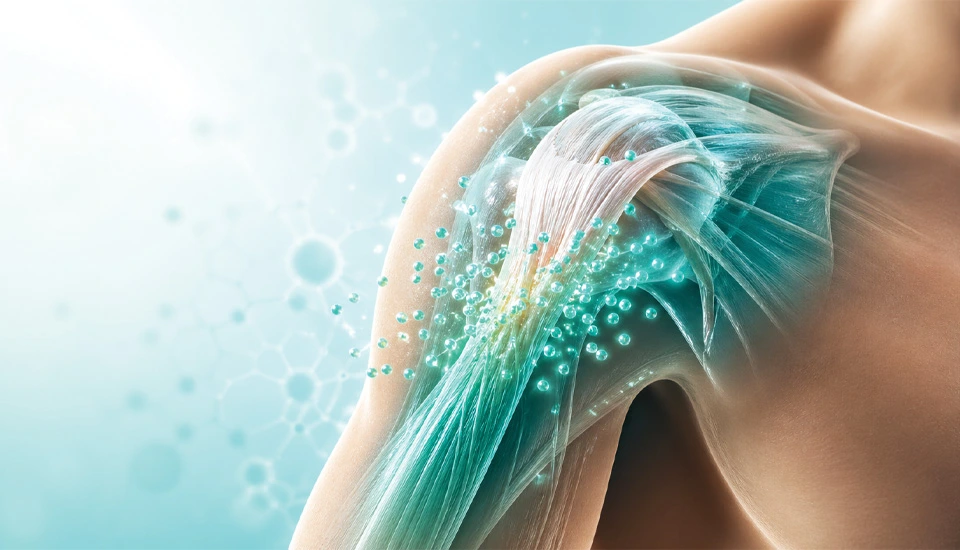
Exosomes in tendon healing for athletes has become a more serious topic in sports medicine, especially in the frustrating cases where a tendon injury does not recover as cleanly or as quickly as expected.
Not every sports injury makes itself obvious.
Some do. A fall, a collision, a sharp tear that stops everything at once. Tendon problems are often less dramatic at the beginning. They creep in. An athlete notices a tendon that feels stiff after rest, touchy under load, less cooperative than it used to be. At first, it is easy to train around it. Later, that becomes harder.
That is part of what makes tendon injuries so frustrating.
They often sit in that uncomfortable space between “still manageable” and “not really right.” Training continues, but not freely. Performance is still possible, but it begins to cost more. The athlete adjusts, sometimes so gradually that the change does not fully register until it has already become part of the routine.
Eventually the question shifts. It is no longer just, “Can I keep going?” It becomes, “Why is this not settling, and is there anything that may help the tendon heal more effectively?”
That is where exosomes usually enter the discussion.
Why Tendon Healing Is Such a Stubborn Problem
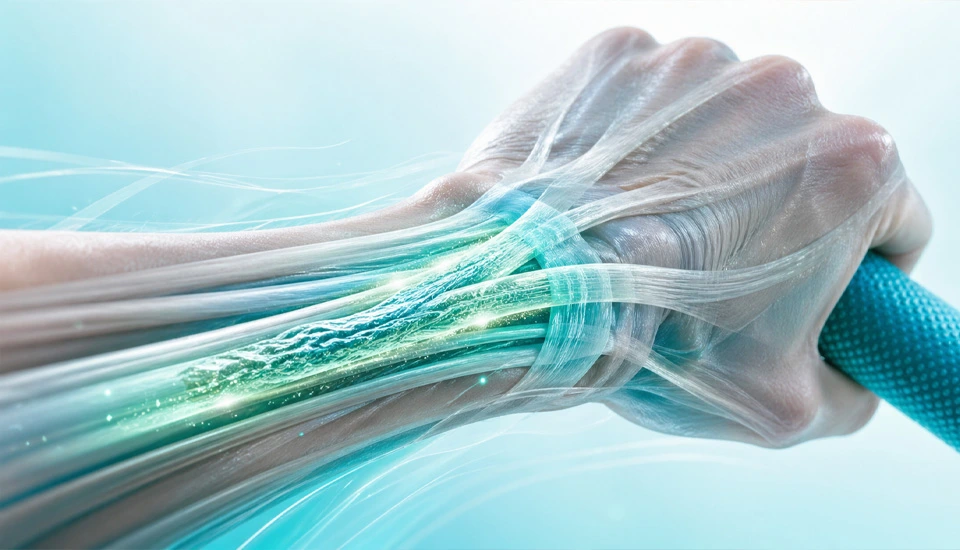
Tendons are unforgiving structures.
In sport they are expected to absorb force, return force, and keep doing it under fatigue. When they are healthy, nobody thinks about them. When they are not, improvement can be slow and strangely incomplete.
That is where many misunderstandings begin.
People often think of tendon recovery as rest followed by return. In reality, tendon healing is usually slower, less linear, and more dependent on the quality of the local tissue environment. Blood supply is limited. Collagen organization matters. The extracellular matrix matters. Cellular behavior matters. Load tolerance matters. And once those things begin to drift away from normal, symptoms may settle faster than the underlying biology does.
That is why an athlete can feel somewhat better and still not truly be ready.
In tendon care, symptom relief and tissue readiness are not always the same thing. Reviews on tendon regeneration continue to describe tendon healing as biologically difficult for exactly these reasons.
Why Exosomes Matter in Tendon Healing
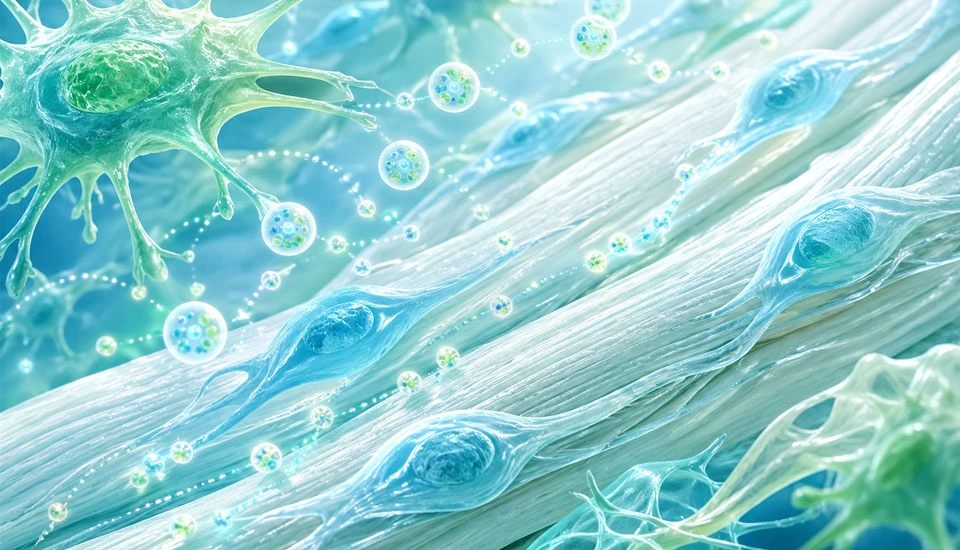
Exosomes became relevant in tendon healing because this kind of recovery depends on more than time.
A tendon improves only if the tissue environment starts behaving differently. Cells have to respond in a useful way. Inflammatory activity has to settle instead of lingering. Matrix turnover has to move in the right direction. Repair has to become organized rather than chaotic. In other words, healing depends partly on whether the local biology is still capable of coordinating itself.
That is where exosomes have drawn attention.
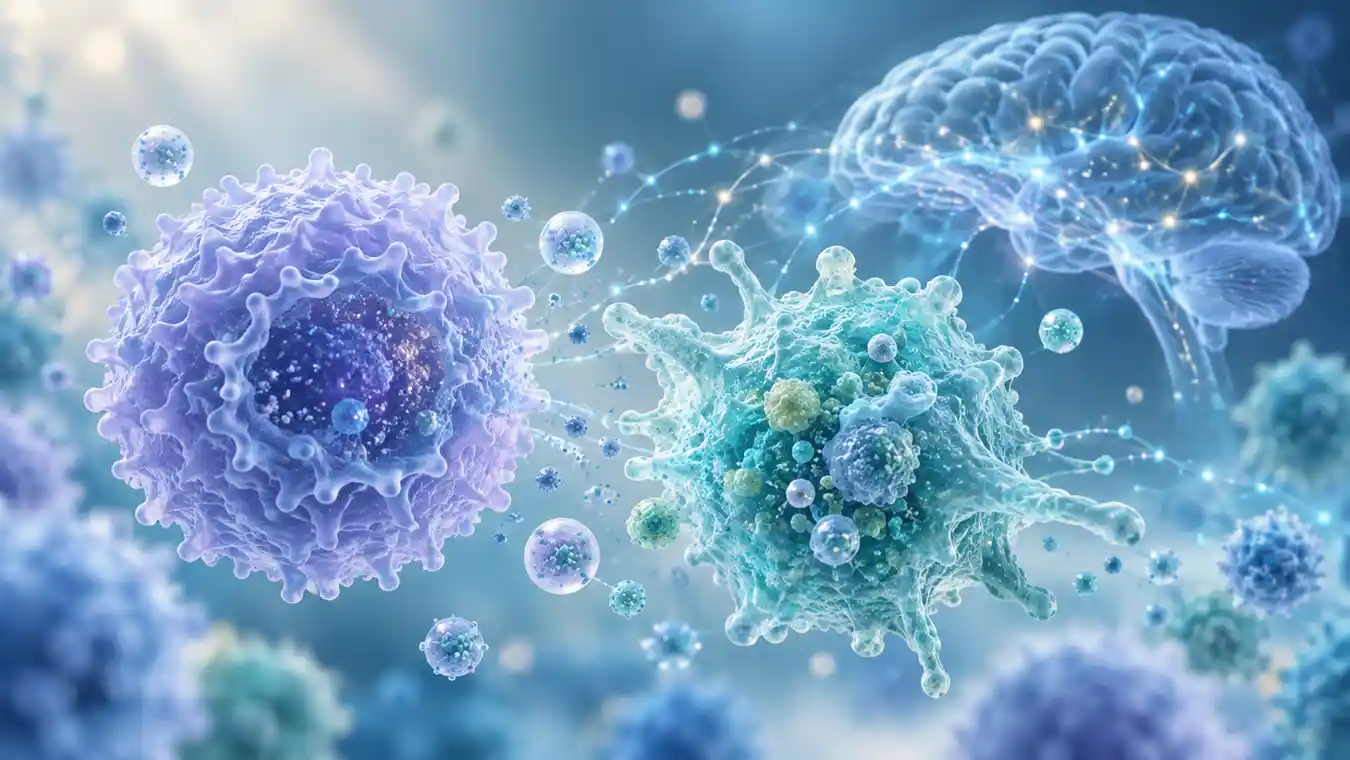
They are small vesicles released by cells, and researchers are interested in them because they appear to be involved in this sort of communication. That does not make them a cure. It does make them relevant. The whole appeal is that if tendon healing is partly a signaling problem, then something that participates in signaling may matter. Reviews on exosomes and extracellular vesicles in tendon healing describe that exact logic and continue to frame them as a potentially useful cell-free regenerative approach.
What the Research Is Actually Trying to Understand
The current exosome literature is not built around one oversized question. It is built around several smaller ones, which is usually a good sign.
Researchers are asking whether exosomes may affect collagen organization, tendon cell behavior, fibrosis, inflammatory signaling, extracellular matrix balance, and tendon-bone healing. Those questions are much more useful than vague claims about regeneration, because they deal with the actual weak points in tendon recovery.
That is where the topic becomes more interesting.
The idea is not that exosomes somehow “repair” a damaged tendon by themselves. It is that they may influence some of the biologic processes that decide whether healing becomes more organized or remains incomplete.
That is a more modest claim.
It is also a more serious one.
Why the Field Keeps Getting Attention
The reason this subject keeps returning is not difficult to understand.
Experimental work has kept producing findings that are hard to ignore completely. In some models, exosomes have been associated with better collagen alignment, less inflammatory stress, a more favorable matrix environment, and improved tendon-bone healing signals. That does not settle the question, but it does explain why the field keeps moving rather than fading away.
From a sports medicine perspective, that matters.
Tendon injuries are exactly the sort of problems where biologic support would be meaningful if it proves dependable. These injuries are often prolonged, reactive, and vulnerable to incomplete recovery. So when research repeatedly points in a potentially useful direction, people pay attention. That is one reason athletes are hearing more about exosomes now than they were a few years ago.
Why Caution Still Matters
At the same time, this is not a finished clinical story.
A lot of the work still sits before the point where everyday treatment becomes straightforward. And the same practical questions keep coming back: how exosomes are prepared, how consistent they are from one source to another, how they are isolated, how much should be used, how they should be delivered, how safety is judged, and whether laboratory findings really hold up once they move into ordinary clinical care.
Those are not side issues. They are the things that decide whether a treatment stays interesting in theory or becomes dependable in practice. So yes, the research is active.
But the everyday clinical answers are still catching up. Reviews on clinical status and tendon-healing applications continue to highlight exactly these issues around source variability, standardization, delivery, and translation.
What I Would Want an Athlete to Understand
If an athlete asks me whether exosomes can help a tendon heal, I would not brush the question aside.
It is a fair question. But I would also be careful not to answer it too confidently.
The more honest answer is that exosomes may eventually support selected parts of tendon healing, which is precisely why they are being studied. But they do not replace diagnosis. They do not replace proper load management. They do not replace strengthening, movement correction, rehabilitation planning, or simply the time that tissue sometimes needs.
Even if exosomes do become more useful in tendon care, they are much more likely to become one part of treatment than the whole treatment itself.
That is usually the more honest frame.
Where Exosomes May Actually Fit
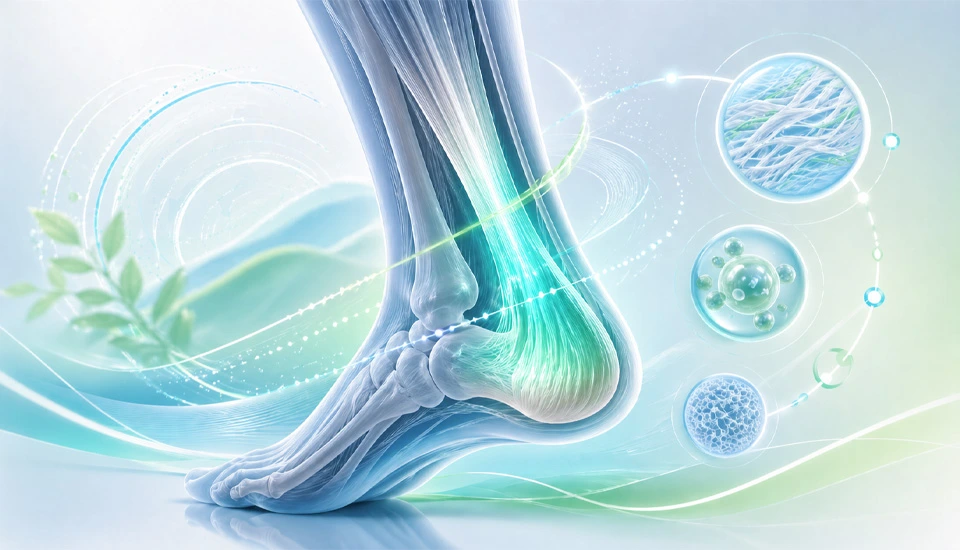
If exosomes develop a real place in tendon care, it will probably be as support rather than substitution.
Support for:
- cell signaling
- matrix remodeling
- inflammatory balance
- tissue quality
- tendon-bone healing in selected situations
Not a replacement for:
- diagnosis
- load modification
- rehabilitation
- progressive strengthening
- kinetic chain assessment
- return-to-sport judgment
That distinction is important because tendon healing rarely fails for one simple reason. It usually fails when biology, load, mechanics, and timing all drift out of balance together.
A biologic therapy may help part of that picture. It is unlikely to replace the whole picture.
Why This Matters So Much in Athletes
Athletes do not ask tendons for ordinary function.
They ask for repetition, speed, force absorption, force transfer, deceleration, elasticity, and reliability under fatigue. That changes everything.
A tendon may feel acceptable in daily life and still be nowhere near ready for real sport.
That is why this discussion matters especially in athletes. The goal is not only to calm symptoms. The goal is to restore a tendon that can tolerate performance again.
If exosomes can eventually help create a better healing environment for that process, then they are worth serious attention.
But being worth attention is not the same thing as being beyond question.
A Better Way to Frame the Question
The most useful question is not: Do exosomes heal tendons?
It is: Can exosomes improve part of the healing environment in the right tendon problem, at the right time, under the right conditions?
That is a better question because it matches the level at which medicine usually works. And for now, it is probably the most honest one.
Exosomes deserve attention in tendon healing because the interest around them is tied to real biology rather than empty language. At the same time, the field is still evolving, which means the sensible response is neither to reject it reflexively nor to talk about it as though every important uncertainty has already disappeared.
In sports medicine, that balance is important.
Because tendon recovery is not only about making pain quieter. It is about getting the tissue back to a point where it has enough quality, enough tolerance, and enough reliability to keep doing its job when sport becomes demanding again.
FAQs About Exosomes and Tendon Healing in Athletes
Can exosomes support tendon healing?
They may. Current research suggests they could influence some parts of tendon healing, including signaling, inflammatory control, matrix remodeling, and tendon-bone healing. But much of that work is still preclinical, so the clinical picture is not fully settled.
Are exosomes already a standard treatment for tendon injuries in athletes?
No. The field is active and scientifically serious, but exosomes are not yet a routine, standardized treatment in everyday sports medicine.
Why are exosomes receiving so much attention in tendon healing?
Because tendon recovery depends on more than pain reduction. It also depends on signaling, matrix organization, and how the tissue manages repair. Exosomes are being studied because they may influence some of those processes.
Can exosomes replace rehabilitation for tendon injuries?
No. Even if exosomes prove useful in selected settings, they do not replace diagnosis, load management, strengthening, movement retraining, or return-to-sport planning.
What is the main limitation right now?
The main limitation is that the field has not yet matured into dependable routine clinical practice. The biology is interesting and, in some areas, encouraging. But standardization, dosing, delivery methods, safety questions, and stronger clinical evidence still need much more work.