
Clinical insights by Dr. Tengiz Tkebuchava, MD, PhD
Why Patients Ask If They Are a Good Candidate for Stem Cell Injections
Sooner or later, most patients ask the same question.
Not whether stem cells sound promising. Not whether regenerative medicine is modern. Just this:
Am I actually the right person for this?
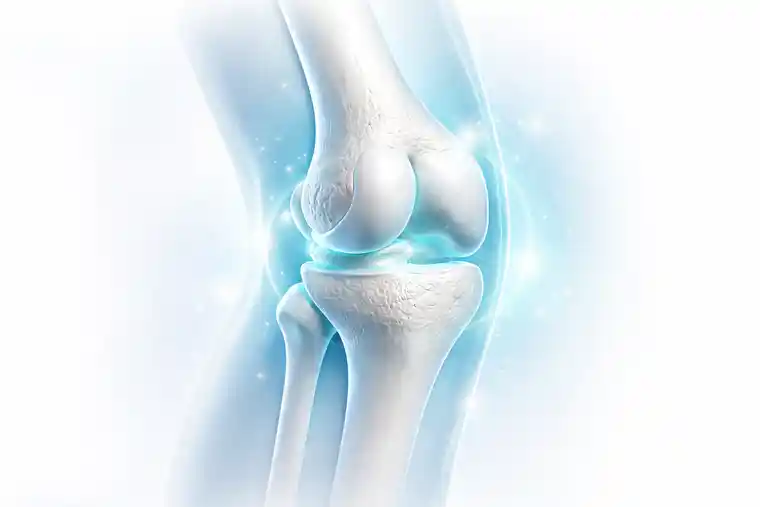
It is a fair question. A painful hip does not automatically mean stem cell treatment makes sense. The same is true for the knee. Some joints still have enough left to work with. Some do not. Some patients ask at a very reasonable time. Others come when the joint has already moved much closer to surgery than they realized.
That is why this question matters more than people think. Before comparing treatments, before reading about PRP or exosomes, it makes more sense to ask something simpler first: is this even the kind of joint where injections may still help?
Table of Contents
Why Pain Alone Does Not Make You a Good Candidate for Stem Cell Injections
This is often the first misunderstanding.
Patients feel pain, so naturally they think treatment should follow from that. But pain is only one part of the picture. A hip can hurt for different reasons. A knee can hurt in ways that sound similar while the underlying condition is very different.
One joint may be inflamed but still quite treatable. Another may already be badly worn. One patient may still be functioning reasonably well even though symptoms have become persistent. Another may already be changing daily life around the joint without fully noticing how much has been lost.
So no, pain alone does not make someone a candidate.
The more useful question is what is happening inside the joint, how far the problem has gone, and whether there is still enough left to preserve.
When the Right Time Comes for Stem Cell Injections in the Hip or Knee
The best candidates are usually not the very earliest patients and not the very last ones either.
What I mean by that is simple. If the joint has only just started causing occasional discomfort, stem cell treatment may not be the first step. But if the joint is already near the point of complete failure, injections may also be asking too much.
A lot of good candidates sit somewhere in between.
They are no longer comfortable. The problem is no longer small. Walking may be different now. Stairs may be annoying. The hip may stiffen after sitting. The knee may complain after activity or swell more easily than before. Life is not normal anymore, but the joint is not necessarily lost.
That is often the stage where the question becomes serious in a good way.
Who Often Turns Out to Be a Good Candidate for Stem Cell Injections
There is no single perfect profile, but certain patterns come up again and again.
Usually, the more realistic candidates are people whose hip or knee is clearly causing trouble, but still has something left to save. The joint may already be damaged. It may already hurt regularly. It may already limit movement and confidence. But it has not yet reached the point where every non-surgical option is simply too weak.
This often includes patients with early or moderate wear, recurring stiffness, chronic irritation, activity-related pain, or ongoing symptoms that have not improved enough with simpler measures.
In other words, the joint is no longer doing well, but it is not beyond help either.
That is the kind of situation where injections become worth discussing properly.
Why Age Matters Less Than Patients Expect for Stem Cell Injections
Patients often focus on age too much.
Someone in their forties may think they are too young for this. Someone older may assume they are automatically too late. Neither assumption is very reliable on its own.
Age does matter, of course. It influences tissue quality, healing response, and the type of problem we are usually dealing with. But when it comes to candidacy, the state of the joint usually tells us more than the birth date does.
I would take a better-preserved joint in an older patient more seriously than a badly damaged joint in a younger one.
That is why I do not find age very helpful when it is discussed in isolation. It belongs in the overall picture, but it does not decide the whole case by itself.
Why a Diagnosis Alone Does Not Decide Who Is a Good Candidate for Stem Cell Treatment
Patients often arrive with a label already attached to the problem.
Arthrosis. Osteoarthritis. Cartilage wear. Degeneration. Chronic knee pain. Hip arthritis.
These words are not useless, but they can create a false sense that the decision is already obvious. It usually is not.
Two people can have the same diagnosis written on a report and still be in completely different situations. One may still have a joint that functions well enough to justify preserving it. Another may already be far more advanced than the wording suggests.
That is why the diagnosis name is only a starting point.
What matters more is how the joint behaves in real life, how much structure is still there, and whether treatment still has something meaningful to work with.
Why a Good Candidate Usually Still Has a Joint Worth Preserving
This is one of the simplest ways to look at it.
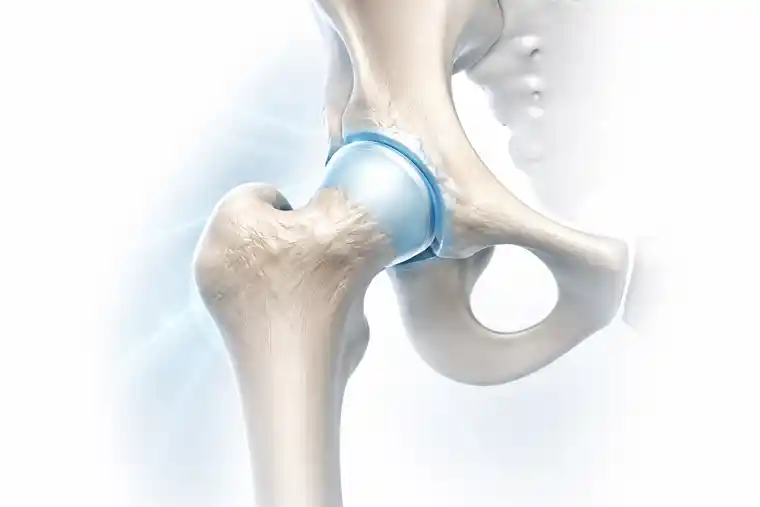
Stem cell treatment makes the most sense when the hip or knee is damaged, yes, but not finished. The patient may already have daily pain. Movement may already be reduced. Life may already be organized differently because of the joint. But there should still be a reason to believe that preserving the joint can change something important.
That point matters.
Because if the joint still has usable function, still has meaningful structure, and still has biological room to respond, then helping it makes sense. If that is gone, the conversation has to change.
Not every painful joint is a preservation case.
Why Active Patients Often Ask About Stem Cell Treatment at the Right Time
This does not only mean athletes.
More often it means ordinary people who notice that the joint is starting to take things away from them. Walking comfortably. Traveling without thinking about every step. Going up stairs without irritation. Standing too long without paying for it later. Even small things begin to feel less simple.
These patients are often asking at a useful moment because they still care about function they still have.
That is important. A person who notices the decline while the joint is still reasonably usable is often in a better position than someone who has spent years adapting to a much more advanced problem.
The wish to remain active does not make someone a candidate by itself. But very often it brings the patient to the discussion before the window becomes too small.
Why Previous Treatment Matters When Choosing Stem Cell Injections
Previous treatment tells us quite a lot.
If someone has already rested, done physiotherapy, reduced activity, taken medication, maybe even had standard injections, and the same problem keeps returning, that usually means the joint is asking for a more serious decision.
It does not automatically mean stem cells are the answer. But it does mean the basic route may no longer be enough.
On the other hand, if very little has been tried, then sometimes the better first step is still a simpler one.
That is why treatment history matters. It helps place the patient in the real timeline of the problem instead of looking only at today’s symptoms.
Why Severe Pain Does Not Always Mean You Are the Best Candidate
This surprises many people.
They assume that stronger pain must mean a stronger indication for regenerative treatment. But pain can be misleading when looked at alone. A joint with a lot of inflammation may hurt badly and still be quite reasonable to treat. Another joint may hurt less, but be structurally in much worse shape.
So no, pain severity by itself does not answer the candidacy question either.
It has to be read together with function, structure, daily limitation, and the stage of the joint problem. Otherwise it is too easy to misunderstand what the hip or knee is really telling us.
Who May Not Be a Good Candidate for Stem Cell Injections in the Hip or Knee
Some joints are simply too far advanced.
When the hip or knee is already badly damaged, very unstable, clearly deformed, or close to end-stage failure, injections usually do not have enough room to do something meaningful. In that setting, calling stem cell treatment an alternative to surgery would not be honest.
There are also patients whose problem is not really the kind that regenerative treatment solves well. Not every painful joint belongs in the same category. Sometimes the mechanical issue is too dominant. Sometimes too much structure has already been lost. Sometimes the real answer lies elsewhere.
This is why wanting to avoid surgery is not enough on its own. Almost everyone would prefer that. The harder question is whether the joint still gives us a real reason to try.
Why Imaging Helps, but Does Not Decide Everything
Patients often hope the scan will answer the whole question.
Of course imaging matters. X-rays and MRI can show us wear, cartilage loss, alignment problems, and other structural changes. That information is important. But a scan is still not the full story.
A standard X-ray is useful, but for the knees I would usually want standing or weight-bearing X-rays whenever possible. That matters because the knee often looks different once the joint is carrying the patient’s real body weight. In practice, this is often the clearest way to understand how much space is truly left in the joint and how the knee is behaving under normal load.
Standing knee X-rays are especially important because they may reveal joint space narrowing, alignment problems such as bow legs or knock knees, cartilage loss, and early degenerative change that a non-weight-bearing image can easily underestimate. So yes, imaging helps, but in knee evaluation the right kind of imaging matters too. A lying-down X-ray can miss part of the real picture.
I have seen joints that look worse on imaging than the patient’s actual function would suggest. I have also seen the opposite. A report may sound moderate, but the real daily limitation is already much more serious.
That is why the image and the person have to be read together.
A hip or knee is not just a radiology result. It is part of how someone moves through daily life.
What I Look at First When Deciding If a Patient Is a Good Candidate
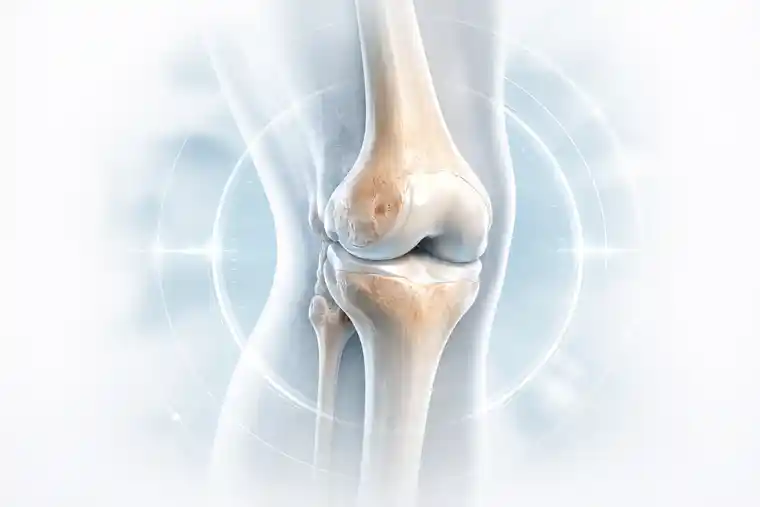
I do not start by asking which product sounds attractive. I start with the joint itself.
How far has this gone? How much function is still there? What is the patient no longer able to do comfortably? What has already been tried? Is this still a joint-preserving situation, or has the problem already moved past that stage?
That usually tells me much more than a long list of treatment names ever could.
The decision becomes easier once the joint is understood properly. Not necessarily easy for the patient emotionally, but medically clearer.
Why Honesty Matters When Deciding on Regenerative Treatment
Patients who read about regenerative medicine are often hopeful. That is natural. Many are tired of pain, tired of waiting, and tired of feeling that everything is slowly moving toward surgery.
But hope is not the same as candidacy.
Someone is not a good candidate because they want the treatment badly. They are a good candidate when the condition of the hip or knee still makes the treatment medically sensible.
That is why honesty matters so much in this field. When there is still something real to preserve, that should be said clearly. And when the joint is already too far gone, that should also be said clearly.
Anything else stops being medicine and starts becoming sales language.
My Clinical View on Who Is a Good Candidate for Stem Cell Injections
The patients I consider most suitable are usually those who are clearly no longer doing well, but who are also not yet at the stage where the joint has effectively been lost.
That middle ground comes up again and again.
Daily life is already affected. The joint is already asking for more than basic measures can offer. But there is still enough function, enough structure, and enough reason to try to preserve what remains.
That is usually the point where stem cell treatment becomes a serious option.
Final Thoughts on Who Is a Good Candidate for Stem Cell Injections in the Hip or Knee
In practical terms, a good candidate is usually someone whose hip or knee has become a real problem, but not yet a hopeless one.
The joint hurts, function is no longer normal, and simpler treatment has not done enough. But there is still something left to work with, and still a real possibility that preserving the joint can improve daily life in a meaningful way.
That is the point where injections are worth considering seriously.
FAQs About Who Is a Good Candidate for Stem Cell Injections in the Hip or Knee
Am I a good candidate if my hip or knee hurts every day?
Not automatically.
Daily pain matters, of course, but pain by itself does not answer the whole question. Some joints hurt a lot and still have quite a bit left to work with. Others may hurt less, but already be much further advanced. That is why the real issue is not only how often the joint hurts, but what condition it is in overall.
So yes, daily pain may be one sign that it is time to look more closely. But it is not the only thing that decides candidacy.
Does age decide whether I am a good candidate?
Usually not by itself.
Patients often worry about this more than they need to. Some think they are too young, others think they are too old. In reality, the state of the joint usually matters more than age alone. A better-preserved joint in an older patient may still be more suitable than a much more damaged joint in a younger one.
Age is part of the picture, but it is not the whole picture.
Do I need an MRI or X-ray before deciding?
Usually yes, or at least some kind of proper imaging. It is difficult to judge a joint well without seeing what is actually going on structurally. And when we are looking at the knee in particular, standing or weight-bearing X-rays are often especially important, because they show the joint under natural load. That can reveal narrowing, alignment problems, cartilage loss, and early degeneration more clearly than an X-ray taken without weight on the joint.
MRI and X-ray do not answer exactly the same question, and neither should be read in isolation. Imaging still has to be matched with how the patient actually functions in daily life. But if the goal is to understand the real condition of the knee, a weight-bearing X-ray is often one of the most useful starting points.
It is difficult to judge a joint well without seeing what is actually going on structurally. Imaging helps show cartilage wear, degeneration, alignment issues, and how far the problem has already progressed. But the scan is not everything either. It still has to be read together with how the patient actually functions in daily life.
So imaging matters, but it should not be looked at in isolation.
Can I still be a candidate if I have already tried physiotherapy or other injections?
Yes, quite possibly.
In fact, that is often when patients start looking at this option more seriously. They have already tried to manage the joint in simpler ways, but the same problem keeps coming back. The pain settles for a while, then returns. The stiffness improves a little, then returns. Life is still being shaped by the joint.
That does not automatically mean stem cells are the answer, but it often means the discussion is becoming more serious for a reason.
Who is usually not a good candidate anymore?
Usually the patient whose joint is already too far gone.
If the hip or knee is very badly damaged, very unstable, clearly deformed, or already close to end-stage failure, injections often do not have enough room to do something meaningful. There are also patients whose pain comes from a problem that is simply not the right kind of problem for this treatment.
So the issue is not whether someone wants to avoid surgery. Almost everyone does. The real question is whether the joint still gives us a sensible reason to try a regenerative option.
When a Joint Check Makes Sense
Pain can be confusing. Some people still have a joint that may respond to treatment. Others are already at a point where injections may not do much.
So it makes sense to check properly before deciding. Look at the scan. Look at how the hip or knee moves. Talk about what has already been tried. Then it is much easier to say whether stem cell injections are worth a serious discussion, or whether another route makes more sense.