Clinical Insights by Dr. Mehmet Kalcay of DentSpa
Why a Sinus Lift Procedure May Be Needed Before Dental Implants
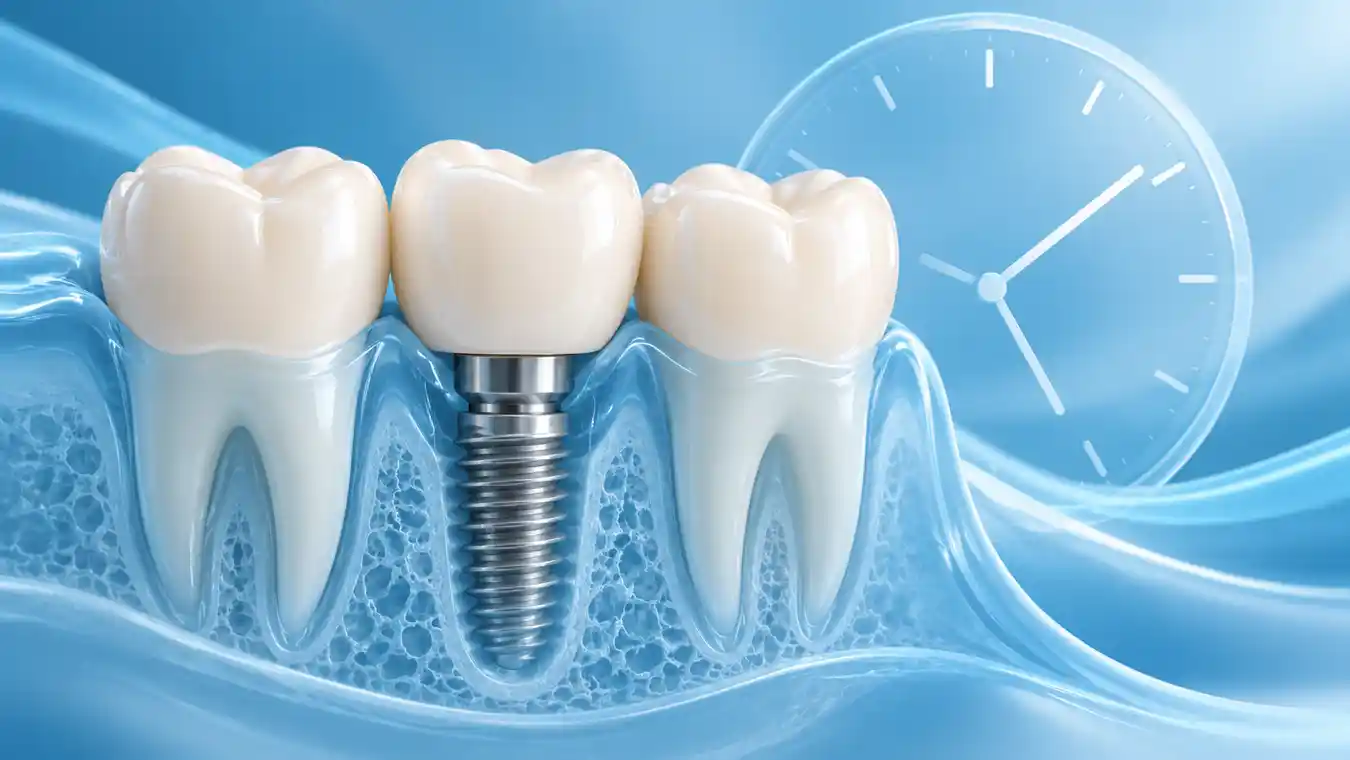
For an implant to remain stable, it needs enough healthy jawbone around it. In the back of the upper jaw, that bone is sometimes too shallow for safe implant placement.
Dentists see this quite often after the loss of an upper molar. With no tooth root in place, the bone slowly loses volume. Meanwhile, the maxillary sinus may settle lower into the same area. Eventually, only a thin layer of bone may remain.
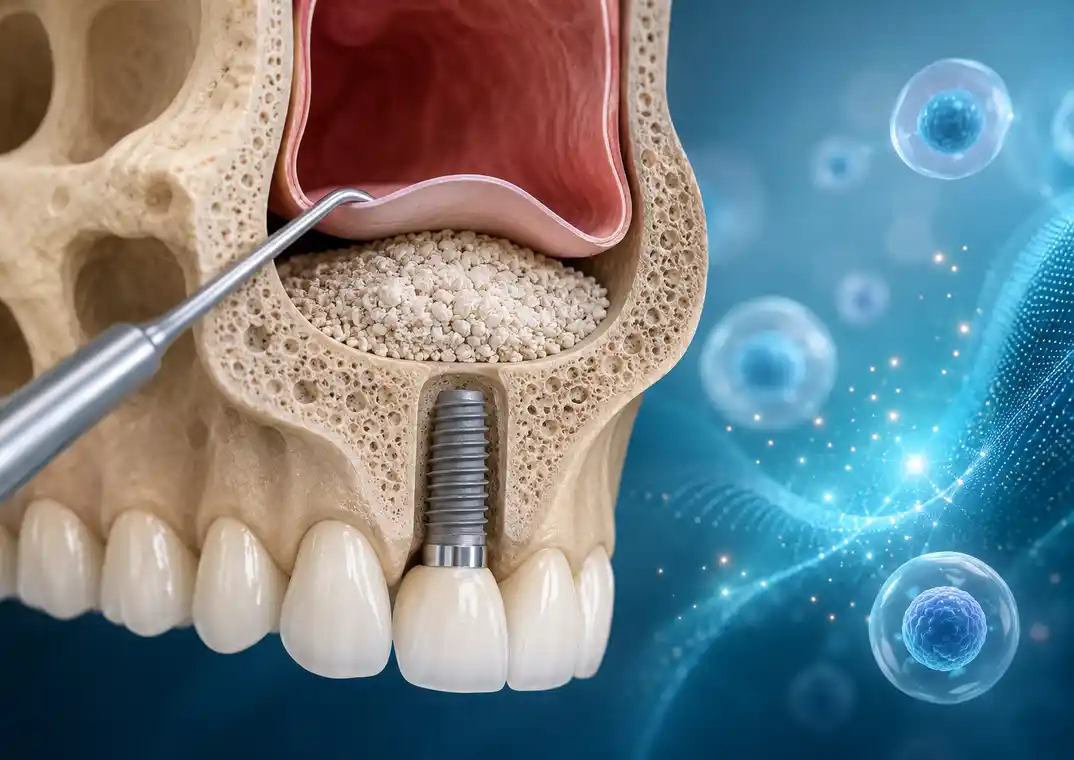
A sinus lift procedure makes use of the space beneath the sinus. The membrane is moved slightly upward, and graft material is added below it. This gives the body an area in which it can rebuild some of the missing bone.
The dentist does not make this decision based on one measurement alone. The width and quality of the bone are considered together with the planned implant position and the individual shape of the sinus. Sometimes the implant and graft can be placed during one operation. In other cases, the graft is allowed to heal first.
Table of Contents
How Is a Sinus Lift Procedure Actually Performed?
The sinus lift procedure is easier to understand when you picture the sinus sitting just above the upper jaw. The surgeon carefully opens the area, raises the membrane and places graft material into the space that has been created.
In practice, this is usually done in several steps.
Creating the Incision During a Sinus Lift Procedure
First, a small cut is made in the gum so the jawbone can be reached. The surgeon then prepares a small opening through the side of the upper jaw.
Through this opening, the membrane on the floor of the sinus becomes visible and can be reached safely.
The lift
Next comes the most delicate step. The membrane is eased away from the bone and slowly raised without damaging it.
The movement creates a pocket beneath the sinus where the graft can be placed.
Placement of the graft
The sinus lift bone graft material is placed into this space. It does not simply remain there as a block of foreign material. Instead, it acts as a framework while the patient’s own bone gradually grows through and around it.
Closure
Once the graft is in position, the opening may be covered with a protective membrane. The gum is then returned to its normal position and closed with stitches.
Two points are worth clarifying.
A sinus lift is not required for every implant in the upper jaw. It is considered when the remaining bone cannot provide reliable support. Very limited bone height may mean that grafting has to be completed before the implant is inserted.
The surgery itself often takes one to two hours. The waiting period is much longer. It is quite usual for the graft to need six to nine months before the dentist considers it ready for the next stage.
What Healing Looks Like After a Sinus Lift Bone Graft
Healing after a sinus lift bone graft happens in stages. The outside may feel better quite quickly, but deeper inside the jaw, the graft continues changing for several months.
The exact timing differs between patients, but the process generally follows a similar pattern.
Inflammation and clot formation
Right after surgery, blood collects around the graft and forms a clot. This is expected and provides the first protection for the treated area.
For the first few days, the clot helps control bleeding and holds the graft in place. Immune cells also arrive to clear away damaged tissue and respond to bacteria around the wound.
This first phase is relatively short and normally settles within several days.
Soft tissue formation
The gum begins closing while the deeper tissues are still repairing themselves.
Under the surface, granulation tissue grows around the surgical site, and tiny blood vessels begin entering the area. By this point, swelling and tenderness may already be improving, although the graft still has a long way to go.
The area therefore still needs protection, even when it already feels much better.
Early bone integration: Weeks 4–6
A few weeks later, osteoblasts become more active. These are the cells the body uses to make new bone.
The first small areas of bone begin to appear around the graft material. These early connections are still fragile. Hard foods and strong chewing pressure on the treated side may disturb the area, so the dentist’s eating instructions should be followed carefully.
Bone maturation and remodelling
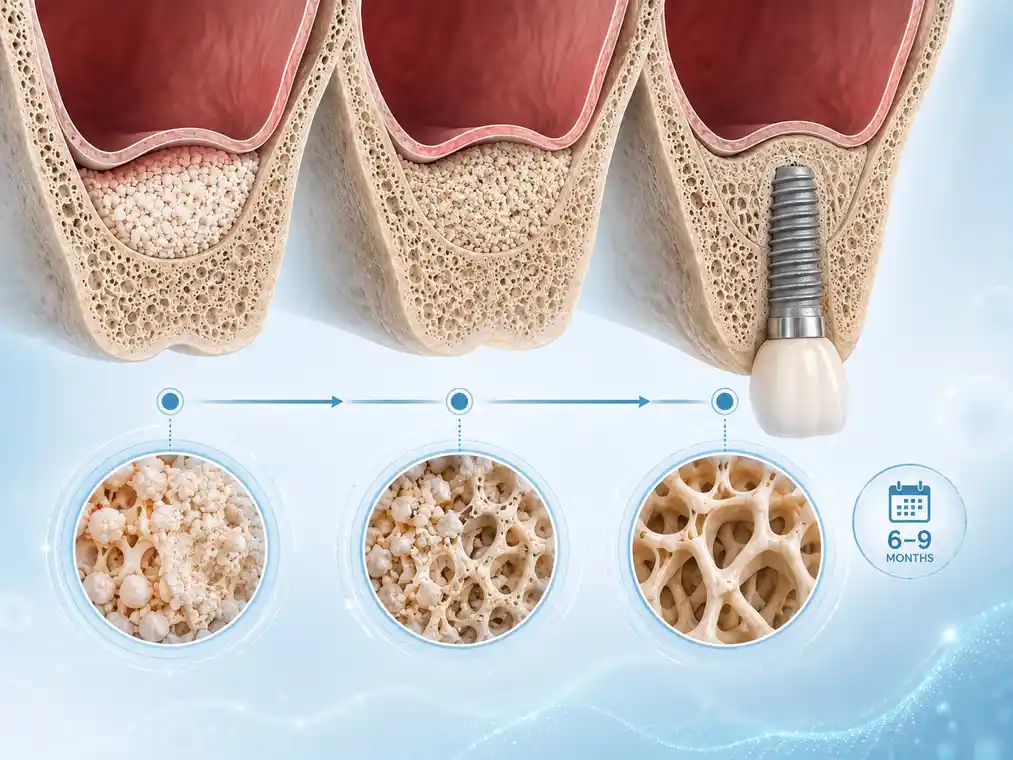
The first bone produced around a graft is not yet as strong as mature jawbone.
Over the next several months, it is reorganised and becomes denser. This gradual remodelling is what eventually gives the site enough strength to support an implant.
There is no identical timetable for every patient. Smoking, general health, the size of the graft, the original bone quality and any infection can all influence healing. Six to nine months is a common estimate, although a larger graft can take longer.
Could Stem Cells for Bone Regeneration Work for Dental Implants?
Standard grafting methods already give good results in many cases. Research is now looking at whether bone regeneration for dental implants can be strengthened biologically, particularly in patients whose bone may regenerate more slowly.
One area of interest is the use of stem cells or exosomes for bone regeneration together with graft materials.
The purpose is not to replace the graft or avoid the sinus lift. The idea is to support the living processes that help blood vessels and new bone develop inside the grafted area.
There are several reasons why this approach is being studied.
Stem Cells May Support Faster Bone Formation
Mesenchymal stem cells, usually shortened to MSCs, may come from bone marrow, fatty tissue or dental pulp.
Under the right conditions, they can take on characteristics associated with osteoblasts. These are the cells that produce new bone.
When MSCs are added to a graft, they may provide more cells capable of participating in repair. This may be particularly relevant when the body has a larger area of missing bone to rebuild.
The idea is encouraging, although it does not promise quicker healing in every case. Results can vary according to the patient, how the cells are prepared and how they are placed into the graft.
Stem Cells May Improve Vascularisation
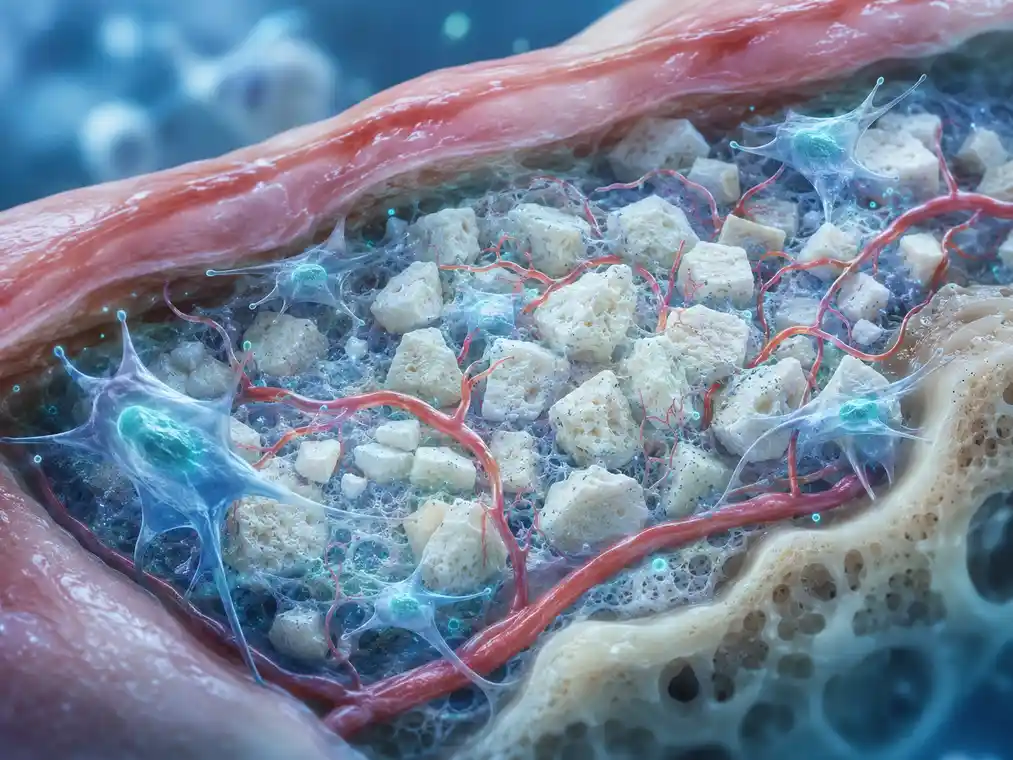
Bone needs blood.
A graft with poor circulation cannot receive the oxygen and nutrients required for proper healing. New vessels must therefore grow into the area before strong living bone can develop.
MSCs may release signals that influence endothelial cells, which take part in blood vessel formation. Researchers are studying whether this interaction can improve circulation through the graft.
Better vascularisation could give healing cells easier access to the site and help the newly developing bone survive.
Stem Cells May Support Graft Integration
A graft needs to become connected to the patient’s existing jawbone. Simply filling the space is not enough.
The whole graft does not always heal in exactly the same way. One part may form bone, while another develops mainly soft or fibrous tissue. Restricted blood flow, infection, inflammation and movement of the graft can all affect this balance.
Part of the interest in MSCs comes from the way they may influence inflammation and the signals exchanged between cells during healing. Researchers are examining whether this could make the graft environment more favourable.
For now, this approach remains an addition to established dental implant bone grafting, not a substitute for it.
Risks and Complications of a Sinus Lift Procedure
Most patients recover without a serious problem. Still, a sinus lift is an operation, and complications are possible.
The risk is influenced by the patient’s anatomy, the amount of grafting required, smoking, existing sinus problems, and the surgical technique.
Sinus membrane tears
The sinus membrane is very thin. It can tear while it is being lifted away from the bone.
Membrane perforation is a recognised issue during sinus lift surgery. When the opening is small, the surgeon can often cover or repair it during the same procedure.
A larger tear requires a different decision. The graft may still be possible, or the surgeon may prefer to close the area and return after it has healed.
An untreated opening may allow some of the graft material to move into the sinus. This can lead to irritation or sinus-related symptoms.
Infection Around the Sinus Lift
Infection is possible after a sinus lift, although it is not part of normal healing.
A patient may notice that pain or swelling is becoming worse instead of better. Fever, an unpleasant taste or pus-like drainage from the nose can also be warning signs. These changes should be reported to the clinic.
When treatment begins early, antibiotics may be enough. A collection of infected fluid may occasionally need to be drained or treated in another way.
When a Sinus Lift Bone Graft Does Not Heal as Planned
A graft has failed when it does not create enough usable bone for the planned implant.
There is rarely one single explanation. Several factors may be involved, including infection, poor circulation, smoking, movement of the graft, trauma to the area or a problem with the graft material.
Not every patient develops obvious symptoms. A weak graft may only be noticed on follow-up imaging or when the dentist examines the site before inserting the implant.
If the bone volume is still insufficient, the area may be given additional healing time. Sometimes another graft is necessary.
Good surgical planning is only one part of the process. What the patient does afterwards also has an effect, particularly when it comes to smoking, nose blowing, oral hygiene, medication and chewing on the treated side.
Where Stem Cells May Fit Into Dental Implant Bone Grafting
At present, stem cell therapy is being explored as extra biological support for dental implant bone grafting. It does not take the place of the graft or the sinus lift operation.
There are good reasons for the interest. MSCs may influence bone-forming cells, blood vessel development, and the local healing response. These effects could be useful in selected patients.
However, the technique is not standardised everywhere. Cell source, cell number, preparation, graft material, and application method may differ considerably between centres. Regulations also vary from one country to another.
For that reason, early results should be interpreted carefully. A promising biological idea still needs consistent clinical evidence before it becomes routine treatment.
A successful sinus lift continues to depend on correct diagnosis, detailed imaging, appropriate case selection, careful surgery, and enough healing time.
At DentSpa in Istanbul, the treatment plan is based on the patient’s bone volume, sinus anatomy, and implant needs. Regenerative techniques may be included when they suit the individual case, but they are only one part of the overall surgical plan.
FAQs About Sinus Lift Procedures
Why might I need a sinus lift before receiving a dental implant?
The operation is used to rebuild bone at the back of the upper jaw.
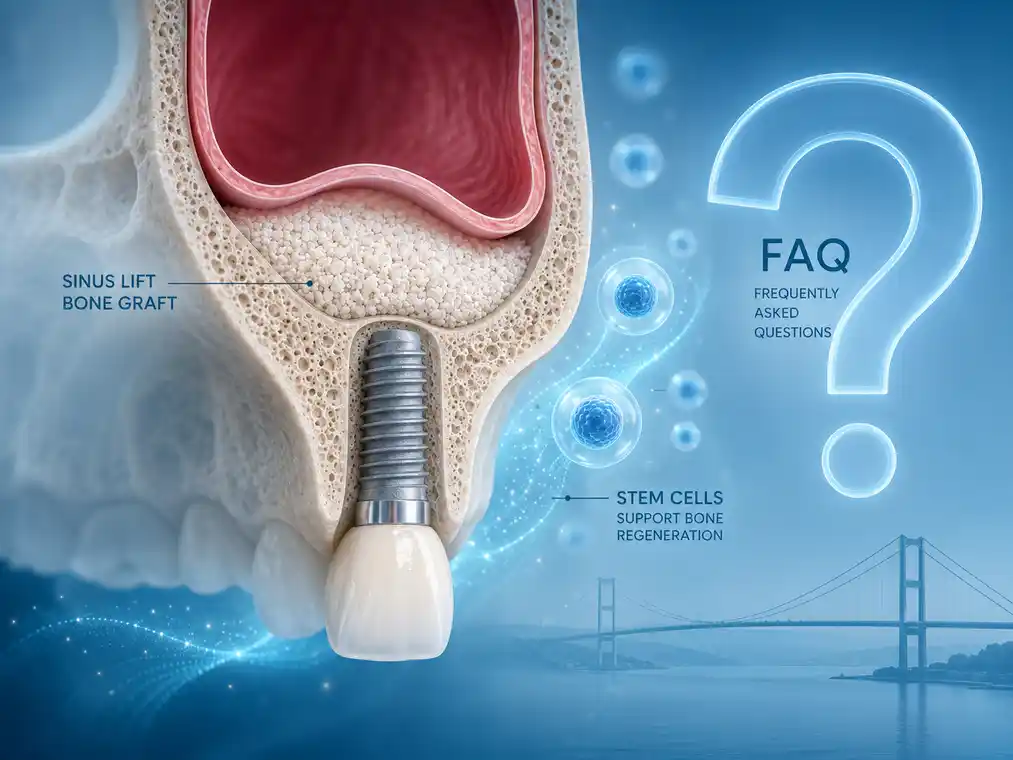
It may be discussed when the remaining jawbone is too shallow to keep an implant stable. This can happen after tooth loss or simply because the sinus lies very close to the mouth.
The membrane below the sinus is raised, leaving room for graft material underneath. New bone then develops gradually around the graft.
Will I feel pain during a sinus lift?
The dentist numbs the treatment area before starting, so the operation itself should not be painful.
Once the anaesthetic wears off, some soreness, swelling, pressure or nasal stuffiness can occur. It is usually more noticeable during the first few days and should then begin to settle.
The prescribed medication is normally sufficient for this early discomfort. Pain that keeps increasing should be checked.
How long does the sinus area take to recover?
The gum and the underlying graft follow different healing timelines.
The gum can close and the swelling can settle quite quickly. The bone underneath needs much longer. Full maturation commonly takes around six to nine months.
A larger graft, the patient’s general health and simultaneous implant placement can all influence how long recovery takes.
What can go wrong after sinus lift surgery?
The best-known surgical risk is a tear in the thin membrane lining the sinus.
Other possible complications are infection, bleeding, sinus irritation, movement of graft material or failure to form sufficient new bone.
This is why the dentist studies the sinus and the remaining bone on a CBCT scan before planning the operation.
What do we currently know about stem cells and sinus lift healing?
Early studies have looked at combining MSCs with bone graft material to support the formation of bone and new blood vessels.
The findings are interesting, but they do not show that every patient will heal faster or gain more bone. The outcome may depend on the cells, graft, treatment method and individual healing response.
For now, stem cells for bone regeneration remain a supportive and investigational option rather than a standard part of every sinus lift.
Is it possible to place the implant during the sinus lift?
In selected patients, yes.
The implant can be placed during the same operation when enough natural bone remains to hold it securely from the beginning.
When only a very small amount of bone is present, the sinus lift bone graft is normally completed first. Implant placement follows after the graft has had time to heal.
The CBCT findings allow the dentist to measure the remaining bone and choose the safer sequence for that patient.