The Advanced Laparoscopic Urology Course in Istanbul has two hours on its Saturday afternoon program devoted to an uncomfortable part of surgery: what happens when an operation becomes difficult.
The scheduled subjects include vascular complications, bleeding around the renal hilum, urinary leakage and problems that force surgeons to reconsider their next move. Recorded operations will be reviewed with the faculty, giving participants an opportunity to examine decisions that often have to be made quickly in the operating room.
It is an interesting choice for a course that also includes radical nephrectomy, partial nephrectomy and advanced renal reconstruction. These procedures have well-established operative principles, but knowing the sequence of an operation is only one part of performing it. Exposure changes. Instruments do not always approach the tissue from a convenient direction. A dissection that seemed straightforward at the planning stage may become considerably more demanding once the anatomy is exposed.
The course, scheduled for 5–6 December 2026 in Istanbul, Türkiye, addresses several of these challenges through two different types of training. Saturday brings together theoretical teaching, operative recordings and case discussions. Sunday is reserved for laparoscopic exercises in a porcine wet lab.
Renal surgery occupies much of the curriculum. Alongside nephrectomy and hilar control, the organizers have included renorrhaphy, pyeloplasty, ureteroureterostomy and intracorporeal suturing. The practical sessions are arranged with one porcine model for every three physicians.
The result is a program covering both the removal of renal tissue and the reconstructive work that may follow, with time devoted to the technical difficulties encountered along the way.
Table of Contents
Advanced Laparoscopic Urology Course at a Glance
📌 Format: Theory, surgical video analysis and hands-on porcine wet lab
📅 Duration: 2 days, 5-6 December 2026
📍 Location: Istanbul, Türkiye
🩺 Renal procedures: Radical and partial nephrectomy, hilar dissection, vascular control and tumor excision
🧵 Reconstructive techniques: Renorrhaphy, pyeloplasty, ureteroureterostomy and advanced laparoscopic suturing
🧪 Hands-on training: Porcine wet lab with one model per three physicians
👨⚕️ Supervision: Faculty-guided practical exercises and surgical technique evaluation
🎓 Certificate: Certificate of Participation
📞 Contact: For registration details and availability, contact us via WhatsApp at +90 537 977 89 84.
The Surgical Work That Connects Nephrectomy and Reconstruction
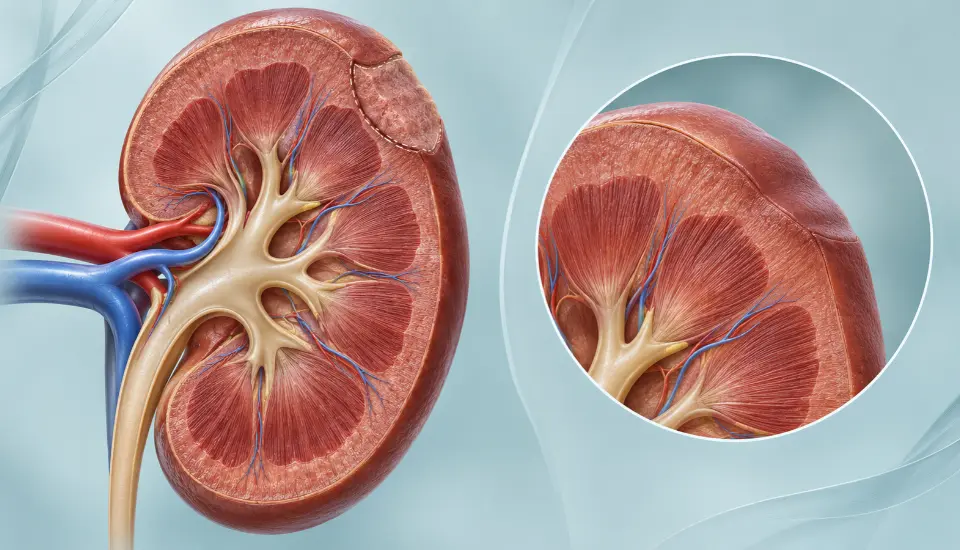
A surgeon planning a laparoscopic partial nephrectomy has to think beyond the point at which the lesion is removed. The location of the tumor, its relationship to the collecting system and the surrounding vessels, and the anticipated renal defect all influence the operation.
These considerations become particularly important when the excision is followed by reconstruction.
Renorrhaphy is therefore a significant part of the December curriculum. The technique appears in Saturday’s advanced urological session and returns during both practical sessions on Sunday.
The procedure itself will be familiar to the intended audience. What makes it relevant to hands-on training is the difficulty of reproducing precise suturing movements through laparoscopic instruments.
Working around a renal defect can be awkward. The tissue may sit at an angle that makes needle placement uncomfortable, and the available space may restrict how the instruments can be moved. A surgeon must also consider the structures involved in the repair, including the collecting system when it has been opened during excision.
These problems require experience with actual instrument handling. Watching a well-executed renorrhaphy provides an understanding of the approach, but the practical difficulty often becomes clear only when the surgeon attempts the movement.
The curriculum includes intracorporeal knot tying and double-layer suturing alongside the renal procedures.
It also extends into upper urinary tract reconstruction.
Pyeloplasty and ureteroureterostomy are scheduled for Saturday afternoon, with corresponding practical exercises included in Sunday’s wet lab. Both operations require careful anastomotic technique, although the anatomical problems and operative approaches differ.
The inclusion of these procedures gives reconstructive laparoscopy a considerable place within the course. A urologist interested primarily in partial nephrectomy will find relevant training in hilar control, excision and renorrhaphy. Someone working towards greater experience with laparoscopic urinary tract reconstruction may be more interested in the suturing exercises.
There is useful overlap between those interests. The technical demands of intracorporeal reconstruction are encountered in several different urological operations, and practice with one technique can expose difficulties in instrument handling that also arise elsewhere.
Looking Closely at the Operation, Rather Than Simply Watching It
The theoretical day begins at 09:30 on Saturday, after registration and opening remarks.
Patient preparation, positioning and operating room setup are covered first. Laparoscopic instruments, entry techniques, trocar placement and pneumoperitoneum follow.
For experienced laparoscopic surgeons, this material will be familiar. It nevertheless provides an opportunity to review the practical choices that determine the working arrangement for the rest of an operation.
Port placement is a good example. The positions chosen must allow the surgeon to carry out different tasks, sometimes requiring quite different instrument movements. An arrangement that provides satisfactory access during renal exposure may be less comfortable when the operation reaches the reconstructive stage.
After the morning break, the program moves into laparoscopic renal anatomy.
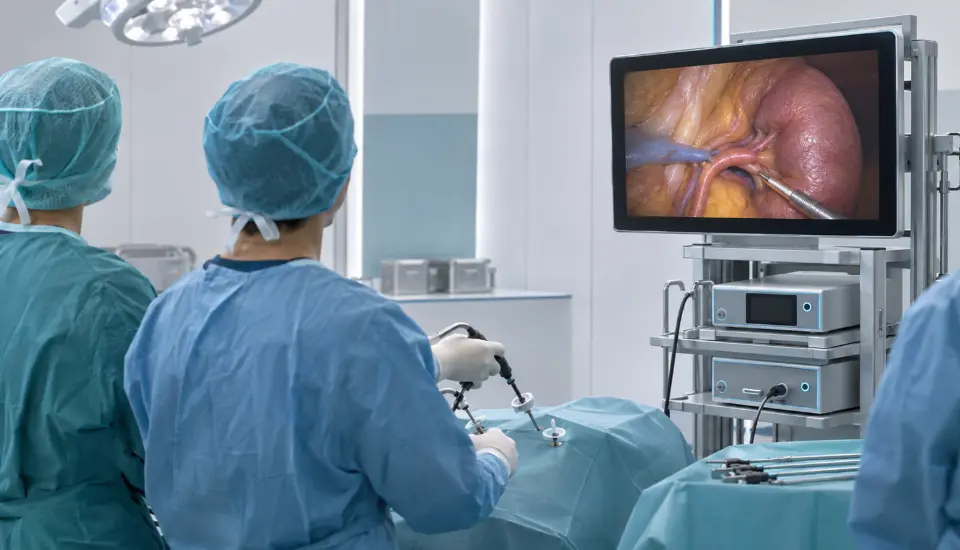
The 11:15 session concentrates on radical and partial nephrectomy, with hilar dissection and vascular control among the principal subjects. Recorded operations are used to examine surgical technique and critical steps.
A surgical recording is particularly useful when there is a decision worth revisiting.
During renal dissection, exposure of the vessels and surrounding structures can influence how the surgeon proceeds. Anatomical variation may alter the approach, and some operative steps require careful preparation before they can be performed safely.
The footage allows the faculty to stop at a particular point, examine the operative field and discuss the choices made.
An experienced surgeon watching the same recording may recognise an alternative approach. Another participant may be interested in the sequence of dissection or the method used to achieve exposure. Both questions belong in a surgical training session.
The nephrectomy discussion finishes at noon.
After lunch, the faculty move into advanced urological techniques. Tumor demarcation and excision, renorrhaphy, pyeloplasty, ureteroureterostomy and double-layer suturing are scheduled between 13:00 and 14:00.
It is a broad collection of subjects for an hour, especially given the technical demands of some of these procedures. The session provides the theoretical preparation for techniques that will be encountered again during the wet lab.
The Complication Sessions Deserve Attention
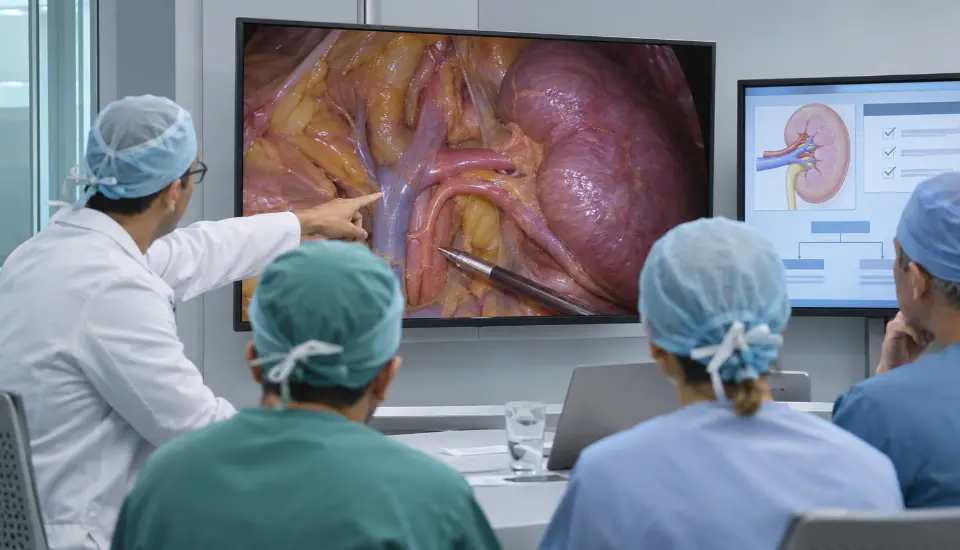
At 14:00, the teaching shifts towards difficult operative situations.
The program includes hilar and vascular complications, intraoperative bleeding, urinary leakage and other technical problems, all discussed through surgical recordings.
These cases can raise questions that rarely have a simple answer.
A vascular problem during hilar dissection, for instance, may require the surgeon to reassess the exposure and the available options. Urinary leakage following renal excision or reconstruction presents a different set of considerations. The operative circumstances influence what needs to be done.
Reviewing recorded cases makes it possible to examine the progression of a problem rather than looking only at the final result.
The next session, beginning at 15:15, continues with step-by-step video analysis and discussion of surgical strategy, technical approaches and complication management.
There is time for participants to question the faculty about particular decisions and techniques.
For urologists who already perform laparoscopic procedures, these discussions may be especially engaging. Much of surgical experience develops through dealing with situations that do not resemble the ideal operative recording. Seeing how another surgeon approaches a difficult moment can provide material for thought long after the course has ended.
Saturday concludes at 16:30, following the final discussion.
Sunday in the Wet Lab: Starting With Exposure
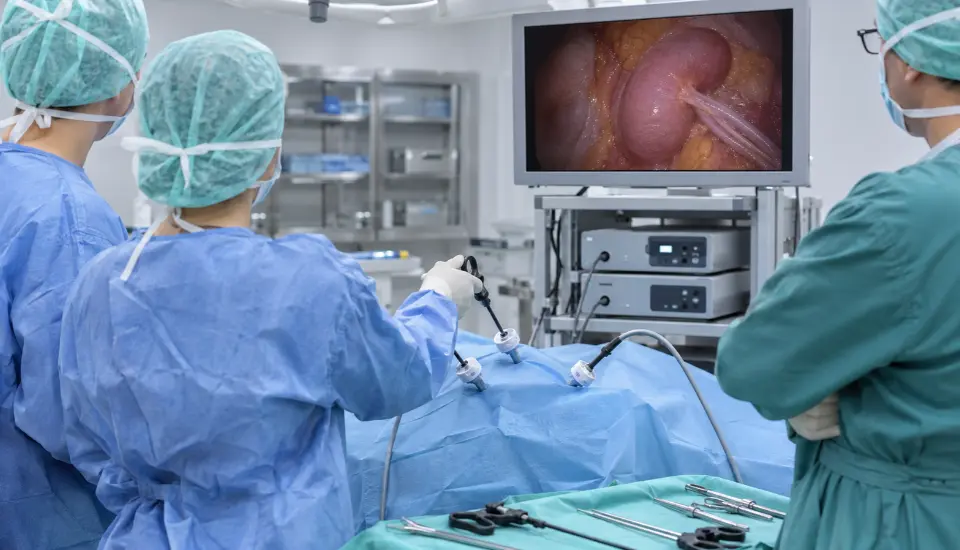
The first practical exercises take place on Sunday morning.
Before participants begin operating with the instruments, the faculty review porcine renal anatomy and the surrounding structures relevant to the day’s work. The orientation starts at 08:30 and is followed by a demonstration of laparoscopic access, Veress entry, trocar placement and preparation of the working area.
The hands-on session begins at 10:00.
The first exercises concern laparoscopic entry and exploration. Participants then proceed to colon mobilization, renal exposure and dissection.
Colon mobilization may attract less attention than the nephrectomy techniques listed later in the schedule, but it has an important place in the operative approach. The kidney must be adequately exposed before dissection around the hilum can proceed.
This is also where differences in instrument handling become apparent.
A surgeon may know exactly which anatomical structures need to be identified yet still have to work to obtain a suitable view. The camera position, direction of dissection and way tissue is held influence how comfortably the next step can be performed.
Once renal exposure has been established, the exercises continue with identification and control of the hilar structures.
Tumor demarcation and excision are also included in the morning program.
These tasks bring together several of the techniques discussed on Saturday. Participants work through selected parts of the renal approach while the faculty supervise the exercises.
The latter part of the morning changes emphasis.
Intracorporeal knot tying, renorrhaphy and pyeloplasty or ureteroureterostomy are scheduled before the lunch break.
Here, the work moves from exposure and dissection towards reconstructive suturing. The instruments are used differently, and precision becomes particularly important.
There may be an awkward needle position or a suture that requires the instruments to approach the tissue from an unfamiliar angle. These are the kinds of technical problems that benefit from practice and correction during the exercise.
The morning session ends at noon.
Partial Nephrectomy and Advanced Suturing After Lunch
The afternoon wet lab runs from 13:00 to 15:30.
Advanced renal dissection and hilar control return to the schedule, followed by partial nephrectomy techniques and radical nephrectomy.
There is further reconstructive work as well. Renorrhaphy, double-layer suturing and exercises involving pyeloplasty or ureteroureterostomy are included in this second session.
The return to suturing is particularly relevant because the first attempt at a laparoscopic technique rarely reveals every difficulty.
A movement may be comfortable when the tissue is positioned favourably and much more demanding when the direction of approach changes. With reconstructive suturing, small differences in instrument position can have a noticeable effect.
Practising these techniques in the wet lab allows participants to examine such details while working with laparoscopic instruments.
Partial nephrectomy is also an important part of the afternoon. Selected techniques associated with renal dissection, hilar control, excision and reconstruction are brought together within the practical program.
The faculty supervise the training and address technical problems encountered during the exercises.
The hands-on work finishes at 15:30, followed by a surgical evaluation. The faculty review the techniques performed and discuss the principal challenges and learning points.
Participant feedback and the closing ceremony take place between 16:00 and 16:30.
Physicians receive a Certificate of Participation acknowledging their participation in the course.
What Does the Wet Lab Arrangement Mean for Participants?
The course specifies one porcine model per three physicians.
Two practical sessions are scheduled: the first from 10:00 until noon and the second from 13:00 to 15:30. Together, they provide four and a half hours of hands-on training.
The number of procedures listed for those sessions is considerable.
Laparoscopic access, renal exposure, hilar dissection, vascular control, tumor excision, nephrectomy techniques and reconstruction must all be accommodated within the practical day.
The published timetable does not assign a fixed number of repetitions of each technique to individual physicians. It describes the planned exercises and the arrangement of the training stations.
Participants should therefore understand the wet lab as supervised practice of selected surgical steps rather than assume that each physician will independently perform every listed operation in its entirety.
For a surgeon choosing a course, the practical arrangement deserves as much attention as the procedure names.
Someone particularly interested in hilar dissection may place greater emphasis on the renal exposure and vascular control exercises. Another participant may be more concerned with renorrhaphy, intracorporeal knot tying or upper urinary tract reconstruction.
The curriculum includes these different areas, although the time available for practical training is shared across the scheduled exercises.
Which Urologists Might Find This Course Relevant?
The December program is most closely suited to physicians interested in laparoscopic renal and upper urinary tract surgery.
A practising urologist may be looking for further training in a particular procedure, such as partial nephrectomy, or in a specific technique, such as hilar control or renorrhaphy.
Others may be more interested in reconstructive laparoscopy, especially pyeloplasty, ureteroureterostomy and advanced suturing.
The course may also be relevant to residents and fellows who already have some experience with laparoscopic instruments and want further exposure to renal surgery.
Although the first day begins with fundamental principles, the practical curriculum includes advanced dissection and reconstruction. A background in laparoscopy would therefore be helpful.
Formal admission requirements have not been specified in the published program, so prospective participants should confirm whether the technical level is appropriate for their experience.
The course covers a number of procedures, but individual participants may have quite different reasons for attending. A surgeon who has already performed several laparoscopic nephrectomies may be interested mainly in reconstructive techniques. Someone developing a renal surgery practice may want further familiarity with dissection and vascular control.
The detailed agenda allows physicians to assess which parts of the training are most relevant to their clinical interests.
Advanced Laparoscopic Urology Training in Istanbul, December 2026
The Advanced Laparoscopic Urology Course on 5–6 December 2026 brings together renal surgery, reconstruction and complication management over two days.
Saturday concentrates on anatomy, operative techniques and recorded surgical cases. Sunday moves into a porcine wet lab, where physicians practise selected laparoscopic procedures under faculty supervision.
Radical and partial nephrectomy form the main surgical subjects, with renorrhaphy, pyeloplasty, ureteroureterostomy and advanced suturing adding a substantial reconstructive component.
For urologists considering further hands-on training, the program provides a detailed picture of the techniques covered, the time allocated to practical work and the arrangement of the wet lab.
Further articles about surgical education and upcoming medical training programs in Türkiye are available in the MedClinics Medical News & Blog section.
Frequently Asked Questions
When and where will the course take place?
The Advanced Laparoscopic Urology Course will be held in Istanbul, Türkiye, on 5–6 December 2026.
Is hands-on surgical training included?
Yes. The second day consists of supervised practical exercises in a porcine wet lab, with three physicians sharing each model.
Is partial nephrectomy included in the wet lab?
Partial nephrectomy techniques are included in the afternoon practical session, together with advanced renal dissection, hilar control and reconstructive suturing.
Does the course cover pyeloplasty and ureteroureterostomy?
Yes. Both procedures are included in Saturday’s theoretical teaching. Practical exercises involving pyeloplasty or ureteroureterostomy are also scheduled for Sunday.
What certificate will participants receive?
Participants receive a Certificate of Participation confirming their participation in the educational program.