Clinical insights by Op. Dr. Melihcan Sezgiç
How Exosomes for Skin Rejuvenation Are Approached in Clinical Practice
When patients ask me about exosomes, they usually do not begin with the biology.
They begin much more simply.
“My skin looks tired.”
“It feels thinner than before.”
“I don’t look unwell. I just don’t look fresh.”
That is usually the real beginning of the conversation.
Because most patients are not looking for a technical explanation. They are trying to understand whether this word they keep hearing actually means something useful for their skin, or not.
That is where it helps to slow the whole thing down.
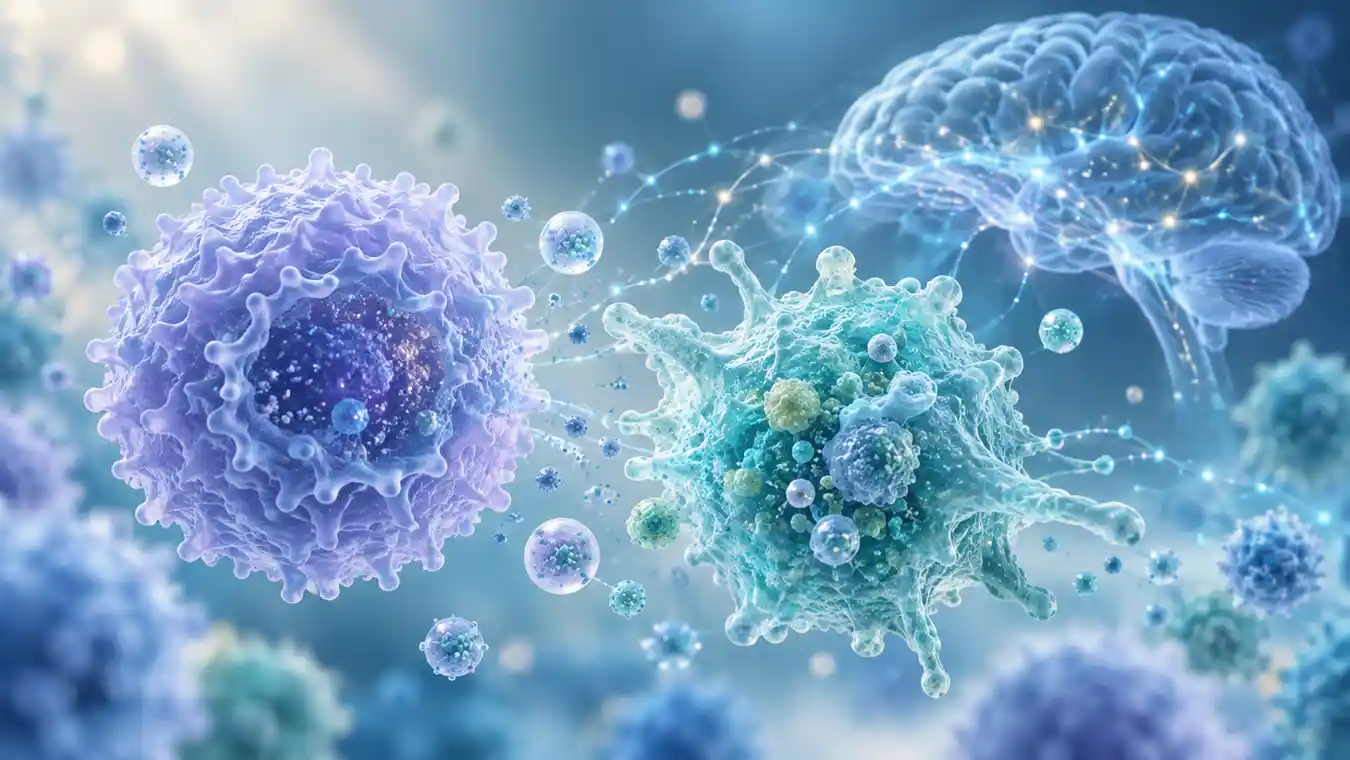
Exosomes are not imaginary. They are real biological particles, and they are being studied seriously. But that does not mean every treatment advertised under that name is already clear, settled, and proven. Exosomes are small vesicles involved in cellular communication, repair, inflammation, and tissue response.
So I would not start with, “Are exosomes the future?”
I would start somewhere quieter.
When do they actually make sense?
And what are we really trying to improve?
That is the more useful discussion.
Table of Contents
What Exosomes Actually Are
Exosomes are tiny vesicles released by cells.
That is the scientific description, but it sounds more complicated than it needs to.
They are not whole cells.
They are not fillers.
They are not little pieces of tissue.
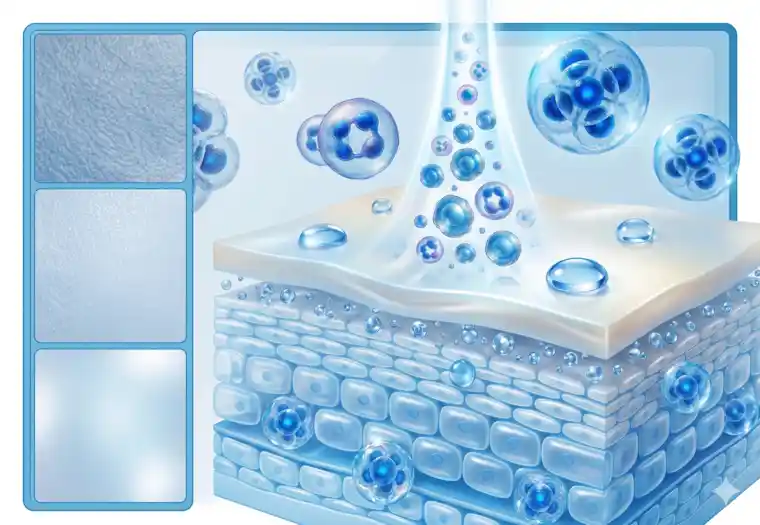
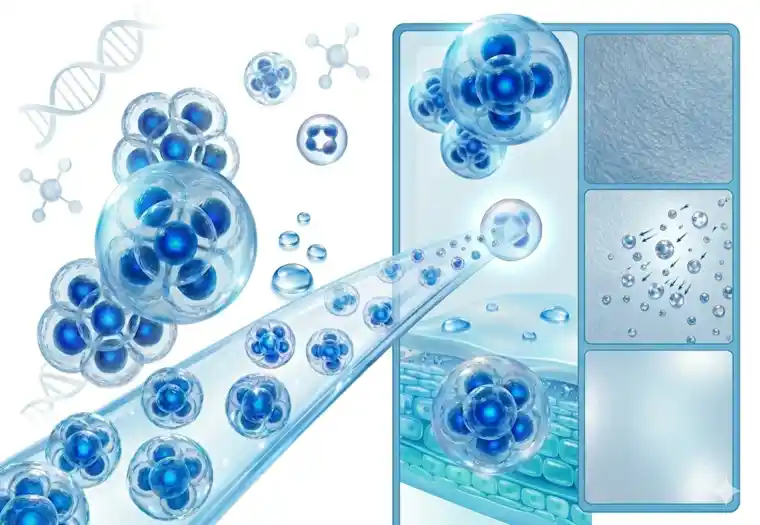
They are more like very small biological messengers. They can carry proteins, lipids, and other signaling material involved in how cells communicate with each other. In skin medicine, that matters because the interest is not really about “replacing” the skin. It is more about whether these signals can influence healing, inflammation, collagen-related processes, and overall skin behavior.
That is why they are often described as a cell-free regenerative treatment.
And that phrase is useful, but also a little dangerous.
Because once patients hear “cell-free,” they often assume that means simple, standardized, or automatically safer.
It does not.
Why Exosomes Are Being Discussed in Skin Rejuvenation
Skin aging is not just about lines.
That is one of the things patients often realize only later. A wrinkle may be what they notice first, but the deeper complaint is often different. The skin seems duller. Less even. Less elastic. Less alive.
That is exactly why exosomes for skin rejuvenation have attracted so much attention.
The reason is not that they sound futuristic. The reason is that they are being explored in relation to how skin heals, how inflammation is regulated, how pigmentation behaves, how collagen-related pathways are influenced, and how tissue responds after injury or treatment.
So the attraction is understandable.
Patients are not always asking for dramatic change. Sometimes they are asking for stronger skin. Better texture. Better recovery. A fresher look that still feels natural.
That is where we start talking about exosomes.
Do Exosomes for Skin Rejuvenation Really Work?
Possibly, in selected patients.
That is still the most honest answer.
There are patients with whom we achieve very good results, whether in terms of skin improvement or increased skin elasticity; with others, however, the success is not so clearly visible. Every body is different and every person reacts differently. There is no guarantee of success, but depending on expectations, we have often observed very good improvements.
That matters. Because sometimes it is talked about exosomes as if the debate is over.
It is not over.
When exosomes help, the changes are usually not dramatic in the way advertisements suggest. What patients may notice is often much more modest than that. The skin may look a bit fresher. More even. Better hydrated. Recovery after another procedure may feel smoother. Texture may improve.
That kind of result is believable.
“Ten years younger after one session” is not.
Who May Be a Good Candidate for Exosome Skin Rejuvenation?
Usually, the better candidates are the patients asking for improvement, not reinvention.
That may be someone who feels the skin has become duller or less resilient. Someone noticing early changes in texture. Someone recovering from more invasive skin procedures. Someone who is not mainly asking for volume, lifting, or reshaping, but for better skin quality.
That is often where this kind of treatment discussion makes sense.
The goal here is usually not to change the whole face.
It is to support the quality of the skin itself.
Who May Not Be a Good Candidate?
This matters just as much.
A poor candidate may be someone expecting a dramatic anti-aging transformation, someone with active skin infection, uncontrolled medical issues and unrealistic timing expectations.
I am also careful when the explanation is vague.
A serious clinic should make the treatment clearer.
Not more mysterious.
How Exosome Treatment for Skin Rejuvenation Is Usually Performed
This is one of the reasons the subject deserves its own article.
Because “exosome treatment” can mean different things in practice.
Recent reviews describe exosomes being used in several ways in skin-related protocols. Sometimes they are applied after microneedling. Sometimes after laser. Sometimes they are discussed in injection-based settings. In the skin literature, topical or transdermal use after creating pathways in the skin is especially common.
That means patients should not ask only, “Are exosomes included?”
That is too broad.
The better question is: How are they being used, and why in this form?
Because the route of delivery changes the whole logic of the treatment.
A microneedling-based protocol is one conversation.
A laser-assisted protocol is another.
An injectable discussion is another again.
The name alone does not tell the patient enough.
Are Exosomes the Same as Stem Cells?
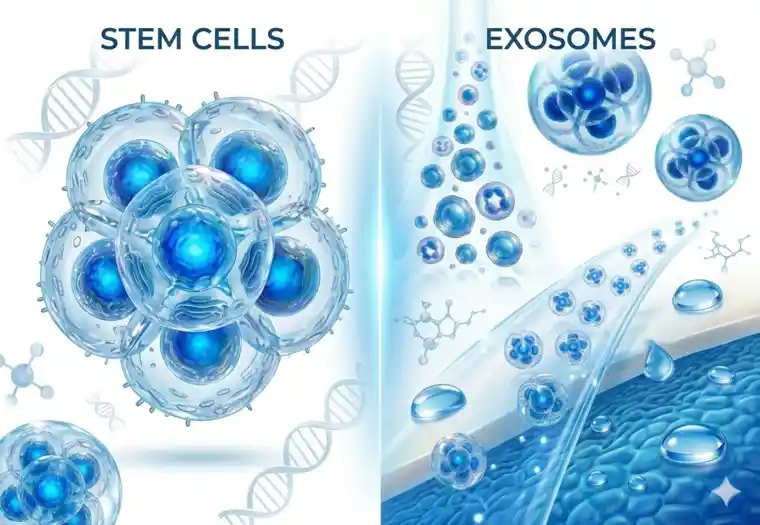
No.
Stem cells are living cells. Exosomes are vesicles released by cells. They are often discussed as a cell-free regenerative option because they may carry some of the signaling features that make regenerative medicine interesting, without being living-cell therapy themselves.
That sounds simple enough, but in practice it gets messy fast.
Because once the phrase “stem cell exosomes” appears, many patients assume the treatment must already be more advanced, more proven, or more official than it really is.
That is exactly where caution is needed.
Can Exosomes Be Combined With Other Skin Treatments?
Yes. In fact, often they are used in combination with other treatments rather than in isolation.
They are used together with microneedling, laser procedures, and other skin-directed therapies, often with the idea that they may support repair or improve post-procedure skin response.
That does not mean every combination is a good one.
A long treatment menu is not the same as a good treatment plan.
What Results Can Patients Realistically Expect?
This is where the conversation has to stay calm.
Patients may notice:
- fresher-looking skin,
- better hydration,
- improved texture,
- more even tone,
- softer early signs of aging,
- and in some protocols, smoother recovery after procedures.
What patients should not expect:
- guaranteed dramatic lifting,
- one universal “exosome treatment,”
- or proof that the field is already fully standardized.
That is not pessimism.
It is simply cleaner medicine.
Often the result patients appreciate most is not dramatic at all. They say the skin looks calmer. Fresher. Better rested. Less tired.
That is usually a more honest outcome measure than anything overly promotional.
Safety, Ethics, and Regulatory Reality
This part should never be brushed aside.
Patients should know:
- what product is being used,
- where it comes from,
- how it is characterized,
- what evidence exists for that method,
- and whether the treatment is being presented as approved, investigational, or simply marketed loosely.
“Regenerative” is not the same as “automatically safe.”
And “new” is not the same as “ready.”
What a Proper Consultation Should Cover
A serious consultation should explain, clearly:
- what exosomes are in this treatment context,
- why they are being recommended,
- how they will be delivered,
- what problem in the skin they are supposed to address,
- what alternatives exist,
- what can realistically be expected,
- and what is still uncertain.
If those things are not explained, the patient is being asked to trust a label rather than understand a method.
That is never a good basis for treatment.
Frequently Asked Questions About Exosomes for Skin Rejuvenation

Are Exosomes the Same as Stem Cells?
No, not really. Stem cells are actual living cells. Exosomes are much smaller particles released by cells. So they are connected, yes, but they are not the same treatment. The easier way to think about it is this: stem cells are the cells themselves. Exosomes are more like the signals they send out.
Can Exosomes Improve Skin Quality?
They may, yes. But I would keep that sentence modest. I would not say more than the science can really hold. In some patients, the skin may look fresher, more hydrated, a little more even, or recover better after another treatment. That is the level where the discussion usually becomes realistic. If someone is promising a dramatic anti-aging change from exosomes alone, I would be careful.
Are All Exosome Products the Same?
No. One of the biggest problems in the field is lack of standardization in source, preparation, characterization, and delivery.
Are Exosomes Usually Used Alone?
Not always. Often they are combined with other treatment methods like laser or microneedling to get a better effect.
Will Exosomes Make Me Look Much Younger?
Usually not in a dramatic way. A more realistic expectation is improvement in skin quality, freshness, and recovery-related aspects rather than complete transformation.
Final Thoughts
Exosomes for skin rejuvenation are worth discussing because the topic is real.
It is not imaginary.
It is not only hype.
But it is also not finished.
That is the balance patients deserve.
The science is promising.
The interest is understandable.
The literature is growing.
But the field is still uneven, and the regulatory picture still demands caution.
So if a patient asks me whether exosomes are worth exploring for skin rejuvenation, my answer would be this:
Possibly, yes.
But only in a serious medical setting.
Only with a clear explanation of what is being used.
And only with realistic expectations.
That is usually where good decisions begin.
When a Skin Check Makes Sense
It is not always easy to know what your skin actually needs. Maybe it looks tired. Maybe the texture feels different. Or maybe exosomes are not the right treatment at all.
That is why a skin check can be useful before choosing anything. The doctor can look at the skin properly, talk through what is realistic, and tell you which option makes sense instead of guessing from photos or trends.