MedClinics News & Blog
Stem cell therapy for Charcot-Marie-Tooth disease is no longer confined to animal experiments. In July 2026, researchers reported the first human experience with CLZ-2002, an experimental cell product given to nine adults with CMT type 1.
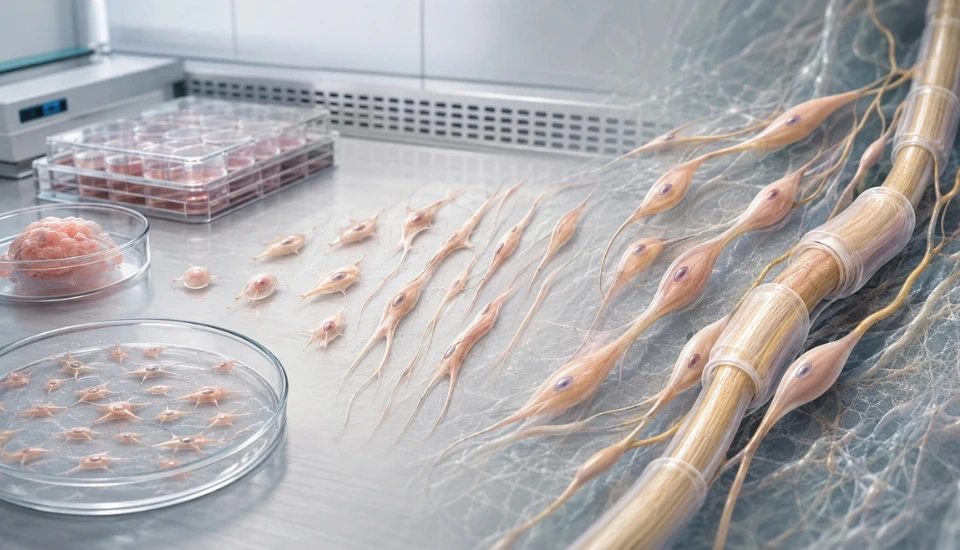
Nothing about this treatment is generic. It begins with mesenchymal stem cells from donated tonsil tissue. The cells are grown in the laboratory and guided into a form that resembles Schwann cells, the cells responsible for protecting peripheral nerves and building their myelin covering.
The trial was small and focused on safety. Over 24 weeks, no serious adverse events or reactions linked to CLZ-2002 were reported. Some clinical scores improved as well, which has given the research team a good reason to move ahead with a larger study.
Table of Contents
CMT Is a Nerve Disease, Despite Its Name
If the name Charcot-Marie-Tooth sounds like a dental condition, you are not alone. The disease is named after the three physicians who first described it: Jean-Martin Charcot, Pierre Marie and Howard Henry Tooth.
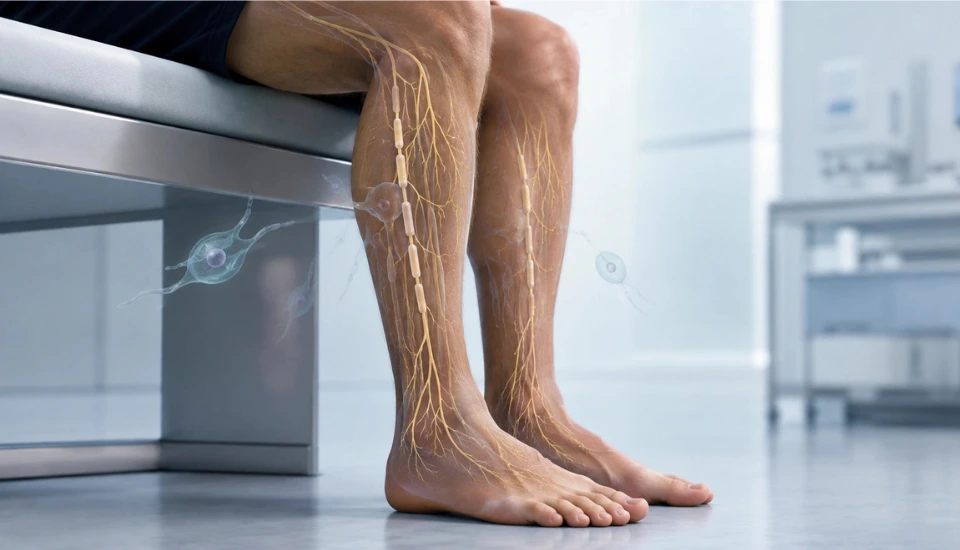
CMT is an inherited disease of the peripheral nerves. These are the nerves running from the brain and spinal cord into the arms and legs, carrying messages for movement, touch, pain and balance.
The first clue can be quite ordinary. Someone begins catching the front of a shoe on the floor, finds stairs more tiring or notices that the ankles feel less steady. Weakness usually starts in the feet and lower legs. Sensation may fade, the muscles become thinner and the shape of the feet can change. Hands may be affected later.
In CMT1, the problem involves myelin. Myelin wraps around peripheral nerves much like insulation around an electrical cable. It allows signals to travel quickly. When the myelin becomes unstable, those signals slow down and the muscles receive less reliable instructions.
There are different genetic forms of CMT1. The new study included five people with CMT1A, usually associated with the PMP22 gene, and four with CMT1B, linked to the MPZ gene. Seven had moderate disease and two had severe disease. Everyone was still able to walk without assistance when the trial began.
For now, treatment is practical and supportive. Physiotherapy helps maintain movement. Braces can make walking safer. Occupational therapy, pain treatment and orthopedic surgery may be useful at different stages. None of these options rebuilds myelin, and no approved medicine reliably stops CMT1 from progressing.
Research into stem cell therapy for Charcot-Marie-Tooth disease is beginning to address this gap, and CLZ-2002 is one of the first approaches to reach a human trial.
Why Schwann Cells Became the Target
Schwann cells are essential to peripheral nerves. They form myelin, help nourish nerve fibers and take part in the repair process after an injury. Since CMT1 disrupts this system, researchers have long been interested in ways of restoring Schwann cell support.
The obvious source would be a patient’s own nerves, but obtaining Schwann cells that way is invasive and produces only a limited supply. CLZ-2002 starts somewhere less expected: human tonsil tissue.
Donated tonsils contain mesenchymal stem cells that can be isolated and expanded. Under carefully controlled culture conditions, these mesenchymal stem cells can be developed into Schwann-like cells. By the time the final product is ready, the cells show several features associated with myelination, nerve growth and neuroprotection.
They are not embryonic cells. They are adult, donor-derived cells, and the product is allogeneic. In other words, it can be manufactured in advance rather than made separately from each patient.
The idea had already been tested in the laboratory and in mice. In a CMT1A mouse model, related Schwann-like cells were associated with better movement and improvements in peripheral nerve and muscle structure. The cells appeared to encourage myelination and release proteins that support local repair.
Moving from mice to people is a large step. Phase 1 began with a deliberately small group.
How the Treatment Was Given
The trial took place at Samsung Medical Center in South Korea. Recruitment ran from July 2023 until January 2024, with the final follow-up completed in July 2024. The paper was published two years later, on 28 July 2026, in Stem Cells Translational Medicine.
Nine adults took part. Their average age was approximately 37, and most had lived with CMT for close to ten years.
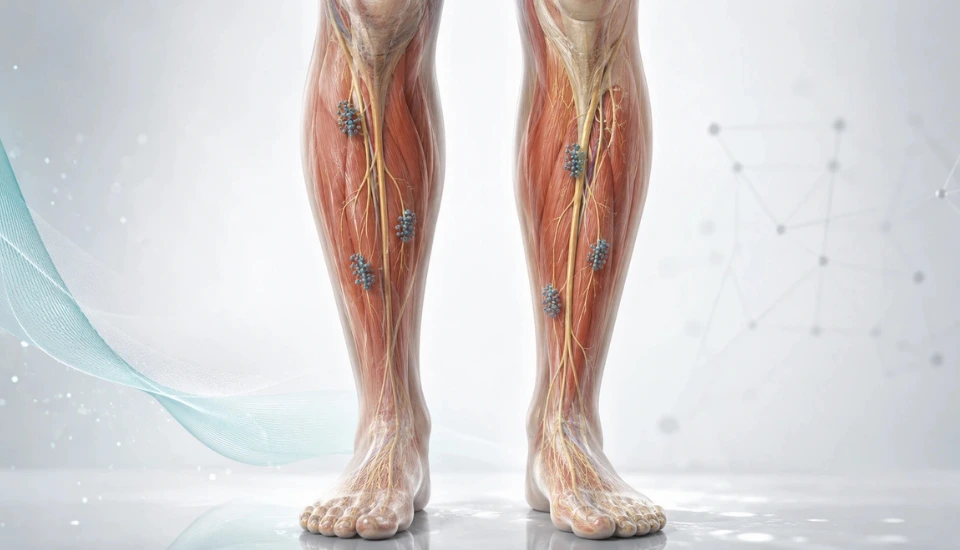
Three doses were studied. The first three participants received 6 million cells. The next three received 12 million, and the final group received 24 million. Treatment took place once. The cells were divided among 12 injections into muscles in both lower legs.
Why the lower legs? That is where weakness often appears early in CMT, and preclinical work suggested that the cells would largely remain close to the injection sites. Researchers hoped these Schwann-like cells might support nearby nerves through their local activity and the proteins they release.
Participants returned for assessments over the following 24 weeks. The team checked blood results, vital signs, physical examinations and electrocardiograms. They also repeated neurological examinations and measured disability, walking speed, nerve conduction and changes on muscle MRI. Blood samples were collected for experimental biomarkers.
There was no placebo group. Everyone knew that CLZ-2002 had been given, including the patients and the clinicians assessing them.
What Changed After 24 Weeks?

The first question was safety, and the answer was reassuring.
No one experienced a serious adverse event, an adverse drug reaction or a dose-limiting toxicity. Four people reported five mild or moderate medical events. Two were cases of temporary pain at an injection site. The others were osteoarthritis, rotator cuff syndrome and vulvovaginal itching. Investigators did not link any of them to CLZ-2002 as an adverse drug reaction.
The highest dose was tolerated as well as the lower doses during the six-month follow-up. Of course, nine patients cannot reveal a rare complication. That becomes possible only when larger numbers of people are followed for much longer. Still, nothing in the safety record forced the study to stop.
Then came the more interesting number: 5.44.
That was the average improvement in the Charcot-Marie-Tooth Neuropathy Score, or CMTNS, across all nine participants. CMTNS combines symptoms, findings from a neurological examination and selected nerve-test results. Lower is better. At Week 24, the average score was 5.44 points below where it had started.
Measures of lower-leg limitation and functional disability also improved in several patients. Since CMT generally moves in the direction of slow decline, a change toward better function is notable, even over a short period.
There was an odd detail in the results. The 6-million-cell group improved more than the groups receiving 12 million or 24 million cells. This does not establish that a lower dose works better. With three people in each group, one unusually strong response can shift the average quite dramatically.
Not every assessment changed. Participants completed a 10-meter walking test, but their speed remained similar. Muscle MRI showed no measurable reduction in fat infiltration. Nerve-conduction studies were also broadly stable.
That leaves the biological effect unresolved. Six months may be too short to see structural change in a disease that develops over years. At the same time, the trial did not provide objective evidence of new myelin or repaired nerve conduction.
Two blood markers, NCAM1 and GDF15, fell early after treatment and then moved back toward their original levels. These markers are still experimental. Researchers do not yet know whether they reflect a meaningful response in CMT.
What This Means for Stem Cell Therapy for Charcot-Marie-Tooth Disease
The simplest reading of this trial is also the fairest. CLZ-2002 was given to nine adults at three dose levels without producing a serious treatment-related safety signal. That is a positive Phase 1 result.
The improvement in CMTNS is more intriguing. It is also less certain.
There was no untreated group for comparison, and the study was open-label. CMTNS includes symptoms and parts of the neurological examination that depend on clinical judgement and patient effort. When people know they have received an experimental treatment, expectations can influence some of these measurements without anyone intending it.
The tiny groups create another problem. Three participants per dose cannot show a dependable dose-response relationship, and they cannot tell us whether CMT1A and CMT1B behave differently after treatment.
The research was funded by Cellatoz Therapeutics, the company that owns the CLZ-2002 patent. Some of the authors worked for the company. Others reported patent-related interests in the method used to turn tonsil-derived mesenchymal stem cells into Schwann-like cells. The paper discloses these relationships clearly. Independent confirmation will be valuable as the program develops.
The investigators are planning a Phase 2 trial. That study will need more participants, a control group and longer follow-up. It should also settle on a dose before asking whether CLZ-2002 can preserve function or slow the disease.
The clinical score gives Phase 2 something concrete to chase. Researchers can now look for the same change in a controlled setting and check whether it is accompanied by better walking, stronger nerve conduction or visible changes on MRI. Durability will matter too. A benefit seen at six months becomes far more meaningful if it remains at one year or beyond.
For now, stem cell therapy for Charcot-Marie-Tooth disease remains at an early clinical stage. CLZ-2002 has made it through the first human test without a serious treatment-related safety signal, and the improvement in neuropathy scores adds genuine interest. It is early, but it is progress.
Frequently Asked Questions
Is CLZ-2002 a conventional MSC treatment?
No. Mesenchymal stem cells from donated tonsil tissue are the starting material. The laboratory then develops them into Schwann-like cells before they are given to patients.
Why use cells from tonsil tissue?
Tonsil tissue contains adult mesenchymal stem cells that can be expanded and guided toward a Schwann-like state. This creates a renewable source of cells with features relevant to peripheral nerve support.
Were embryonic stem cells involved?
No. CLZ-2002 is manufactured from adult mesenchymal stem cells obtained from donated tonsil tissue.
Did the treatment repair the participants’ nerves?
The trial recorded improvement in neuropathy and disability scores. MRI and nerve-conduction studies did not show measurable repair or remyelination during the 24-week follow-up.
Was CLZ-2002 safe?
No serious adverse events, adverse drug reactions or dose-limiting toxicities were reported in this nine-person trial. Larger studies are needed to build a fuller safety record.
Can people with CMT receive CLZ-2002 now?
CLZ-2002 remains experimental. It is not approved for routine treatment and would only be available through authorized clinical research.
Sources
- A Phase 1 Clinical Trial to Evaluate the Safety and Tolerability of CLZ-2002 for the Treatment of Patients With Charcot-Marie-Tooth Disease Type 1 – Stem Cells Translational Medicine
- A Phase 1 Clinical Trial to Evaluate the Safety and Tolerability of CLZ-2002 for the Treatment of Patients With Charcot-Marie-Tooth Disease Type 1 – PubMed
- The Safety and Tolerability of CLZ-2002 in Patients With Charcot-Marie-Tooth Disease – ClinicalTrials.gov
- Preclinical Efficacy of Peripheral Nerve Regeneration by Schwann Cell-Like Cells Differentiated From Human Tonsil-Derived Mesenchymal Stem Cells in C22 Mice – PubMed
- Charcot-Marie-Tooth Disease – National Institute of Neurological Disorders and Stroke
This article is for informational purposes and does not replace medical advice, diagnosis or treatment.