MedClinics News & Blog
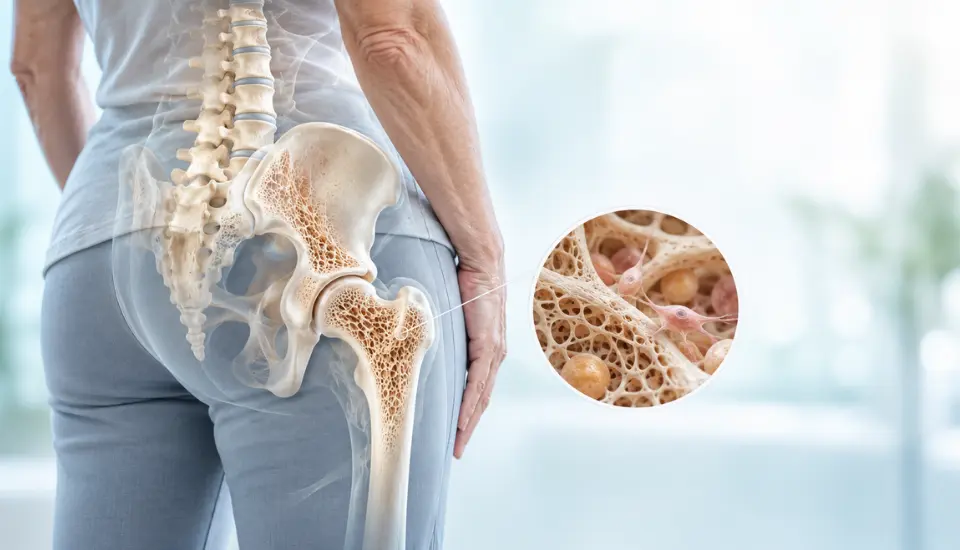
For people living with advanced osteoporosis, the greatest concern is often not the diagnosis itself, but the next fracture. A broken vertebra, wrist or hip can bring lasting pain, reduced mobility and a difficult loss of independence. Although current medicines lower fracture risk for many patients, some continue to break bones despite treatment.
A recent human study of MSC therapy for osteoporosis examined a different approach: preparing a patient’s own mesenchymal stromal cells so that they could interact more readily with blood vessels in bone marrow.
The study was led by researchers from the Instituto Murciano de Investigación Biosanitaria, Virgen de la Arrixaca University Hospital and the University of Murcia in Spain. The wider research group also included collaborators from the University of Málaga, the Instituto de Biomecánica de Valencia and the Miami Veterans Affairs Medical Center. Their findings were published in Cell on 11 September 2026.
Ten women with advanced osteoporosis and recurrent fragility fractures received a single intravenous infusion of MSCs collected from their own bone marrow. Before infusion, the cells were given a surface modification intended to improve their ability to reach bone.
The women were then followed for approximately six years. No serious adverse events were attributed to the infusion, and the researchers recorded a substantial reduction in fractures during the first two years after treatment. Because this was a small Phase I study without a comparison group, the findings cannot yet establish how effective the treatment is. They do provide an encouraging clinical reason to investigate the approach in a larger study.
Table of Contents
The Patients Had Already Been Fracturing
Osteoporosis is often discovered after a bone breaks. By then, the loss of bone strength may have been developing quietly for years.
A fragility fracture happens after an injury that would not normally break healthy bone—falling from standing height, for example. Vertebral fractures can sometimes occur with even less force. Once a person has sustained one such fracture, the likelihood of another rises.
This changes daily life in ways that a bone-density score cannot fully describe. Back pain may become persistent. Walking feels less secure. A person who has fractured a hip or vertebra may avoid activity because another fall feels too risky. That understandable caution can lead to muscle loss and poorer balance, creating another problem on top of the osteoporosis.
Modern treatment can substantially reduce fracture risk. Depending on the situation, physicians may prescribe drugs that slow bone loss or medicines that stimulate new bone formation. Exercise, adequate protein, calcium and vitamin D, and attention to fall risk also form part of care.
Yet some patients continue to fracture. These difficult cases are one reason MSC therapy for osteoporosis is being investigated as a possible addition to existing care
The women enrolled in this study were between 51 and 72 years old. All had advanced osteoporosis and recurrent low-trauma fractures despite previous treatment. This was therefore a small and highly selected group, rather than a cross-section of everyone diagnosed with osteoporosis.
Their medical histories made them suitable for an early investigation of a new approach: using the patient’s own mesenchymal stromal cells and modifying the outside of those cells before infusion.
Preparing the Cells to Recognise Bone Marrow
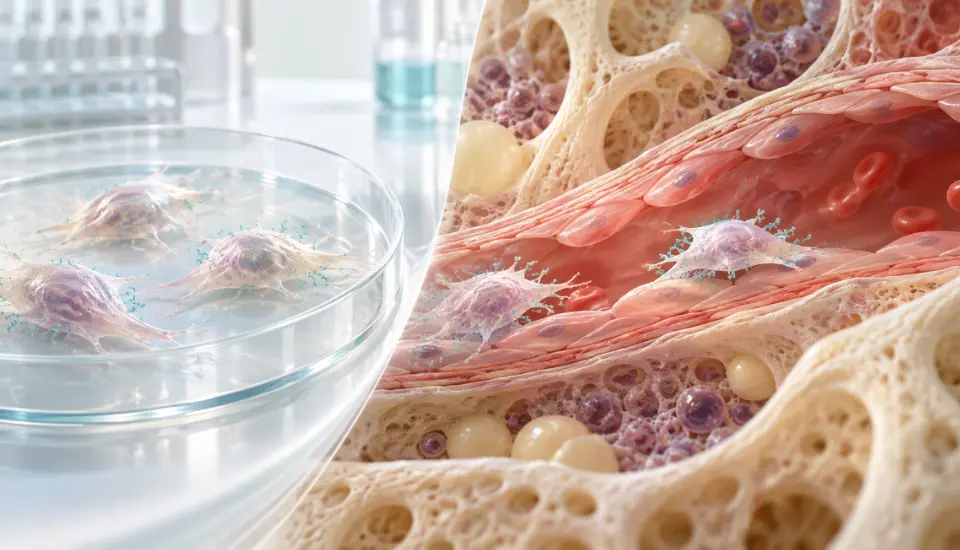
Mesenchymal stromal cells-still widely called mesenchymal stem cells or MSCs-can be collected from bone marrow and expanded in a laboratory. They are closely associated with the environment that supports bone formation and bone-marrow function.
This has made them a natural subject of osteoporosis research. Delivering them effectively has proved more difficult.
An intravenous infusion sends cells into the circulation, but circulation alone does not bring them reliably to bone. Many infused MSCs become caught in the lungs or distributed elsewhere. Laboratory expansion may also reduce some of the surface molecules that cells use to attach to blood vessels.
The researchers addressed this problem before giving the cells back to the patients.
Bone-marrow blood vessels carry a molecule called E-selectin. Certain blood cells use it as part of the process of slowing down, attaching to the vessel wall and entering the marrow. The team added a sugar called fucose to the surface of the laboratory-expanded MSCs. This created an E-selectin-binding form of a surface molecule known as HCELL.
In practical terms, the procedure was intended to give the MSCs a better opportunity to interact with bone-marrow vessels. The paper describes this as enhanced osteotropism, or an increased tendency to travel towards bone.
The cells’ DNA was left unchanged. This was surface engineering, carried out through a process known as exofucosylation. The name sounds close to gene editing, although the two procedures are quite different.
These fucosylated MSCs are sometimes described as bone-targeted stem cells. “Targeted” refers to how they were prepared and where researchers hoped they would go. The study did not include direct tracking inside the participants, so their final location was not visually confirmed.
How MSC Therapy for Osteoporosis Was Tested

About one month before treatment, bone marrow was collected from each participant. The MSCs were isolated, expanded under controlled conditions and prepared with the surface modification.
Four women received a dose of two million cells per kilogram of body weight. The remaining six received five million cells per kilogram. Every participant had one intravenous infusion; there was no repeated dosing course.
The immediate clinical period was uneventful. No infusion reactions were recorded, and the women left the hospital in their usual state of health after 24 hours.
For two years, the research team followed fractures, bone-turnover markers, bone density and several measures of bone structure. Safety and fracture monitoring then continued for more than three additional years. The often-quoted “six-year follow-up” refers to this combined observation period. The full set of laboratory and imaging assessments was concentrated in the earlier part of the study.
No placebo or untreated comparison group was included. Everyone received the modified cells, and both the participants and the clinical team knew that the infusion had been given.
That design is normal for a small Phase I investigation focused on feasibility and initial safety. It places a clear limit on conclusions about effectiveness.
A Very Different Fracture Record
The ten women had sustained multiple fragility fractures during the two years before entering the study. During the two years after infusion, their combined fracture rate was reported to have fallen by 94%.
For MSC therapy for osteoporosis, the occurrence of new fractures is one of the most clinically meaningful outcomes to follow.
The calculation used each participant’s earlier history as the reference. It did not compare the women with a second group receiving the same medical care without MSCs.
This is an important detail behind the headline figure. The women entered the trial after a particularly severe period of disease. Fracture rates can fluctuate, and an unusually difficult period is not always followed by an equally difficult one. Changes in medication, mobility, exercise, general health or fall exposure may also alter the number of fractures a person experiences.
The study’s other measurements are therefore useful.
After treatment, the investigators observed increases in blood markers associated with bone formation. They also reported improvements in bone tissue area and volumetric bone mineral density. The timing and size of the changes were not identical for every participant, but the overall pattern supported greater bone-building activity.
These measurements examine different parts of the same clinical picture. Bone-turnover markers can change fairly quickly. Bone density develops more slowly. Fractures are the outcome patients feel most directly, although they are also influenced by falls and physical activity.
When several measurements move in the same direction, the result becomes more interesting. In this case, the laboratory findings, bone measurements and fracture record all gave the researchers a reason to continue.
Whether the cells caused those changes remains open.
Conventional Osteoporosis Care Continued
The participants did not spend the follow-up period without standard treatment. Their medical histories included osteoporosis medicines such as bisphosphonates, denosumab and teriparatide, used at different times. Calcium and vitamin D were also part of care.
This reflects what happens outside research. A patient with severe osteoporosis and repeated fractures would not normally be left untreated for years simply to make an experimental study easier to interpret.
It also means the contribution of the cell infusion cannot be separated neatly from the rest of their care. One woman may have changed medication. Another may have been more active after recovering from a fracture. Fall risk can change with age, vision, balance and home circumstances. In a group of ten, individual events have a large effect on the final percentage.
A controlled study could handle these influences more carefully by using comparable treatment plans and following a larger number of patients over the same period.
There is another unanswered question: how much did the surface modification contribute?
An unmodified-MSC comparison group could show whether fucosylation improves the clinical performance of the cells. Direct cell tracking could also establish whether the engineered surface actually led to greater bone-marrow entry in people, as intended.
Without that information, the study provides clinical support for the concept rather than proof of the proposed route through the body.
What the Long Follow-Up Tells Us

Long-term monitoring is particularly important for MSC therapy for osteoporosis, as extended safety information remains limited in many early cell-therapy studies
Across approximately six years of observation, no serious adverse event was attributed to the treatment. The paper did not identify tumours, severe immune reactions or delayed complications linked to the MSC infusion.
The use of autologous cells may have helped simplify the immune question. Each woman received MSCs grown from her own bone marrow, so donor rejection was not expected.
The study also provides information about manufacturing mesenchymal stromal cells from people who already had an age-related skeletal disease. There has been concern that autologous MSCs taken from older patients may be too biologically impaired to be useful. In this trial, the cells could be collected, expanded, surface-modified and administered successfully.
A study of ten women will miss rare risks. If a complication occurs once in several hundred treatments, this trial is far too small to reveal it. Even so, following the same participants for years provides more reassurance than a report ending a few weeks after infusion.
Where the Research Goes From Here
A larger study now has several practical questions to answer.
Fractures should remain the central clinical outcome. Bone markers and imaging can help explain the biology, but the aim of osteoporosis treatment is to prevent broken bones and preserve movement, independence and quality of life.
Background medication will need to be planned carefully. Researchers should record when antiresorptive or bone-forming drugs are started, stopped or changed, and make sure comparison groups receive similarly appropriate care.
Future research on bone-targeted stem cells should include patients from more than one narrow clinical profile. This first study included ten women with advanced disease. Future research will need to examine whether the approach performs similarly in men, in older age groups and in people at different stages of osteoporosis.
Finally, cell production has to be reproducible. Autologous treatment involves collecting and preparing a separate product for every patient. Laboratories must be able to deliver a consistent number of viable cells with the intended surface features each time.
If those questions are addressed, MSC therapy for osteoporosis could develop into a more clearly defined addition to skeletal medicine. The current report offers a strong enough signal to justify that work. Clinical use will depend on whether the fracture findings can be reproduced under controlled conditions.
For patients today, fucosylated MSC treatment remains experimental. Established osteoporosis care still has the evidence needed for routine use, and continuing fractures usually call for a fresh clinical review rather than abandoning conventional treatment.
The six-year study opens a worthwhile line of research: preparing a person’s own MSCs so they have a better chance of reaching the tissue where they are needed. The next study has to show how much that preparation changes the outcome.
Frequently Asked Questions
Were these donor stem cells?
Each woman received MSCs collected from her own bone marrow. The cells were grown and prepared in a laboratory before being returned through an intravenous infusion.
Is a 94% reduction the same as 94% protection from fractures?
Not quite. The percentage compares the group’s fracture rate after treatment with its own fracture rate during the previous two years. Since there was no untreated comparison group, it cannot be read as a confirmed level of protection.
Did the researchers prove that the cells reached bone?
Cell tracking was not included. The surface modification was designed to help the MSCs attach to blood vessels in bone marrow, but their movement and survival inside the body were not directly observed.
Were there any serious safety problems?
No serious adverse event was linked to the infusion during the extended follow-up. That is reassuring for an early study. A much larger group would be needed to identify uncommon side effects.
Can patients receive this MSC therapy for osteoporosis now?
The treatment is still experimental and is not a routine option for osteoporosis. People who continue to fracture while taking medication should have their treatment, bone health and fall risk reviewed by a physician experienced in osteoporosis.
Sources
- Cell – Glycocalyx-Edited Mesenchymal Stem/Stromal Cell Therapy in Advanced Osteoporosis
- PubMed – Glycocalyx-Edited Mesenchymal Stem/Stromal Cell Therapy in Advanced Osteoporosis
- ClinicalTrials.gov – NCT02566655
- Nature – Independent Coverage of the Osteoporosis MSC Study
This article is intended for general information and does not replace individual medical advice, diagnosis or treatment.