Japan’s First iPS Cell Therapy Approvals put regenerative medicine on more real ground.
Regenerative medicine is often discussed as something that is coming next.
A lot of the coverage around it lives in the future tense. There is usually a promising study, a new platform, or a technical breakthrough that suggests where the field may be heading. That is part of what makes Japan’s latest decision so notable. This time, the story is not just about potential. It is about two products actually getting regulatory approval.
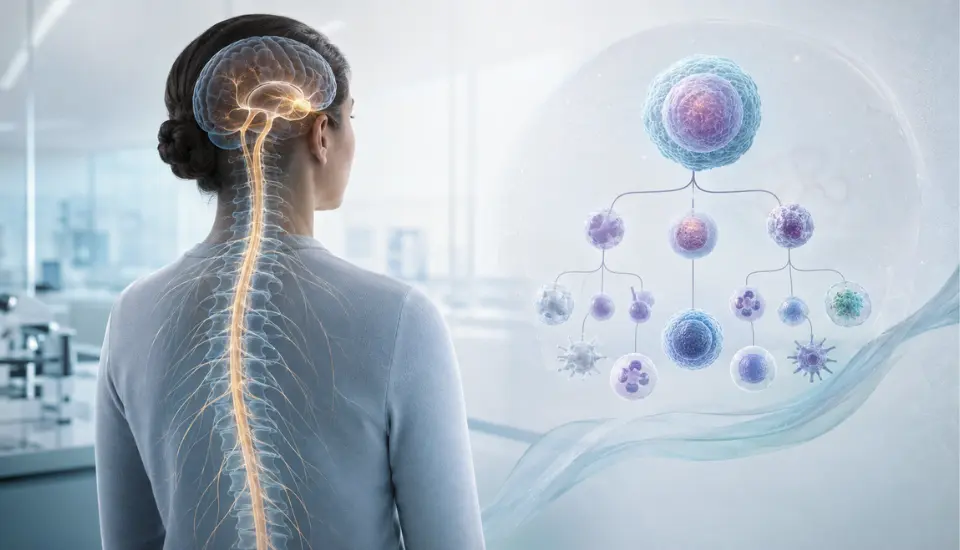
In March 2026, Japan gave conditional, time-limited approval to two regenerative medicine products made from induced pluripotent stem cells, or iPS cells. One is intended for severe ischemic cardiomyopathy. The other is for Parkinson’s disease.
That alone is enough to make people in the field pay attention.
Table of Contents
Why iPS Cells Have Always Been Watched So Closely
iPS cells have occupied a special place in regenerative medicine for years. They changed the direction of the field in a very basic way.
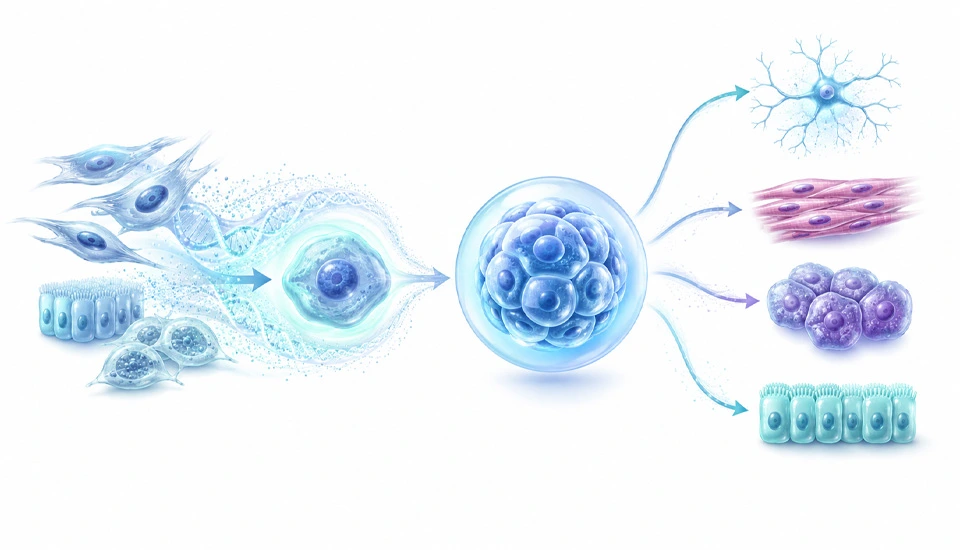
Researchers learned how to take ordinary adult cells and reprogram them so they behaved more like stem cells again. That changed what seemed possible. It meant scientists were no longer talking only about repairing tissue in theory. They were talking about building specific cell types from a patient-related starting point, and doing so without centering the whole conversation on embryonic stem cells.
That is a large part of why iPS technology became such a major topic in regenerative medicine.
For a long time, though, the field carried a familiar tension. The science attracted enormous interest, but the practical question kept hanging there in the background: when does any of this start to count in real clinical medicine?
Japan’s approvals do not settle that question completely. But they do move the answer a little closer to the patient side of the story.
What Japan Actually Approved
It is worth being precise here, because this was not some broad approval of regenerative medicine in general.
Japan approved two specific products for two serious conditions. One is aimed at severe ischemic cardiomyopathy, where the heart has been significantly damaged and weakened. The other is for Parkinson’s disease, a progressive neurological condition that can gradually interfere with movement, stability, and everyday independence.
The approvals were conditional and time-limited. That is an important part of the story. Regulators did not declare the science finished. They did not say every uncertainty had disappeared. What they did was allow these products to move ahead under a framework that still requires more evidence to be gathered.
Why This Approval Matters
The reason this news carries so much weight is not only the diseases involved. It is the fact that these have been described as the first approved regenerative medicine products developed from iPS cells.
That is a big moment for the field.
Regenerative medicine has no shortage of interesting ideas. The harder part is getting any of them far enough that regulators are willing to let them enter real medical use, even under conditions. Many approaches never get that far. They stay in preclinical work, in early human studies, or in a kind of permanent future promise.
That is why this approval stands out. It does not mean the journey is over. It means something has finally crossed an important line.
Why Japan Is at the Center of This Story
This outcome did not appear out of nowhere.
Japan has been closely linked with iPS-cell science from the beginning, and not only because Shinya Yamanaka’s work helped launch the field into global prominence. The country has also spent years building the less visible pieces that matter just as much: research networks, translational pathways, manufacturing systems, regulatory structures, and the kind of long-term institutional support that newer fields need if they are ever going to reach patients.
That larger background helps explain why this happened there.
Scientific discovery matters, of course. But regenerative medicine does not move into clinics on discovery alone. It also needs a country, a system, and a set of institutions willing to deal with production, oversight, safety, reimbursement, follow-up, and the long stretch between scientific excitement and ordinary medical use.
Japan has been doing that work for years. These approvals reflect that.
Why This Also Matters to Healthy Aging
It is easy for longevity coverage to slide into vague language and make every regenerative development sound like a direct anti-aging breakthrough. That is not what happened here. Japan did not approve a general treatment for aging, frailty, or broad age-related decline.
Even so, this news still matters to people who follow healthy aging.
Heart function matters. Neurological function matters. So does the ability to move through daily life with some steadiness and control. Severe cardiomyopathy and Parkinson’s disease can shape the course of aging in very concrete ways. They can reduce mobility, narrow independence, and change how much of everyday life a person can manage on their own.
So yes, these are disease-specific approvals. But they still have broader relevance than a narrow regulatory headline might suggest.
What This Does Not Mean
This is one of those stories that can be made to sound bigger than it really is.
That would be a mistake.
These approvals do not mean iPS-cell therapies have become routine medical care across the board. They do not mean the outstanding questions have been resolved. They do not mean regenerative medicine has suddenly moved out of its difficult stage and into a smooth, established clinical era.
The approvals themselves make that plain. More data still need to be collected. Monitoring will continue. Access will depend on what happens next, including reimbursement and practical rollout.
So this is real progress, but it is still progress under watch.
Where Exosomes Still Fit Into the Broader Picture
This particular news item is about iPS-cell-derived products, not exosome therapy.
Still, it sits within the same larger shift in regenerative medicine. The field is no longer focused only on the simple idea of replacing damaged cells. More of the discussion now is about signaling, tissue environment, immune response, and the ways repair might be guided, supported, or modulated rather than treated as a single replacement problem.
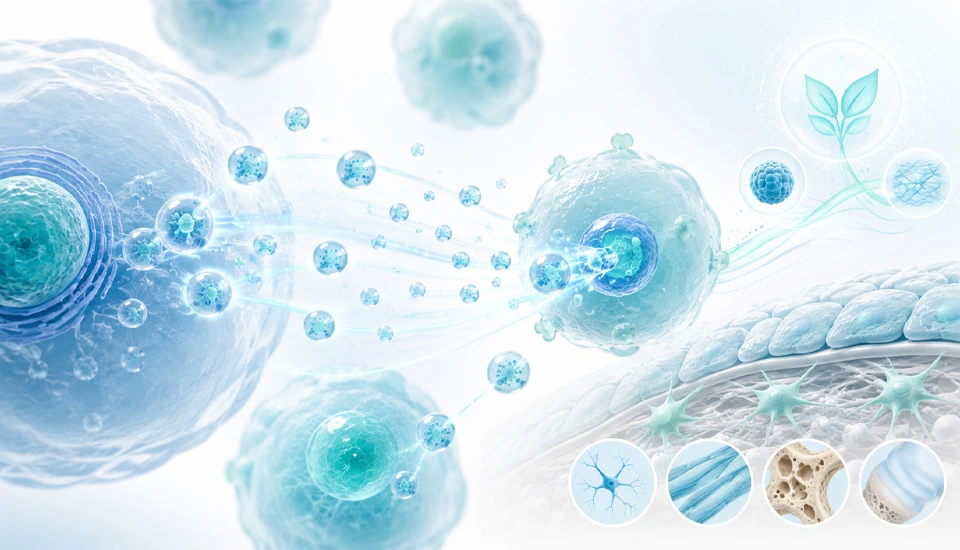
That is one reason exosomes still belong in the wider conversation. They point toward a different way of thinking about repair. Not necessarily by becoming the tissue themselves, but by influencing communication between cells and shaping how healing unfolds.
So even when the headline is about iPS cells, the broader regenerative medicine picture still includes exosomes, cell-free strategies, and other approaches that are trying to work with biological repair in a more controlled and intelligent way.
A Smaller Step Than the Headlines Suggest, but a Real One
That is probably the fairest way to read this development.
In this field, one of the hardest things is getting beyond compelling science and into an actual approved medical product. A lot of ideas never make it that far. These did.
That is what makes the story worth watching.
For people interested in healthy aging, the broader lesson is also worth noting. Progress in this area is not going to come from exciting biology alone. It will come from what happens after the discovery phase — testing, regulation, manufacturing, follow-up, and the slow process of turning something promising into something patients can actually reach.
Japan’s decision does not complete that process. But it does show that the process is moving.
Learn More About Regenerative Medicine
If you would like to learn more about stem cell therapies, exosome-based approaches, or other regenerative medicine options, you are welcome to contact our team.
Our professors and medical team review each case individually and provide a careful medical assessment based on the information you share. If appropriate, they may also outline possible treatment directions or next steps.
The evaluation is free of charge and completely without obligation.
FAQ
What exactly did Japan approve?
Japan gave conditional, time-limited approval to two regenerative medicine products derived from iPS cells. One is for severe ischemic cardiomyopathy, and the other is for Parkinson’s disease.
Why are people calling this a milestone?
Because iPS cells have been talked about for years as one of the most important areas in regenerative medicine, but approval has taken time. This is one of those moments when a field stops sounding quite so theoretical. A regulator has now allowed specific products to go forward, even if under conditions.
Does this mean there is now a treatment for aging?
No. These approvals are tied to specific diseases. They are not a general treatment for aging. The connection to healthy aging is more indirect than that. Conditions affecting the heart or nervous system can strongly shape independence and function later in life, which is why the news still matters beyond the diseases themselves.
What does “conditional and time-limited approval” mean in practice?
It means the products were approved in a way that still requires more data to be collected. So this is not the same as saying every question has already been answered. It means regulators were prepared to let them move forward, but under continued observation and with further evidence still expected.
Why should someone interested in longevity medicine pay attention to this?
Because this is the kind of development that shows whether regenerative medicine is staying mostly conceptual or beginning to enter actual care. Longevity medicine is not only about lifespan. It is also about keeping important functions for longer. When therapies aimed at serious heart or neurological decline get closer to real patient use, that has obvious relevance to that larger conversation.
Sources
- A. Marshall. World’s first two iPSC therapies in Japan. Nature Biotechnology. 2026.
- Japan Approves the World’s First Treatment Made With Reprogrammed Human Cells. Wired. 2026.
- Japan Clears First iPSC Therapies for Clinical Use. The Medicine Maker. 2026.