Regenerative Medicine

Clinical insights by Op. Dr. Melihcan Sezgiç
When patients ask about SVF, they usually do not start with the abbreviation.
They start with the mirror.
They tell me their skin looks thinner. More tired. Less alive than before. Sometimes they say it has lost its firmness. Sometimes they are not even focused on wrinkles. They simply feel that the skin no longer reflects how well they actually feel.
That difference matters.
Because skin rejuvenation is often discussed in a very superficial way. The language online tends to be dramatic. It promises renewal, glow, reversal, transformation. But real patients are often asking something more modest and more meaningful. They want better skin quality. Better tissue. A fresher appearance that still looks like them.
This is where SVF becomes interesting.
Not because it should be sold as magic. It should not. But because it belongs to a more specific medical conversation than many generic “stem cell” claims. SVF, or stromal vascular fraction, is derived from the patient’s own adipose tissue and has been studied for regenerative applications because of its mixed cellular composition and biologic signaling potential. Reviews describe it as a promising tool in regenerative medicine, including for skin-related applications, while also emphasizing that methods and outcomes are not yet standardized across the field.
So the right starting question is not, “Does SVF erase age?”
A better question is: “When does SVF make sense for skin quality, and what can it realistically do?”
That is the real conversation.
SVF stands for stromal vascular fraction.
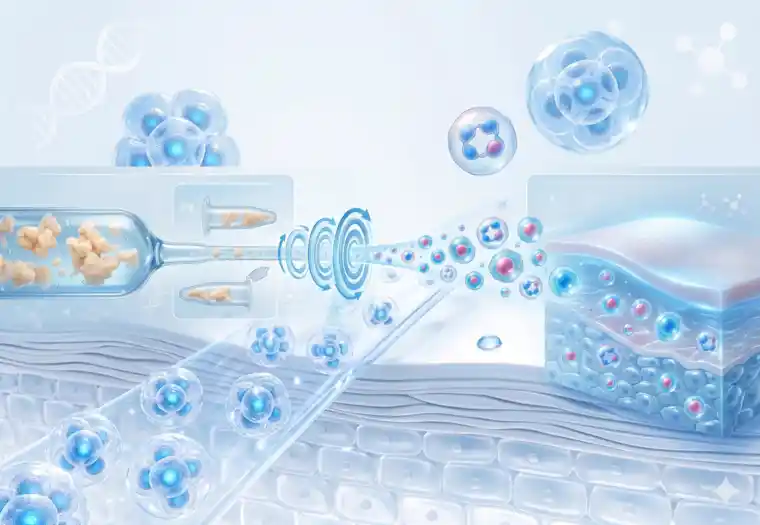
Patients often hear that phrase and understandably assume it refers to one purified substance. In reality, SVF is not one simple ingredient. It is a heterogeneous cell population derived from fat tissue, containing several cellular components, including adipose-derived stromal or stem-cell-associated populations, endothelial cells, pericytes, immune cells, and other supportive elements within the tissue environment. That complexity is exactly why it attracts interest in regenerative medicine.
In plain language, the idea is this:
Fat tissue is not just stored volume. It is biologically active. When processed appropriately, it can yield a regenerative fraction that may support healing, tissue remodeling, and local signaling.
That does not mean it “turns into new skin” in the simplistic way advertisements sometimes imply. It means researchers and clinicians are interested in whether this fraction can improve the environment of aging or damaged tissue.
That is a very different claim. And it is the more honest one.

Skin does not age for one single reason.
Collagen changes. Hydration changes. Elasticity changes. Blood supply is not what it used to be. Sun exposure accumulates. The extracellular matrix becomes less supportive. Fine lines are only one visible part of a much larger biological picture.
That is why some patients feel their skin looks older even when no single line or fold is the main issue.
SVF is being explored because regenerative medicine is less interested in covering that change and more interested in whether tissue quality itself can be supported. Reviews of SVF describe regenerative effects through a combination of cellular interaction, trophic signaling, angiogenic support, and wound-healing-related mechanisms rather than through simple volumizing alone.
That point is important.
SVF is not primarily exciting because it sounds modern. It is interesting because it may speak to the biology of skin quality in a deeper way than a purely surface-based treatment.
The honest answer is: it may help, in the right setting, for the right patient.
That is not a weak answer. It is a medically responsible one.
A clinical trial on aging infraorbital skin reported that autologous SVF transplantation was associated with improvements in measures such as dermal density, skin elasticity, and color in that treatment setting. A scoping review on mechanically fractionated tissue SVF also identified skin rejuvenation among the clinical areas being explored, though with clear variation in methods and evidence quality.
There is also related evidence from facial rejuvenation work in which fat grafting assisted by SVF showed positive effects on facial contour and skin quality, which is relevant because in real practice the line between volume restoration and tissue-quality improvement is often not perfectly separate.
But this is exactly where clinics become too enthusiastic.
SVF should not be described as if every patient will get dramatic rejuvenation. It should not be described as a replacement for surgery when sagging is advanced. And it should not be presented as if every protocol sold under the name is equally evidence-based.
When SVF helps, the change patients notice is often quieter than that.
The skin may look fresher. Less dull. Better hydrated. Slightly softer. A bit healthier overall.
That is much closer to reality than the language of “turning back time.”
Usually, this conversation makes most sense in patients whose main complaint is skin quality, not dramatic structural aging.
That may be the patient who says:
Those are often the more natural situations in which regenerative options become worth discussing.
The better candidate is usually not the person asking for one treatment to erase a decade. It is the patient asking for a real improvement in tissue quality and understanding that the result may be gradual and modest rather than theatrical.
This part matters just as much.
A poor candidate may be someone with unrealistic expectations, someone with untreated medical issues, active infection, poor procedural suitability, or someone whose main problem is advanced laxity that would not realistically respond to a regenerative skin-quality treatment alone.
I am also careful when a patient is drawn in mainly by social media language. Regenerative treatments are often described online as if they are already settled, standardized, and universally proven. They are not.
And there is another warning sign patients should take seriously:
If the clinic cannot explain clearly what is being done, how the tissue is harvested, how the material is processed, what the intended target is, and what the realistic benefit is, that alone is a reason to slow down.
A serious clinic should leave the patient better informed, not more dazzled.
This is one reason why SVF deserves its own article.
Because unlike vague “stem cell skin” marketing, SVF treatment is a real procedure with steps patients should understand.
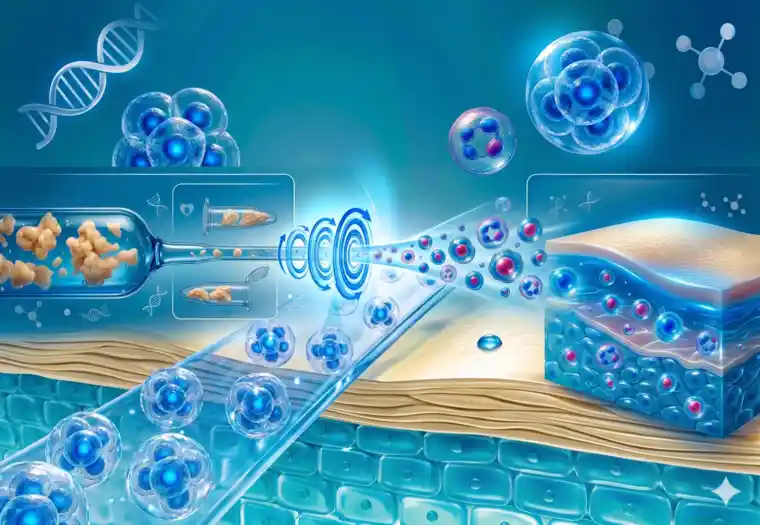
It usually begins with taking a small amount of the patient’s own fat tissue, often by minor liposuction from an area such as the abdomen, waist, or thigh. Depending on the plan and patient comfort, local anesthesia may be enough, while some cases may also involve sedation. The harvested tissue is then processed to isolate the stromal vascular fraction before the regenerative material is injected into the selected treatment areas. This basic workflow is also reflected in published clinical descriptions of SVF-related facial and infraorbital treatment.
Patients often imagine the injection as the treatment.
In reality, the process begins earlier:
That matters because it changes expectations. This is not the same as arriving for a quick filler session. It is a broader regenerative procedure.
Not exactly.
But they are closely related.
Fat grafting is usually discussed first as a way to restore lost volume. SVF, by contrast, is the cell-rich regenerative fraction derived from adipose tissue. In real facial rejuvenation work, however, the two topics often overlap because some fat-based procedures aim not only to restore contour, but also to improve tissue quality. Clinical literature on SVF-assisted fat grafting in facial rejuvenation reflects exactly that overlap.
That is why patients sometimes get confused.
They hear:
and assume all of these mean the same thing.
They do not.
But they do meet in the same medical territory.
Sometimes, yes.
In practice, combination treatment may be considered depending on the skin problem being addressed. That may include pairing regenerative approaches with microneedling, fat-based procedures, or other adjunctive strategies. More broadly, recent regenerative skin literature also continues to examine related approaches such as extracellular vesicles, conditioned media, and other biologic supports in scars and skin repair.
Still, more is not automatically better.
A thoughtful plan is better than a crowded one.
The point of combination treatment should be biological logic, not marketing complexity.

This is where the consultation either becomes honest or becomes sales.
A realistic answer sounds less dramatic.
Patients may see:
What patients should not expect:
That is not pessimism. That is accuracy.
In regenerative aesthetics, the most meaningful improvements are often subtle. But subtle does not mean unimportant. For the right patient, subtle can still be very worthwhile.
This part should never be pushed into the background.
Patients do not need to become regulatory experts.
But they do need to understand one thing:
The word “autologous” does not automatically settle every safety or approval question.
And the word “regenerative” is not the same as “proven.”
That is why sourcing, sterile handling, method transparency, and honest indication-setting matter so much.
A serious consultation should explain, in plain language:
If those questions are not answered clearly, the patient is not ready to consent.
Consent is not a signature.
Consent is understanding.
Maybe your skin looks more tired than it used to.
Maybe it feels thinner, drier, or less firm.
Sometimes the change is around the eyes.
Sometimes it is simply the feeling that the skin has lost some freshness.
SVF may be discussed when the concern is skin quality, not a completely different face. Texture, elasticity, hydration, fine lines, scars, and slower recovery can all matter.
You can send us a short message and, if you feel comfortable, a few photos. Our medical team will review your case and tell you honestly whether SVF could be suitable, or whether another option may make more sense.
The evaluation is free of charge and without obligation.

Not exactly. SVF is a mixed regenerative cell fraction obtained from adipose tissue. It includes stem-cell-associated populations, but it is not best explained as one purified stem cell product.
It may, in selected patients. Early clinical reports and reviews suggest potential improvement in elasticity, dermal quality, hydration, and some aging-related skin changes, but evidence is still evolving.
Not necessarily better. Different. Fat grafting is often used to restore volume, while SVF is discussed more in regenerative terms. In some facial rejuvenation settings, the two are combined.
Usually not in a dramatic way. Patients who benefit more often describe fresher, healthier, better-quality skin rather than a complete transformation.
The literature is broader than rejuvenation alone. Yes, in selected patients SVF can help in scar treatment and skin repair.
SVF for skin rejuvenation is worth discussing because it belongs to a real regenerative medicine conversation, not just a fashionable phrase.
It is specific.
It is procedural.
And it is biologically more interesting than many loose “stem cell facial” claims.
But the same honesty still applies.
The science is promising, not complete.
The outcomes may be meaningful, but not magical.
The right patient may benefit, but not every patient is the right patient.
And the clarity of the doctor and the clinic matters just as much as the treatment name.
That is usually what good medicine looks like in aesthetic care.
Not bigger promises.
Better definitions.