
Clinical insights by Op. Dr. Melihcan Sezgiç
What Mommy Makeover Surgery Really Means
When patients hear the words “mommy makeover,” many imagine one standard operation. There is no standard version.
For one woman, the plan may include a breast lift and tummy tuck. Another may need breast implants with limited liposuction. A third patient may benefit from abdominal surgery but have no reason to operate on the breasts.
The name refers to an individual treatment plan, not a fixed package.
Pregnancy can change several parts of the body at once. The abdominal skin may remain loose. The muscles can feel weaker or separated. The breasts may lose volume, become lower, or remain larger and heavier than before. Fat may also stay around the waist or flanks even after the patient returns to a stable weight.
A mommy makeover brings some of these corrections into one surgical plan. But the starting point should never be a list of procedures.
I first look at what has actually changed.
- What is the main concern?
- Is the problem loose skin, reduced breast volume, abdominal wall weakness, localised fat, or a combination of these?
- And just as importantly: how much surgery can the patient reasonably recover from?
Table of Contents
Which Mommy Makeover Procedures Are Most Often Combined?
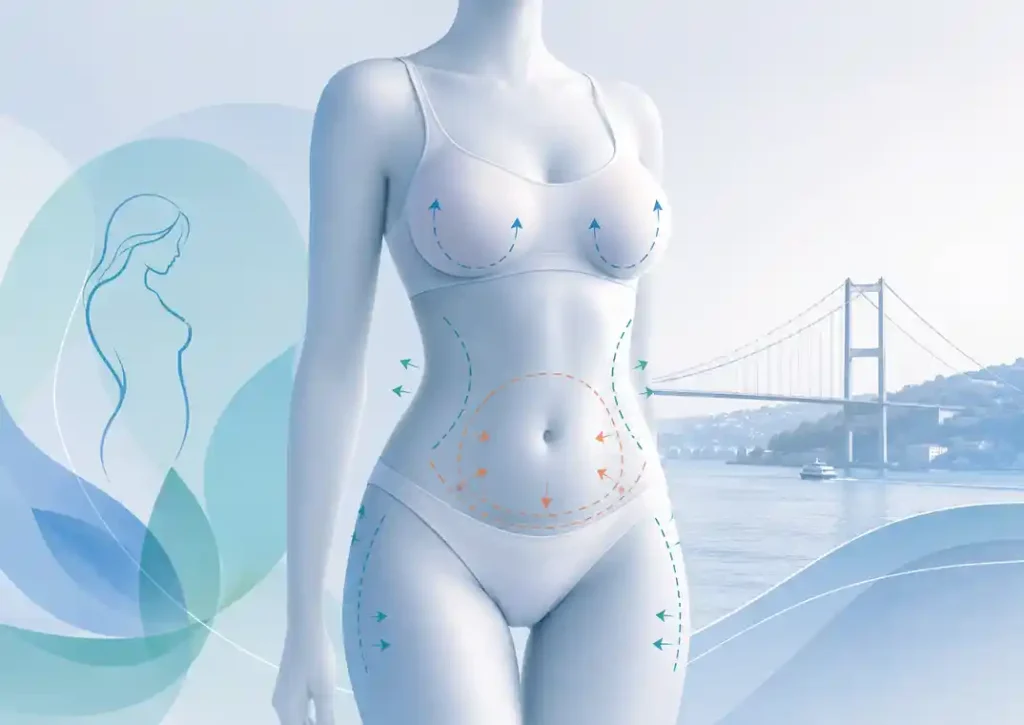
The best-known combination is breast surgery with a tummy tuck.
For some women, that means restoring lost breast volume while removing loose abdominal skin. For others, the breast needs lifting or reduction rather than an implant.
Liposuction may be added around the waist or flanks when a small amount of remaining fat affects the abdominal contour.
The most common procedures include:
- breast augmentation
- breast lift
- breast reduction
- breast lift with implants
- implant replacement or removal
- tummy tuck
- repair of separated abdominal muscles
- limited liposuction around the waist or flanks
A mommy makeover is one example of combined cosmetic surgery, but the same principle applies here: the procedures should work together during recovery, not only in the operating room.
Breast Lift, Implants or Reduction After Pregnancy?
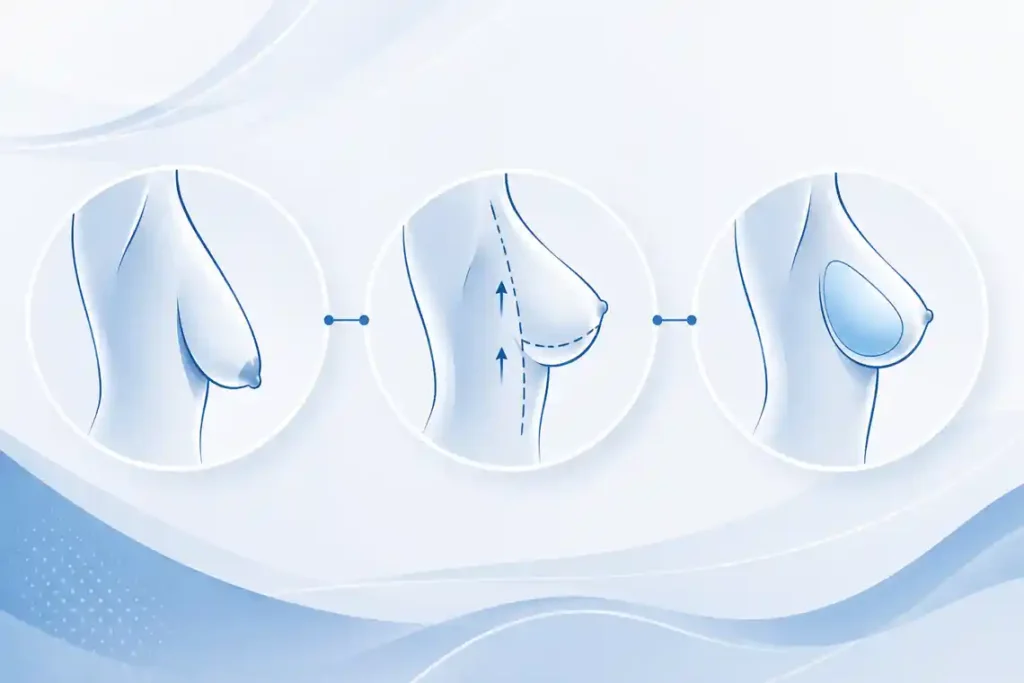
Pregnancy and breastfeeding affect the breasts differently from one woman to another.
Some women lose volume, especially in the upper part of the breast. The breast may look smaller or feel emptier than before. In this situation, an implant can sometimes restore fullness.
Other women still have enough breast tissue, but the skin has stretched and the nipple sits lower. An implant alone may make the breast larger without correcting the low position. A breast lift may be more appropriate.
There are also patients whose breasts remain large and heavy after pregnancy. They may experience discomfort around the neck, shoulders or back. For them, breast reduction with lifting may make more sense than adding volume.
Sometimes both problems are present: the breast has lost fullness, but the skin has also become loose.
A lift with implants can then be considered. This is a more demanding operation because the breast is being enlarged while the surrounding skin is tightened. That balance needs careful planning.
The choice should depend on:
- existing breast volume
- skin quality
- nipple position
- breast asymmetry
- previous implants
- scar preference
- the patient’s expected result
Not every mommy makeover needs implants. Not every low breast needs more volume. The breast procedure should follow the anatomy rather than a standard formula.
What a Tummy Tuck Can and Cannot Correct
The tummy tuck is often the more demanding part of a mommy makeover.
Pregnancy may leave loose skin below and around the navel. The abdominal wall may also feel weaker, particularly when the muscles have separated.
A tummy tuck can remove excess skin and, when necessary, repair the abdominal wall.
It is not the same as liposuction.
Liposuction removes fat through small access points. It does not remove a wide fold of loose skin, and it cannot repair separated abdominal muscles.
This distinction matters because many patients ask for liposuction when the main issue is not fat.
If the skin hangs or folds, liposuction alone may make the looseness more visible.
The abdomen therefore needs to be examined as a whole:
- Is there excess skin?
- Is there a muscle separation?
- Is the problem mainly below the navel?
- Is there a previous caesarean scar?
- Is there a hernia?
- Is there localised fat around the waist or flanks?
Previous caesarean sections are common and do not usually prevent a tummy tuck. The scar may sometimes be included in the skin that is removed.
But the abdominal wall still needs careful examination, especially when the patient reports bulging, weakness or discomfort.
When Limited Liposuction Fits the Plan
Liposuction is often added around the waist or flanks.
The tummy tuck treats the front of the abdomen. A small amount of liposuction around the sides can improve the transition towards the waist and make the contour look more balanced.
The word “small” matters.
There is a clear difference between refining the waist and performing wide 360-degree liposuction across the abdomen, flanks, back and hips.
The second option creates more swelling and adds considerably more work to the operation.
A mommy makeover should not continue expanding simply because another area could technically be treated.
I only add liposuction when it has a clear purpose.
For some patients, it improves the final contour. For others, the tummy tuck alone is enough.
When I Prefer to Divide a Mommy Makeover into Two Operations
I am more likely to suggest two stages when both the breast and abdominal procedures are extensive.
A large breast reduction takes more time than a straightforward implant procedure.
A tummy tuck with major muscle repair is also different from removing a smaller amount of loose skin.
Other findings may make the plan larger than expected.
A patient may have:
- a wide separation of the abdominal muscles
- an abdominal hernia
- several old abdominal scars
- a large amount of loose skin
- a complex breast lift
- previous breast implants that need revision
- liposuction planned across several areas
At that point, the operation is no longer a simple breast-and-abdomen combination.
There is also the patient’s situation at home.
A woman with young children and little support may find a very extensive recovery particularly difficult. She may be unable to lift, carry, drive, prepare meals or manage the usual household routine for a while.
Sometimes I correct the abdomen first and plan the breasts after the new waistline has settled.
In another patient, breast surgery comes first.
There is no rule that every mommy makeover must be completed in one session.
Why the Tummy Tuck Usually Shapes the Recovery
In many mommy makeovers, the tummy tuck determines how difficult the first days will be.
- The abdomen feels tight.
- Standing fully upright may take time.
- Getting out of bed can require help at first.
- Coughing, laughing or changing position may pull on the abdominal area.
The breast area may also feel sore, but it is usually the abdominal procedure that affects everyday movement most.
This becomes especially important when there are young children at home.
The patient may not be able to:
- lift a child
- carry a pushchair
- lift shopping bags
- sleep in her usual position
- drive immediately
- clean the house
- manage childcare alone
Even when the patient begins to feel better, the deeper tissues are still healing.
That is why I ask about support before surgery.
- Who will help with the children?
- Who will manage shopping and meals?
- Who can stay with the patient during the early recovery?
These are not small details. They are part of the treatment plan.
When Is the Right Time for Mommy Makeover Surgery?
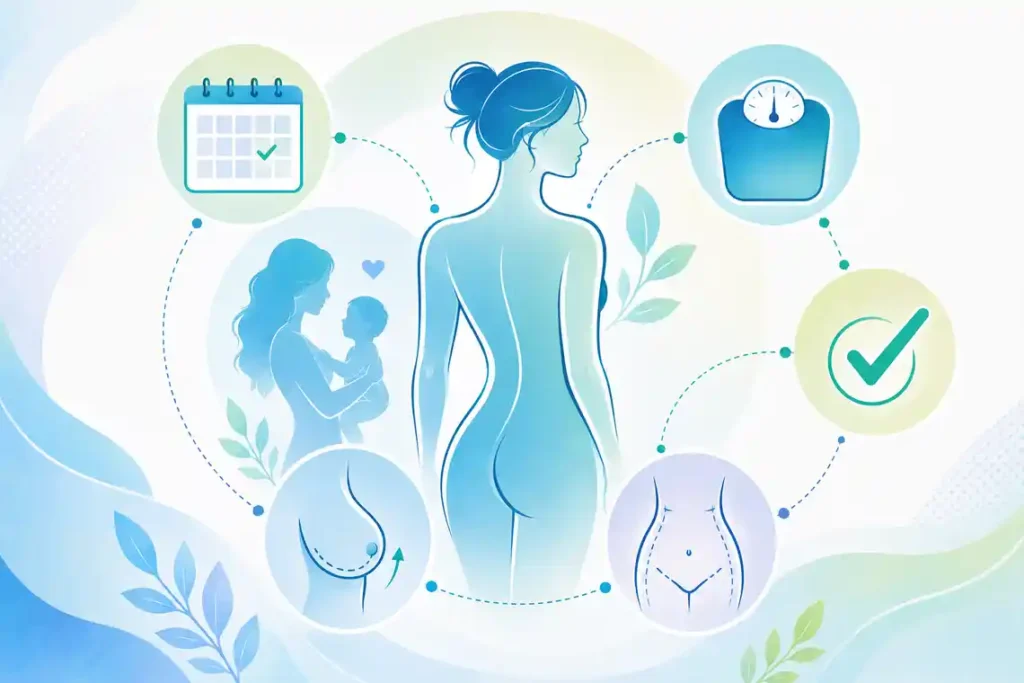
I would not plan mommy makeover surgery while the body is still changing after pregnancy.
The breast shape needs time to settle. Breastfeeding should have ended. Weight should also be reasonably stable.
Operating too early can make the result harder to predict.
The breasts may continue to change after breastfeeding ends. The abdomen may also improve naturally during the months after delivery.
Future pregnancy is another important point.
A pregnancy after a tummy tuck is possible, but it can stretch the abdominal skin and muscles again. The breasts may also change in volume and position.
For that reason, mommy makeover surgery is usually better suited to women who:
- have completed childbearing
- are no longer breastfeeding
- have reached a stable weight
- are in good general health
- have realistic expectations
- have reliable help during recovery
This does not mean the patient must reach a perfect body weight before surgery.
It means the result is easier to plan when the body is no longer going through major hormonal or weight changes.
When Mommy Makeover Surgery Should Be Postponed or Reconsidered
A mommy makeover should not be planned simply because the patient is ready emotionally.
The body also needs to be ready.
Smoking is one of the first issues I ask about.
Nicotine reduces blood flow to the skin. Both a tummy tuck and breast lift depend on reliable circulation for healing. Smoking can increase the risk of wound opening, delayed healing and skin damage.
Anaemia or low iron levels also matter.
After pregnancy, heavy menstruation, breastfeeding or previous surgery, some women begin the consultation with low haemoglobin or depleted iron stores. That should be corrected before a large elective operation.
I also look carefully at:
- poorly controlled diabetes
- previous thrombosis or pulmonary embolism
- known clotting disorders
- significant heart or lung disease
- problems with wound healing
- long-term corticosteroid use
- high BMI
- limited mobility
- future pregnancy plans
- lack of support at home
One risk factor does not always mean that surgery is impossible.
- Sometimes we wait.
- Sometimes a medical issue is treated first.
- Sometimes the operation is reduced.
- Sometimes the breast and abdominal procedures are separated.
The final plan should match the patient’s health, not only her cosmetic goals.
What Mommy Makeover Surgery Cannot Do
A mommy makeover cannot stop future ageing.
The breasts will continue to respond to gravity, hormonal changes and weight fluctuation. The abdominal area can also change after significant weight gain or loss.
It cannot remove every stretch mark.
A tummy tuck may remove stretch marks located on the skin that is excised, especially below the navel. Marks outside that area will usually remain, although their position may change when the skin is tightened.
It cannot guarantee the same scar in every patient.
Scar quality depends partly on genetics, skin type, tension, healing and aftercare.
It also cannot create the same shape in every woman.
Bone structure, rib cage width, existing breast tissue, skin elasticity and fat distribution all affect the result.
The aim is not to recreate the body that existed before every pregnancy-related change.
The aim is to improve the areas that can be treated safely and produce a result that still fits the patient’s natural proportions.
One Operation or Two?
Many women prefer one operation because they want to organise childcare, travel and time away from work only once.
That is understandable.
One operation also means one main anaesthetic and one main recovery period.
But convenience should not be the only deciding factor.
When the breast procedure, tummy tuck and liposuction are all extensive, one operation may leave the patient with several painful areas, a large amount of swelling and very limited movement.
Two shorter operations may be easier to recover from.
They can also make planning more precise.
After the first area has healed, the second procedure can be adjusted to the new body contour.
My aim is not to fit the largest possible number of procedures into one day.
It is to choose a plan that gives the patient a good result without making the recovery harder than it needs to be.
Frequently Asked Questions About Mommy Makeover Surgery
Does every mommy makeover include breast implants?
No. Some women have lost volume and want more fullness. Others still have enough breast tissue and only need a lift. If the breasts have remained large and heavy after pregnancy, a reduction may be the better option.
How soon after breastfeeding can surgery be planned?
Not immediately. I prefer to wait until the breasts have settled and the patient’s weight is no longer changing. Otherwise, we are planning surgery on tissue that may still look different a few months later.
Can a mommy makeover repair separated abdominal muscles?
It can, when a tummy tuck is part of the plan. I examine the abdomen first because a bulge is not always caused by fat. If the muscles have separated, liposuction alone will not solve the problem.
Can I have a tummy tuck after a caesarean section?
Yes, in most cases. The old scar may even lie within the skin that is removed. What matters more is the condition of the abdominal wall and whether there is weakness, pain or a hernia.
What if I become pregnant again afterwards?
The breasts and abdomen may stretch again, so the result can change. For that reason, I usually advise waiting until no further pregnancy is planned.
How much help will I need at home?
That depends on the ages of your children and which procedures were done. If you have a toddler, you will need real help, not just someone checking in once a day. You may be able to walk around the house, but lifting a child, carrying laundry or preparing everything on your own will not be realistic at first.