Clinical insights by Op. Dr. Melihcan Sezgiç
Let’s Talk About Your Nose Before Planning Rhinoplasty in Turkey
Before we look at techniques, tell me what bothers you.
You don’t need to explain it in medical terms. Point to it. Show me a photograph if that’s easier. Perhaps you’ve disliked the same bump since you were a teenager. Or you had an injury, and now every time you look at a photograph from before it happened, you notice the difference.
Is there anything you’d be sorry to lose?
That question belongs in the consultation too. If you’re happy with your nose from the front, I need to know. If you want a straighter bridge but definitely don’t want the tip turned upwards, say that clearly. These are quite different changes, even though you might describe both as wanting a “better nose.”
For someone considering rhinoplasty in Turkey, we can start with photographs before the journey. There’s a limit to what I can decide from them, though. When we meet, I’ll check the cartilage and examine the nasal passages as well. Until then, there are parts of the plan I need to leave open.
And tell me about your breathing, even if you contacted us mainly because of the appearance. Don’t save that until we’ve finished talking about the shape.
Table of Contents
“Can You Make It Smaller Without Changing My Face?”
Let’s take that request apart a little.
Do you want the bridge lower? Does the nose project too far from your face? Is it the width of the tip? You may only want one of those things changed.
If you tell me, “I only dislike it from the side,” we’ll spend some time looking at the front too. Lowering a hump can change that view, and you may be perfectly happy with it as it is. The nose has width as well as height; we can’t plan it from one side photograph.
The same applies to the tip. You might want it narrower but feel quite strongly that you don’t want it lifted. I need to hear both. With a reference photograph, show me the detail you mean—I might be looking at the bridge while you’re trying to show me the tip.
You’re welcome to bring a few examples. Just remember that the person in the photograph has their own skin, cartilage and facial proportions. We can use the image to understand your preference, but I can’t promise to reproduce someone else’s nose on your face.
Why I May Suggest Reshaping Rather Than More Reduction
You might reasonably ask, “If my tip looks too big, why not remove more cartilage?”
Because that cartilage also holds the tip in position. Taking away too much can weaken the very structure we’re trying to improve. Depending on your nose, reshaping it or adding support may be part of the correction.
Then there’s your skin. I can reshape the cartilage, but with thick skin over it, you may not see all the fine detail. If your skin is thin, I have a different concern: it may show little uneven areas underneath.
I need to explain those limits while we’re planning. If your skin is unlikely to allow a very finely defined tip, you should know that before deciding on surgery.
We’ll look at the rest of your profile as well. A relatively recessed chin can make the nose appear more prominent. That doesn’t mean you need another operation. It helps us judge how much reduction makes sense for your face.
If a chin procedure is worth considering, we can discuss it separately. You shouldn’t feel that asking about your nose commits you to changing anything else.
Open or Closed Rhinoplasty in Turkey: Which Would Suit You?
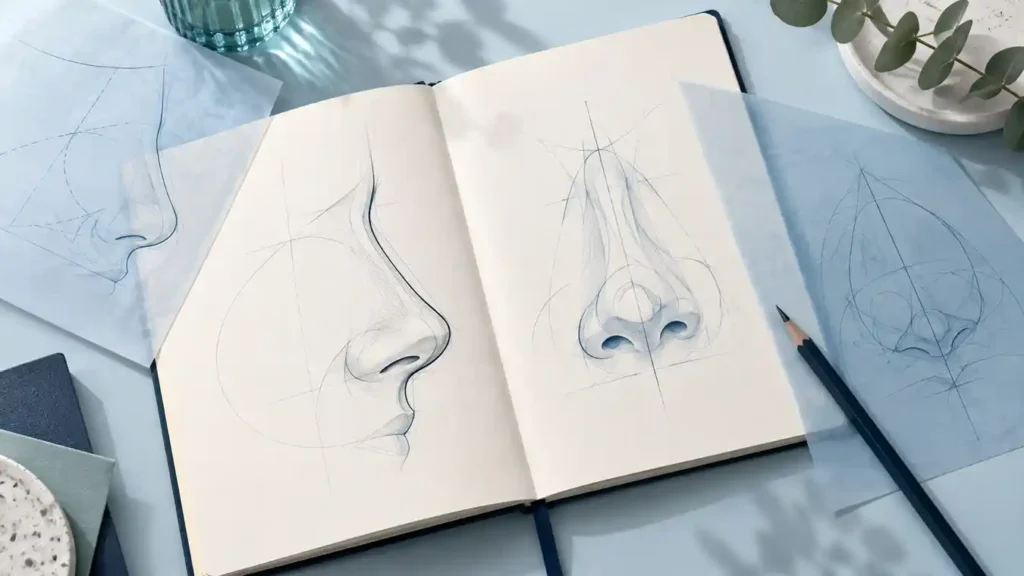
If you’ve been researching rhinoplasty, you may already have a preference.
Perhaps you’ve read that closed surgery is better for your nose job because there’s no incision between the nostrils. Or someone has told you that a complicated nose always needs an open operation.
Let’s first establish what needs doing. Then I can explain how the proposed approach gives access to those areas.
Open rhinoplasty
There’s a small strip of tissue between your nostrils called the columella. In an open operation, I make an incision there and join it to the incisions inside. I can then lift the tissue covering the nose and get a fuller view of the bone and cartilage.
That access can help with detailed tip work, asymmetry or reconstruction.
There will be a scar at the external incision. I can show you where it would sit, but I shouldn’t promise that it will be invisible. How noticeable it becomes depends partly on healing.
Closed rhinoplasty
With closed rhinoplasty, I work through incisions inside the nose. There’s no incision across the columella.
I still need to be able to reach and work on the areas we’ve agreed to change. When I’ve examined your nose, I can explain whether this approach would let me do that.
Are you mainly worried about having a visible scar? Let’s talk about it. It deserves an answer. I’ll also explain why I think one approach gives me the access I need for your operation.
What About Preservation and Ultrasonic Rhinoplasty?
You may have come across both names and wondered which one to ask for. They can apply to different parts of the same operation, so you don’t have to choose one label and rule out all the others.
I may use an open approach and ultrasonic instruments in the same operation, for example.
Preservation rhinoplasty
Preservation techniques retain more of the existing nasal structures. For some noses, I can bring the bridge down and keep its upper contour.
Would that work for you? I need to look at what’s already there. If the bridge itself needs substantial reshaping, preserving that shape may not give you the change you’re looking for.
If I suggest this technique, I’ll show you which parts I’m proposing to keep. That makes the explanation much more useful than simply hearing the name of the technique.
Ultrasonic rhinoplasty
I can use ultrasonic, or piezo, instruments for selected bone work. They don’t explain how I’ll treat the cartilage or tip.
So if you ask me about ultrasonic rhinoplasty, we still need to go through the rest of your operation. Where is the hump? What needs changing at the tip? Is there a breathing problem?
You should also allow for recovery. Using that instrument doesn’t mean you can forget about swelling, bruising or postoperative restrictions.
“It’s Only One Part of My Nose That Bothers Me”
That may allow a limited correction during your nose job. I still need to examine the whole nose, because changing one area can affect another.
If it’s the tip
Perhaps you’re happy with the bridge and only want the end of the nose changed.
I’ll look at the shape and strength of the cartilage, the tip’s position and the skin over it. We’ll also look at your nostrils. Moving the tip can change how they appear, even without removing tissue from the nasal base.
A tip procedure may be appropriate. The examination helps establish what “just the tip” would involve.
If your nose is crooked
Was it crooked before the injury, or is the bend something you noticed afterwards? Older photographs can help you explain that to me.
I’ll check the bones, cartilage and the septum inside. More than one of them may be involved, and I want to know whether you’re having trouble breathing as well.
We also need to look at the rest of your face. If the two sides are naturally a little different, that can affect how straight the nose looks after surgery. I can discuss the improvement we’re aiming for; perfect straightness isn’t something I should promise.
If your nostrils seem too wide
We can look at the width and outline of the nasal base, including any difference between the sides.
Before we agree on nostril reduction, I’ll show you where the incisions would be and where scars may remain. Here, I’m cautious about taking too much away. If the nostrils end up too narrow, putting that right can be difficult.
If you want to keep features that feel like you
You may see the terms “ethnic rhinoplasty” or “male rhinoplasty” while researching.
Neither tells me what you personally want.
You might say, “Everyone in my family has this nose. I don’t want to lose that completely.” Or perhaps you like a strong profile and only want the bump reduced.
That gives me something useful to work with. Your background or gender, on its own, doesn’t tell me which changes you’ll feel comfortable with.
Septorhinoplasty: Tell Me If Breathing Is Difficult
If one side has been blocked for years, you may hardly think to mention it anymore.
I still want to hear about it. Is it noticeable when you go to bed, when you exercise, or more or less all the time? Does the obstruction stay on one side? Tell me if you’ve tried allergy treatment, and whether you’ve had an injury or an operation on your nose.
The septum is the wall between the two nasal passages. Septoplasty treats that partition. When I combine septal work with surgery on the external nose, we call it septorhinoplasty.
But a bent septum may explain only part of the blockage. The turbinates, nasal valves or inflammation can contribute too.
That’s why I need to examine the airway. Straightening the visible nose may leave the breathing problem unchanged if we haven’t identified its cause.
If you’re hoping for both a change in appearance and easier breathing, I’ll explain how the proposed treatment addresses each concern.
Revision Rhinoplasty: Let’s Understand the Previous Operation First
Before we talk about another operation, take me back to the first one.
What were you hoping it would change? What improved? Then tell me what you’re unhappy with now and when you first noticed it. Something that was there from splint removal may need a different explanation from a change that appeared months later.
The previous operation report and older photographs can help, if you have them. Bring whatever you’ve been able to find; we can go through it together.
A revision rhinoplasty may involve more work than the visible problem suggests. A small dip on the bridge, for example, could be associated with a lack of support underneath. Scar tissue and previous cartilage removal can make reconstruction more demanding.
You may then ask, “Will you need cartilage from my rib?”
Not necessarily. I need to establish how much support is required and what suitable cartilage remains. The septum may provide enough; in other cases, I may consider ear or rib cartilage. If I think an additional donor site will be needed, we’ll talk about its incision and recovery before you agree.
I’ll also ask how long it has been since the last operation. Around a year, sometimes longer, may be needed to assess the settled appearance. Early swelling can make a cosmetic concern difficult to judge.
But if you’re having trouble breathing or think there may be a complication, contact me. I need to assess those symptoms when they arise, even if the nose is still healing.
After two previous operations, there is even more to consider. Another procedure needs a defined purpose and a reasonable prospect of improvement. Sometimes I may advise that further surgery carries too much uncertainty for the benefit expected.
When I May Ask You to Wait with your Nose Job
You may have arranged leave and started looking at flights. Even so, there can be a reason to postpone.
A medical condition may need attention. Bring your medication and supplement list, and don’t stop prescribed treatment yourself.
Smoking needs to be part of this conversation because it can interfere with healing.
There may also be a simpler reason to take more time: you’re unsure.
If you tell me that you wanted the tip lifted last week but now feel uncomfortable with the idea, we need to revisit it. You don’t owe anyone an operation because you’ve made an enquiry or arranged a consultation.
With younger patients, I also need to consider facial growth and readiness for the decision.
And there are times when my advice may be not to operate. If I don’t think the requested change can be achieved safely, or another revision offers too little likely benefit, I need to explain that plainly.
Rhinoplasty Recovery: What Will You See When the Splint Comes Off?

You may be looking forward to that appointment more than any other. It’s understandable to want to see your new nose.
But the first view can be surprising. The tip may seem wide. One side may look more swollen. You might like the profile immediately and feel less certain about the front.
Show me what concerns you. I can examine it and follow the changes with you, but that early view doesn’t give us the final shape.
Getting through the first week
You may feel congested and have swelling or bruising around the eyes after your nose job. Depending on the operation, there may be support inside your nose as well as an external splint.
Work, glasses and exercise
If you work at a desk, we’ll often start by allowing roughly one to two weeks away. I’ll need to know what a working day actually involves for you before we settle on that.
Are you lifting things? Bending down repeatedly? Could someone or something knock your face? “Going back to work” means something quite different for someone at a computer and someone doing physical duties.
And if you’re planning around a wedding, tell me the date. Being able to sit at your desk doesn’t necessarily mean you’ll be comfortable with how your nose looks in the wedding photographs.
Ask me separately about glasses and exercise. Glasses can put pressure on the operated bridge, and heavier activity may need to wait. I’ll explain what applies to the operation you’ve had.
Watching the nose settle
You may find yourself waiting for the tip long after other parts look more settled. I wouldn’t judge the final contour too early; it can take a year or longer, especially after a more complex operation or a revision rhinoplasty.
For photographs, use the same spot and roughly the same distance each time. If one picture is a close-up in bright light and the next is taken from farther away, it’s hard for either of us to make a useful comparison.
Keep our planned reviews. If something changes in between, get in touch and tell me when you first noticed it. Mention any pain, discharge, fever or change in breathing too.
What Risks Do You Need to Understand during a Nose Job?
You’re entitled to a direct answer to that question before agreeing to surgery.
Bleeding, infection, scarring, altered sensation and breathing difficulties are among the possible complications. You may be dissatisfied with part of the appearance, or further treatment may be needed.
You’ll also have a discussion with our anaesthesia team about the anaesthetic. With me, we’ll go through the risks of the nasal surgery and anything in your health or previous operations that needs particular attention.
Afterwards, please don’t dismiss heavy bleeding, a fever or pain that keeps getting worse as something you simply have to put up with. Contact us if those problems occur. Severe breathing difficulty requires urgent medical attention.
If you’re becoming unwell, don’t wait for our next routine appointment.
Rhinoplasty Cost: Why Can Quotes Differ?
When comparing quotations, look at the proposed operation as well as the amount. A first operation and a revision rhinoplasty requiring reconstruction can involve very different work. Therefore the rhinoplasy costs change. Each case is individual and each nose job is different. Let me evaluate your nose first, afterwards my team can give you an offer.
Before You Leave the Consultation
Before you leave, please share whatever is on your mind – whether it’s a concern about your nostrils, preserving a familiar feature, or anxiety about rhinoplasty recovery – because while I can analyze your facial structure, only you can tell me what truly matters so we can tailor your surgery precisely to your goals.
Frequently Asked Questions About Rhinoplasty in Turkey

Can you take the bump off without changing the rest of my nose during Rhinoplasty in Turkey?
That may be possible. Let’s look at your photographs together, because lowering the bridge can also change how the tip and the front view look. If there’s a part you’re happy with, point it out to me before we decide what to alter.
What if I don’t want a turned-up nose after a nose job?
You can say exactly that: “The bump bothers me, but I like where my tip is.” That helps me understand what you’re asking for. We can look at the angle together, and I’ll explain whether the work on your bridge would affect how the tip looks.
Why does my tip still look big when the splint comes off?
There’s still swelling underneath, so you’re seeing the change from surgery with swelling on top of it. I know that can be disappointing when you’ve been waiting for that first look. Let me examine the area that bothers you; we’ll have a much clearer idea of its shape as it settles.
I’ve already had one operation, this will be a revision rhinoplasty. Will you have to use cartilage from my rib?
Having had surgery before doesn’t automatically mean I’ll need rib cartilage. First, I need to work out what needs correcting and what cartilage is still available in your nose. Taking cartilage from your ear or rib would involve another incision. If that looks necessary, we’ll talk about that part of the operation too, including the recovery there.
I need to book a return flight. How do we choose the date?
Send us the dates you’re considering while you’re arranging the trip. I need to allow time to examine you before your nose job and see you afterwards, so the surgery date alone isn’t enough to plan around. Once we’ve discussed your procedure, my team and I can explain the proposed schedule and how much time to allow after your rhinoplasty in Turkey and before your return flight.