Clinical insights by Prof. Dr. Erdinç Civelek
When Lumbar Disc Disease Starts Causing Leg Pain
When patients talk about disc problems in the lower back, they often divide their pain into two very simple categories.
“Back pain.”
“Leg pain.”
And usually the second one scares them more.
For understandable reasons.
Lower back pain is unpleasant, exhausting, and limiting. But when the pain starts running into the buttock, thigh, calf, or foot, the whole situation feels different. Patients begin asking different questions.
“Is this sciatica?”
“Is the nerve trapped?”
“Is this still disc disease, or is it something worse?”
That is where the discussion becomes important.
Because yes, lumbar disc disease, leg pain, sciatica can be connected. But not in every patient, and not in the same way. Sometimes the disc itself is the main problem. Sometimes the nerve is the main problem. And sometimes the lower back disc has set off both at once. Reviews of lumbar disc degeneration and lumbar disc herniation make that distinction very clear: disc degeneration can drive low back pain, while radicular leg pain is more classically linked to nerve root irritation or compression, often from disc herniation.
So the better question is not simply:
“Can lumbar disc disease cause sciatica?”
The better question is:
“What exactly is the disc doing, and is the nerve involved?”
Table of Contents
When Lumbar Disc Disease Starts to Matter
A lumbar disc is supposed to absorb load, support movement, and help the lower back tolerate daily stress.
Over time, that disc can begin to change.
It may lose water.
It may lose elasticity.
Its internal structure may weaken.
The matrix changes.
Small cracks can appear.
That broader process is what doctors usually mean when they speak about lumbar disc degeneration or lumbar disc disease. Reviews describe this as a combination of structural damage, altered cell function, and mechanical change in the disc.
Patients usually notice it before they know the terminology.
They say the lower back feels stiff.
Or weak.
Or always “there.”
Sometimes the pain stays local. Sometimes it does not.
And that is exactly where patients start wondering whether ordinary lower back pain has turned into something involving the leg.
What Sciatica Actually Means
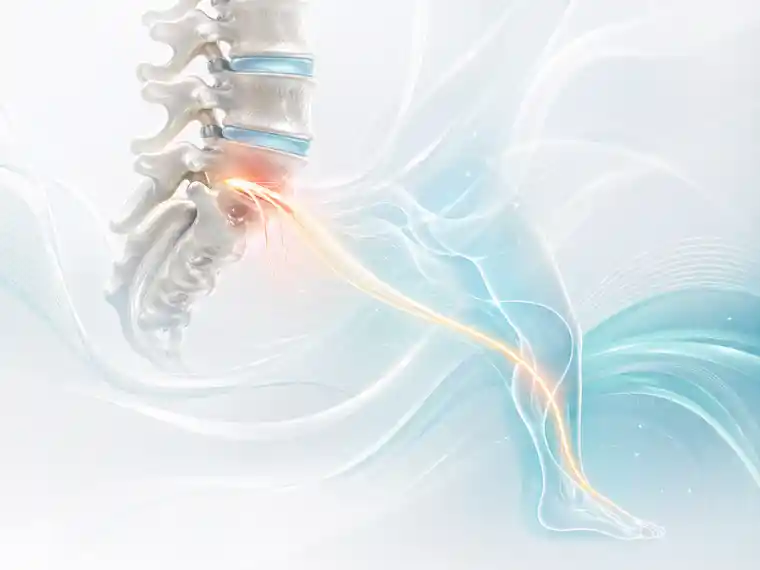
Patients use the word sciatica very freely, but medically it points to something more specific.
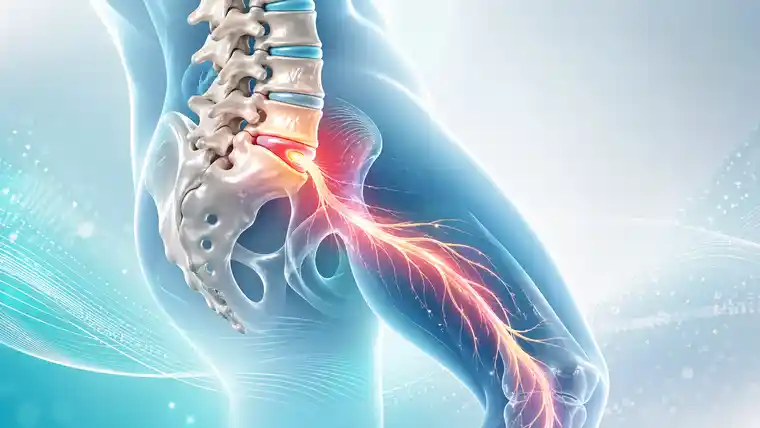
Sciatica usually means pain radiating down the leg in a pattern that suggests irritation of a lumbar or sacral nerve root. Lumbar disc herniation with radiculopathy is classically associated with greater pain and disability than ordinary nonspecific low back pain.
That matters because it helps separate two different conversations.
One conversation is:
“My lower back hurts.”
The other is:
“The pain shoots down my leg.”
Those are not always caused by the same mechanism.
A disc can be degenerated and painful without clearly producing sciatica.
A disc can also herniate and irritate a nerve root, which changes the whole pattern.
That is why patients should not assume all disc pain is the same pain.
Can Lumbar Disc Disease Cause Leg Pain?
Yes, it can.
But it depends on how the disc problem is behaving.
A degenerating disc can contribute to inflammation, annular injury, mechanical instability, and other changes that make the lower back painful. Sometimes that process also affects nearby nerve structures indirectly or exists alongside a disc bulge or herniation that begins to irritate the nerve root. Disc degeneration and disc herniation are both common imaging findings, and the symptom pattern depends on the clinical context rather than the report wording alone.
So the short answer is yes.
But the more accurate answer is this:
Lumbar disc disease may be part of the story when leg pain appears, but true sciatica usually makes us think more seriously about nerve root irritation, often from a herniated or protruding disc.
When the Pain Stays in the Lower Back and When It Runs Into the Leg
This is the part patients usually feel before anyone explains it.
A chronic degenerating disc often gives more of a lower back pattern:
- aching,
- stiffness,
- flare-ups after sitting,
- soreness with bending,
- the feeling that the back is tired or unreliable.
Once the pain begins to travel, especially in a line into the buttock or leg, the pattern changes.
Now the question becomes whether the nerve is involved.
That is why one patient says,
“My back is always bad,”
while another says,
“It starts in my lower back, but then I feel it down the leg.”
Those are not small differences.
They usually point to different pain mechanisms. Lumbar disc herniation with radiculopathy is a classic cause of sciatica, whereas lumbar disc degeneration is more strongly discussed in relation to discogenic low back pain.
Why a Herniated Disc Is Often the More Obvious Cause of Sciatica
When patients ask what is more likely to cause true leg pain, the answer is often the herniated disc.
That is because once disc material pushes outward far enough to irritate or compress a nerve root, the pain pattern often becomes more specific. Now we are not only dealing with a worn disc. We may be dealing with a disc pressing on something that sends pain, numbness, tingling, or weakness into the leg. Lumbar disc herniation with radiculopathy is associated with substantial pain, disability, and healthcare burden compared with nonspecific low back pain.
That does not mean every herniated disc causes sciatica.
And it does not mean lumbar disc disease is irrelevant when sciatica appears.
It means that when the pain clearly radiates, especially in a nerve-like pattern, the herniation and the nerve root move higher on the list.
Why MRI Alone Does Not Answer Everything
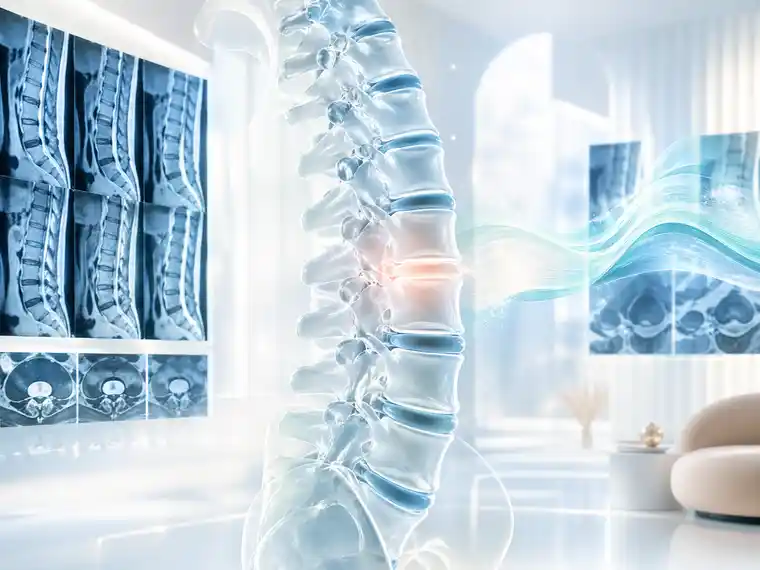
This is where patients often become confused.
They see words like:
- degeneration,
- bulge,
- protrusion,
- extrusion,
- annular tear,
- desiccation,
and assume the scan has already explained their pain completely.
Usually it has not.
Disc degeneration and herniation are both common on imaging, but symptoms depend on location, severity, inflammatory response, and whether the imaging matches the actual examination and pain pattern. In other words, the MRI matters, but it does not speak alone.
A patient can have visible disc degeneration and mostly local lower back pain.
Another can have a smaller herniation in exactly the wrong place and feel sharp radiating leg pain.
Another can have both.
That is why good spine care is still interpretive, not automatic.
When Leg Pain May Suggest Something More Urgent
Most disc-related leg pain is not an emergency.
But some patterns should not be minimized.
Faster evaluation matters when leg symptoms come with:
- progressive weakness,
- marked loss of strength,
- major numbness,
- worsening neurologic symptoms,
- bowel or bladder change,
- or saddle-area numbness.
Those patterns suggest the discussion is no longer only about pain control. They raise concern about more significant neurologic involvement and, in some cases, urgent decompression decisions. Guidelines and reviews on lumbar disc herniation management consistently treat major neurologic deficits and cauda equina-type symptoms much more urgently than ordinary pain alone.
So yes, sciatica can be common.
But not all sciatica should be treated casually.
Why the Difference Matters for Treatment
This is where patients need the clearest answer.
If the problem is mainly discogenic lower back pain, treatment logic usually focuses on the lower back itself:
- movement,
- rehabilitation,
- pain control,
- activity adjustment,
- and in selected cases, more advanced treatment discussion.
If the problem is mainly nerve-root irritation from a herniated disc, the treatment discussion becomes more focused on:
- radicular symptoms,
- inflammation around the nerve,
- neurologic status,
- how long the leg pain has persisted,
- and whether the pattern is improving or worsening. Reviews on lumbar disc herniation management support conservative care first in many cases, but the logic changes when neurologic deficits become more significant.
That is why the words matter.
Not because terminology is academic.
Because treatment changes depending on what the pain pattern is really telling us.
FAQs About Lumbar Disc Disease, Leg Pain, Sciatica
Can lumbar disc disease cause leg pain?
Yes, it can. But when patients say “leg pain,” I usually want to slow that down a little first. Because not every pain that reaches into the leg is the same thing. Sometimes the lower back problem is still mostly disc-related and local, but the pain starts spreading in a broader way. And sometimes the moment leg pain appears, we begin thinking more seriously about the nerve. So yes, lumbar disc disease can be part of that picture. But once the pain clearly starts traveling, the next question is no longer only about the disc. It is whether the nerve has now become involved too.
Is sciatica the same thing as lower back pain?
No, not really. Patients often group it all together at first, which is understandable. They just know something hurts. But clinically, there is a difference. Lower back pain usually stays more local. Sciatica feels different. It tends to travel. Patients describe it as shooting, pulling, burning, or running down into the buttock or leg. That is why sciatica changes the conversation. Once the pain starts following that kind of path, we stop thinking only about the lower back itself. We start asking much more directly whether a nerve root is being irritated.
Does a herniated disc cause sciatica more often than disc degeneration alone?
Usually yes. A herniated disc is the more typical cause of sciatica because it may irritate or compress the nerve root directly.
Can I have lumbar disc disease without sciatica?
Yes, very easily. In fact, many patients do. A disc can degenerate, dry out, lose height, and become painful without ever creating true sciatica. Those patients may still have chronic lower back pain, stiffness, flare-ups, or the feeling that the back is weaker and less reliable than before. So lumbar disc disease does not automatically mean pain will run into the leg. That usually depends on whether the nerve has become part of the story.
If my MRI shows degeneration, does that explain my leg pain?
Not automatically. MRI findings need to match the pain pattern and examination. Degeneration may be present, but the leg pain may depend more on whether a nerve root is being irritated.
When should leg pain worry me more?
More urgent assessment matters if leg pain comes with progressive weakness, major numbness, bladder or bowel symptoms, or saddle-area sensory change. Those are not symptoms to explain away casually.
Final Thoughts
Lumbar disc disease can be connected to leg pain and sciatica.
But that does not mean every aching lower back with a disc MRI finding is automatically a nerve problem.
The real difference is usually in the pattern.
When the pain stays mostly in the lower back, the disc itself may be the more obvious part of the story.
When the pain starts running into the leg, the question of nerve-root irritation becomes much more important.
That is why the better question is never just:
“Do I have disc disease?”
It is:
“What is this disc doing, and is the nerve involved?”
That is usually where the next good decision begins.
When a Back and Leg Check Makes Sense
Leg pain can make a back problem feel more serious. Sometimes it is only irritation. Sometimes the nerve is involved.
So it makes sense to check the pattern properly. Look at the MRI. Look at where the pain travels. Talk about numbness, weakness, and what has already been tried. Then it becomes easier to understand what the disc is doing, and which treatment path makes sense.