Regenerative Medicine

MedClinics News & Blog
A new stem cell aging study can be easy to misunderstand if it is reduced to a headline.
People often react to this kind of research in two very different ways. Some immediately read it as proof that stem cell treatment is about to transform longevity medicine. Others dismiss it as another laboratory paper with no practical meaning outside academic science.
Neither reaction is especially helpful.
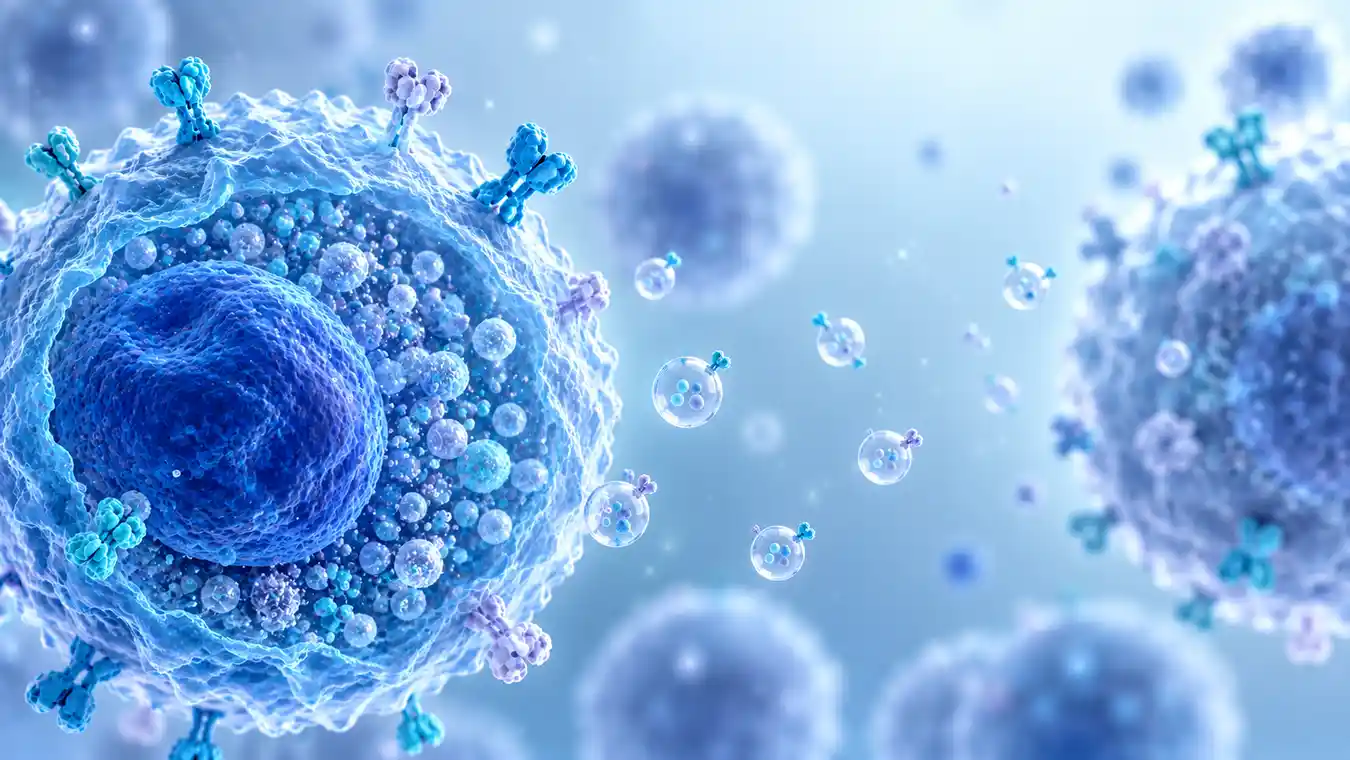
What makes this new 2026 Nature Communications paper important is not that it introduces a ready treatment. It does not. Its value lies somewhere else. The study gives a clearer explanation of one of the biological changes that may weaken stem cells over time. More specifically, it looks at hematopoietic stem cells – the blood-forming stem cells that help support immune and blood system function – and explores how mitochondrial damage may contribute to their decline with age.
That matters for a simple reason: if stem cell treatment is going to play a meaningful role in longevity medicine, then understanding why stem cells lose resilience in the first place is not a side question. It is part of the foundation.
Stem cell treatment is often discussed in the language of regeneration, repair, and cellular renewal. That is understandable. Stem cells are closely connected to those ideas, and for good reason.
But treatment does not exist in isolation from biology.
If stem cells themselves become less stable, less adaptive, or less functional with age, then that has consequences for how we think about stem cell treatment in the broader context of longevity medicine. It means the field is not only about what stem cells may one day help repair. It is also about understanding the conditions under which stem cells remain strong, and the conditions under which they begin to lose that strength.
That is where this paper becomes relevant.
The study is not offering a treatment protocol. It is not introducing a new stem cell therapy. But it does strengthen the scientific importance of stem cells in the aging conversation. It helps explain why stem cell biology remains central to any serious attempt to understand long-term repair, resilience, and functional aging.
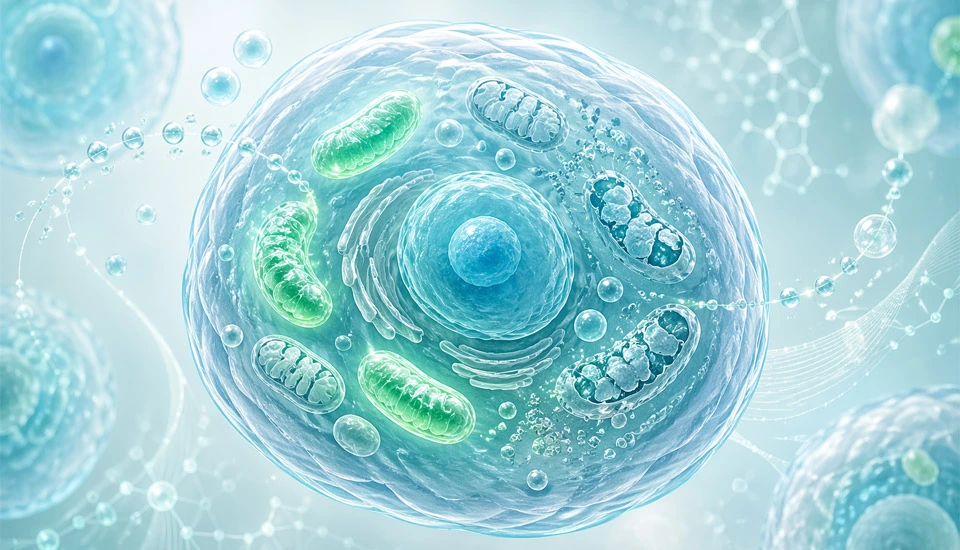
The study examined MLKL, a protein usually associated with necroptosis, a regulated form of cell death. What makes the paper notable is that the researchers describe a different role for it here — not in cell death directly, but in the biology of stem cell aging. Their findings suggest that MLKL may contribute to mitochondrial injury and, through that, to the aging of hematopoietic stem cells.
That may sound like a narrow molecular detail. In fact, it is more useful than that.
In simpler terms, the paper suggests that stem cell decline may not be just a vague consequence of getting older. It may also involve specific stress pathways that interfere with how stem cells manage energy, protect mitochondrial function, and continue operating over time. Once that process starts, the effects may reach far beyond one isolated cellular change. They may influence how well stem cells adapt, how they recover from stress, and how reliably they continue performing their role with age.
That is exactly the kind of detail that matters if stem cell treatment is going to develop on a stronger scientific basis. The more clearly researchers understand why stem cells weaken, the more realistic it becomes to think carefully about how stem cell-based approaches may fit into longevity medicine in the future.
Longevity medicine has spent years trapped between overstatement and oversimplification.
On one side, every new finding gets turned into a dramatic anti-aging narrative. On the other, anything that is not already a treatment is brushed aside as too early to matter.
That is not how real medical progress usually works.
What studies like this do is make the field more precise. They move the conversation away from slogans and toward biology. And that matters, because longevity medicine will only become more credible if it is built on mechanisms that can actually be traced, studied, and understood.
Aging is still often spoken about as if it were one single process. It is not. It unfolds across many layers — energy metabolism, inflammation, repair, signaling, immune change, tissue maintenance. When research begins to identify one of the mechanisms involved in stem cell decline, it helps longevity medicine become more concrete.
And for clinics, physicians, and patients who are interested in stem cell treatment, that matters too. It means the field is gradually moving away from vague regenerative language and toward a better understanding of the biology that may support treatment thinking more responsibly.
There is a reason stem cell treatment keeps appearing in discussions about longevity medicine.
It is not only because stem cells are linked to regeneration. It is because they sit very close to one of the central questions of aging: why does the body gradually lose its ability to maintain and repair itself?
That is why it remains such an important part of the broader conversation.
The issue is not simply whether stem cells might be used therapeutically in the future. In many ways, they already represent one of the most serious and meaningful directions in regenerative medicine. The deeper question is what weakens stem cell function with age, what biological environments make that worse, and how a better understanding of those processes may strengthen the future of stem cell treatment itself.
This is one reason stem cell aging research now feels more directly relevant to treatment discussions than it once did. It is no longer just an abstract branch of aging science. It helps build the biological context in which the treatment is understood.
It is just as important to stay clear about what this study does not mean.
It does not mean there is now a new treatment for aging. It does not mean this paper has proven stem cell therapy as an anti-aging intervention. It does not mean a clinical solution is suddenly ready. And it does not mean that one molecular pathway explains aging as a whole.
Those would be serious distortions of the science.
What the study does provide is a more detailed understanding of where future stem cell treatment research may gain depth – especially in relation to mitochondrial health, stem cell resilience, and the mechanisms that connect aging to reduced biological function. That is encouraging, not because it offers instant translation, but because it gives stem cell therapy a more serious scientific backdrop.
In longevity medicine, that distinction is important. Real progress depends not only on clinical ambition, but on understanding the biology well enough that treatment ideas are built on something stronger than hope alone.
Even though this study is specifically about stem cell aging rather than exosomes, it naturally connects to a broader scientific movement in longevity medicine – one in which stem cell treatment, exosomes, and regenerative medicine are all becoming more relevant.
That matters because stem cells are not a side issue in aging biology. They are closely tied to renewal, recovery, and the body’s ability to maintain function over time. For that reason alone, stem cell therapy continues to hold a meaningful place in longevity medicine.
What this study adds is not a new therapy, but a more detailed explanation of why stem cell function changes with age. That shift matters. If longevity medicine is going to make real progress, it will not be enough to speak positively about stem cell treatment in general terms. The field also has to understand what gradually weakens stem cells – the metabolic strain, the signaling changes, the damage that builds in the background – because those are the conditions that shape how treatment is understood and how future therapeutic strategies may evolve.
This is where the field becomes more mature.
Stem cell therapy remains promising not only because of what stem cells may someday help restore, but because stem cell biology reveals something essential about aging itself: the body’s repair systems do not fail all at once, and they do not fail without reasons. Understanding those reasons makes the broader treatment discussion stronger.
Exosomes enter the picture from a related angle. They are being studied because they may help explain how cells communicate stress, repair signals, and inflammatory responses. In regenerative medicine and aging research, that is highly relevant. Aging is not only a story of cells wearing out. It is also a story of communication becoming less coordinated over time. That is one reason they have become increasingly interesting in the wider landscape of regenerative medicine.
So while this paper is not about exosome therapy, it still belongs to the same larger scientific environment in which stem cell treatment, exosomes, and regenerative medicine are all being discussed in relation to repair, resilience, and healthier aging.
Of course, that does not mean every positive stem cell paper should be converted into a treatment claim. That would damage trust very quickly. But it does support something more grounded and more useful: stem cell therapy deserves its place in longevity medicine because stem cell biology continues to reveal some of the most important foundations behind repair, decline, and the body’s changing ability to sustain itself over time.
The most useful longevity news is often not the kind that looks dramatic on the first day.
Usually it is smaller than that. One pathway. One protein. One better explanation than before.
That may not sound exciting in the way headlines often try to be exciting. But this is how real medical fields usually move forward.
The mistake is to think such work is either too small to matter or big enough to change clinical practice overnight. It is neither. Its value is that it makes the field easier to understand. And if longevity medicine is going to become something more substantial than marketing language, it will depend on this kind of work — research that makes aging biology more readable, more structured, and more useful for future treatment thinking.
The new stem cell aging paper does exactly that.
Not by promising too much. By making one part of stem cell decline less obscure — and by giving stem cell therapy in longevity medicine a stronger scientific context than it had before.
Because it gives the field a more concrete explanation for one part of age-related decline. Instead of speaking about stem cell aging in general terms, the study points to a specific link between MLKL, mitochondrial damage, and the weakening of blood-forming stem cells. That makes the biology clearer.
No. This is not a treatment paper. It does not introduce a new clinical stem cell therapy. What it does is improve our understanding of one pathway involved in stem cell aging, which may be important for future treatment thinking.
Because stem cell therapy depends not only on the idea of regeneration, but also on understanding stem cell biology properly. If researchers can understand more clearly why stem cells lose resilience with age, that gives the treatment field a stronger scientific foundation.
The study itself is not about exosomes, but it belongs to the same broader shift in aging research. More and more, the field is looking at signaling, mitochondrial health, tissue environment, and biological coordination – which is also why exosomes and regenerative medicine have become part of the longevity discussion.
Not by itself. But it is exactly the kind of research that makes the field more serious. It does not offer a miracle. It offers a clearer understanding of the biology that may eventually support better, more evidence-based approaches in longevity medicine and stem cell treatment.