Regenerative Medicine

Clinical Insights by Op. Dr. Hilmi Karadeniz
Patients rarely describe an ACL injury in anatomical terms.
They do not usually come in saying, “I think I tore my anterior cruciate ligament.” They say the knee slipped. Or gave way. Or felt wrong the moment they tried to stand again. There was often a twist, a sharp moment they remember clearly, swelling that came on fast, and then something more unsettling than pain: the sense that the knee was no longer trustworthy.
That feeling is usually not misleading.
What stays with most people is not only the pain, but the sudden loss of confidence in the joint. A knee that felt completely ordinary a moment earlier now feels unfamiliar. For an athlete, the mind moves ahead very quickly. How bad is this? How long will I be out? Can the healing be helped in some way, or do I simply wait and hope the knee catches up?
That is usually where stem cells, exosomes, and regenerative medicine begin to appear in the conversation.
And that is also where some caution becomes necessary.
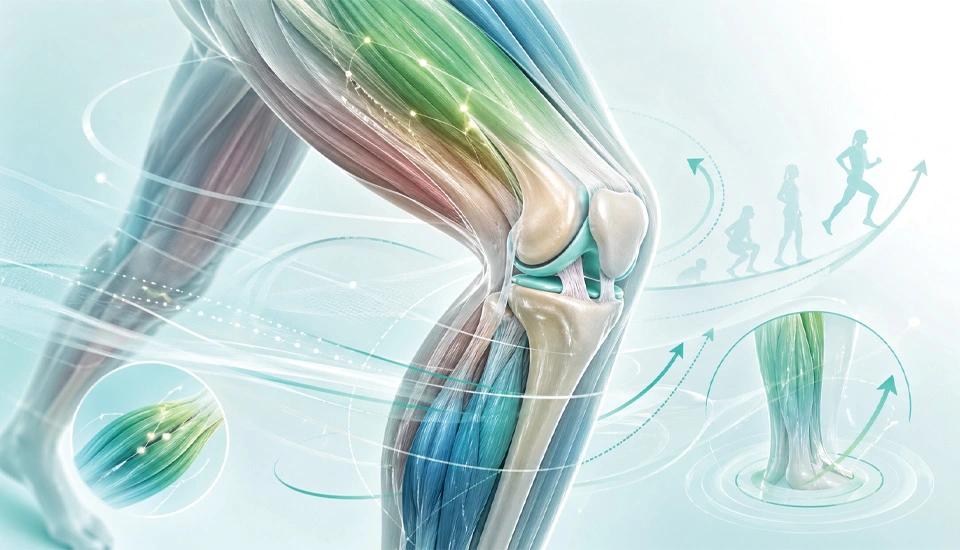
Many patients picture ACL recovery almost like a sequence on a chart. The ligament tears, the knee becomes unstable, surgery may be done, rehabilitation follows, and with enough time everything moves back into place.
Actual recovery is less neat than that.
The ACL is obviously central, but the knee does not behave as though only one structure has been injured. After the initial tear, the whole joint enters a longer process. Inflammation has to settle. A graft, if used, has to incorporate. Tendon-bone healing has to take place. Muscles have to wake up again. Control has to return. Rotation has to feel manageable. Confidence has to come back. And only much later does the question of sport truly begin.
That is why a technically good reconstruction can still leave a patient feeling disappointed for a while. The operation may be successful, and yet the knee may not feel like theirs again.
Patients often sense that before they have the language for it.
The swelling comes down. The movement improves. Strength begins to return. On paper, all of that sounds reassuring. But the knee can still feel guarded, a little strange, not fully willing. That gap — between recovery as it appears clinically and recovery as it feels in real movement — is one of the reasons ACL healing takes longer, and feels more complicated, than most people expect.
It is also one reason people begin looking beyond the usual rehabilitation discussion and asking whether healing itself can be supported more intelligently.
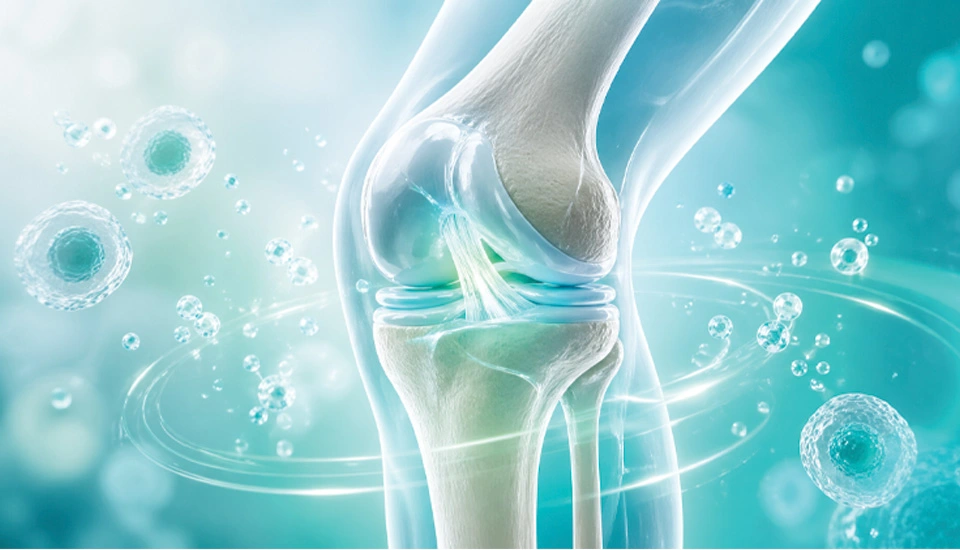
Stem cells come into ACL recovery discussions because they are associated with repair, tissue support, and biologic healing.
That does not mean a torn ACL simply grows back because stem cells are mentioned. The real medical question is smaller than that, and much more useful. The question is whether stem-cell-based approaches may improve the healing conditions around the injury — especially where graft biology, tendon-bone integration, or tissue response after reconstruction are concerned.
That is where the subject becomes relevant.
From an orthopedic perspective, stem cells are not interesting because they sound modern. They are interesting because ACL healing depends on more than the mechanics of surgery. The biology around the graft, the tunnels, and the surrounding tissues matters as well. If that biology can be supported under the right conditions, then the idea deserves serious attention.
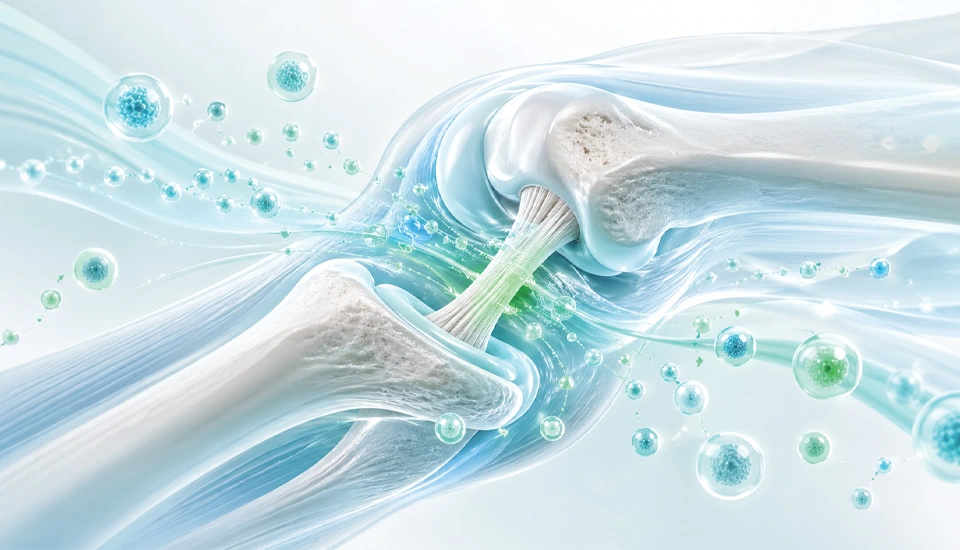
Exosomes entered the discussion from a different direction.
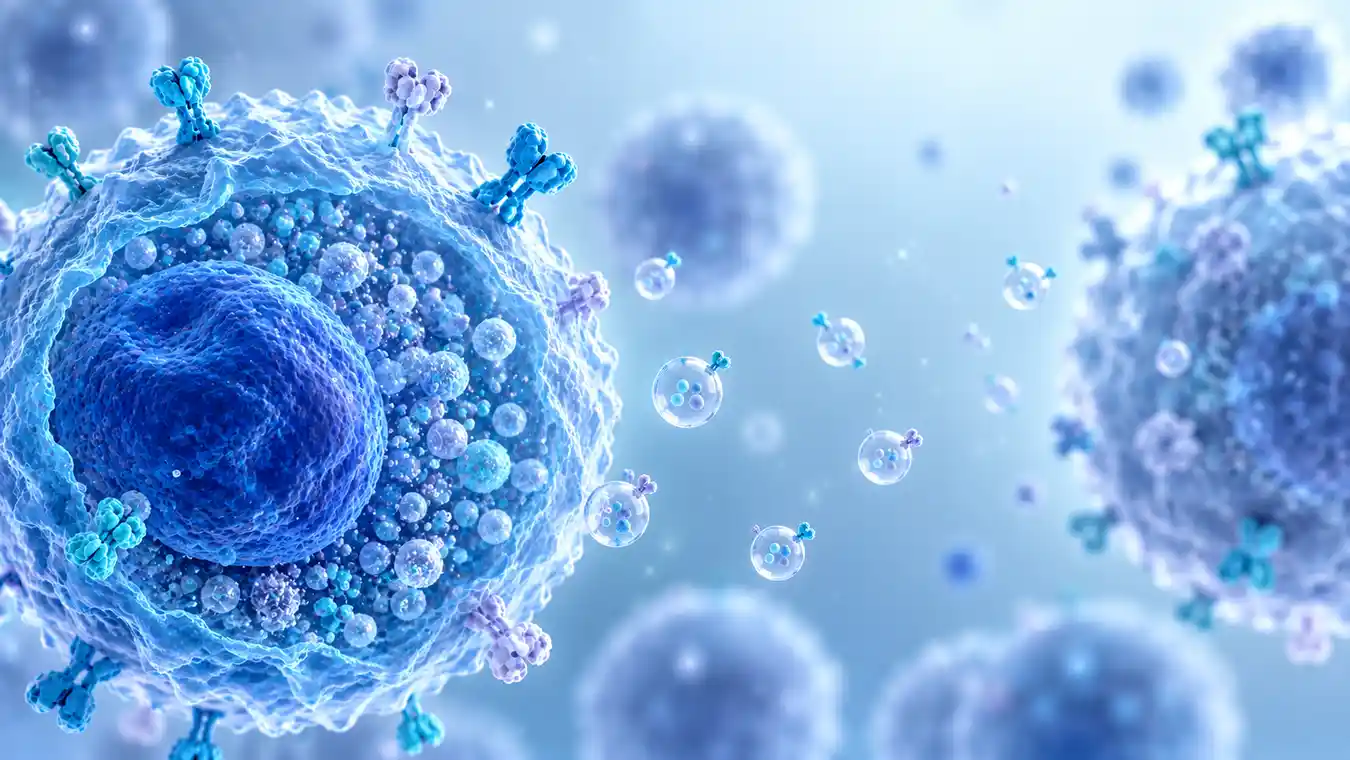
They are tiny vesicles released by cells, and what makes them important is not their size but their role in signaling. That is the key point here. Recovery is not just a matter of having tissue in the right place. It also depends on how cells communicate, how inflammation is controlled, how repair activity is coordinated, and how the local environment in the knee changes after injury or surgery.
That is why exosomes have attracted so much interest.
The stronger scientific interest in them is not really about novelty. It is about whether these signaling processes may shape the quality of healing in ways that matter. An ACL-injured knee is not simply sitting still while time passes. It is going through a cascade of biological reactions, some useful, some limiting. Exosomes have become interesting because they may be part of that story.
The most honest way to describe the field at the moment is this: the research is active, but the conclusions are not final.
There is real scientific interest in stem cells and stem-cell-derived exosomes in ACL repair and reconstruction. Much of that work is looking at tendon-bone healing, graft maturation, inflammatory control, and the wider biologic setting in which recovery takes place. Those are not side issues. They are some of the details that may ultimately influence how complete the recovery becomes.
At the same time, there is still a limit to what should be promised.
A large share of the evidence remains preclinical or early translational. That means the biology may be encouraging, but dependable everyday clinical certainty is not there yet. Protocols are not fully standardized. Outcomes are not uniform. And there is still a real distance between promising research and routine orthopedic practice.
That does not make the field unimportant.
It simply means it has to be discussed in proportion.
This is probably the most useful way to see it.
Regenerative medicine makes the most sense in ACL recovery when it is understood as support.
Support for:
tendon-bone healing,
graft incorporation,
biologic signaling,
tissue quality,
and the local environment in which repair unfolds.
Not a replacement for:
clinical diagnosis,
good surgical judgment,
reconstruction when clearly indicated,
rehabilitation,
strength recovery,
movement retraining,
or return-to-sport decisions.
This difference matters because many patients encounter these ideas in the wrong order. They hear about stem cells or exosomes first. Only later do they hear the less dramatic but much more important part: the graft still needs time, the knee still has to be retrained, movement still has to be rebuilt, and the athlete still has to regain confidence again under load, rotation, and speed.
Those parts do not disappear because a biologic therapy is being discussed.
When patients ask me about stem cells or exosomes after an ACL injury, I do not think the right answer is dismissal.
The interest is understandable, and in some respects it is justified.
But I also do not think the right answer is enthusiasm without structure.
The better questions are:
What exactly are we trying to support?
At what phase of recovery?
For what indication?
On what evidence?
And how does this fit into the rest of the treatment plan?
If those questions are not clear, then the discussion is probably moving faster than it should.
Because even if regenerative medicine becomes more important in ACL recovery over time — and I believe it may — it will still have to earn that place in the usual way: through careful indication, proper follow-up, quality control, and outcomes that stand up outside theory.
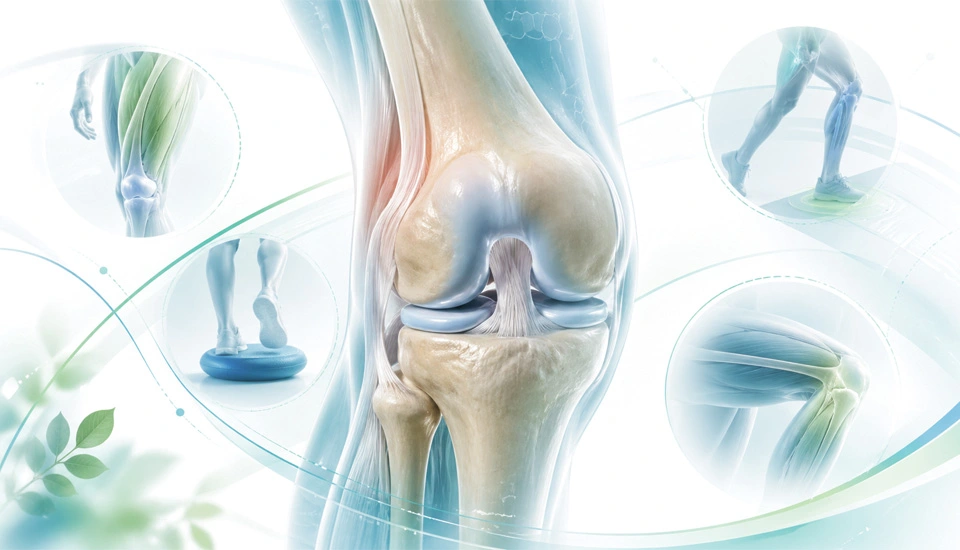
It is tempting to think the future of ACL recovery will depend on one advanced tool.
It probably will not.
More likely, it will depend on several things being done well at the same time.
A clearly defined injury.
The right decision between surgical and non-surgical treatment.
A technically sound reconstruction when needed.
Thoughtful rehabilitation.
Gradual exposure to load, rotation, and speed.
Strength that returns in a usable way.
Movement that becomes dependable again.
And, in selected cases, biologic support that may improve the quality of healing rather than trying to replace the whole process.
That answer is less dramatic than many headlines make it sound.
It is also closer to the truth.
The useful question is not whether stem cells or exosomes can somehow solve everything.
It is whether they may support one part of healing, in the right patient, at the right point in recovery, for the right reason.
That is the point where the discussion starts to become medically useful.
Stem cells and exosomes are worth following in ACL recovery because the conversation around them has become more concrete than it used to be. Researchers are not just speaking in broad regenerative terms anymore. They are looking closely at graft healing, tendon-bone integration, inflammatory signaling, and the quieter biological factors that may influence how well a knee comes back after injury or reconstruction. That does not mean the answers are all there. It means the questions are becoming better.
And in ACL recovery, that matters.
Because recovery is not only about whether the anatomy has been repaired. It is about whether the knee becomes dependable again — first in daily life, then in training, and eventually in sport.
They may help support certain parts of healing, especially where graft biology or tendon-bone healing are concerned. But they should not be presented as a complete answer on their own, and they do not replace the rest of proper ACL treatment.
They are being studied with increasing interest, mainly because of their possible role in cell communication, inflammation, and repair biology. That scientific interest is real, but the field is still developing and needs to be discussed carefully.
No. When reconstruction is clearly necessary, regenerative approaches do not replace that decision. At most, they may serve as supportive options within a much larger treatment process.
The areas most often discussed are graft healing, tendon-bone integration, tissue quality, inflammatory balance, and the broader biologic environment in which recovery takes place.
Because they are part of a growing scientific effort to improve how healing takes place, not just how injury is repaired mechanically. Researchers are especially interested in whether they may support graft biology, tendon-bone healing, and the broader environment in which recovery happens.