Clinical insights by Dr. Melihcan Sezgiç
A Doctors’s Perspective on Peptides for Anti-Aging and Where They May Be Useful
If you asked me which treatment might help you look younger, I’d ask you to point out what bothers you. We could be looking at the same face and noticing quite different things.
It might be the skin beneath the eyes. Perhaps your cheeks seem less full, or you feel that you look tired even after a good night’s sleep. Before discussing a treatment, I need to understand which of those changes you want to address.
Some preparations containing peptides for anti-aging have shown benefits for particular aspects of skin quality. What I would not do is recommend “peptides” without explaining which substance I mean and why I am considering it.
The term has become very broad. A search might bring up a face serum, a tub of collagen powder and an injection programme on the same page. It takes a little reading to realise how little some of these products have in common.
I’d begin by separating them. Otherwise, it is very easy to expect a benefit from one product because you have read about a completely different preparation.
Table of Contents
A Small Molecule With a Specific Job
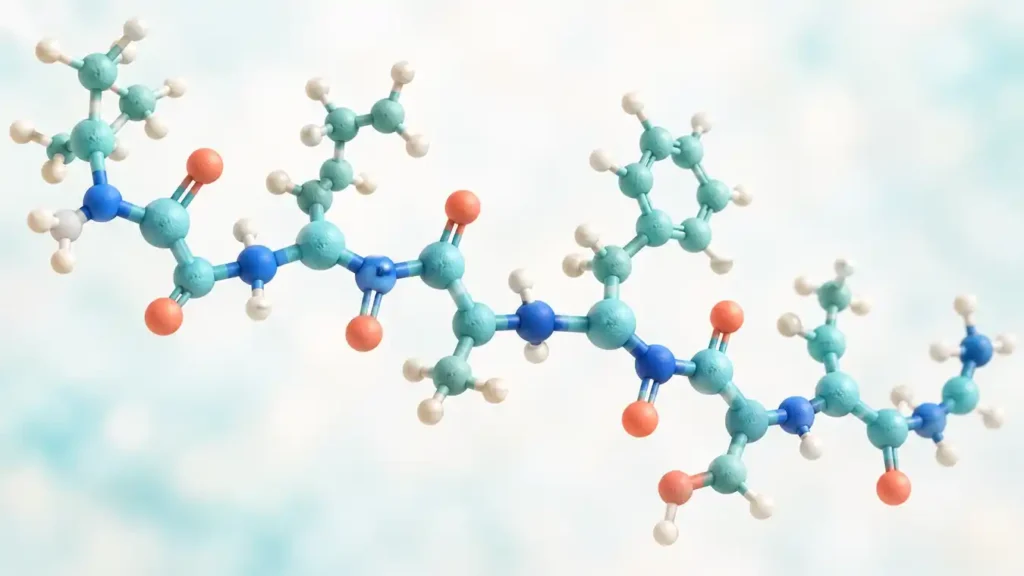
A peptide consists of amino acids linked together in a short chain. Proteins use those same building blocks, usually in much longer chains that form more complex structures.
The body produces many peptides. Some are involved in communication between cells. Others appear when larger proteins are broken down. Their actions depend on the sequence of amino acids and the biological setting in which they act.
I think of the word “peptide” as a starting point. It tells me something about a molecule’s structure. I still need its name before I can discuss its function.
In skin research, certain peptides are investigated for their influence on processes associated with collagen and other parts of the supporting tissue. Insulin belongs to the peptide family too, although most people would never think of it when reading about an anti-aging serum.
This helps explain why evidence cannot be transferred from one peptide to another. They may belong to the same broad family while doing very different things.
How Are the Peptides in Skincare and Supplements Obtained?
People want to know whether an ingredient comes from human tissue, whether animals are involved and what “laboratory-made” actually means. Those are reasonable questions. The answer depends on the product.
Making a Defined Sequence
For a defined peptide, the manufacturer can start with individual amino acids and link them in the required order.
In a method called solid-phase peptide synthesis, the first part of the chain is attached to a support. Further amino acids are added while it remains there. The completed chain is then detached, and the material goes through purification and testing.
What comes out of that process may reproduce a sequence found in nature. In other cases, the sequence has been modified, perhaps to make the molecule more stable.
I don’t see laboratory production itself as a drawback. I’m interested in whether the finished material is what it claims to be and whether it has been prepared properly for its proposed use. Those are questions I’d ask about any source.
“Natural” can sound reassuring, but it leaves those questions unanswered.
Obtaining Peptides From Collagen
Collagen supplements are produced differently.
The starting material is usually collagen from animal tissues. Sources can include fish skin and scales, cattle tissues or porcine tissues. The collagen is broken into smaller fragments, often with enzymes, through a process called hydrolysis.
That is what “hydrolysed collagen” means on a label.
The result contains many fragments of the original protein. So when you compare a collagen powder with a cream containing one named synthetic peptide, you are looking at rather different preparations.
This is also where I’d check the animal source. Someone with a fish allergy needs that information before choosing a marine product. Religious or dietary requirements may rule out other sources.
A term such as “marine” should describe the source; it should not be taken as proof of a better result.
Production Through Biotechnology
Some peptides can also be produced using engineered cells or microorganisms. These production systems receive genetic instructions to make the target molecule, which is then recovered and purified.
The microorganisms do the manufacturing work. Their use during production should not be confused with putting living microorganisms into the finished treatment.
Whatever the method, I want to be able to follow the ingredient back to its source.
Peptides do not automatically come from stem cells or from a patient’s own blood. We should never leave someone with that impression simply because several treatments are being discussed together.
What I Look for in Peptides for Skin Rejuvenation
I would keep the initial goal fairly focused.
Peptides for skin rejuvenation may be relevant when the concern involves fine lines or other aspects of skin quality. I would then look at the formulation and its supporting evidence.
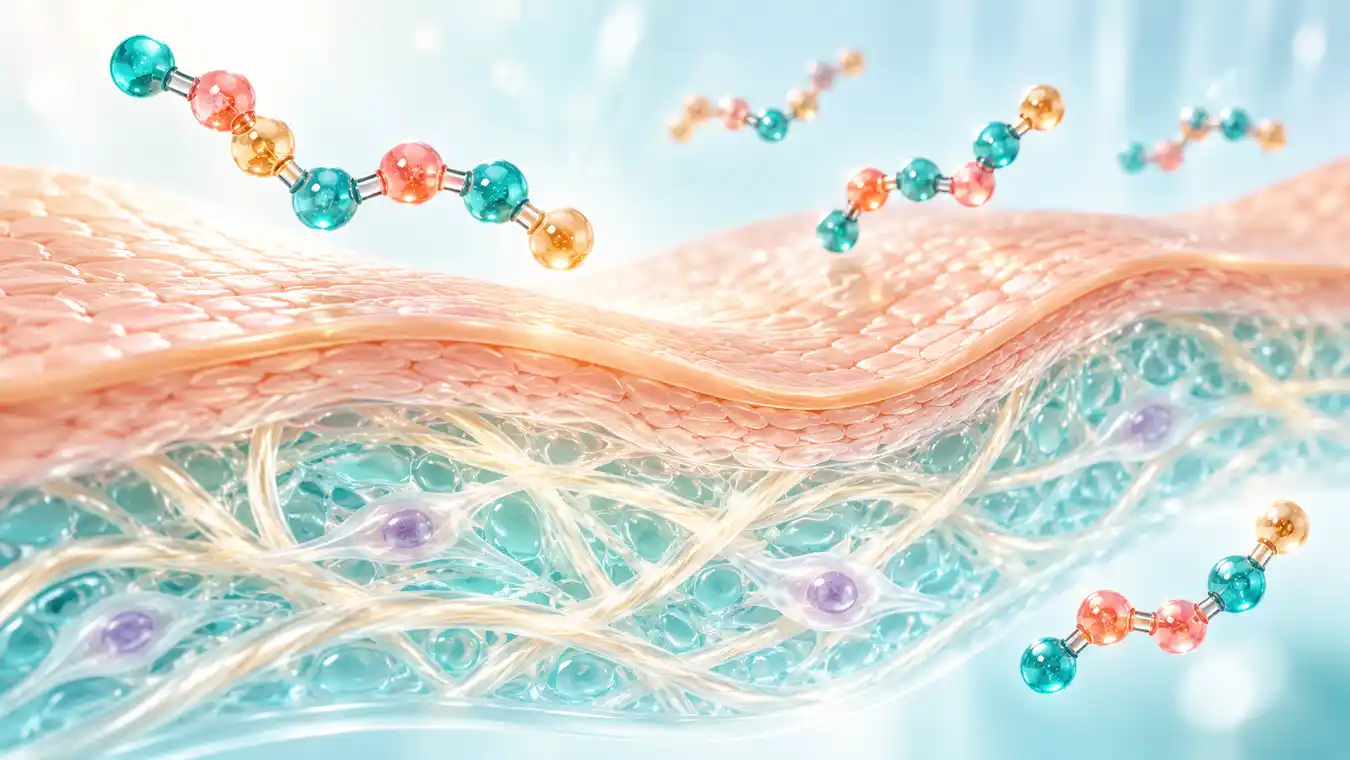
Some peptides are studied because of their effects on signalling associated with the extracellular matrix, the material surrounding cells. Collagen forms part of this supporting environment.
There is a sound reason to investigate those interactions. Getting an ingredient to work in a jar of cream is another part of the research. It has to remain stable there, and after application it needs to reach the place where it can act.
That is why I’m interested in what happens when people use the actual product. I would be more interested in a study of the finished product than a long explanation of what one component did in a laboratory experiment.
A small randomized trial of a cream containing tetrapeptide-68, for instance, assessed the eye area over 12 weeks. Instrument measurements showed improvements in several wrinkle-related parameters.
That is a useful finding for that preparation. I would explain it as a possible gradual improvement, with the size of the visible change still relevant to the person using it.
An instrument may detect a difference that someone finds difficult to see. Both observations belong in the discussion.
The Part a Cream Cannot Explain
The face changes beneath the skin as well as at its surface.
Loss of fullness, changes in tissue position and changes in the skin can all contribute to an older appearance. During an assessment, I would try to establish which of these is contributing most.
Take the fold beside the mouth. Someone may ask for a cream because that is where they notice the change. But the appearance of the fold may also be influenced by the cheek above it. Looking only at the line would give us an incomplete picture.
This is a familiar problem with treatment selection: the person sees an area, while the cause may involve a wider part of the face.
There may still be a good reason to use the skincare product. I just want us to agree on what we are trying to achieve with it. If you expect the fold to disappear while I am hoping for a modest change in surface texture, we have quite different ideas of success. That conversation belongs before you spend months using the cream.
What Happens After You Swallow Collagen Peptides?

Digestion comes first. The collagen in a drink does not travel straight to the face and fill the lines you have been looking at in the mirror.
Researchers study what happens to the amino acids and peptides fragments after digestion and absorption. They also examine whether taking a particular preparation leads to a measurable change in the skin.
There are human studies reporting improvements with collagen peptides. One randomized study involving 100 women evaluated a collagen peptides preparation over 12 weeks and reported benefits in several skin measurements.
I’d want to know more about that preparation before suggesting that another supplement would give the same result. The word “collagen” on two labels does not tell us that their contents are equivalent.
There is also the study itself to read. How was the change measured? Was it large enough to be visible? Were other ingredients included?
For you, the question may be simpler: is there a reasonable chance of seeing enough improvement to make it worth taking? I’d discuss the evidence with that in mind. A supplement is easier to assess when we have agreed on a realistic goal and a point at which to review it.
Why I Would Ask More Questions About an Injection
If you are considering injectable peptide therapy, bring the name of the substance you have been offered. Without that, I cannot make much of the description.
I’d also ask what the proposed treatment is supposed to change. Then I would look for human evidence relevant to that route.
A cream study gives me no basis for judging an injection. Even if the ingredient name is familiar, I still need to examine the injectable preparation and the research supporting its use.
With several peptides promoted in wellness programmes, there is relatively little human safety information to work with. Concerns have also been raised by regulators about impurities and possible immune reactions in certain preparations. Those are reasons to ask more questions about a product before recommending it.
The manufacturing source therefore deserves close attention, alongside the legal status of the preparation in the country where treatment is proposed.
I would be particularly cautious about a product labelled “research use only.” That designation does not establish suitability for patient treatment.
There is no need to dismiss research because it is early. But when speaking to someone considering treatment, I would make the stage of that research clear.
Peptides for Longevity: What Interests Me About the Research
Skin is only one part of this subject.
Peptides for longevity are being investigated because some participate in processes associated with metabolism, cellular stress and physical function. These are relevant areas of aging biology.
One example is MOTS-c, a mitochondrial-derived peptide. In experimental studies, giving MOTS-c to mice improved physical performance, including in older animals.
That result is interesting. It gives researchers a basis for further work. Before recommending treatment in people, I would want to know whether a relevant benefit has been demonstrated in humans and how safety has been assessed.
The word “longevity” can hide quite different goals. Someone may mean having more energy. Another person may mean preserving independence into old age. Others are asking whether treatment could extend life.
These outcomes need different kinds of evidence.
Suppose a treatment changes a blood marker. The finding might tell researchers something useful about how it acts, but I still couldn’t use that result to tell you how long you will live. Biological age tests raise a similar question: what does the changed number actually represent? I would want to understand what the test measures before giving the result clinical weight.
When I read longevity research, I try to keep the original finding in view. It is easy for the description of a treatment to become much broader than the result that started the discussion.
Looking Younger Is a Valid Goal
I do not think an aesthetic result needs to be presented as a longevity result to make it worthwhile.
If someone is troubled by fine lines or a change in skin texture, an improvement can matter to them. They may feel more comfortable with their appearance. That is a perfectly reasonable reason to seek advice.
We can look at the area together and discuss whether the treatment has helped.
What I cannot read from a facial photograph is whether your heart is healthier or whether you will remain physically independent for longer. Those questions require medical evidence relevant to those outcomes.
I’m quite comfortable describing an aesthetic improvement as just that. We can say what improved without attaching claims that have not been demonstrated.
Where PRP and PRF May Fit
PRP and PRF are prepared from the patient’s own blood. They differ from manufactured peptide ingredients, although they may be considered within the same broader treatment plan.
I would want a defined purpose for each component. If I suggest combining treatments, I need a reason for that combination. Separate studies of the individual components may not tell us what happens when they are used together.
There is a practical side too. Every addition costs the patient something, and several treatments started together can make the result difficult to interpret. You should be able to ask what each part contributes and receive an understandable answer.
How I Would Review the Result
I would start by returning to the concern recorded before treatment.
If we were trying to improve fine lines around the eyes, that is the area to reassess. I’d take the follow-up photograph in lighting similar to the original, with the same positioning and expression. A slightly different angle, or a smile in only one photograph, can make the comparison misleading.
Where available, skin measurements can add useful information. They should sit alongside the person’s own assessment.
I also want to hear how it has been for you to use the preparation. Has it irritated your skin? Can you see enough of a difference to want to continue paying for it? A small improvement on a measurement sheet may not feel worthwhile to the person following the routine.
The review date needs to fit the product. We should allow the period supported by its evidence rather than make a judgement after a few applications. Equally, there should come a point when we stop and ask whether continuing makes sense.
That is how I’d approach a decision about peptides: start with your concern, examine the preparation and return to the result. The molecule and the formulation matter much more to me than how prominently “anti-aging” appears on the packaging.
Questions About Peptides for Anti-Aging

Where Do the Peptides in My Serum Come From?
Quite possibly from laboratory synthesis. A peptide can be built from individual amino acids, so manufacturing it need not involve stem cells or donated human tissue. Other production methods exist too.
For a serum you already own, the manufacturer is the best place to ask. I wouldn’t try to work out its origin from a phrase such as “regenerative skincare.” That describes how the product is being presented, rather than where its ingredients came from.
Does “Marine Collagen” Mean It Is Suitable for Vegans?
No. Marine collagen generally comes from fish, which rules it out for a vegan diet. Conventional collagen peptides also come from sources such as cattle and pigs.
The confusing products are the ones called “collagen boosters.” A vegan booster may supply nutrients associated with collagen production without containing any collagen. I’d check the ingredients before buying it, particularly if you are trying to find the equivalent of a supplement used in a study.
Can a Peptide Cream Soften Crow’s Feet?
There may be some improvement in fine lines with a well-studied preparation. How much you notice is another question.
I’d want to look at your skin with your face relaxed as well as smiling. You may be pointing to a fine crease, a deeper fold or a shadow beneath the eye. From a description alone, it’s easy to misunderstand what bothers you. A cream could leave the surface looking smoother while doing very little for the hollow responsible for that shadow.
Is It Worth Having Peptide Injections?
I couldn’t recommend an injection on that description alone. “Peptide injections” covers different substances, and I need to know what you have been offered.
Bring the product name and the proposed treatment details. Then we can look at whether it has been studied in people for your concern, alongside its source and suitability for injection. Sometimes the information available is simply too limited to support a recommendation. A reassuring account of what a substance does in the laboratory doesn’t settle those clinical questions.
How Long Should I Give a Product Before Deciding?
I wouldn’t expect a wrinkle treatment to prove itself over a weekend. The studies mentioned in this article followed their particular preparations for 12 weeks. For another product, I’d look at the research behind it before agreeing on a review date.
A photograph taken before you start can be surprisingly helpful. Memory is a poor way to compare small changes over several months. At review, I also want to hear what you think: has anything improved enough for you to want to carry on? A tiny measured change may have little value to someone who cannot see a worthwhile difference.
Could Peptides Help Me Live Longer?
That remains a research question. The animal work discussed here is interesting, but it doesn’t allow me to tell someone that peptide treatment will extend their life.
I’m more comfortable being specific about what we can assess. With a skin preparation, we can look for a change in the area being treated. Whether a person will stay healthier for longer is a much bigger question, requiring human research that follows those outcomes. Smoother skin, however welcome, cannot give us that answer.