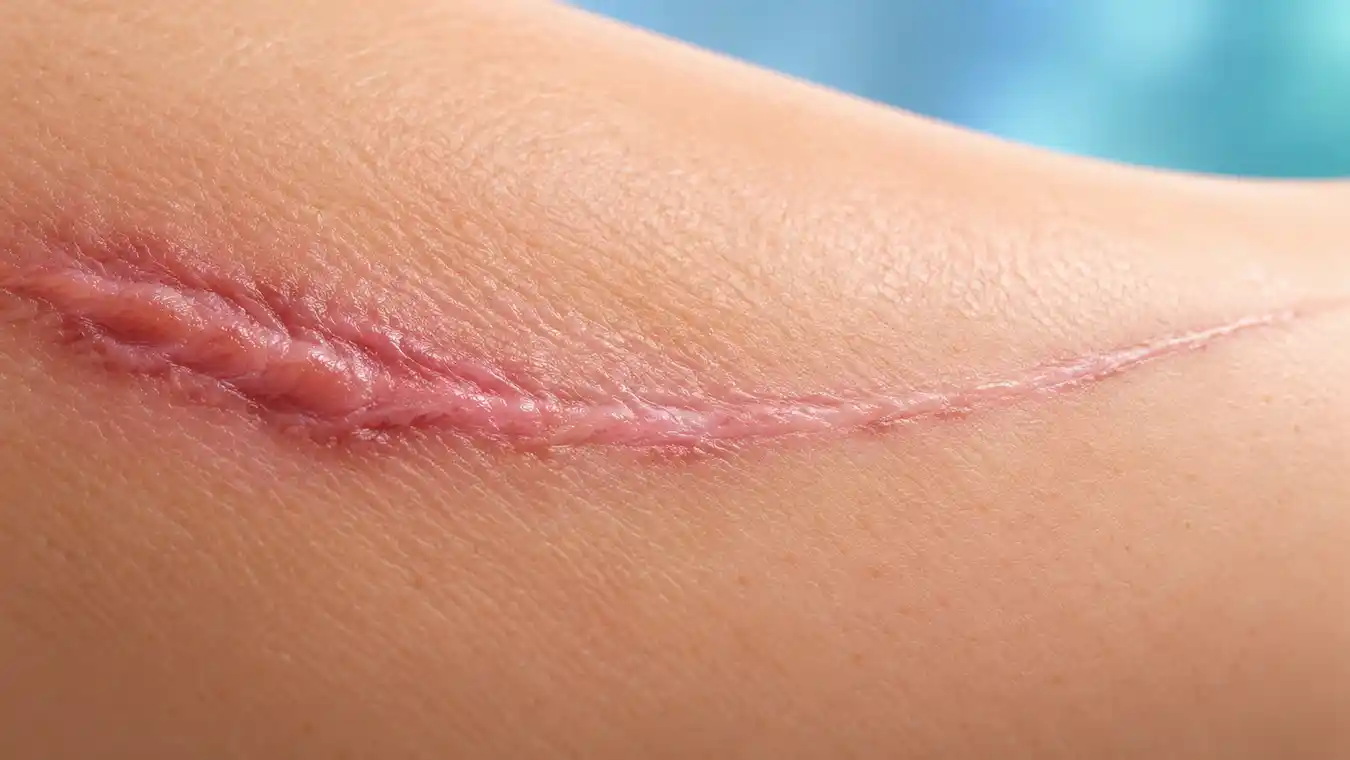
Clinical insights by Op. Dr. Melihcan Sezgiç
What Would You Like Scar Treatment to Change?
“The scar itself doesn’t hurt. I just don’t like the fold above it.”
That would give me somewhere to start. I’d ask you to show me the fold while standing, then sitting. I’d examine the skin and feel whether it moves over the tissue underneath.
You might have a completely different concern. Perhaps your sleeve catches a raised scar, or you avoid stretching because an old burn feels tight. You may simply want to wear something without checking whether the mark shows.
Tell me that part first. It helps me understand what you’re asking for before we talk about laser, stem cells or exosomes.
I would also ask how the scar formed and what happened during healing. If you’ve already tried treatment, bring its name and any photographs you kept. “I had laser three times” is useful information; knowing which laser and how your skin responded is even more useful.
Table of Contents
A Scar Can Have More Than One Problem
An incision can be flat at one end, raised in the middle and depressed at the other. We don’t necessarily need to approach its whole length in the same way.
For an abdominal scar that draws inward, I look for attachments underneath. There may also be missing fat beneath the line. Treating the surface might improve its texture while doing little for the fold that bothers you.
That is where release of an attachment or fat grafting may enter the discussion.
Surgical scar treatment doesn’t always mean cutting out the existing scar. Sometimes the work is beneath it. In another case, revising the line itself may offer the more useful change.
Burns and injuries can involve a much larger area. I’d want to see how you move, especially when the scar crosses a joint. With acne scars, I’d look at the individual depressions: a shallow hollow and a narrow, deep scar may require different methods, even on the same cheek.
Why It Feels Different From the Surrounding Skin
After a wound closes, repair continues underneath. Collagen is produced and reorganised as the scar matures.
You may notice that the area becomes softer over time. Some scars, however, remain firm or feel fixed to a deeper layer. Others settle with an indentation where supporting tissue has been lost.
During examination, I gently move the skin around the scar and compare it with the scar itself. If you describe pulling, I ask you to repeat the movement that causes it.
A photograph cannot show me all of this. It may be enough for an initial conversation, but I would examine the tissue before confirming the procedure.
How Could Stem Cells Help With Scars?
Stem cells release substances that affect other cells involved in healing. Researchers are investigating their influence on inflammation, blood-vessel development and collagen remodelling.
In laboratory studies, fat-derived stem cells have altered scar-forming cells and reduced the expression of proteins associated with fibrosis.
That is relevant to a scar which has become thick or restrictive. The aim isn’t simply to produce more collagen. We’re interested in how the repaired tissue is organised and whether its behaviour can change.
How well that translates into a result for a patient still needs clinical evidence.
For example, a small randomised study examined nanofat along abdominal surgical scars. It found an improvement in early maturation, but the final mature scar wasn’t better. An early photograph, therefore, wouldn’t have told the whole story.
When discussing stem-cell-based scar treatment, I would explain what is actually being proposed. That includes the preparation, its purpose and what we know about its use for that kind of scar.
Fat Grafting, Nanofat and Stem Cells
A depressed scar may need volume beneath it. Fat grafting can be considered for that purpose, sometimes together with release of deeper attachments.
Fat tissue also contains supporting cell populations, including stem or stromal cells. Several preparation methods have developed from this, and their names can be confusing.
Ordinary fat grafting transfers prepared fat tissue. Nanofat is processed differently and is generally considered for tissue-quality applications rather than dependable volume replacement.
SVF, short for stromal vascular fraction, describes a mixture of cells obtained from fat. Isolated, expanded stem cells involve further processing.
I wouldn’t expect you to remember all those terms after a consultation. You should, though, be able to explain what you’ve agreed to: whether fat will be collected, what will happen to it and where it will be used.
If there is no need to replace volume, collecting fat still requires a reason. It shouldn’t become an automatic part of every plan.
Exosomes: What We Can Learn From the Research
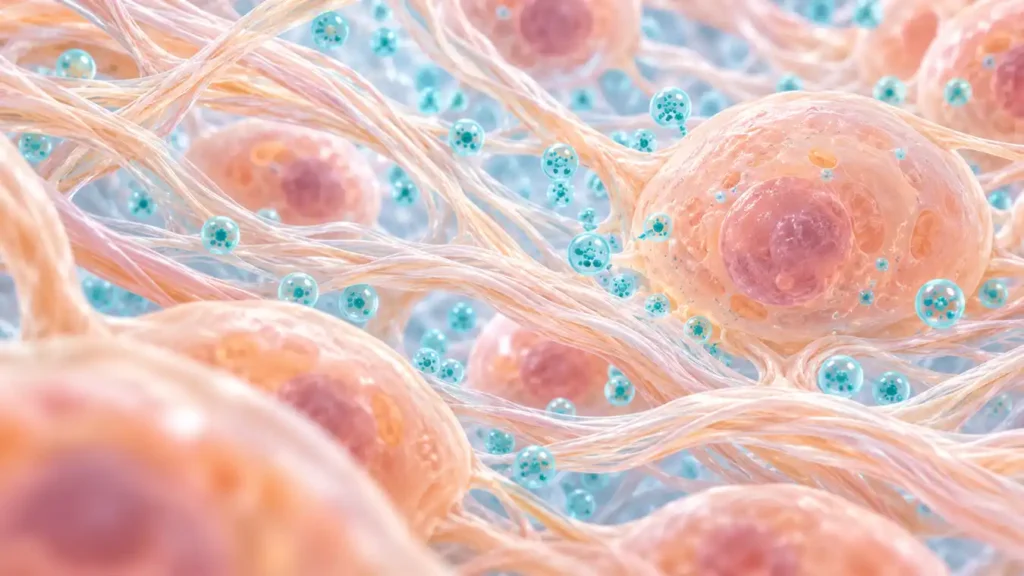
Exosomes are small vesicles released by cells. They carry proteins, RNA and other biological material capable of influencing neighbouring cells. They contain no living stem cells.
Experimental scar research has found effects on excessive collagen deposition and fibrosis. Much of that work has involved cells or animal models, so it helps explain the interest without establishing the outcome of treatment in people.
There is early human research too.
One study involved 25 people with depressed acne scars. Both sides of the face received fractional CO₂ laser. Afterwards, one side received a particular stem-cell-derived exosome gel and the other a control gel.
During the 12-week study, the exosome-treated side showed greater improvement in scar scores. Redness was milder and downtime was shorter.
This gives us something specific to discuss. It also leaves questions open. The findings concern the preparation and application tested on acne scars. They don’t establish the same result for an old burn, a surgical scar or another exosome product.
The application method matters as well. Evidence from a topical gel study cannot automatically support an injectable preparation.
If exosomes are included in your treatment, I would explain their source, how they will be applied and why they have been proposed.
How I Use CO₂ Laser for Scar Treatment
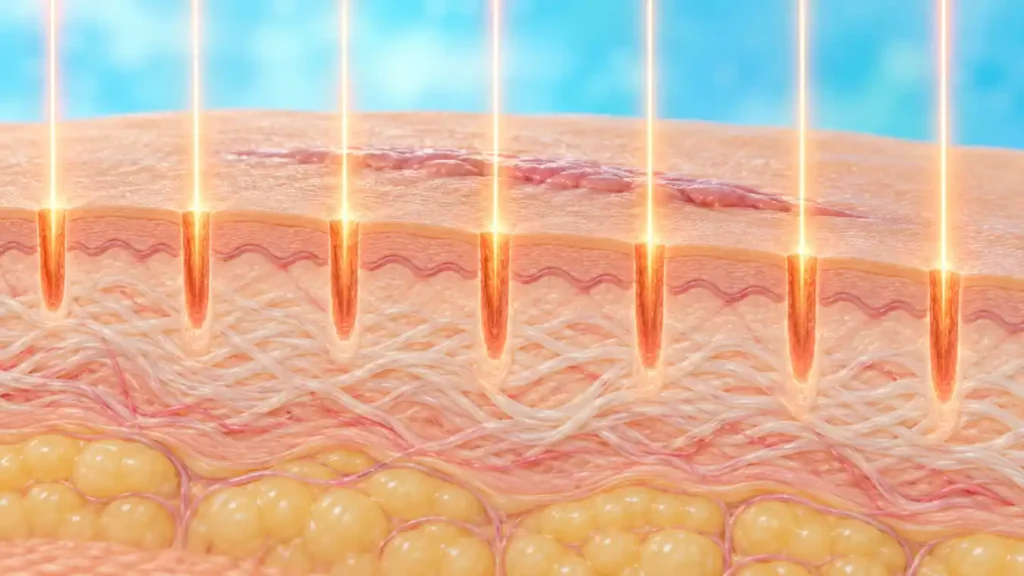
In my practice, the planned stem-cell-based and/or exosome application takes place on the same day as CO₂ laser.
Laser scar treatment produces a controlled injury, followed by healing and remodelling. Fractional CO₂ treatment creates small treated columns, leaving areas between them intact. The settings depend on the scar and surrounding skin.
We decide beforehand whether other work is needed. If there is a deep attachment, that needs assessment. If volume is missing, an exosome preparation won’t replace it.
Laser scar treatment has an established role in managing selected scars. The additional benefit of regenerative preparations is still being investigated for many applications. I explain that distinction when discussing the combination.
You may ask whether both stem cells and exosomes are necessary. The answer should come from the proposed procedure and the scar we’re treating. Each addition needs a purpose.
Treatment Under Anaesthesia
The CO₂ laser procedure used in this approach can be painful. We therefore carry out the planned treatment under anaesthesia.
Beforehand, the medical and anaesthetic team discuss the arrangements with you. Your health, the area involved and the extent of treatment all need consideration.
Afterwards, expect redness and swelling. There may be tenderness, crusting or some oozing as the surface heals. If fat has been collected, you will have a donor area to care for too.
Allow yourself time for those first days. You may feel well enough to go out while still having visibly healing skin. It helps to know this before making plans for photographs, meetings or social events.
Allowing Time in Istanbul
For the initial visit, we generally suggest approximately seven to ten days.
That provides time for treatment, also for laser scar treatment, early recovery and follow-up checks. We confirm the arrangements individually, particularly when a larger area is involved.
Redness can remain when you leave. Being ready to travel and looking fully recovered may happen at different times.
Please tell us about work before booking your return. Working from home is different from working outdoors, doing physical work or meeting customers all day. Even a uniform that rubs over the treated area may affect the practical arrangements.
Ask which appointments are included in the visit and what care you’ll need at home. A further laser session may be considered at around three months, so keep that possibility in mind when planning travel and costs.
You don’t have to decide everything about later treatment before the first procedure. You should know that one visit may be one stage of the plan.
Aftercare and Healing
You’ll receive instructions for cleaning the area and using the prescribed products. Leave crusts alone, and wait for advice before returning to scrubs, acids or other active skincare.
Sun exposure requires care around laser scar treatment. Tell us about recent tanning and whether your skin develops dark marks after irritation. Pigment changes are among the risks considered during assessment.
We need a full medication and supplement list, along with information about smoking, diabetes, allergies and previous healing problems. Don’t stop prescribed medication yourself.
Before proceeding, we discuss infection, delayed healing, pigment changes, further scarring and anaesthetic risks. Cell-based and exosome preparations also have their own uncertainties and risks, including contamination and inflammatory reactions.
You should leave with contact details for the treating team. Increasing pain, spreading redness, discharge or fever warrants prompt contact.
Treatment for Old Scars
When patients ask about treatment for old scars, I would first examine what still bothers them about the area.
A scar may have stopped changing years ago and still be worth assessing.
Perhaps the redness has gone but the indentation remains. Perhaps stretching has always felt uncomfortable and you’ve learned to avoid it.
When considering treatment for old scars, I examine what is there now: its depth, flexibility and attachment. Age alone doesn’t settle the question.
Previous treatment can help us understand the tissue’s response. Did the scar soften? Did it improve temporarily? Did anything become worse?
With a newer scar, we must also allow for natural maturation. The appearance during early healing is not necessarily the appearance it will keep.
For surgical scar treatment, reports from previous operations are particularly helpful when there were wound complications or more than one procedure.
Keloids Need Particular Care
A keloid extends beyond the original wound and can return after treatment.
If you have had a scar removal and watched it grow back larger, tell me at the beginning. That history should influence the next recommendation.
Depending on the findings, options may include injections, silicone, pressure treatment, laser scar treatment or surgery with additional measures.
Stem cells and exosomes are not established cures for keloids. Their possible role remains under investigation. Findings from depressed acne scars cannot answer the same questions.
Reviewing Your Scar Treatment Results
At follow-up, I would ask you to show me the same problem we examined before treatment.
If it was a fold above an abdominal scar, sit down again. If raising an arm caused pulling, repeat that movement.
Photographs help us compare the surface and contour, especially when taken in similar lighting. They may miss discomfort, though. You might feel more comfortable even while the mark remains visible.
Early swelling can temporarily alter the contour, so the first days are too soon to judge an indentation. Results after laser may take months to develop.
In my practice, another CO₂ laser session is often considered around three months later. We reassess the healing and response before deciding whether to proceed.
What “Scar Removal” Can Mean
People ask for scar removal because they want the mark gone. That is understandable.
Laser cannot completely erase scar tissue. Surgical revision creates another scar, although it may be narrower or positioned more favourably.
During the consultation, I would show you the features we hope to change. It could be the edge, the depression or an attachment underneath.
That gives you a clearer basis for deciding than a general promise of improvement. You can consider what the possible change would mean to you, alongside recovery, cost and the chance of further sessions for scar removal.
Frequently Asked Questions About Scar Treatment
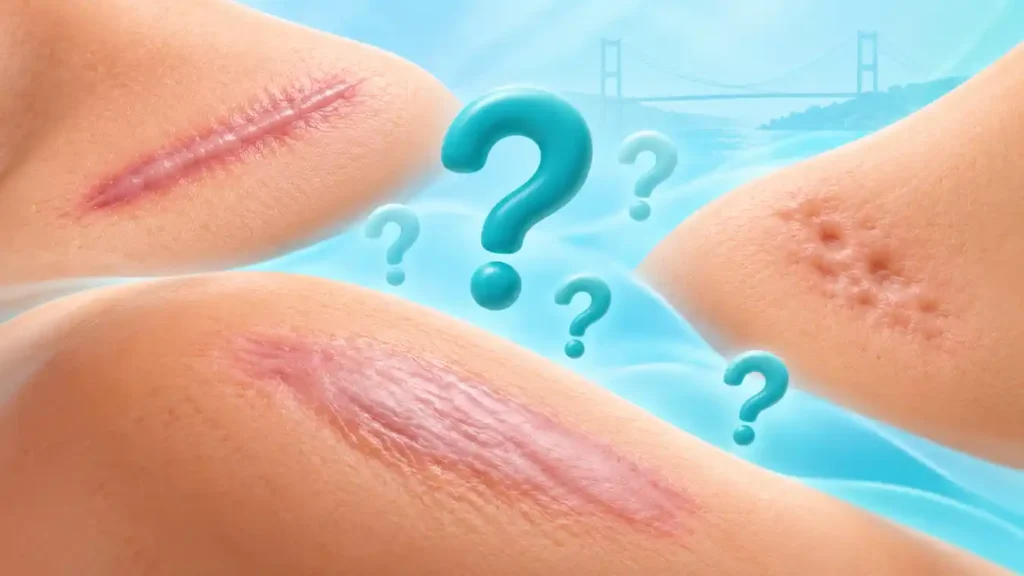
Would You Use Both Stem Cells and Exosomes on My Scar?
That’s something we decide after examining it. If I propose both, I’ll explain what each is intended to add. There should be a reason for every part of your treatment.
What If I Need Another Laser Session?
We often consider a further CO₂ laser session at about three months. I would examine the area again first and ask what you’ve noticed since treatment. We can then discuss whether another session is worthwhile.
My Scar Hurts When I Stretch. Could Treatment Help?
Tell me which movement brings on the pain, and show me if you can. I’d examine whether the scar is pulling on deeper tissue. Pain can also involve nerves, so I wouldn’t choose a procedure from its appearance alone.
Will I Be Awake During the Laser Procedure?
We use anaesthesia for the combined CO₂ laser procedure described here because it can be painful. The anaesthetist will review your health and explain the arrangements before we proceed.
Should I Send Pictures First?
Yes, a photograph gives me a starting point. What I can’t do from a picture is feel how firmly the scar is attached or check how it moves. I’d need to examine that in person before settling on the procedure.
What Do You Need From Me Before We Meet?
Start with a few clear pictures. Include enough of the surrounding area for me to recognise the location; a very close photograph can make that difficult. For a raised or sunken scar, try taking another from the side.
A short explanation helps too: “This followed surgery five years ago, and it pulls when I bend,” for example. Mention previous treatments, even if you can’t remember their exact names.
Is My Scar Too Small to Ask About?
You don’t have to justify the appointment by having a large scar. A short mark on your face may concern you more than a much longer one elsewhere. I’d like to hear why you’re considering treatment and take a look.