Clinical insights by Prof. Dr. Serdar Kabataş, MD, PhD (C)
Stem Cells: What They Are and How They Work
Patients often use the term stem cells as though it referred to one clearly defined treatment.
It does not.
A person may have heard about stem cells after leukaemia treatment, another in connection with knee arthritis, and someone else while researching a neurological disease. The same words are being used, but the cells, the medical aim and the level of evidence may be completely different.
This is where confusion begins.
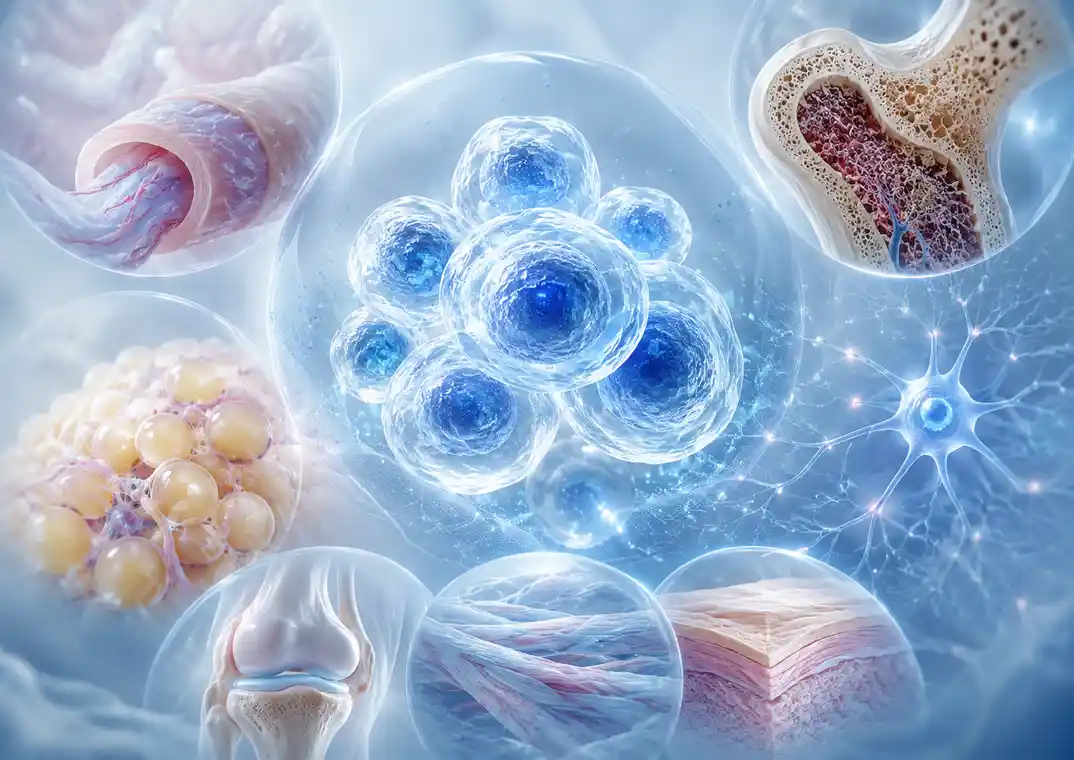
Blood-forming stem cells have an established role in selected diseases of the blood and immune system. Mesenchymal stem cells, or MSCs, are being discussed for other reasons. Their possible value is linked not only to differentiation, but also to the signals they release and the way they interact with surrounding tissue.
Their origin matters as well. Bone marrow, Wharton’s Jelly and adipose tissue are not simply three places from which an identical product can be taken.
Before discussing whether stem cell treatment may be relevant, we therefore need to clarify what kind of cells are actually being considered.
Table of Contents
What Makes a Cell a Stem Cell?
A stem cell has not yet reached the same fixed role as a mature nerve, muscle or blood cell.
It can continue producing cells while retaining some capacity to develop further. That capacity may be broad or quite restricted.
Haematopoietic stem cells illustrate this well. They produce the different cells found in blood and the immune system. That is a highly specialised and medically important ability. It does not mean that they would normally be expected to form cartilage or repair the spinal cord.
Other stem and progenitor cells remain in tissues throughout life. They help replace cells that are lost through normal use, injury or ageing. The skin, blood and intestinal lining all depend on continuing renewal.
However, repair is not an unlimited process.
A recent wound and a joint that has been degenerating for fifteen years are not comparable. The same applies to a recent nerve injury and a slowly progressive neurological disorder. In both cases, the body may still be trying to repair itself, but the biological conditions are very different.
This is why regenerative medicine cannot be reduced to the idea of adding new cells.
Sometimes the medical question is whether tissue can be replaced. Sometimes repair does mean replacing cells. In many discussions around MSCs, however, that is not the main expectation.
The more relevant question is often what happens to the tissue that is still there. Can inflammation be reduced? Can damaged cells receive better support? Can the surrounding environment become less hostile to recovery?
The Main Types of Stem Cells
Several cell groups are described as stem cells, although they differ greatly in what they can do.
Embryonic stem cells
have the broadest developmental potential. In laboratory conditions, they can form almost any cell type in the body. This makes them valuable for research, but their use also brings ethical concerns and requires very careful control of cell growth.
Induced pluripotent stem cells, usually called iPS cells,
are created from mature cells. Researchers reprogramme them so that they regain some of the flexibility seen in embryonic cells. They are especially useful for studying diseases and testing new medicines. At present, they are not the cells normally used in regenerative treatment plans for patients.
Adult stem cells
have a more limited range. They usually remain connected to one tissue or biological system. Blood-forming stem cells are the clearest example. Their task is to produce the different cells found in blood and the immune system.
MUSE cells
are less familiar. They are a small, stress-resistant cell population found in tissues including bone marrow, skin and fat. Their properties have led to growing scientific interest, including in neurology. Clinical experience is still limited, so their role remains under investigation.
Mesenchymal Stem Cells (MSCs)
For most current regenerative medicine discussions, the main focus is on mesenchymal stem or stromal cells, known as MSCs.
The reason is not simply that MSCs can develop towards bone, cartilage or fat-related cells in the laboratory. In many treatment concepts, that may not even be their most relevant feature.
MSCs release a wide range of biological signals. These include growth factors, cytokines and extracellular vesicles. Nearby immune cells, blood vessels and tissue cells may respond to those signals.
This type of communication is often described as a paracrine effect, but the basic idea is straightforward: the cells may influence damaged tissue without becoming that tissue themselves.
In neurology, this distinction matters.
It would be unrealistic to suggest that administered MSCs simply turn into new brain cells or rebuild an injured spinal cord. Research is looking instead at whether their signals may affect inflammation, immune activity and the conditions around nerve cells that are still alive.
That is a less dramatic claim, but medically it is the more relevant one.
Why We Prefer MSCs for Donor-Derived Cell Treatments
Safety is another reason why MSCs are central to our treatment concepts.
Undifferentiated pluripotent cells, including embryonic stem cells and iPS cells, can continue dividing and may form several different tissue types. This broad potential is scientifically valuable, but it also creates a recognised risk of uncontrolled growth and teratoma formation if undifferentiated cells remain in a therapeutic product.
MSCs are different. They are multipotent rather than pluripotent and have a more limited developmental range. For donor-derived treatment concepts, we therefore prefer well-characterised MSCs from Wharton’s Jelly rather than experimental pluripotent cell populations.
Wharton’s Jelly provides young MSCs with useful expansion and immunomodulatory properties. The tissue can also be collected after birth without an invasive procedure for the donor. These characteristics make Wharton’s Jelly-derived MSCs a practical option when the patient’s own bone marrow or adipose-derived cells are not suitable for the intended treatment.
This preference should not be misunderstood as a claim that MSCs are entirely free of risk. Donor screening, laboratory conditions, genetic stability, the number of culture passages, sterility and final cell viability all remain important.
MUSE cells are also being investigated because they combine broader differentiation characteristics with an apparently low tendency to form tumours in experimental studies. However, clinical research is still limited, particularly in neurological diseases. For this reason, we do not currently treat MUSE cells as a routine alternative to established, well-characterised MSC preparations.
The terminology can also be confusing. Many researchers now prefer the name mesenchymal stromal cells, since not every cell in an MSC preparation behaves like a true stem cell. In clinical conversations, however, both terms are still widely used.
Why the Source of Stem Cells Matters
When patients ask which stem cells are being used, the answer should include the tissue source.
For the treatment concepts most relevant to MedClinics, three sources come up repeatedly: Wharton’s Jelly, bone marrow and adipose tissue.
They overlap in some biological features. That does not make them interchangeable.
A cell obtained from perinatal tissue has developed under different conditions from one taken from the bone marrow of an adult. A fat-derived preparation may contain a mixture of cells that is very different from a culture-expanded MSC product.
The practical reason for choosing one source may also change from one medical field to another.
Wharton’s Jelly and Neurological Treatment Concepts
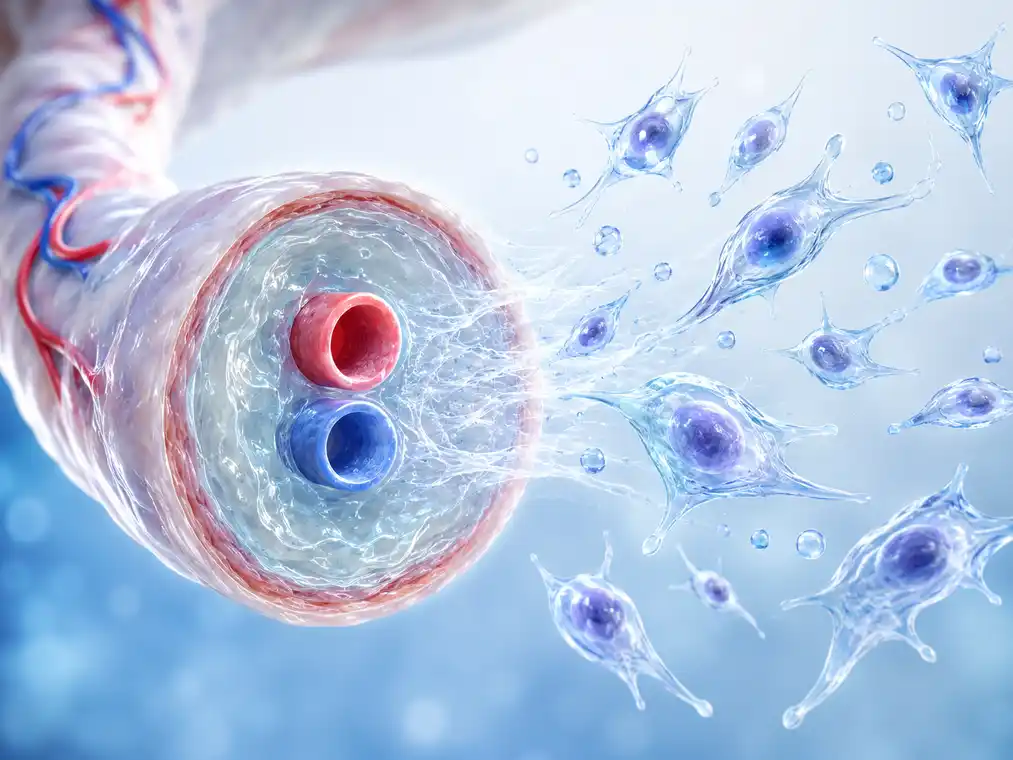
Wharton’s Jelly is the soft tissue that surrounds the blood vessels inside the umbilical cord.
After delivery, the cord would normally be discarded. With the mother’s consent, suitable donor screening and controlled laboratory processing, this tissue can instead be used as a source of MSCs.
These cells come from young tissue. This is relevant, but it should not be turned into a marketing claim.
Their appeal is not simply that “younger is better.” Researchers are interested in their growth characteristics, the substances they release and the way they interact with inflammatory and immune pathways.
That is why Wharton’s Jelly-derived MSCs are often discussed in relation to neurological treatment concepts.
The aim is not to suggest that the cells will replace all the nerve tissue that has already been lost. A more realistic discussion concerns the tissue that remains. Can the environment around those cells be influenced? Can excessive inflammatory activity be reduced? Can repair or rehabilitation be supported?
The answers will not be the same for every neurological disease.
A spinal cord injury, multiple sclerosis, Parkinson’s disease, autism spectrum disorder and an inherited neuromuscular condition may all involve the nervous system, but their biological mechanisms are not identical. The same treatment plan cannot simply be transferred from one diagnosis to another.
Product quality also remains a separate issue. A preparation does not become reliable merely because the cells came from an umbilical cord.
Donor screening, the part of the cord used, isolation, laboratory expansion, freezing, transport and final cell viability all affect what is eventually administered.
Wharton’s Jelly Is Not the Same as Cord Blood
The confusion is understandable because both materials are collected after birth.
However, they are different tissues and contain different cell populations.
Cord blood is the blood that remains in the cord and placenta. Its main medical importance comes from haematopoietic stem and progenitor cells, which produce blood and immune cells.
Wharton’s Jelly is the connective tissue surrounding the vessels of the cord. It is used as a source of mesenchymal stromal cells.
This means that cord blood transplantation and Wharton’s Jelly-derived MSC treatment are not two versions of the same therapy.
One belongs mainly to haematology and transplantation medicine. The other is being studied for signalling, immunomodulation and support of the tissue environment.
The shared connection to the umbilical cord does not make their functions the same.
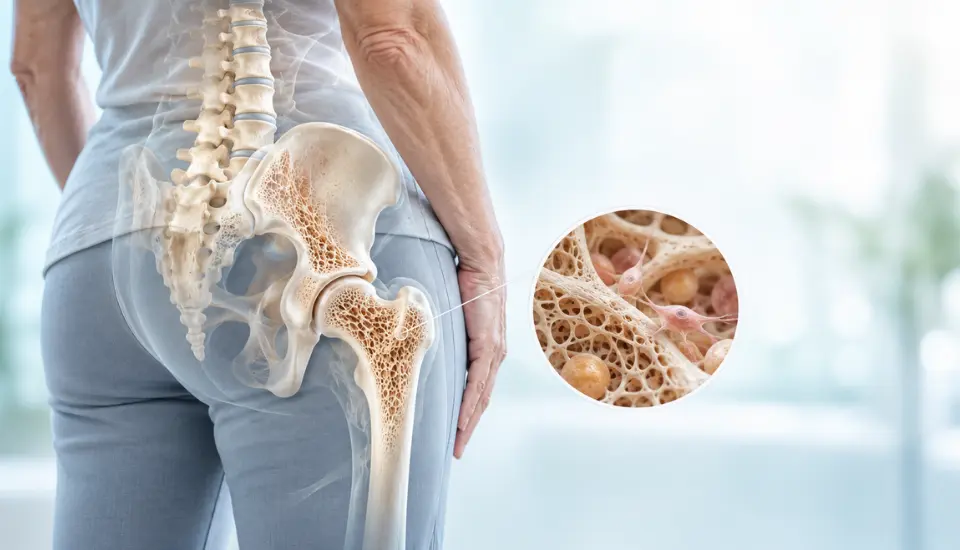
Bone Marrow in Orthopaedics
Bone marrow-derived treatments are sometimes described too simply.
Bone marrow aspirate concentrate, or BMAC, is not a syringe containing only mesenchymal stem cells. It is a mixed preparation. Blood-forming cells, platelets, immune cells, growth factors and stromal cells may all be present.
For an orthopaedic treatment, that mixture may still be relevant.
The more important question is whether the joint, tendon, cartilage or bone problem is suitable for a biological approach in the first place.
This cannot be decided from the diagnosis alone.
Two patients may both be told that they have knee osteoarthritis. One may still have reasonable alignment, acceptable stability and areas of cartilage worth preserving. The other may have severe deformity, major instability and almost complete loss of the joint surface.
A local bone marrow-derived treatment may be discussed in the first situation. It would not be expected to correct the mechanics of the second.
A biological injection can only work within the structure that remains.
This is why I would look first at the patient’s symptoms, examination and imaging. The proposed cell count comes later.
Adipose Tissue in Rejuvenation and Reconstruction
Adipose tissue is often described as a rich source of regenerative cells. That statement is broadly true, but it does not tell us what product is actually being used.
Fat can be collected through a liposuction-based procedure and handled in several different ways.
Processed fat, microfat, nanofat, stromal vascular fraction and culture-expanded adipose-derived MSCs are not different names for one treatment.
For example, stromal vascular fraction contains several cell populations. It is not made up only of mesenchymal stem cells.
In reconstructive and rejuvenation procedures, fat is useful partly because it brings volume. At the same time, its stromal and vascular components may support the tissue into which it is transferred.
This can be relevant in fat grafting, certain scars, soft-tissue reconstruction and procedures intended to improve skin or tissue quality.
The word rejuvenation should still be used carefully.
These procedures do not return tissue to a younger biological age. They may improve volume, texture, healing or the survival of transferred fat. That is a more realistic description of the treatment goal.
Which Stem Cell Source Is Best?
Patients naturally ask this question.
The honest answer is: best for what?
- Wharton’s Jelly-derived MSCs may be discussed in neurological treatment concepts because of their perinatal origin and signalling characteristics.
- Bone marrow-derived preparations may be relevant when the target is a local orthopaedic problem.
- Adipose tissue can be useful when a procedure also requires volume or soft-tissue reconstruction.
These are not absolute rules. They illustrate why the medical objective should determine the biological product – not the other way around.
A clinic should not begin with one available product and then recommend it for every diagnosis.
How Are Exosomes Connected to Stem Cells?
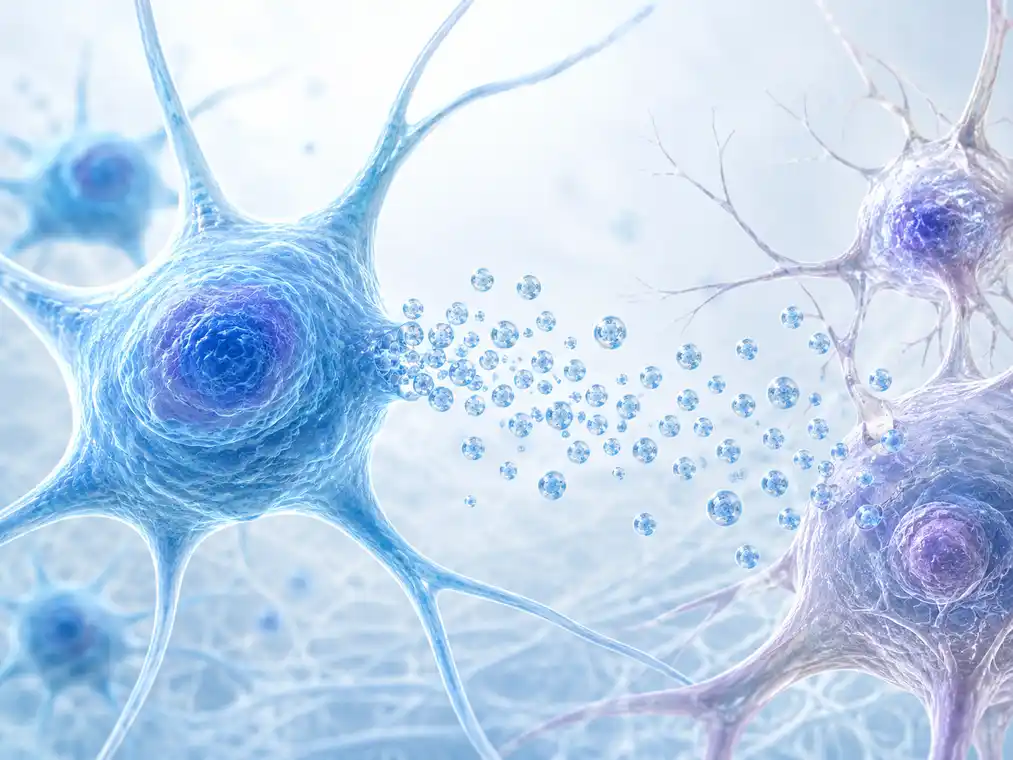
Exosomes are not stem cells.
They are small extracellular vesicles released by cells, including MSCs. They transport biological material from one cell to another and form part of the communication taking place within tissues.
This helps explain why exosomes have become relevant to regenerative medicine.
If an important part of MSC activity comes from the signals the cells release, then it is reasonable to investigate whether some of those signals can be delivered through a cell-free product. Current research into the MSC secretome and extracellular vesicles is built around this idea.
Exosomes cannot divide. They do not settle in the body as living cells, and they cannot transform into tissue.
That does not automatically make them less effective.
In a treatment concept where the intended effect is mainly biological signalling, an exosome preparation may be a medically reasonable choice. This is why an exosome-based approach may sometimes be proposed instead of living MSCs. It should not be regarded as a cheaper or weaker form of stem cell therapy. The biological tool is different because the intended action is different.
At the same time, exosomes are not universally equivalent to stem cells. A living MSC can respond to its environment and change the substances it releases. An exosome preparation contains vesicles that were produced before administration.
Product quality remains central. Source cells, culture conditions, isolation, purity and storage can all change the final preparation. A large vesicle count alone does not prove clinical effectiveness.
What Can Stem Cells Realistically Do?
Some stem cell treatments already have a clear place in medicine.
Haematopoietic stem cell transplantation can restore blood formation in selected patients with leukaemia, lymphoma, bone marrow failure and certain immune disorders.
Many MSC-based approaches are at a different stage.
Their aim may be to influence inflammation, support tissue that remains, improve the local repair environment or contribute to functional recovery. Depending on the condition, a meaningful result might be less pain, better movement, improved daily function or support for another treatment such as rehabilitation.
That is not the same as recreating an organ.
Nor does every patient respond. A biological treatment may produce a noticeable change, a limited change or no useful improvement.
What Stem Cells Cannot Be Expected to Do
Stem cells cannot correct every form of permanent damage.
They cannot reliably replace extensive areas of lost brain or spinal cord tissue. They cannot straighten a severely deformed joint. They cannot reverse every genetic disorder or guarantee that a progressive disease will stop.
The stage of the disease matters. So do age, general health, circulation, active inflammation and the amount of viable tissue that remains.
This is why I would not begin an evaluation by asking which stem cell package a patient wants.
I would begin with the diagnosis, medical history, imaging and present level of function. Only then can we discuss whether a regenerative approach has a medically reasonable goal.
What Patients Should Check Before Stem Cell Treatment
A treatment should be explainable in plain language.
Patients should know what the biological product is and where it came from. They should be told whether the cells are their own or donor-derived, how the material was processed and why the proposed route of administration was chosen.
Laboratory quality is not a technical detail hidden behind the treatment. Sterility, cell identity, viability, transport and storage affect what eventually reaches the patient.
The same caution applies to impressive numbers. More cells or more vesicles do not automatically mean a better treatment.
Regulatory status also varies between countries. For example, the FDA states that the stem cell products currently approved in the United States are cord-blood-derived haematopoietic products for defined disorders of blood formation. It continues to warn about unapproved stem cell and exosome products marketed for unrelated diseases.
This does not allow us to judge every treatment performed in another country by American regulation alone. It does show why patients need an honest explanation of what is established, what remains investigational and where uncertainty still exists.
Frequently Asked Questions About Stem Cells

Are all stem cells obtained from embryos?
No. Stem cells and related progenitor cells can be obtained from adult bone marrow, blood, fat tissue, cord blood and umbilical cord tissue.
Embryonic stem cells are a separate category and are not normally used in MSC-based regenerative treatment concepts.
Why are Wharton’s Jelly-derived MSCs considered for neurological conditions?
Their perinatal origin, laboratory expansion and secreted biological signals have made them an area of interest in neurological research.
The proposed role is mainly connected to signalling and the tissue environment. They should not be presented as cells that simply replace destroyed neurons.
Why is bone marrow often used in orthopaedics?
Bone marrow can be collected from the patient and applied locally. Its concentrate contains several cells and biological factors that are being investigated in cartilage, tendon, joint and bone treatment.
It is most relevant when there is still tissue to preserve and when severe mechanical damage does not make a biological injection unrealistic.
Why is fat tissue used in rejuvenation procedures?
Fat provides volume and contains stromal and vascular cell populations.
Depending on its preparation, it may be used to support fat grafting, soft-tissue reconstruction, scar treatment or tissue quality. It cannot stop the natural ageing process.
Can exosomes work as well as stem cells?
Sometimes the most relevant part of an MSC treatment may be the signals released by the cells. Exosomes carry some of these signals and may therefore be considered when cell communication is the main treatment objective.
They are still different from living MSCs. Neither approach is automatically better for every condition.
Can stem cells cure neurological diseases?
For most chronic neurological diseases, stem cell treatment cannot currently be described as a proven cure. The goal of stem cell treatment should be to influence inflammation, support surviving tissue or contribute to functional improvement. What can reasonably be expected depends on the diagnosis and how far the disease has progressed.
The Right Questions to Ask About Stem Cell Treatment
Asking whether stem cells work is rather like asking whether surgery works.
Which surgery? For which condition? At what stage? Performed in what way?
The same precision is needed here.
Cord blood stem cells used to restore blood formation cannot be compared directly with bone marrow concentrate placed into a joint. Wharton’s Jelly-derived MSCs are not the same as adipose-derived SVF. Exosomes are not living cells.
A useful discussion begins with five questions:
- What is the product?
- Where does it come from?
- Why is it being considered for this diagnosis?
- How was it prepared?
- What result is medically realistic?
Once those questions have been answered, the term stem cells becomes much less mysterious – and much more clinically meaningful.