
MedClinics News & Blog
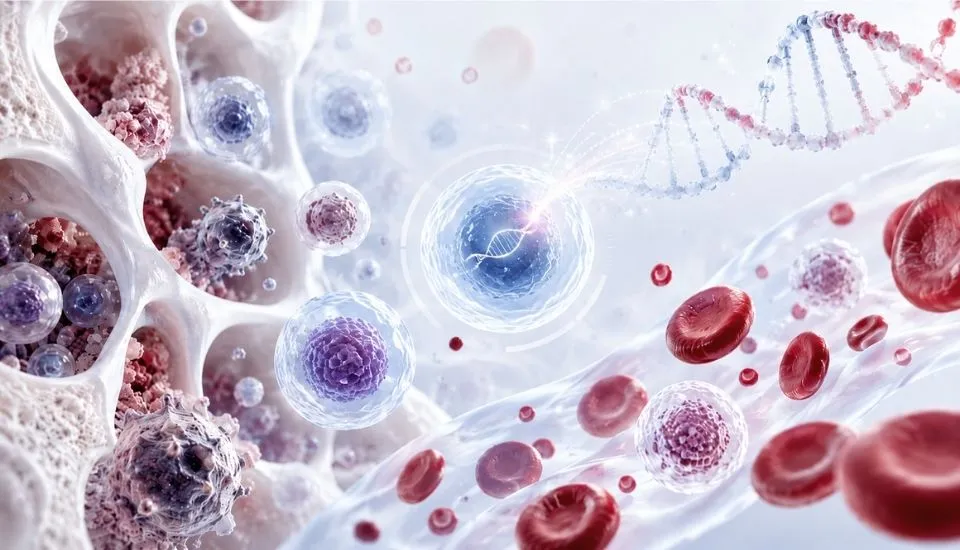
In high-risk acute myeloid leukemia, or AML, a donor stem cell transplant can help rebuild the blood-forming system after intensive treatment. New AML stem cell transplant research is now looking more closely at how donor cells may be prepared before they are given.
The patient’s blood-forming system has to recover. Donor cells need to settle into the bone marrow and begin producing new blood cells. At the same time, doctors remain concerned about relapse, especially in patients whose leukemia has already shown aggressive behavior.
A recent study published in Nature Medicine looked at this difficult post-transplant period through a new kind of cell engineering. The study tested whether donor stem cells could be edited before transplant so that a later targeted cancer treatment could be used with less damage to the new donor-derived blood system.
The disease focus was high-risk acute myeloid leukemia, or AML, and myelodysplastic syndrome, known as MDS. Both are diseases of the bone marrow, where blood cells are made. In some patients, an allogeneic stem cell transplant is used to replace the diseased blood-forming system with donor cells.
The edited donor cell product in the study is called tremtelectogene empogeditemcel, or trem-cel. Before the donor cells were transplanted, researchers used CRISPR gene editing to remove a marker called CD33. This makes the study part of a more engineered direction in AML stem cell transplant research.
CD33 is found on many AML cells. That makes it useful for targeted therapies. But it can also appear on normal blood-forming cells, including cells that are needed after transplant. This overlap is the reason the study matters.
The researchers were trying to make the donor-derived blood system less visible to CD33 therapy. If the new donor cells no longer carry CD33, then a later drug aimed at CD33 may be less likely to damage those cells. Any remaining leukemia cells that still carry CD33 could remain a target.
It is a small adjustment in wording, but a large change in strategy: the donor cells are prepared before transplant with the next phase of treatment in mind.
Table of Contents
AML Stem Cell Transplant and Regenerative Medicine
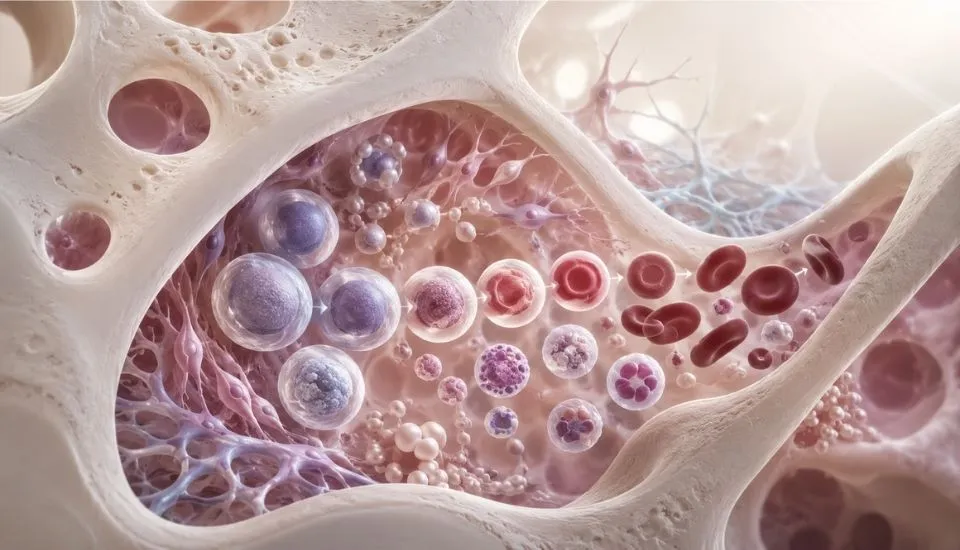
CD33 has been part of AML research for years. Many leukemia cells carry it on their surface, and drugs can be designed to recognize that marker.
One of those drugs is gemtuzumab ozogamicin. It is designed to attach to CD33-positive cells and deliver a cancer-killing treatment. For AML, that makes biological sense. The difficulty is that CD33 is not limited to leukemia.
Normal myeloid cells and blood-forming cells can carry CD33 too. In a patient who has just received a donor stem cell transplant, this becomes a practical problem. The new donor-derived blood system is still rebuilding. If those cells carry CD33, they may also be affected by CD33-targeted therapy.
This is the tension the study addresses. CD33 is useful enough to target, but not clean enough to ignore the healthy cells around it.
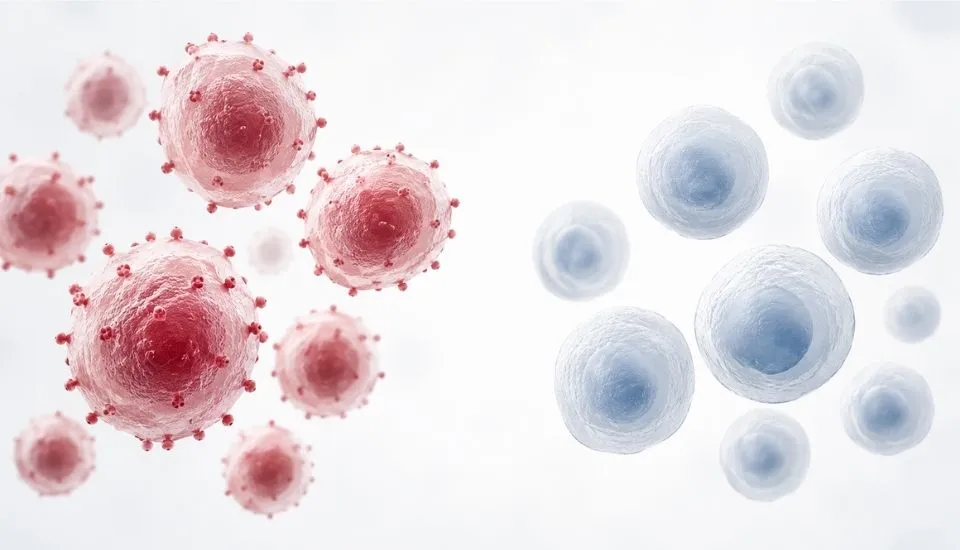
Trem-cel was developed as a way to change the donor graft before it enters the patient. The CRISPR edit removes CD33 from donor blood-forming stem and progenitor cells. After transplant, the new blood system is expected to grow from cells that no longer carry the same CD33 marker.
A simple image helps. CD33 is like a label that a targeted drug can recognize. Trem-cel removes that label from the donor cells before they are given to the patient. The leukemia cells, if still present and still CD33-positive, remain visible to the treatment.
The aim is not to make the cancer drug more powerful. It is to make the treatment setting more selective. That is the reason CD33 therapy becomes more interesting when the donor graft has already been edited.
CD33 and the Post-Transplant Problem
The trial enrolled adults with AML or MDS who were considered at high risk of relapse after allogeneic hematopoietic cell transplantation.
Donor stem and progenitor cells were collected and edited outside the body. CRISPR-Cas9 was used to delete CD33 from those cells. After preparation, the edited cells were transplanted into the patients.
The study then evaluated the use of gemtuzumab ozogamicin after transplant as maintenance therapy. Maintenance therapy is given after the main treatment phase, often to reduce the chance that the disease returns.
The important part is the sequence. The transplant and the maintenance treatment were not treated as separate ideas. The donor cells were edited with the later therapy in mind.
That is different from a conventional transplant approach. In a standard transplant, donor cells are selected, prepared, and infused to rebuild the blood-forming system. In this study, the graft was also modified around a known treatment problem: CD33 is shared by many leukemia cells and some healthy blood-forming cells.
This makes the transplant more than a replacement step. It becomes part of a planned treatment sequence.
How the Trem-Cel Study Was Carried Out
The study reported results from 30 adults with AML or MDS who received the CRISPR-edited donor stem cell transplant.
All 30 achieved primary engraftment by day 28. In transplant medicine, engraftment means the donor cells have settled into the bone marrow and started producing blood cells. In blood cancer research, it is one of the first signs that a new transplant approach is working inside the patient. The cells had to survive the editing process and still behave like functional blood-forming stem cells after transplant.
The study also reported that gemtuzumab ozogamicin could be explored after transplant in this setting. Because the new donor-derived cells had been edited to lack CD33, the CD33-targeted drug could be studied without the prolonged severe blood toxicity that might be expected if those donor cells still carried the target.
The early findings are important mainly because they show that the idea could be carried into patients. The edited graft was able to establish blood production, and the post-transplant therapy could be tested in a setting where the new donor cells were less exposed to the same marker.
For AML stem cell transplant research, that is a meaningful proof of concept. The study does not simply ask whether a transplant can work. It asks whether a transplant can be redesigned to make the treatment after transplant more workable.
What the Early Results Showed
AML can respond to treatment and still return later. This is one of the reasons high-risk AML remains difficult, even when patients reach transplant.
After transplant, doctors want to reduce the risk of relapse. But the new blood-forming system is still vulnerable. Treatment during this period has to be chosen carefully, because damage to donor-derived cells can lead to serious complications.
This is where the trem-cel strategy becomes relevant. By removing CD33 from the donor graft, researchers are trying to create more separation between the leukemia target and the healthy donor-derived blood system.
That separation could matter for maintenance therapy. If donor cells are less affected by a CD33-targeted drug, the drug may become easier to use after transplant. The treatment would still need to be studied carefully, but the biological reasoning is clear.
For MDS, the same principle may apply in selected high-risk cases. Some patients with MDS undergo transplant because of progression risk or aggressive disease biology. Relapse after transplant remains a concern there as well.
The study fits into a broader effort to make post-transplant care more precise, especially for patients who remain at high risk. It also reflects a wider direction in blood cancer research, where treatments are being planned more carefully around what happens after the main therapy.
Why This Matters for Blood Cancer Research
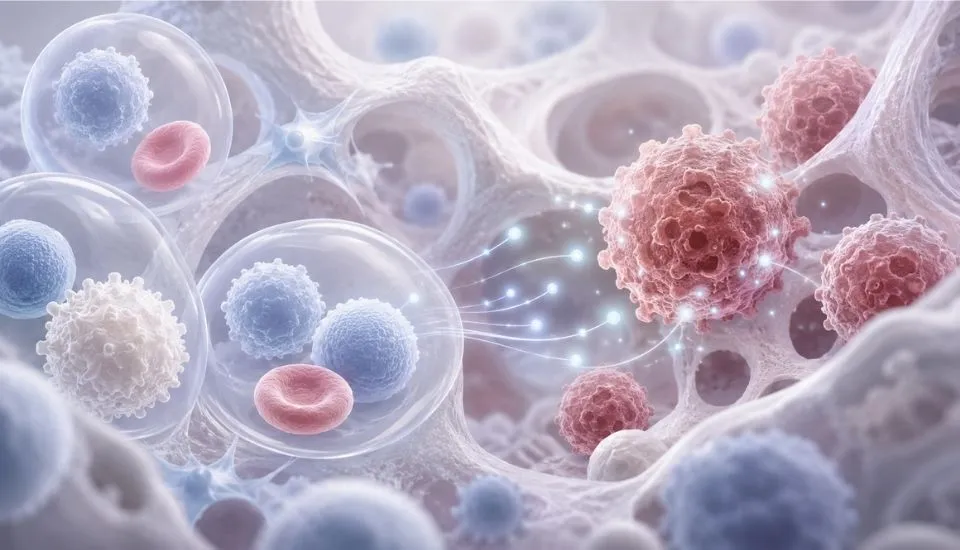
Stem cell transplantation is already one of the most established uses of stem cells in medicine. It has been part of blood cancer treatment for decades.
The newer part is what can be done to the cells before they are transplanted.
In the trem-cel study, donor cells were not only collected and given to the patient. They were edited to remove a marker that could interfere with later treatment. The graft was shaped around the biology of AML and around the therapy that might follow. CRISPR gene editing is what makes that possible: the donor cells are changed before transplant so they better fit the treatment plan that follows.
This is one direction stem cell medicine is moving: away from broad ideas about cells and toward more specific roles for them.
In some settings, cells are used to replace a damaged system. In others, they are studied for immune effects or signaling. Here, the donor stem cells are being used to rebuild the blood system, but they are also modified so they fit a targeted cancer treatment strategy.
For regenerative medicine, that distinction matters. The question is not only whether stem cells are involved. The more useful question is what the cells are being asked to do.
In this study, the answer is specific. They are being asked to rebuild blood production while avoiding a target that a later cancer drug may use.
AML Stem Cell Transplant and Regenerative Medicine
The study is still early clinical research. Longer follow-up will be needed to understand relapse risk, survival, durability of the edited graft, and long-term safety.
Gene-edited donor cell products are also difficult to develop. They require specialized manufacturing, strict quality control, and careful monitoring. These are not simple treatments to produce or scale. For blood cancer research, this practical side matters almost as much as the biology, because complex cell therapies have to be reproducible before they can be tested more widely.
There is also a practical issue with this specific trial. The ClinicalTrials.gov record notes that the study was terminated because of lack of funding. That does not remove the scientific value of the concept, but it does show how difficult the path can be for advanced cell and gene therapies.
A study can be scientifically interesting and still face development barriers. Manufacturing, funding, regulation, access, and long-term evidence all affect whether an early clinical idea can move forward.
l face development barriers. Manufacturing, funding, regulation, access, and long-term evidence all affect whether an early clinical idea can move forward.
That is worth keeping in mind when reading this kind of research. The biology may be promising, but clinical translation is a long process. This is also a familiar issue in regenerative medicine, where promising cell-based ideas often depend on whether they can be manufactured and followed safely over time.
What Still Needs More Evidence
The trem-cel study adds a practical idea to blood cancer research.
CD33-targeted therapy can be useful in AML stem cell transplant, but CD33 is also present on some healthy blood-forming cells. Removing CD33 from donor stem cells before transplant may make it easier to use CD33-targeted treatment afterward.
That idea connects three areas of medicine that are often discussed separately: donor stem cell transplantation, CRISPR gene editing, and targeted cancer therapy.
For high-risk AML and MDS, the long-term question is whether this type of approach can reduce relapse or improve outcomes after transplant. That will require more evidence.
For stem cell medicine, the study is useful because it shows how a graft can be prepared around a specific clinical problem. Donor cells may not only be matched and transplanted. They may also be edited before use so that the next stage of treatment can be planned more carefully.
That is the part of the research that feels most relevant for the future of regenerative medicine. It is not about using stem cells in a general way. It is about designing them for a defined role in a defined disease setting.
FAQ
What was tested in this study?
The study tested a CRISPR-edited donor stem cell product called trem-cel in adults with high-risk AML or MDS. The donor cells were edited before transplant so they no longer carried CD33.
Why remove CD33 from donor stem cells?
CD33 is found on many AML cells, but it can also appear on normal blood-forming cells. Removing CD33 from donor stem cells may make the new donor-derived blood system less vulnerable to CD33 therapy after transplant.
What is trem-cel?
Trem-cel, or tremtelectogene empogeditemcel, is the CRISPR-edited donor stem cell product used in the study. The cells are edited outside the body before being transplanted.
What did the early results show?
In the Phase 1/2 study, 30 patients received the edited donor stem cell transplant, and all achieved primary engraftment by day 28. The study also explored CD33-targeted maintenance therapy after transplant.
Is this a standard AML treatment?
This remains a research approach. More follow-up is needed to understand long-term safety, relapse outcomes, survival, and how it compares with current transplant strategies.
Why is this relevant to regenerative medicine?
It shows a more engineered use of stem cell transplantation. The donor cells are not only used to rebuild the blood system; they are modified before transplant to fit a targeted cancer treatment strategy.
Sources
- DiPersio JF, Koehne G, Shah NN, et al. CRISPR-Cas9 CD33-deleted allogeneic hematopoietic cell transplantation with gemtuzumab ozogamicin maintenance in AML: a phase 1/2 trial. Nature Medicine. 2026.
- Washington University School of Medicine. Gene-edited stem cell transplant shows promise for aggressive blood cancers. 2026.
- ClinicalTrials.gov. Allogeneic Engineered Hematopoietic Stem Cell Transplant Lacking the CD33 Protein, and Post-HCT Treatment With Mylotarg, for Patients With CD33+ AML or MDS. NCT04849910.
- American Society of Hematology. A CD33-Deleted Allograft Enables Post-Hematopoietic Cell Transplant Gemtuzumab Ozogamicin Maintenance Therapy.