Clinical Insights from Prof. Dr. Serdar Kabataş, MD, PhD (C)
What Patients Want to Know Before Stem Cell or Exosome Treatment
I’m Prof. Dr. Serdar Kabataş and I have been working with stem cells and exosomes for more than 18 years now. I saw a lot of different patients, a lot of different diseases, and I used many different treatment methods.
Although every patient is unique and each treatment plan is individually done for each patient, some questions are always the same.
So I decided to collect some of them here in this Stem Cells and Exosomes FAQ.
When patients ask about stem cells and exosomes, they usually do not start with biology.
They ask simpler things.
What exactly is being used?
Is it safe?
Can my disease be treated with IV treatment?
Why do we need intrathecal treatment?
Why do some people get stem cells and some get exosomes?
These are the right questions.
Because in regenerative medicine, the important issue is not only what sounds advanced. It is what makes medical sense for the disease we are treating.
Table of Contents
Understanding Stem Cells and Exosomes in Regenerative Medicine
1) What are stem cells?
Everybody has stem cells.
Our body would not work at all without stem cells. Newborns have them like adults do and also older people have stem cells. However, by the time, when we are growing older, their number decreases.
Stem cells already exist in the human body. They are part of the body’s own repair system.
And this is exactly where the regenerative medicine steps in. It uses exactly the original function of the stem cells to support the body where it needs to be supported, for example in healing, in reducing inflammation, in calming the system or in repairing.
2) What are exosomes?
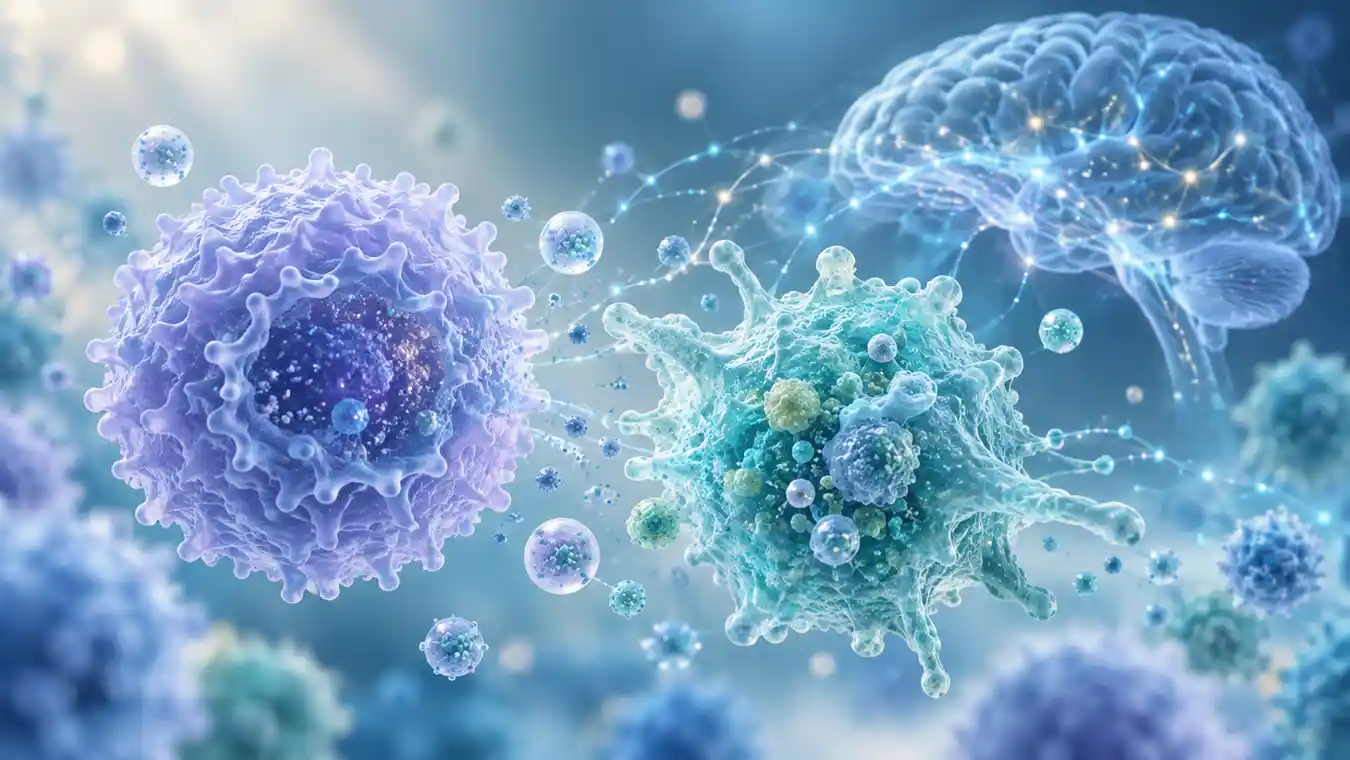
Exosomes are not stem cells. They are tiny particles released by cells.
What makes them interesting is not their size alone, but their function. They carry information. They help cells communicate with each other.
That is why exosomes have become so important in regenerative medicine. Sometimes the effect we want does not require giving whole living cells. Sometimes what matters most is the signal those cells can deliver.
3) What is the difference between stem cells and exosomes?
Some patients never heard the name exosomes before, some of those, who did, don’t know the exact difference.
Stem cells are living cells.
Exosomes are tiny particles released by cells.
In other words: stem cells are the cells themselves, while exosomes are part of what those cells send out.
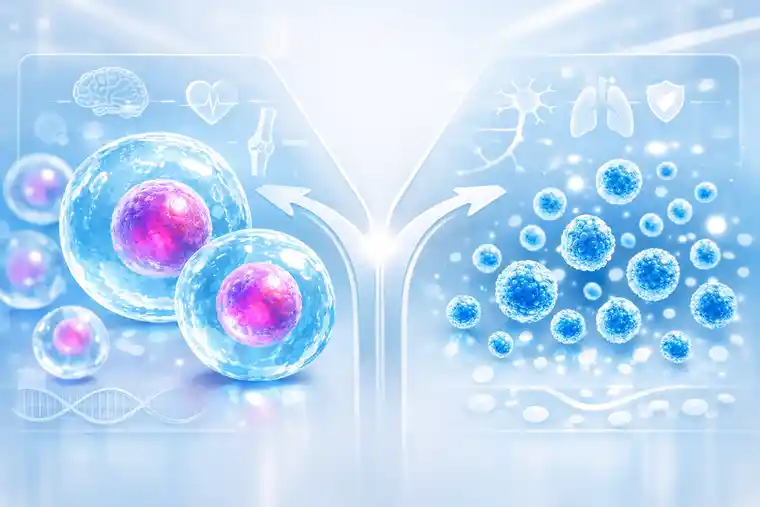
That is why they are not automatically used for the same purpose. In some cases, living cells make more sense. In others, exosomes are the more suitable option.
So yes, they belong to the same regenerative field. But medically, they are not the same treatment.
4) What types of stem cells exist?
This is one of those questions where the scientific answer can become too long very quickly.
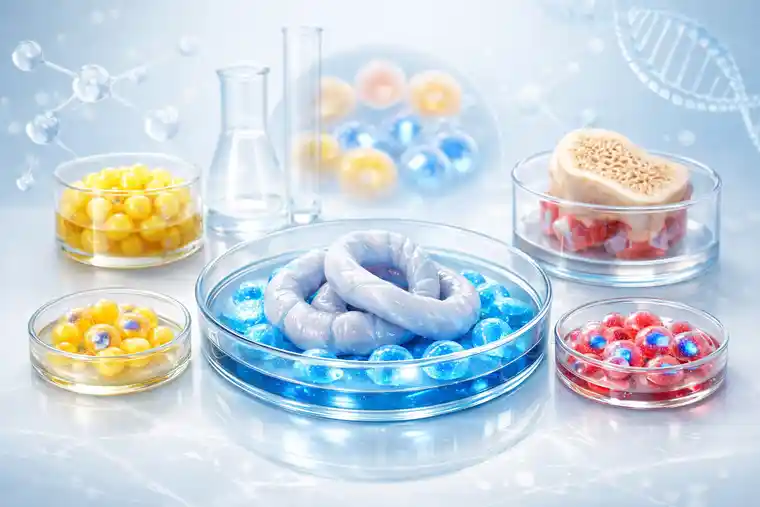
In practical terms, patients should know that not all stem cells are the same. There are embryonic stem cells, adult stem cells, perinatal stem cells such as umbilical cord-derived cells, special subtypes like Muse cells, SVF stem cells from fat tissue, and bone marrow-derived stem cells.
But in the clinic, the more important question is usually not how many types exist.
It is this: which type is appropriate enough, practical enough, and safe enough to use?
5) Do you use embryonic stem cells, and why not?
No, we do not.
That is something I prefer to answer clearly, because many patients arrive with information they found online and are not sure what belongs to real clinical treatment and what belongs more to theory, laboratory science, or media discussion.
In our approach, embryonic stem cells are not used.
The reason is simple: there is a big difference between what is scientifically interesting and what is clinically reasonable.
Embryonic stem cells are powerful, but that power is also part of the problem. Their behavior is harder to control, and the tumor risk is one of the main reasons many physicians do not use them in this kind of treatment setting.
For us, that is not a small detail. It is enough reason not to build treatment around them.
6) What are mesenchymal stem cells, or MSCs?
This is usually the type of stem cell patients mean when they talk about stem cell treatment, even if they do not know the exact name.
What matters in practice is not the abbreviation. What matters is why these cells are used at all.
We use them because they are well suited for regenerative medicine. They can help calm inflammation, support healing, and influence how the body reacts in damaged or chronically stressed tissue. That is the reason they are so important clinically.
So if a patient asks me, “What kind of stem cells are these?” the short honest answer is often: these are the stem cells most commonly used when we want a regenerative effect without moving into the much more problematic world of embryonic stem cells.
Different Types of Stem Cells Explained
7) What are Muse stem cells, and why don’t you use them?
Muse stem cells are a special subtype that patients sometimes read about when they start going deeper into regenerative medicine.
On paper, they sound very attractive. They are often described as stress-resistant, naturally occurring, capable of finding damaged tissue, and less problematic than embryonic-type pluripotent cells when it comes to tumor behavior.
But in medicine, “more special” does not automatically mean more useful in actual treatment.
Muse cells are scientifically interesting, but they are still a more specialized and less established option than the UC-derived MSC-based protocols we prefer. In a clinic, I need more than an interesting mechanism. I need consistency, availability, standardization, and a treatment pathway that is easier to control and reproduce.
That is why we do not build our standard protocols around Muse cells.
8) Do you think Muse cells are bad?
No. I would not present them that way.
They are not bad. They are simply not our preferred treatment platform.
That distinction matters. Patients often hear “we do not use it” and think that means it is dangerous or useless. That is not the point. The point is that our protocol favors approaches with broader clinical practicality and more routine translational use.
For us, that means umbilical cord-derived MSCs and UC-MSC-derived exosomes.
9) What do UC-derived stem cells mean?
It means the stem cells come from the umbilical cord.
But there is one detail here that matters more than most patients realize. Stem cells taken from the tissue of the umbilical cord are not the same as cells taken from umbilical cord blood.
We use the ones from the tissue.
So when we talk about UC-derived stem cells, we mean stem cells taken from the umbilical cord itself, not from the blood inside it.
Patients often hear both described as if they were basically the same thing. They are not. They come from different sources, and they are not used in the same way.
10) Why do you prefer UC-derived stem cells?
Because in practice they solve several problems at once.
They are younger than many adult cell sources.
They are easier to standardize.
They tend to be more consistent in regenerative protocols.
And they are strongly associated with the anti-inflammatory and signaling effects we actually want from treatment.
That combination is one of the reasons umbilical cord-derived MSCs have become so important in regenerative medicine.
Another important point is this: in autoimmune diseases, we never use the patient’s own stem cells. The reason is simple: those cells already come from a system that is not functioning correctly. If they were functioning normally, the patient would not have developed the disease in the first place.
11) Are UC-derived stem cells better than other sources?
For many protocols, yes, they are often the more practical choice.
Better always depends on the disease and the treatment goal. But from a clinical point of view, UC-derived cells offer clear advantages over older adult cell sources. They are younger, more standardized, and less influenced by the patient’s own age or chronic disease burden.
Patients do not need a textbook comparison first. They need to understand why a doctor would actually choose one source over another.
12) What are SVF stem cells, and what are they used for?
SVF stands for stromal vascular fraction. These cells are obtained from the patient’s own fat tissue.
In simple terms, a small amount of fat is taken, processed, and the regenerative cell fraction is separated from it. That is what we refer to as SVF.
These cells are used mainly in rejuvenation medicine, especially for hair and skin applications. In that setting, the goal is usually not neurological or systemic treatment, but local support for regeneration, tissue quality, and revitalization.
So SVF belongs much more to the field of aesthetic and regenerative rejuvenation and longevity.
13) What are bone marrow-derived stem cells, and what are they used for?
Bone marrow-derived stem cells are mostly something patients hear about in orthopedics.
So if someone has a joint problem like knee osteoarthritis, cartilage damage, tendon issues, or another musculoskeletal problem, then bone marrow can become part of the discussion.
That is where Bone Marrow Aspirate Concentrate (BMAC) fits much more naturally.
They are not the same thing as the umbilical cord-derived stem cell protocols we use for broader regenerative and immunologic treatment concepts. The source is different, the purpose is different, and the whole treatment logic is different.
So when patients hear “bone marrow stem cells,” they should think much more in terms of orthopedic treatment than neurological or systemic regenerative therapy.
When Do We Use Stem Cells and When Exosomes?
14) Can treatment be done with exosomes instead of stem cells, and when are exosomes enough?
Yes. Some treatments can be done with exosomes instead of stem cells.
This is not a worse option, it is just another option.
Exosomes are extremely small. They are around a thousand times smaller than stem cells. That matters because their size allows them to move through the body very differently.
One of the big advantages of exosomes is that they can cross the blood-brain barrier much more easily than whole cells. That makes them especially interesting in neurological conditions.
In autism, for example, exosomes may also be applied in ways that allow them to travel through the olfactory pathway toward the central areas of the brain where the actual problem lies.
We use UC-MSC-derived exosomes, and for patients the important point is this: they come from umbilical cord mesenchymal stem cells, so the source is young, medically selected, and chosen very deliberately.
There are diseases in which we often treat with exosome-based protocols as a primary regenerative option, not because exosomes are a second choice, but because they may be especially suitable for the target. Autism is one example. Diabetes is another.
So the point is not that exosomes are “less than” stem cells. The point is that for some diseases, they are biologically very well suited.
15) Why do you prefer UC-MSC-derived exosomes?
Because source and laboratory quality matter.
Our exosomes are derived from UC-MSCs and come from a GMP-certified laboratory.
That is important, because in regenerative medicine the product is only as trustworthy as the laboratory standards behind it. If you want consistency, sterility, and real medical quality, then GMP conditions are not a luxury. They are essential.
So when we say we prefer UC-MSC-derived exosomes, we do not only mean the source. We also mean the quality of preparation.
IV vs Intrathecal Treatment: What Patients Need to Know
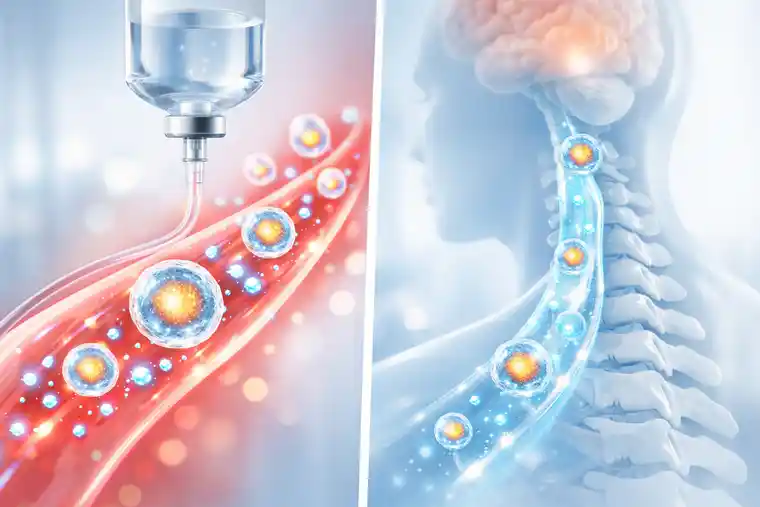
16) What is IV treatment?
IV means the treatment is given through the vein.
Most patients already know what that means from other medical treatments, so I would not overcomplicate it. The main point is that IV treatment allows the therapy to circulate systemically through the body.
That makes it especially useful when the disease itself is not limited to one small local target.
17) What is intrathecal, or IT, treatment, and why is it often recommended?
This simply means the treatment is given into the spinal fluid.
Not into the spinal cord itself. This is a big difference and we always need to explain it very clearly.
Why do we do it this way? Because for some diseases, especially neurological ones, giving the treatment only through the vein is not always the most sensible route. If the problem is mainly in the nervous system, then we want the treatment to get closer to where the problem actually is. An intrathecal treatment can be the most direct route, because it brings stem cells or exosomes much closer to the central nervous system.
That is why this route is often considered in conditions such as autism, multiple sclerosis, and ALS.
So the reason is not that it sounds more advanced. The reason is simply that in the right patient, it can be the more direct and more logical route.
18) Is intrathecal treatment dangerous?
No, it is not, as the injection is done into the spinal fluid, the spinal cord is never touched. However, a lot of patients are afraid of doing intrathecal injections, because they are afraid of becoming paralysed or something like that. But let me tell it again, we are never injecting into the spinal cord, only into the spinal fluid, therefore this is not the danger patients usually imagine.
It is done by an experienced neurologist, under light sedation, in a fully equipped hospital, with an anesthesiologist present. In other words, it is done in a controlled medical setting, not casually.
So I would not describe it as something patients should panic about. I would describe it as a real medical procedure that should be done properly, by the right team, under the right conditions.
That is the important point.
19) Why do you ask for a cranial MRI or CT before intrathecal treatment?
Because before intrathecal treatment, we need to know that the pressure situation inside the skull is acceptable.
With IT applications, pressure relationships in the brain can matter. If there is increased intracranial pressure or another structural problem, the procedure may need to be delayed, modified, or avoided.
So the imaging is not just a formality. It is part of making sure the treatment can be done safely and responsibly.
In simple terms: we need the MRI or CT because during IT applications, pressure dynamics in the brain can change, and we do not want surprises in a procedure like that.
20) Why can IV treatment be enough for some diseases like diabetes?
Because diabetes is not primarily a disease of the cerebrospinal fluid or the central nervous system.
It is a systemic metabolic disease with inflammatory and immunologic components. In that setting, IV treatment can be a logical main route because the goal is body-wide biologic effect, not direct cerebrospinal fluid access.
That said, in selected patients a doctor may still consider other routes depending on the broader clinical picture. But as a general principle, diabetes is one of the clearest examples where IV can be enough, even though intrathecal treatment may be recommended much more strongly in neurological disease.
21) How could a typical treatment plan look like?
A typical treatment plan with 3 sessions planned and a one-week break in between may look like this:
Day 1: Examination and consultation with the professor
Day 2: First procedure
Days 3–8: Rest period
Day 9: Second procedure
Days 10–15: Rest period
Day 16: Third procedure
Day 17: Rest
Day 18: Return home
This kind of structure allows time between procedures and gives the patient space to recover calmly between sessions.
22) Why are the procedures done in the morning?
Because the patient has to come fasting.
That means no food and no drink for 8 hours before the procedure.
Since these treatments are done under sedation, that part is important. And in practical terms, morning appointments are simply easier. It is much more manageable to fast overnight than to stay without food and drink through the day.
This matters even more in children. For them, an early morning procedure is usually much easier to tolerate than waiting until later.
So the reason is not organizational convenience. It is mainly medical and practical.
What to Expect After Treatment
23) When will I see results?
This is a very important question, because regenerative treatment is not the same as taking a painkiller and feeling something immediately.
Stem cell therapy is a long-term treatment. Results usually do not become visible right away. In many cases, changes may begin to appear gradually over the following weeks and months.
As a general expectation, results may become noticeable around 2 to 6 months after the treatment sessions.
That is why patience is important. Regenerative medicine works through biologic processes, and those processes need time.
24) What side effects can happen after stem cell or exosome treatment?
Most patients do not ask this because they expect disaster. They ask because they want to know what is normal.
That is a very reasonable question.
There may be a light fever in the first 24 to 48 hours after the treatment, which can be handled easily with common fever-reducing medication. Some patients may feel tired afterwards, a little weak, slightly dizzy. After intrathecal treatment, headache or some discomfort around the puncture area can also happen.
Usually, these effects are short-lived.
I think it is always better to say that openly. Patients do not need fake perfection. They need realistic preparation.
25) Is there any guarantee? What is the success rate in percent?
No serious doctor should promise a guarantee.
And I would be very careful with fixed percentage numbers, because that can create the wrong expectation. The outcome depends on the disease, the severity, the duration, the age of the patient, the overall condition, and how the body responds biologically.
So the honest answer is this:
There is no guarantee, and there is no single percentage that applies to every patient.
Some patients respond very well. Some show moderate improvement. And some show less change than hoped.
That is exactly why regenerative medicine should always be presented honestly: as a medical treatment with potential, not as a guaranteed result.
FAQs About Stem Cell and Exosome Treatment

What are stem cells?
Everybody has stem cells.
Our body would not work at all without stem cells. Newborns have them like adults do and also older people have stem cells. However, by the time, when we are growing older, their number decreases.
Stem cells already exist in the human body. They are part of the body’s own repair system.
And this is exactly where the regenerative medicine steps in. It uses exactly the original function of the stem cells to support the body where it needs to be supported, for example in healing, in reducing inflammation, in calming the system or in repairing.
What are exosomes?
Exosomes are not stem cells. They are tiny particles released by cells.
What makes them interesting is not their size alone, but their function. They carry information. They help cells communicate with each other.
That is why exosomes have become so important in regenerative medicine. Sometimes the effect we want does not require giving whole living cells. Sometimes what matters most is the signal those cells can deliver.
What is the difference between stem cells and exosomes?
Some patients never heard the name exosomes before, some of those, who did, don’t know the exact difference.
Stem cells are living cells.
Exosomes are tiny particles released by cells.
In other words: stem cells are the cells themselves, while exosomes are part of what those cells send out.
That is why they are not automatically used for the same purpose. In some cases, living cells make more sense. In others, exosomes are the more suitable option.
So yes, they belong to the same regenerative field. But medically, they are not the same treatment.
Do you use embryonic stem cells, and why not?
No, we do not.
That is something I prefer to answer clearly, because many patients arrive with information they found online and are not sure what belongs to real clinical treatment and what belongs more to theory, laboratory science, or media discussion.
In our approach, embryonic stem cells are not used.
The reason is simple: there is a big difference between what is scientifically interesting and what is clinically reasonable.
Embryonic stem cells are powerful, but that power is also part of the problem. Their behavior is harder to control, and the tumor risk is one of the main reasons many physicians do not use them in this kind of treatment setting.
For us, that is not a small detail. It is enough reason not to build treatment around them.
What is intrathecal, or IT, treatment, and why is it often recommended?
This simply means the treatment is given into the spinal fluid.
Not into the spinal cord itself. This is a big difference and we always need to explain it very clearly.
Why do we do it this way? Because for some diseases, especially neurological ones, giving the treatment only through the vein is not always the most sensible route. If the problem is mainly in the nervous system, then we want the treatment to get closer to where the problem actually is. An intrathecal treatment can be the most direct route, because it brings stem cells or exosomes much closer to the central nervous system.
That is why this route is often considered in conditions such as autism, multiple sclerosis, and ALS.
So the reason is not that it sounds more advanced. The reason is simply that in the right patient, it can be the more direct and more logical route.
Is intrathecal treatment dangerous?
No, it is not, as the injection is done into the spinal fluid, the spinal cord is never touched. However, a lot of patients are afraid of doing intrathecal injections, because they are afraid of becoming paralysed or something like that. But let me tell it again, we are never injecting into the spinal cord, only into the spinal fluid, therefore this is not the danger patients usually imagine.
It is done by an experienced neurologist, under light sedation, in a fully equipped hospital, with an anesthesiologist present. In other words, it is done in a controlled medical setting, not casually.
So I would not describe it as something patients should panic about. I would describe it as a real medical procedure that should be done properly, by the right team, under the right conditions.
That is the important point.
When will I see results?
This is a very important question, because regenerative treatment is not the same as taking a painkiller and feeling something immediately.
Stem cell therapy is a long-term treatment. Results usually do not become visible right away. In many cases, changes may begin to appear gradually over the following weeks and months.
As a general expectation, results may become noticeable around 2 to 6 months after the treatment sessions.
That is why patience is important. Regenerative medicine works through biologic processes, and those processes need time.
What side effects can happen after stem cell or exosome treatment?
Most patients do not ask this because they expect disaster. They ask because they want to know what is normal.
That is a very reasonable question.
There may be a light fever in the first 24 to 48 hours after the treatment, which can be handled easily with common fever-reducing medication. Some patients may feel tired afterwards, a little weak, slightly dizzy. After intrathecal treatment, headache or some discomfort around the puncture area can also happen.
Usually, these effects are short-lived.
I think it is always better to say that openly. Patients do not need fake perfection. They need realistic preparation.
Is there any guarantee? What is the success rate in percent?
No serious doctor should promise a guarantee.
And I would be very careful with fixed percentage numbers, because that can create the wrong expectation. The outcome depends on the disease, the severity, the duration, the age of the patient, the overall condition, and how the body responds biologically.
So the honest answer is this:
There is no guarantee, and there is no single percentage that applies to every patient.
Some patients respond very well. Some show moderate improvement. And some show less change than hoped.
That is exactly why regenerative medicine should always be presented honestly: as a medical treatment with potential, not as a guaranteed result.