Written by Prof. Dr. Serdar Kabataş, MD, PhD (C)
Why Patients Often Confuse Stem Cell-Derived Exosomes with Stem Cells
Most patients do not come to me asking about extracellular vesicles or cellular signalling. Their question is usually much more direct:
“Should I have stem cells or exosomes?”
Many patients first encounter the term stem cell exosomes while researching regenerative treatment options.
Quite often, they have already read that exosomes are newer. Some have been told that they are more advanced, or that they are essentially stem cells without the cells. This is where I usually need to slow the discussion down.
Exosomes are not a smaller version of stem cells.
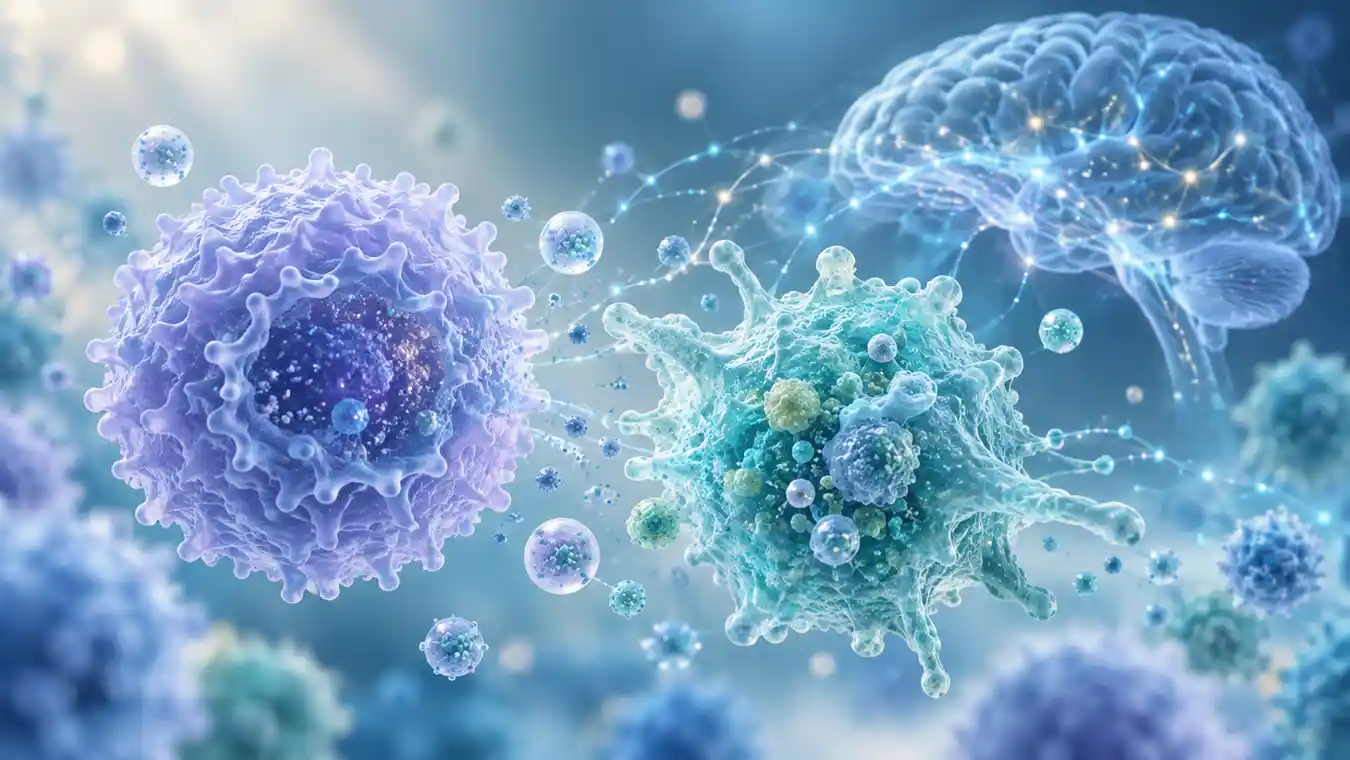
Mesenchymal stem cells, or MSCs, are living cells. Exosomes are tiny vesicles that cells release into their surroundings. They carry material from the parent cell and can pass some of that material to other cells.
That is the connection between them.
The difference becomes important once we start talking about treatment. A living MSC can continue reacting to its environment. An exosome cannot. It arrives with cargo that has already been packed by the cell that produced it.
Whether either approach is relevant depends on what is actually wrong.
For example, a tissue affected mainly by persistent inflammation presents a different problem from a joint that has already lost most of its normal structure. In the second situation, no amount of cellular signalling can correct severe mechanical destruction.
So I do not begin by selecting stem cells or exosomes.
I first look at the diagnosis, the stage of the disease and the amount of functioning tissue that remains. I also need to know what the patient expects. Stabilising a condition, supporting surviving tissue and rebuilding an organ are three very different objectives.
Sometimes regenerative medicine may have a role. Sometimes conventional surgery, medication or rehabilitation is the more appropriate direction. There are also cases in which neither stem cells nor exosomes are likely to provide a meaningful benefit.
That assessment has to come before the product discussion.
Table of Contents
Stem Cell Exosomes: What Does “Stem Cell-Derived” Actually Mean?
The phrase sounds more straightforward than it really is.
In general, stem cell-derived exosomes are very small extracellular vesicles released by stem cells. Most research in this field focuses on mesenchymal stem cell exosomes, often described as MSC-derived exosomes.
These vesicles are surrounded by a membrane. Inside, they can carry proteins, lipids and different forms of RNA, including messenger RNA and microRNA.
However, this does not mean that every exosome contains the same material.
The contents depend on the parent cells and on the conditions in which those cells were kept. MSCs taken from umbilical cord tissue may not release exactly the same vesicles as MSCs obtained from bone marrow or adipose tissue.
Laboratory conditions also leave their mark.
Cells exposed to inflammation, low oxygen or other forms of stress may release a different mixture of signals. The method used to collect, separate and store the vesicles can alter the final preparation as well.
This is why the word “exosomes” alone tells me very little about a product.
I would also want to know which cells produced them, how those cells were cultured, how the vesicles were isolated and which quality tests were carried out.
A high vesicle count may look impressive on paper. It does not automatically tell us whether the preparation is pure, biologically active or suitable for a particular patient.
The source and production process matter at least as much as the number.
Mesenchymal Stem Cell Exosomes: How Are They Produced?
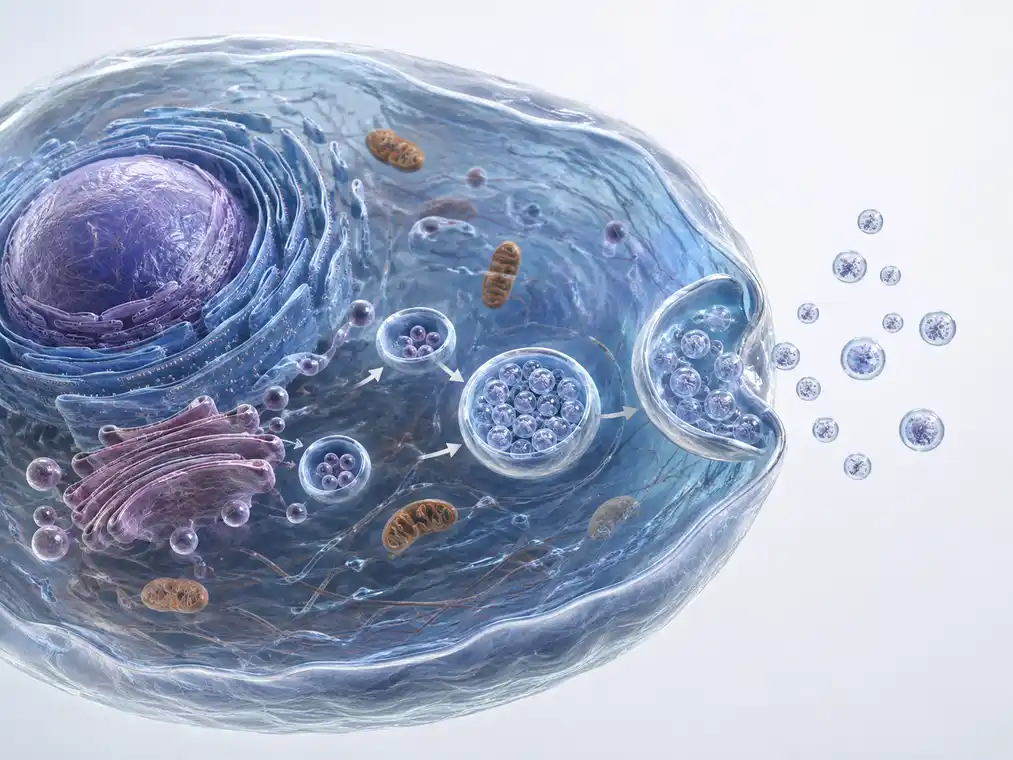
A cell is constantly processing information. It receives chemical and physical signals from its surroundings, produces new molecules and releases substances into the surrounding tissue.
Some molecules are packed into very small vesicles inside the cell. These vesicles collect within larger intracellular compartments. When the compartment joins the outer cell membrane, the vesicles are released.
Once outside the cell, some of these vesicles are classified as exosomes.
The process is not unique to stem cells. It takes place throughout the body. What interests researchers is the particular cargo carried by exosomes released from MSCs.
The cargo is influenced by the condition of the parent cell. The properties of stem cell exosomes therefore depend partly on the source and condition of those parent cells.
A cell exposed to inflammation or reduced oxygen may package different molecules from a cell living under calmer conditions. Cellular age, tissue source and laboratory handling may also change the result.
That variability helps explain why exosome studies do not always produce identical findings. Researchers may use similar terminology while working with preparations that differ in several important ways.
How Do Exosomes Work?
There is no single action that applies to every exosome.
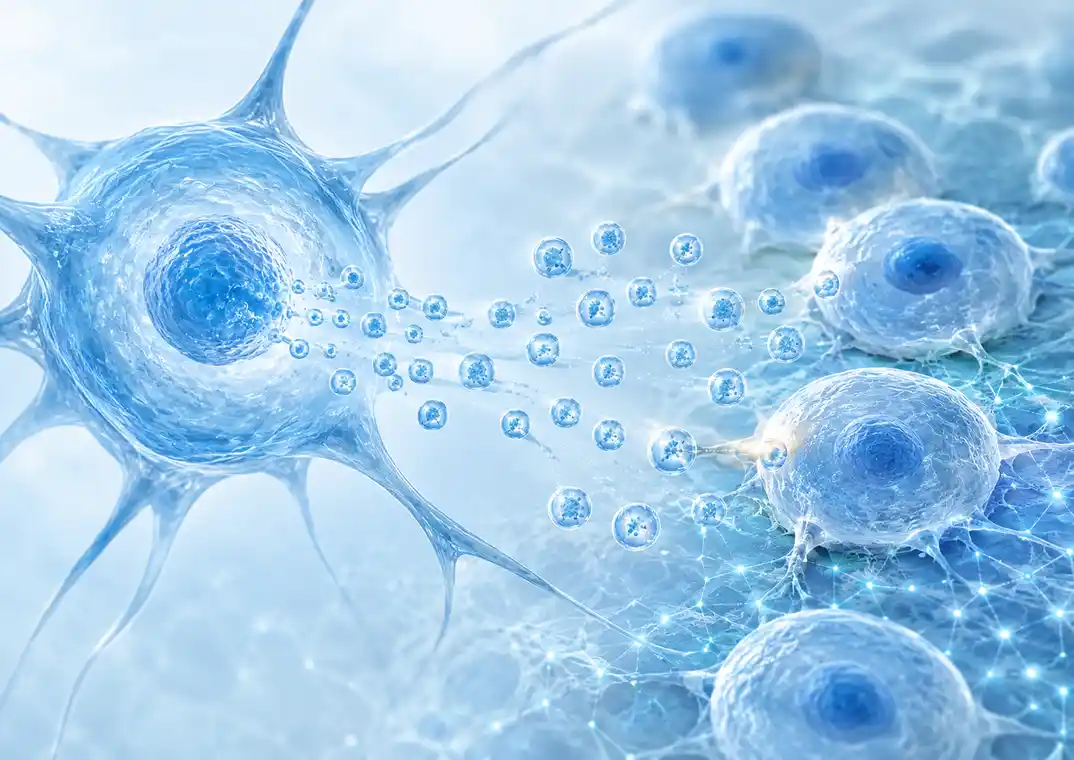
A vesicle may attach to receptors on the surface of another cell. In other cases, the recipient cell may take it up and gain access to part of its cargo.
The response depends on both sides of that interaction.
A fibroblast involved in skin repair will not react exactly like an immune cell in inflamed tissue. A cartilage cell inside an osteoarthritic knee is also functioning under very different conditions from a healthy cartilage cell.
For that reason, I avoid descriptions that make exosomes sound like tiny repair machines. They do not enter the body with one fixed task and rebuild whatever is damaged.
Their possible influence is linked to signalling.
Depending on their origin and cargo, exosomes may affect gene activity, protein production, inflammatory pathways or communication between different cell types. Whether that molecular activity leads to a noticeable improvement for a patient is a separate question.
A change observed in a laboratory dish is interesting. It is not yet proof of clinical benefit.
Exosomes in Regenerative Medicine: Why They Matter
Early discussions about stem cells focused heavily on cell replacement.
Researchers wanted to know whether transplanted cells might become new cartilage, muscle or nerve cells. Over time, it became clear that this could not fully explain many of the effects seen in MSC research.
In several studies, MSCs appeared to influence surrounding tissue even when only a limited number of cells remained in place or became part of the repaired structure.
Attention then shifted towards the substances released by the cells, like mesenchymal stem cell exosomes.
Exosomes are one part of this secretory activity. They provide a possible route through which MSCs can communicate with immune cells, blood vessels and tissue-specific cells.
This has made them relevant to a broad range of research. Exosomes in regenerative medicine are now being investigated in neurological conditions, joint disease, wound healing, chronic inflammation and skin biology.
The science is worth following. The advertising surrounding it requires more caution.
Many proposed applications are still based on laboratory studies, animal models or relatively small clinical trials. Different research groups also use different cell sources, isolation methods and doses.
A positive study therefore needs to be read in context. It may tell us something useful about one preparation in one carefully selected group of patients. It does not necessarily validate every product marketed under the same name.
Exosomes vs Stem Cells: The Practical Difference
A mesenchymal stem cell remains alive and metabolically active.
It can respond to signals in the tissue. Its behaviour may change when it encounters inflammation, cellular stress or reduced oxygen. While it remains active, it may continue to release proteins, vesicles and other substances.
An exosome arrives with cargo that has already been prepared by the parent cell.
It can deliver that cargo, but it cannot decide to produce something new. It cannot alter its contents when the surrounding tissue changes.
A simple way to picture the difference is to think of an ongoing exchange and a message sent earlier. The message may contain useful information, but it cannot respond to the reply.
This is not a ranking. This does not mean that exosome therapy is automatically safer, stronger or more appropriate than stem cell therapy.
There may be situations in which physicians are interested mainly in signals released by cells. In another setting, the continuing activity of living MSCs may be relevant to the treatment concept.
Quality assessment also differs.
For a stem cell product, we need information about cell identity, sterility, viability and manufacturing. For an exosome preparation, we need to understand the parent cells, the isolation process, vesicle identity, purity, concentration and biological activity.
The word “cell-free” should not be confused with “simple”.
Exosome Therapy: Can Exosomes Replace Stem Cells?
Exosomes may account for part of the signalling activity associated with MSCs. This has led to a reasonable research question: could some biological effects be achieved without administering living cells?
Possibly, in certain settings.
That does not make exosome therapy a complete substitute for MSCs. A vesicle cannot continue sensing the tissue or adjust what it releases after administration.
Nor should the opposite conclusion be drawn. Living cells are not automatically necessary for every regenerative approach.
The medical problem comes first.
When a joint is severely deformed, neither stem cells nor exosomes can correct the alignment. When tissue has been extensively destroyed, signalling alone cannot recreate the original anatomy.
Sometimes regenerative medicine may have a supportive role. Sometimes established surgery, rehabilitation or medical treatment is more appropriate. There are also patients for whom no biological treatment can reasonably achieve the result they have been promised elsewhere.
Saying no in such situations is part of good medicine.
Where Exosomes and Stem Cells Are Being Studied
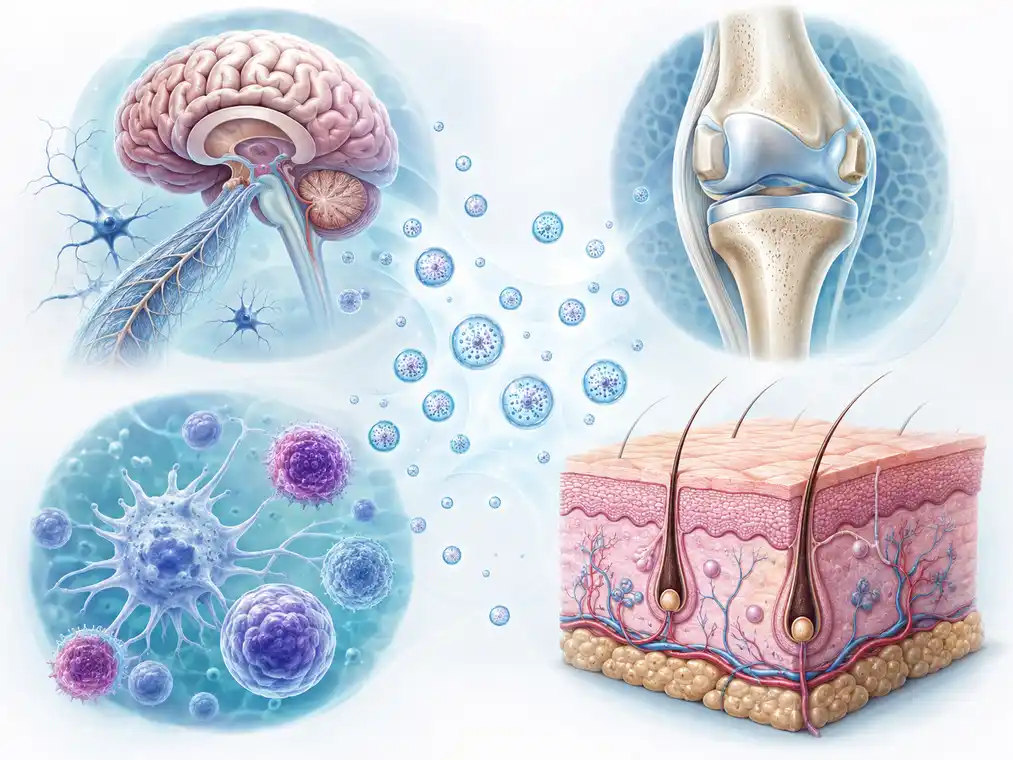
Neurological Conditions
Neurological diseases require particularly careful language.
Patients and families may encounter claims that lost neurons can simply be replaced or that a damaged spinal cord can be rebuilt. Current regenerative medicine cannot reliably do this in most chronic neurological conditions.
The adult nervous system has a limited capacity to recover from extensive structural damage.
Research involving MSCs and mesenchymal stem cell exosomes often addresses a different question: can the environment around surviving nerve cells be influenced?
Inflammation, immune activity, oxidative stress and poor cellular support may affect the function of tissue that remains. MSCs release substances that interact with some of these pathways. Stem cell-derived exosomes may carry a portion of that signalling material.
This is a more modest objective than rebuilding nervous tissue, but it is also a more scientifically realistic one.
The individual case still matters greatly. Diagnosis, disease duration, progression, neurological examination and imaging findings all influence whether a regenerative discussion is reasonable.
A disease name alone is not enough.
Orthopaedics: The Tissue Must Still Be There
In orthopaedics, the boundary between a biological problem and a mechanical problem is often easy to see on imaging.
One patient with knee osteoarthritis may have moderate cartilage damage and reasonably preserved joint alignment. Another may have extensive bone changes, severe deformity and very little remaining joint surface.
Those patients do not have the same biological starting point.
Research is investigating whether MSCs or their exosomes can influence inflammation, cartilage metabolism and local repair responses where useful tissue remains.
They cannot straighten a deformed knee. They cannot stabilise a joint with major ligament failure. They cannot produce a normal new joint surface after advanced destruction.
This is why imaging, joint alignment, stability and remaining cartilage are more informative than the diagnosis “osteoarthritis” on its own.
The patient’s age, body weight, activity and previous treatments also enter the decision.
Chronic Inflammation and Autoimmune Disease
Autoimmune conditions are different again.
Here, the immune response is disturbed. The problem cannot be reduced to one missing cell or one damaged structure.
MSCs release substances that may interact with immune cells. Exosomes from these cells can carry proteins and regulatory RNA linked to immune signalling, which explains the growing research interest.
Still, the category is far too broad for general promises.
Crohn’s disease, multiple sclerosis and rheumatoid arthritis involve different organs and different disease processes. A finding in one of these conditions cannot simply be transferred to the others.
Medication is also part of the picture. Regenerative treatment should never be presented as a reason to stop established immunological therapy without the agreement of the relevant specialist.
Skin, Scars and Aesthetic Medicine
The use of exosomes in aesthetic medicine has expanded quickly.
There is a plausible biological reason for studying them. Skin repair involves fibroblasts, blood vessels, immune cells and connective tissue. These cells have to coordinate inflammation, collagen production and wound closure.
Signals carried by stem cell exosomes may take part in these processes.
That does not justify claims of “age reversal”.
Better skin quality, improved recovery or support for wound healing are not the same as turning aged skin into young skin. The product, treatment method and condition of the patient’s tissue all affect the result.
The source of the preparation should also be clear. Two products sold as exosomes may have little in common beyond the wording on the package.
Why Treatment Plans Differ
Patients sometimes compare their proposed protocol with one prepared for somebody else.
I understand why, but the comparison is rarely complete.
The same diagnosis can exist at different stages. Patients may have different imaging findings, previous operations, medications and amounts of functioning tissue.
Their goals differ too.
Someone hoping to manage daily activities with less discomfort has a different objective from a professional athlete. A slowly progressing condition is not equivalent to one that has changed rapidly over several months.
The number of cells or vesicles does not settle these questions.
More is not necessarily better. A plan involving several administration routes is not automatically more advanced. A complicated protocol can still lack a clear medical rationale.
The explanation behind the plan matters more than its size.
What Exosome Research Has Not Yet Settled
Exosome therapy research still has basic practical questions to answer.
Which parent cells are most suitable for each condition? Which isolation method produces a clean and reproducible preparation? How should dose be measured when particle number alone is insufficient?
Researchers also need to clarify administration routes, duration of biological activity and long-term safety.
Standardisation remains a challenge. Two studies may both use the phrase mesenchymal stem cell exosomes while testing products that differ in source, purity and molecular content.
Larger clinical trials will help identify which findings are reproducible and which patients, if any, are most likely to benefit.
That process takes time. Medicine usually advances more slowly than marketing.
My Clinical View
I do not regard exosomes and stem cells as opponents.
Exosomes are part of the communication system of living cells. They carry some of the information released by MSCs, but they do not reproduce everything the cells themselves can do.
For one patient, living cellular activity may be relevant. For another, a cell-free approach may be discussed. In a third case, neither option may be justified.
The useful questions remain straightforward:
What has happened to the tissue? What is still functioning? Which part of the problem might realistically respond to biological support?
Once those questions are answered, we can discuss products.
Not before.
Frequently Asked Questions About Stem Cell-Derived Exosomes
What are stem cell-derived exosomes?
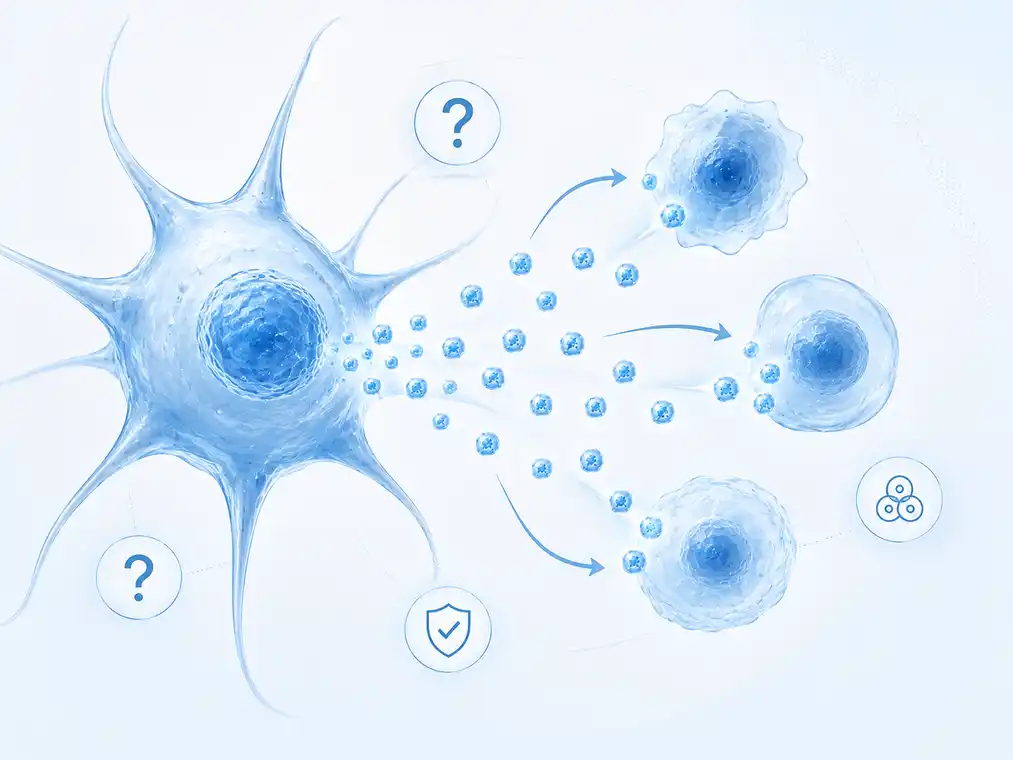
When mesenchymal stem cells are cultured, they release very small membrane-bound vesicles into their surroundings. A proportion of these vesicles are described as stem cell exosomes.They may carry proteins, lipids and different types of RNA. The exact mixture is not always the same. It changes according to the stem cell source, the condition of the cells and the way the preparation was produced.
Are exosomes simply smaller stem cells?
No. This is a common misunderstanding.
A stem cell is still alive. It can react to inflammation, low oxygen levels and other signals in the tissue. An exosome has already left the parent cell with its cargo inside it.
Once released, it cannot divide or decide to produce something different.
What happens when an exosome reaches another cell?
Several things are possible.
The vesicle may attach to the outside of the cell, or the cell may take it up. Molecules carried by the exosome can then affect how that recipient cell behaves.
The outcome is not predictable from the word “exosome” alone. An immune cell, a skin cell and a cartilage cell will not necessarily respond in the same way.
Are mesenchymal stem cell exosomes better than stem cells?
I would not make that comparison without first looking at the patient.
There are situations in which researchers are mainly interested in the signals released by cells. In another setting, the continuing activity of living cells may be more relevant.
Sometimes neither approach is medically justified. The diagnosis and the condition of the tissue should decide the discussion, not which product sounds newer.
Can exosomes do everything that stem cells do?
No.
They may carry part of the signalling material released by mesenchymal stem cells, but they cannot copy the complete behaviour of a living cell.
A stem cell can continue responding to its environment. An isolated exosome cannot change its cargo after it has been released.
Are all stem cell exosomes comparable?
Definitely not.
The parent cells may come from different tissues. Culture conditions, isolation methods, storage and quality testing also vary between laboratories.
Two products can both be called stem cell-derived exosomes and still differ considerably. This is why the source and manufacturing process are just as important as the number of vesicles.
Can stem cells and exosomes be used in the same treatment plan?
They may appear together in certain regenerative protocols, but there should be a clear reason for doing so.
Adding another biological product does not automatically improve the result. A combined approach should be based on the patient’s condition and the medical objective, not on the idea that more treatment must be better.
Are stem cell-derived exosomes already proven treatments?
That depends on the proposed use.
For many conditions, the evidence is still based on laboratory work, animal research or small early clinical studies. Other areas may have more clinical experience, but this does not make every exosome product equivalent.
I would always ask which preparation was studied, in which patients and with which outcome.