Clinical insights from Prof. Dr. Serdar Kabataş, MD, PhD (C)
CAR-NK Exosomes Begin With Engineered Natural Killer Cells
In my work, the word exosomes usually brings up a question about stem cells: were they taken from umbilical cord tissue? With CAR-NK exosomes, the answer is no. The starting material is a culture of natural killer cells. These immune cells are engineered to recognise a chosen target, and the vesicles they release are then collected.
This distinction is more than a technical detail. It explains why researchers are interested in CAR-NK exosomes for cancer, why glioblastoma is attracting particular attention, and why targeted immune approaches may eventually be relevant to diseases beyond oncology, including multiple sclerosis (MS).
To understand the idea, we first need to look at the immune cells from which these vesicles are made.
Table of Contents
What Do T Cells and Natural Killer Cells Do?
T-cells and natural killer (NK) cells are both immune cells, but they recognise threats in different ways.
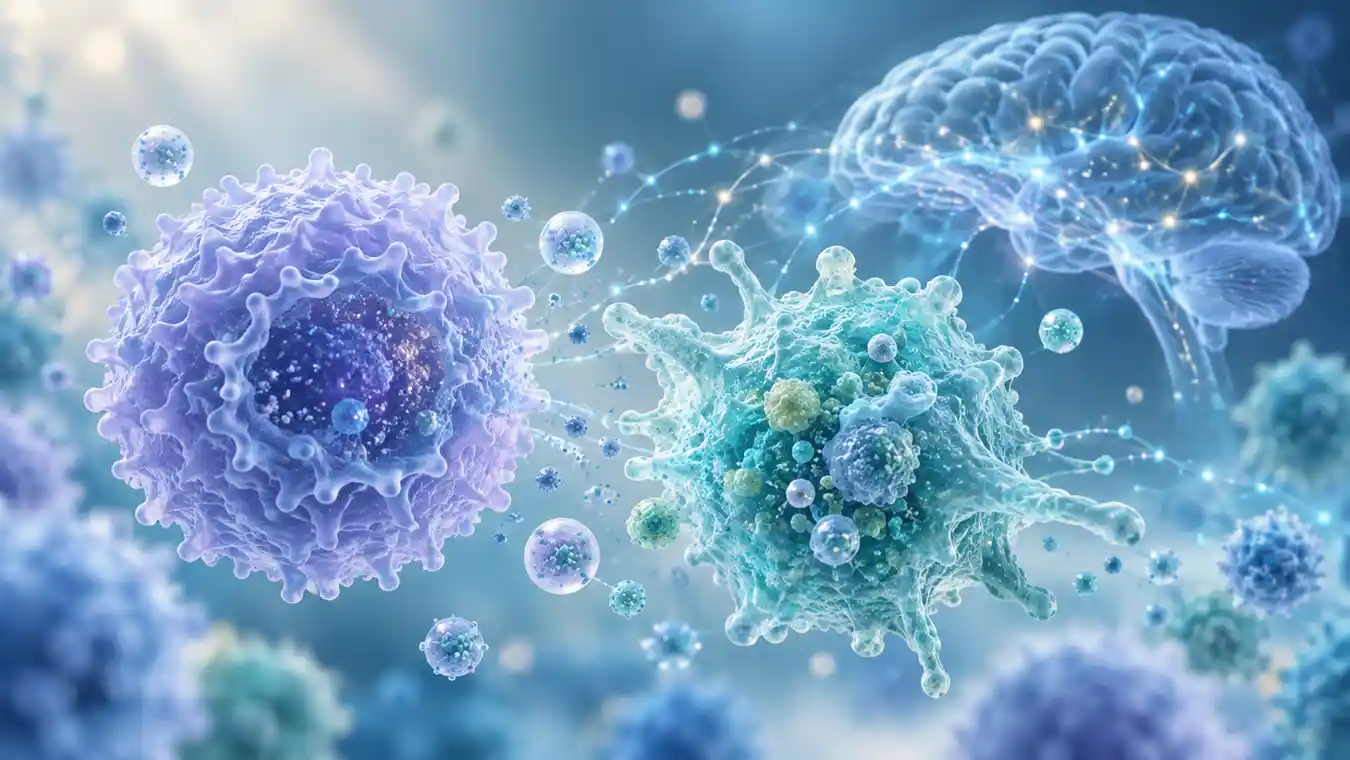
T cells can develop a highly specific response to an antigen. Some T cells identify and destroy infected or abnormal cells; others coordinate the wider immune response. NK cells are part of the body’s more immediate defence. They assess signals on other cells and can kill a cell that appears abnormal, including some cancer cells.
Cancer can interfere with both processes. A tumour may display too little of the signal that alerts immune cells, surround itself with suppressive signals, or create a physical environment that immune cells struggle to enter. Engineering an immune cell with a chimeric antigen receptor, or CAR, is one way researchers try to give it a more defined target.
Think of the CAR as a specially designed recognition receptor on the immune cell’s surface. Its outer portion binds to a chosen antigen. In a living CAR-T or CAR-NK cell, the inner portion passes an activation signal into the cell after that binding occurs. What follows depends on the cell, the receptor design and the surrounding tissue. It is more accurate to say that the treatment is designed to recognise a target and trigger an immune-cell response than to say that it “tells the whole body” to fight cancer.
Where Do CAR-T Cells Come From?
Most established CAR-T treatments begin with T-cells collected from the patient’s blood. In a procedure called leukapheresis, blood passes through a machine that separates out white blood cells. The remaining blood components are returned to the patient.
In a specialised laboratory, T cells are selected and genetically modified so that they produce the intended CAR. The cells are then multiplied and checked before they are given back to the patient. Because the administered product contains living engineered cells, those cells may continue to respond and expand inside the body. Some CAR-T therapies are established treatments for particular blood cancers; that clinical experience cannot automatically be transferred to CAR-NK exosomes.
The source material here is T cells from blood. It is not umbilical-cord-derived MSC tissue.
Where Do CAR-NK Cells Come From?
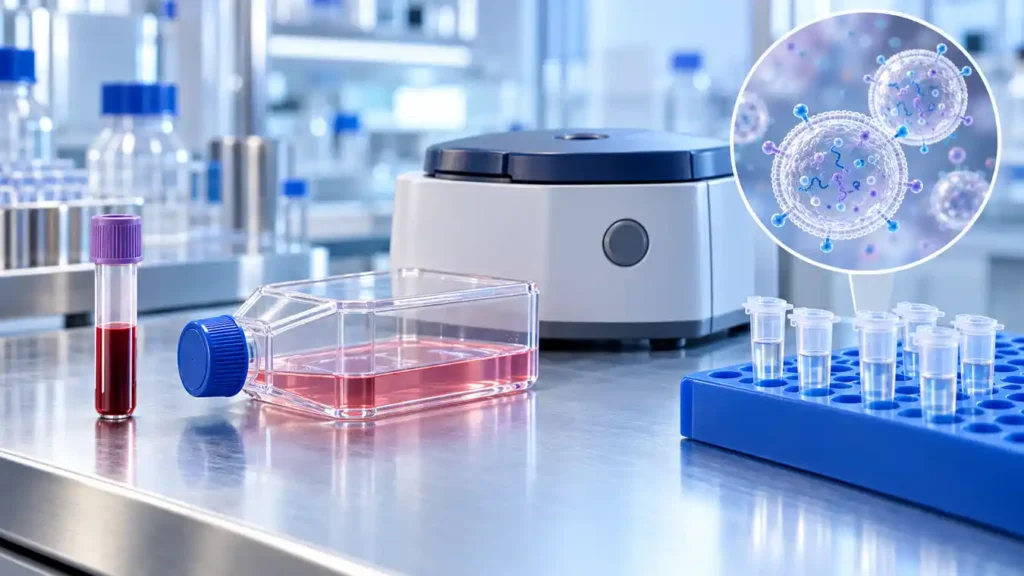
NK cells can be obtained or developed through several routes. Researchers have used NK cells from peripheral blood, umbilical cord blood, established NK cell lines such as NK-92, and NK cells produced from induced pluripotent stem cells (iPSCs). The choice of source affects manufacturing and the properties of the resulting product. Cord-blood-derived NK cells, for example, are immune cells derived from cord blood; they are not the same as MSCs isolated from umbilical cord tissue.
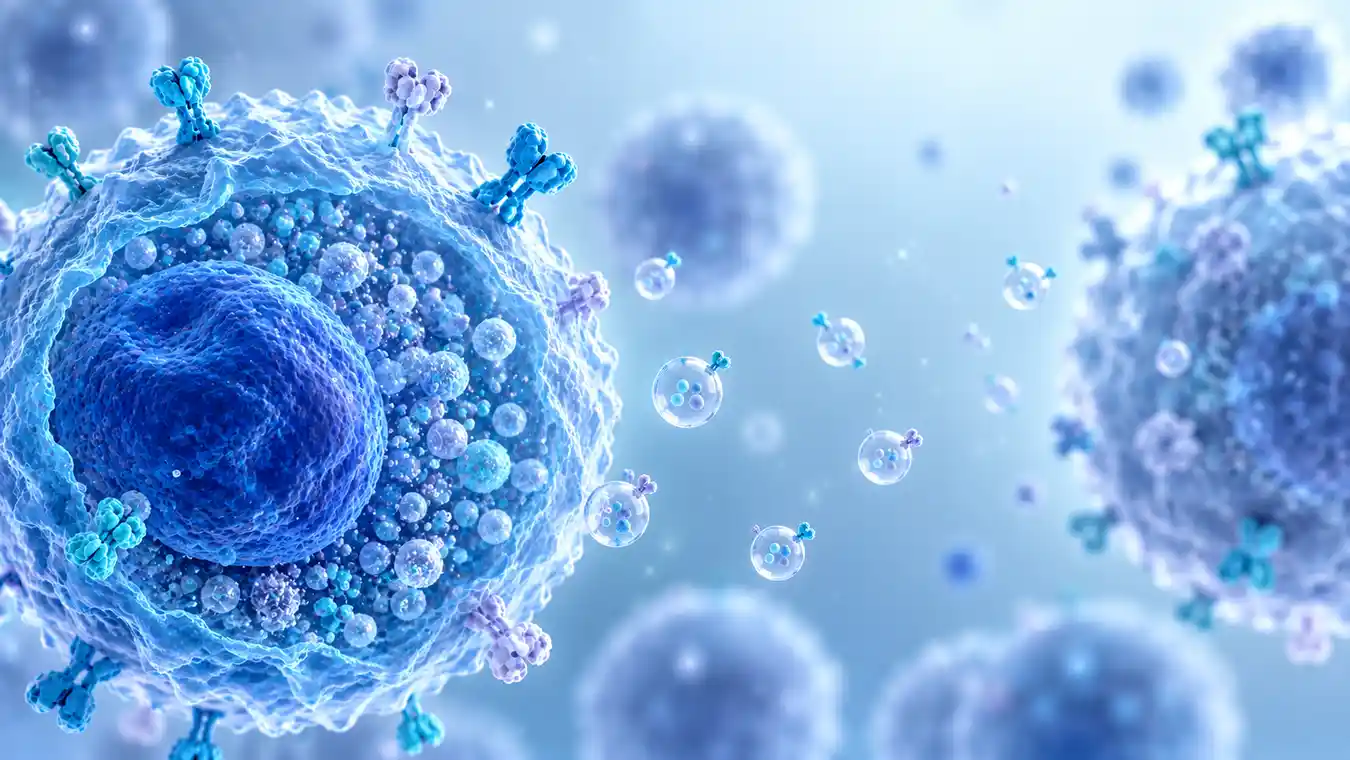
In a CAR-NK programme, the NK cells are engineered to express a receptor aimed at a chosen antigen. They are cultured under controlled conditions and release extracellular vesicles into the culture medium. Researchers can collect the medium, isolate the vesicles and test what the preparation contains and does.
Those vesicles are often called CAR-NK exosomes. You may also see the broader term CAR-NK extracellular vesicles, or CAR-NK EVs. They are a cell-free product: the aim is to use vesicles produced by the engineered cells, rather than administer the living CAR-NK cells themselves. Published laboratory research has characterised vesicles from HER2-directed CAR-NK-92 cells and examined their activity against HER2-positive tumour cells.
The source and target must be specified for every product. “CAR-NK exosomes” alone does not tell us which antigen they recognise, which NK cells produced them, or whether their effects have been studied in people.
How Do CAR-NK Exosomes Target Cancer Cells?
The central research question is whether an engineered vesicle can bring two useful features together:
- Target recognition: surface features associated with its engineered parent cell may help the vesicle interact with cells bearing a selected antigen.
- Biological cargo: the vesicle may carry proteins and other molecules capable of affecting the recipient cell.
NK-cell-derived vesicles have been studied for cytotoxic components including granzyme B and perforin. In laboratory experiments, certain engineered preparations have shown activity against cancer cells carrying the intended target. This gives researchers a plausible mechanism to investigate. It does not mean that every CAR-NK vesicle preparation has the same cargo, reaches a tumour in a patient, or reliably destroys it. Those points have to be measured for the individual product.
So what is the proposed “message” to the body? In cancer research, it is best described as a targeted interaction with cells displaying a chosen marker, potentially followed by delivery of tumour-damaging cargo. The aim is greater precision at the tumour site. It is not a general instruction that makes every immune cell attack every cancer.
Why Is Cancer the Main Focus of This Research?
Cancer provides a defined problem for targeted immune engineering: many tumours display antigens that can be investigated as potential targets. Researchers can examine whether an engineered product recognises cells with that antigen, how strongly it affects them, and what happens to healthy cells that may carry the same marker.
CAR-based treatment has already shown that engineered immune recognition can be powerful in certain blood cancers. Solid tumours present a harder challenge. Their cells may vary from one area to another, and their surrounding tissue can limit access or suppress an immune response. Because extracellular vesicles are much smaller than living immune cells, researchers are investigating whether they can enter tumour tissue and deliver their cargo differently. This is a reason to study CAR NK exosomes in solid tumours.
Studies involving breast cancer cells and animal models have produced encouraging early findings. Their value is that they help researchers decide what to test next: the target, dose, route, distribution, safety and effect in humans. A response observed in a dish or mouse cannot be presented as the response a patient should expect.
Why Is Glioblastoma of Particular Interest?
Glioblastoma is a difficult tumour to treat. It grows within the brain, can infiltrate surrounding tissue and creates an environment that may weaken immune-cell activity. Researchers therefore have a strong interest in ways to deliver a targeted effect within the tumour and its surroundings.
Several antigens have been investigated in CAR-based glioblastoma research. HER2-directed CAR-NK cells, for example, have been studied in laboratory and animal work. A small first-in-human trial also examined the administration of living HER2-directed CAR-NK cells into the brain during surgery for recurrent glioblastoma. This provides clinical experience with CAR-NK cells; it is not a trial demonstrating the efficacy of CAR-NK exosomes.
Extracellular vesicles raise a further question: could an appropriately engineered, targeted vesicle deliver useful cargo in this setting? Their small size makes that worth investigating. But access to the brain, distribution through the tumour, recognition of the intended antigen and effects on healthy brain tissue all need direct testing. We should not assume that an injected vesicle crosses the blood–brain barrier or reaches every glioblastoma cell simply because it is small.
For a patient with glioblastoma, the precise tumour markers would be central to any discussion of a targeted product. A CAR designed for one antigen is not automatically suitable for a tumour that lacks it.
What Is the Potential of CAR-NK Exosomes in Multiple Sclerosis?
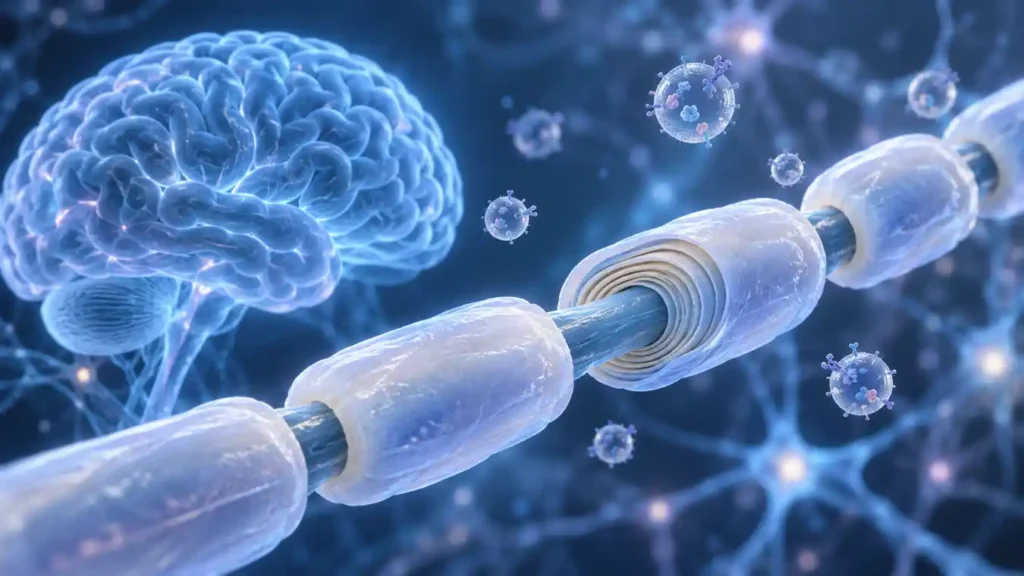
I am interested in this question because MS, too, involves an immune response that we would like to influence more precisely. In MS, immune activity contributes to inflammation and damage within the central nervous system. Extracellular vesicles are already being investigated for their roles in communication between immune and nervous-system cells, as potential biomarkers, and as possible future delivery tools.
The opportunity is a different therapeutic design. In cancer, the goal of a CAR-NK-derived product may be to target and damage a tumour cell. For MS, researchers would need to define which cells or immune pathways should be targeted and what effect the vesicle should produce. Killing a cancer cell and regulating a misdirected immune response are different objectives.
That is why I see MS as an important research direction for targeted, engineered extracellular vesicles. Advances in cell sourcing, receptor design and vesicle delivery could eventually allow much more specific approaches than a broadly described “exosome treatment.” The question for any proposed CAR-NK exosome product is whether its particular target and biological activity make sense for MS and whether they have been tested for that purpose. Research on EVs in MS, or on CAR-NK exosomes in cancer, cannot answer that question by itself.
CAR-NK Exosomes and Healthy Aging
Healthy aging is another area in which I work with CAR-NK exosomes. Patients often call this “anti-aging.” For me, the aim is to preserve health and function as we grow older.
One subject of interest is cellular senescence. Some cells stop dividing but remain active in the tissue, releasing substances that can contribute to persistent inflammation. Natural killer cells play a part in recognising and removing certain senescent cells. Researchers are studying how that process might be supported through targeted immune approaches.
This provides a reason to investigate engineered immune cells and their vesicles in healthy aging. It does not mean that their effects are interchangeable: findings from living NK cells or CAR-T cells cannot establish what a CAR-NK exosome preparation will do.
When considering this approach, I look at the person’s health, medical history and treatment goals. I explain that its use for healthy aging is still developing. We do not yet have clinical evidence showing that CAR-NK exosomes reverse aging or extend human lifespan.
Are CAR-NK Exosomes the Same as MSC Exosomes?
No. It helps to put the source and intended purpose side by side:
| Approach | Source of the vesicles | Main research concept |
|---|---|---|
| MSC-derived exosomes | Mesenchymal stromal cells, which may be obtained from umbilical cord tissue or other sources | Studying cell signalling, inflammation and tissue responses |
| CAR-NK exosomes | Cultured NK cells engineered to express a chosen CAR | Studying targeted recognition and the delivery of effects associated with NK cells |
| CAR-T-derived vesicles | Cultured T cells engineered to express a chosen CAR | Studying a cell-free extension of CAR-T research |
These are broad descriptions, not interchangeable product specifications. Even two preparations from the same type of cell may differ substantially in how they are manufactured and what they contain. And while CAR-T cells are usually collected from a patient’s blood for currently established treatments, a CAR-T-derived vesicle is a separate experimental product made from cultured engineered T cells.
How I Approach CAR-NK Exosomes in Clinical Practice
I already work with CAR-NK exosomes. Before considering them for a patient, I look at the diagnosis, the available medical records and the aim of treatment. I also need to know the characteristics of the specific exosome preparation, including the cells from which it was produced and the target it was designed to recognise.
In cancer, that means reviewing the tumour type, its molecular findings and the treatments the patient has already received. Glioblastoma calls for particular care because of its location and the complexity of its surrounding tissue. In MS, I consider the course of the disease, current neurological findings and ongoing treatment. The question is always what role this particular approach could reasonably have for this particular person.
My experience working with CAR-NK exosomes makes me attentive to their potential, but it does not replace clinical evidence. This remains a developing field. I discuss the proposed treatment and its uncertainties openly with patients, and I do not promise a specific response.
The Future of CAR-NK Exosomes
What interests me most about CAR-NK exosomes is how much room there is to refine them. Researchers can investigate different cell sources, select a target, and study how the resulting vesicles behave in the body. Each step may help make this approach more precise.
In cancer care, this could be especially valuable for tumours that are difficult to reach or treat, including glioblastoma. For multiple sclerosis, the longer-term opportunity may lie in directing an engineered vesicle toward a carefully chosen part of the immune response. These are different goals, but both show why the ability to design a product around a specific biological target matters.
I follow these developments closely. As research advances, I hope we will gain a clearer understanding of which patients may benefit, which targets are most useful, and how this approach can be integrated into individual treatment plans.
Frequently Asked Questions About CAR-NK Exosomes
Are CAR-NK Exosomes Made From Stem Cells?
No. They are collected from a culture of engineered natural killer cells. The confusion often comes from umbilical cord blood, which can be one source of NK cells. That does not make these exosomes MSC-derived: NK cells from cord blood and MSCs from cord tissue are different cells.
Is This the Same as CAR-T Therapy?
No. CAR-T therapy gives the patient living, engineered T cells. Here, the starting point is an engineered NK cell, but the product collected from its culture consists of vesicles. I would not use results from CAR-T studies to predict what those vesicles will do for a patient.
Can CAR-NK Exosomes Be Used for Glioblastoma?
Glioblastoma is one reason researchers are interested in targeted immune approaches. Its location and surrounding tissue make treatment particularly challenging. Living CAR-NK cells have been investigated in a small clinical study involving recurrent glioblastoma. Whether a specific CAR-NK exosome preparation can reach a patient’s tumour and produce a useful effect is a separate question that requires evidence for that preparation.
Why Are CAR-NK Exosomes Being Considered for Multiple Sclerosis?
Multiple sclerosis involves immune activity within the central nervous system. This creates interest in approaches that might influence a more precisely chosen immune target. The intended effect in MS would differ from targeting a cancer cell, so the receptor, vesicle contents and treatment goal would all need to be considered for the specific product. Research into exosomes in MS is growing, but it does not establish the benefit of every CAR-NK exosome preparation.
Are CAR-NK Exosomes Safer Than CAR-T Therapy?
They are different types of products, so a simple safety ranking would be misleading. CAR-NK exosomes do not contain living engineered cells that can expand after administration. That is one reason researchers are interested in them. Their own safety still depends on what the vesicles contain, where they travel, which cells they affect and how they are administered. These questions must be assessed for each product.
Do All CAR-NK Exosomes Work the Same Way?
No. The source of the NK cells, the antigen selected for the CAR, and the way the vesicles are produced can all differ. Two products described as “CAR-NK exosomes” may therefore have different targets and biological effects. Before discussing their possible role for an individual patient, we need to know exactly which preparation is being considered.