Written by Dr. Şükran Baycan (DentSpa)
Understanding Bone Loss and Why It Matters for Dental Implants
The success of any dental implant operation depends largely on the strength and density of the jawbone.
Here is why: if the jawbone is NOT strong enough to hold the implant, it simply won’t stay in place. In fact, some surgeons will not even proceed with the procedure if they detect insufficient bone support.
But don’t worry, if this is your situation, there is still a way out. Thanks to advanced dental procedures like bone grafting and sinus lifting, your jawbone can be “rebuilt” to become a solid foundation for implants.
In this guide, we will take a closer look at the two procedures and how each one works. We will also look at the scenarios where they will be needed and what you can expect during the procedure.
Table of Contents
Causes of Jawbone Loss and Implant Failure Risks

Most dental implant procedures fail because the patient’s jawbone has either shrunk (atrophy) or is weak. There are several factors usually responsible for this; they include:
- Tooth loss
- Chronic Periodontal Disease (Chronic Gum Disease)
- Age
- Diabetes
- Excessive smoking and tobacco usage
- Strong medications like antidepressants, corticosteroids, etc.
- Trauma, injury, or cysts.
- Poor oral hygiene
- Genetics.
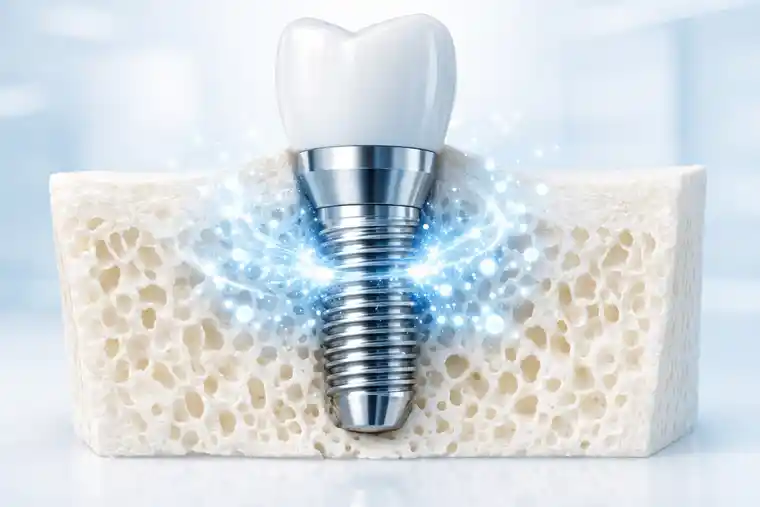
Since implants are made up of titanium posts that have to be anchored into your jawbone, the strength and density of the jawbone are absolutely crucial. If your jawbone is strong enough, the implant will anchor properly and stay stable for years. That said, for implants to succeed, your jawbone must meet the following requirements:
- The bone must be at least 10 to 13mm long
- The bone must be at least 6-7 mm wide.
- Quality of the bone also matters. The bone must not be too soft or porous.
- The bone must be in the right location.
Different Bone Grafting Techniques
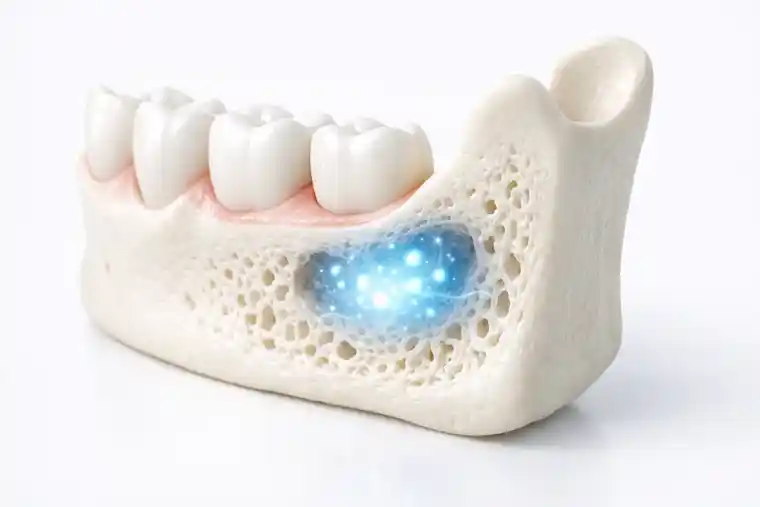
If your bone is not strong enough to receive an implant, bone grafting could be a good option for you. This surgical procedure involves the addition of bone or bone-like material to areas where bone is deficient or completely missing.
As Dr. Serdar Yılmaz, an Oral & Maxillofacial Surgeon at DentSpa, put it, “Bone grafting isn’t just about replacing lost bone—it is about rebuilding the foundation that allows a confident, lasting smile to stand strong.”
The graft material for this procedure can be sourced from
- Your own body (Autograft)
- A human donor (Donor graft)
- An animal (Xenograft)
- Lab-grown (Synthetic graft or Alloplast)
Note: There are instances where bone materials will be combined. For instance, an autograft may be mixed with an allograft or xenograft.
Regardless of where it comes from, the goal of every bone grafting procedure remains the same:
- To provide a stable foundation for a dental implant!
- Restore facial contours affected by the bone loss
- Allow proper implant positioning for function and aesthetics
Various techniques
Various surgical techniques exist for placing bone grafts depending on the situation
Ridge augmentation:
This technique involves placing bone materials on or within the existing bone and then securing them with screws or pins. This procedure is often used when a significant portion of the bone width and height has been lost.
Guided bone regeneration technique
This procedure involves the combination of bone grafts and a resorbable or non-resorbable membrane. A bone graft material will be placed on the targeted area, and a special membrane will be placed on it to prevent soft tissue from invading the area.
Socket preservation
This type of technique is done right after a tooth has been pulled out to prevent bone loss. After extraction, the socket will be filled with bone graft and membrane and then sealed.
Sinus Lift Procedure Explained

If you have ever come across the terms “sinus augmentation” or “sinus floor elevation,” they all refer to the same procedure, Sinus lifting.
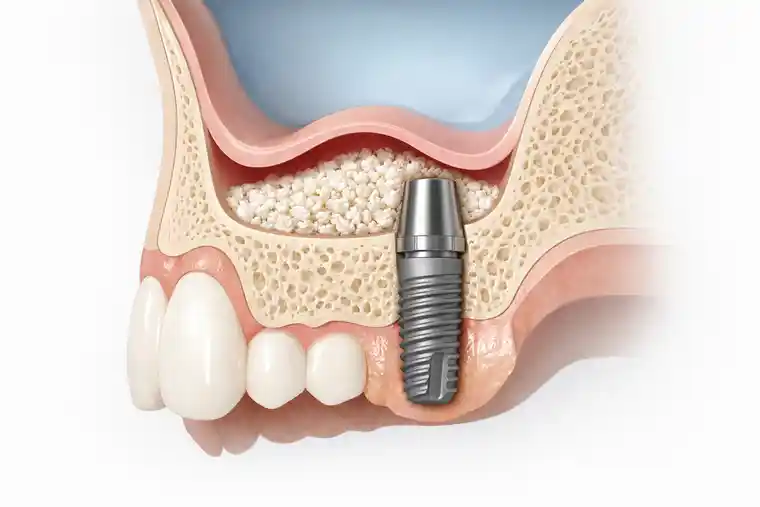
Here is how it works: During your surgery, your sinus will be lifted sufficiently high enough (about 2-4 mm) to create space for bone-graft material to be added between the jaw and the cavity. The entire goal of this lifting is to build a solid foundation strong enough to support a dental implant securely.
When is this procedure needed?
Your dentist will recommend sinus lifting for you if:
- Chronic gum disease. Trauma and impact injuries have reduced the bone height in your upper jaw.
- CBCT scan shows insufficient bone height (<10mm) between ridge and sinus
- Standard implants won’t fit in available bone
- You want to avoid very short implants or alternative solutions
Sinus lifting has gained popularity in recent years because of its high success rate. As explained by Dr. Serdar Yılmaz, “Sinus lift procedures have become highly predictable with modern techniques. Success rates exceed 95% when performed correctly. What once seemed like a complex, risky procedure is now routine in experienced hands.”
Types of sinus lift
There are TWO main types of sinus lift procedure. They include
- Traditional sinus lift: This procedure is often used when there is a significant bone loss. The dentist will create a small hole at the side of your upper jawbone. This space will then be used to access the sinus membrane
- Internal sinus lift: This procedure is also called osteotome or transalveolar sinus lift. It is often used for patients who have only lost a small amount of bone height. In this technique, the surgeon will access the sinus through the implant site itself using specialized instruments.
The sinus lift procedure
If your dentist has cleared you to receive a sinus lift, here is what you should expect during the procedure
- An initial assessment is done to know the bone height and the type of sinus lifting that is perfect for you. Here, your dentist will make use of specialized tools like 3D imaging, X-rays, and many others.
- A small incision is then made to create a “window” that will be used to access the sinus membrane.
- Using specialized tools, the sinus membrane will then be gently raised upward.
- After lifting the sinus membrane, the cavity will then be filled with bone graft material.
- The incision site will then be closed to ensure that the graft integrates with the existing bone.
Difference Between Sinus Lifting and Bone Grafting
Below is a table analyzing the key difference between the two procedures.
| Feature | Bone grafting | Sinus lifting |
|---|---|---|
| Purpose of the implant | After a significant bone loss. Bone grafting is done to increase bone volume and density | Sinus lifting is done solely to increase the height of the upper jawbone so that there will be enough base for the dental implants |
| Healing time | It takes about 4 to 6 months for recipients to fully recover. It should be noted that this, however, varies depending on many factors. | On average, it takes about 6 to 9 months for a recipient of this procedure to heal properly. |
| Technique involved | It varies depending on the extent of the bone loss and location | Sinus manipulation involves two techniques. It can either be done through an external window or through the implant site itself. |
| Success rate | Success rate of bone grafting exceed 90% | Studies show a success rate of about 85% to 97%. |
| Location | It can be done on both the upper and lower jawbones. | It can only done on the upper jaw |
Get your dental implant done right the first time
If your bone volume/density has decreased so much that you can’t receive an implant, bone grafting or sinus lifting can fix this problem. Though they differ in how they’re performed and the techniques involved, both aim to rebuild enough bone to support successful implants.
Goes without saying that if your procedure is ever going to be successful, you will need the expertise of a qualified surgeon – We mean surgeons who do this frequently and have positive reviews to back it up.
A good recommendation is DentSpa. This clinic has its headquarters in Istanbul, Turkey, and has been providing excellent bone regeneration services for more than 25 years.
They have highly trained implantologists that can assess your case, recommend a suitable procedure, and deliver results that will restore your smile and confidence.
Book a consultation with DentSpa today.
Stay Updated
For those who are inspired by this MedClinics article, follow our blog for the latest in medical and aesthetic treatments, tips for maintaining healthy teeth, and inspiring patient success stories.
Anyone interested in finding out more should contact MedClinics for more information.
FAQ’s regarding Bone Grafting and Sinus Lift
Why do I need a bone graft prior to receiving my dental implants?
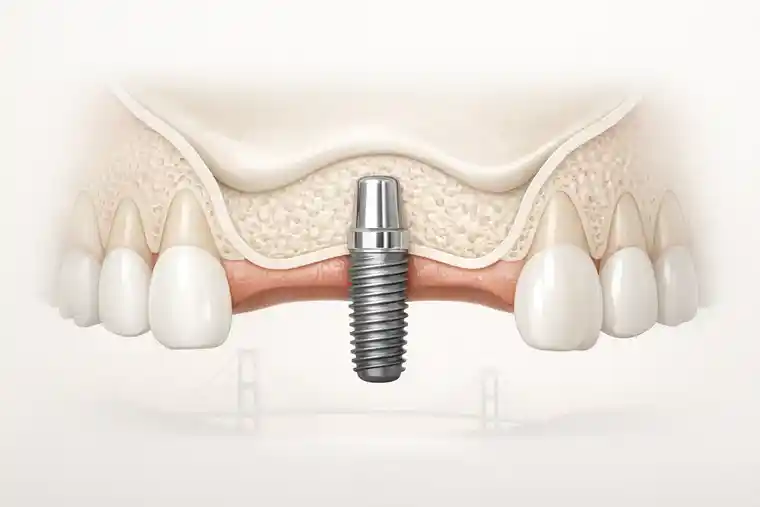
The concept is very easy. You can’t place an implant without a healthy, strong bone to support it. Implants don’t last long if the jawbone is too thin or weak. Most patients experience loss of bone due to gum disease, age, smoking, etc. Bone grafting provides a solid base, creating a very powerful foundation for the placement of an implant, much like having the best possible base for a high-rise building; absolutely necessary.
What types of materials are available for use in bone grafting?
We have many options available. The best options. Options include using the patient’s own bone, donor bone, animal derived grafts and/or advanced, artificial (synthetic) products. These are combined by surgeons to create truly amazing outcomes.
What is a sinus lift and why does it occur?
Sinus lifts are highly developed procedures. Sinus lifts raise the floor of the sinus to allow more space for bone to be placed into the upper jaw. When the bone is less than 10mm in height, it is unsafe to place an implant. A sinus lift allows you to add the needed height and strength to provide a safe environment for the placement of an implant.
How is a sinus lift procedure accomplished?
First you get the best imaging available. The surgeon makes a small incision, gently raises the sinus membrane and places the bone graft. The incision is then closed, the area heals and the bone graft becomes a solid base for the implant. There are times when the procedure is completed through the side, and other times the procedure is completed directly at the implant site. Both methods are effective.
How will I know which type of procedure is correct for me?
It takes an experienced professional with expertise in placing dental implants. This person needs to review your scans, assess your bone height and width, etc., and then inform you of the best method(s) to provide you with the healthiest and most stable dental implant(s).