
MedClinics News & Blog
A stem cell transplant for neuromyelitis optica is an exceptional treatment considered only in specialist centres. A recently published report looks back at two patients who underwent donor transplantation in Milan. One is now 15 years beyond the procedure; the other has reached 16 years.
Neither has had another neuromyelitis optica attack. Both live without maintenance immunosuppression, their scans have remained quiet, and AQP4-IgG-the antibody involved in their disease-is no longer detectable.
It is a remarkable clinical history. It is also the history of only two people. The paper gives us a detailed view of their long-term progress, but it cannot predict what would happen if the procedure were used in a larger group.
Table of Contents
Why Another NMOSD Attack Matters
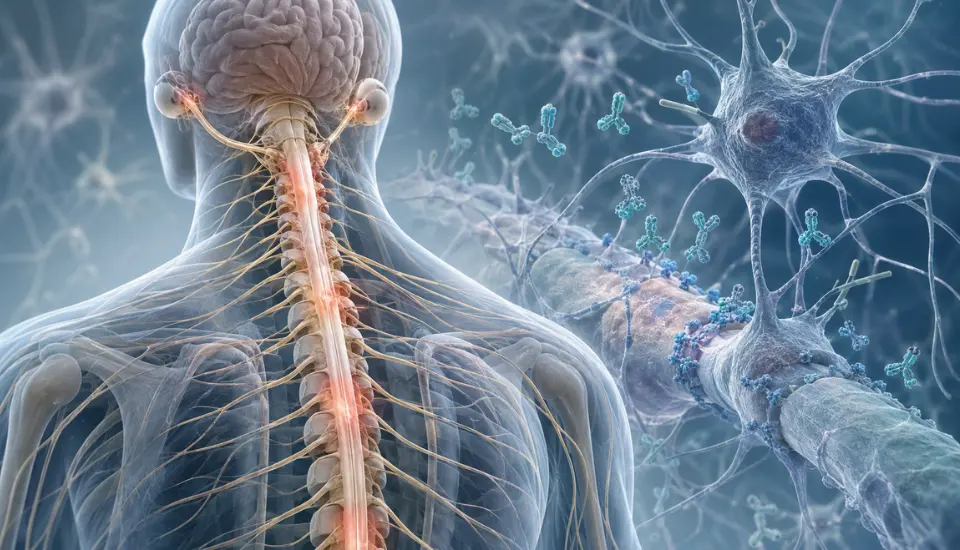
Neuromyelitis optica spectrum disorder, or NMOSD, causes most of its damage during attacks. Between them, the disease may seem quiet. The next episode can arrive suddenly and affect a different part of the nervous system.
Inflammation often reaches the optic nerves, sometimes causing severe loss of vision within a short period. When it involves the spinal cord, the result may be weakness, numbness, difficulty walking or loss of bladder and bowel control. Recovery is not always complete.
The two patients in Milan had the AQP4-positive form of the disease. Aquaporin-4 is found in high amounts on astrocytes, the cells that maintain the environment around nerve cells. AQP4 antibodies bind to these cells and set off an inflammatory reaction.
Both patients continued to have active disease despite previous treatment. Their transplants also took place before today’s range of targeted NMOSD medicines was available. At that point, replacing the immune system was considered because controlling the existing one had not worked.
What the Stem Cell Transplant for Neuromyelitis Optica Involved
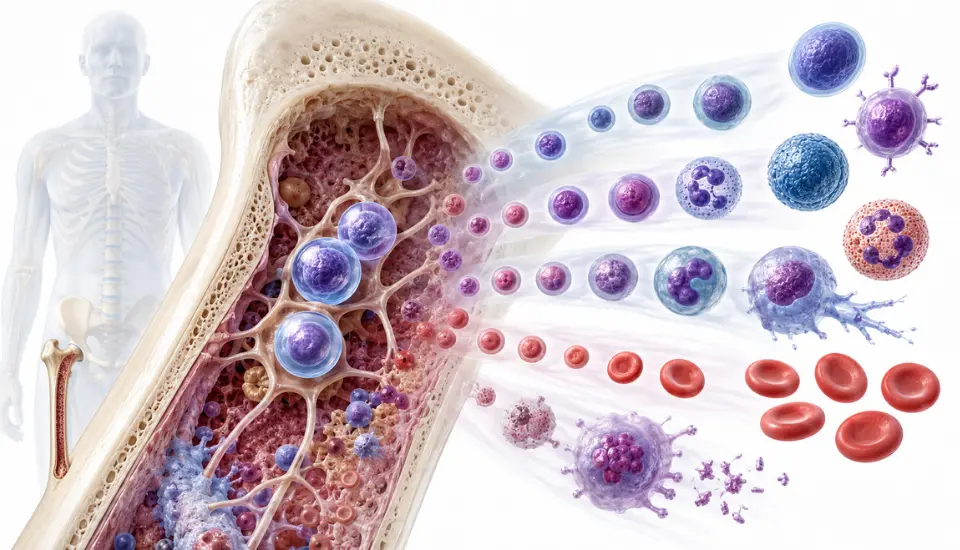
The doctors used allogeneic hematopoietic stem cell transplantation, often shortened to allo-HSCT. The donated stem cells were blood-forming cells—the source from which new blood and immune cells develop.
The process begins with conditioning treatment. This clears space for the donor cells and removes much of the recipient’s existing immune system. Once established in the bone marrow, the transplanted cells begin producing donor-derived immune cells.
The word “stem cell” can give the wrong impression here. Nothing was injected into the patients’ eyes or spinal cord. The donor cells were not intended to become neurons, repair the optic nerves or replace injured spinal tissue.
This was an attempt to exchange one immune system for another.
That makes allo-HSCT very different from MSC therapy. Mesenchymal stem cells are being studied for their signalling and immunomodulatory effects in a range of conditions. They were not used in these patients.
The Antibody Result Stood Out

After receiving a stem cell transplant for neuromyelitis optica, neither patient experienced another attack. Their MRIs also showed no new inflammatory activity, and neither needed continued immunosuppressive medication for NMOSD.
AQP4 antibodies disappeared from the blood after treatment. More than 15 years later, they had not returned.
The donor cells had also maintained full chimerism. This means that blood formation remained donor-derived rather than gradually shifting back to the patients’ original cells.
Researchers examined the rebuilt immune systems in more detail. They found re-established populations of T cells and B cells, including both naïve and memory cells. Testing also revealed lasting changes among regulatory T cells, the cells involved in keeping immune responses under control.
The transplant had therefore done more than temporarily reduce the number of immune cells. Years later, both patients had active donor-derived immune systems, while the AQP4 antibody response remained absent.
Graft-versus-host disease was not reported in either case.
Remission Did Not Erase Earlier Injury
Preventing new attacks can protect the optic nerves and spinal cord from further harm. It cannot be assumed to restore tissue already lost before transplantation.
A patient may enter remission yet continue to live with reduced vision, weakness or another disability left by an earlier attack. The published follow-up does not show that the donor stem cells rebuilt damaged parts of the nervous system.
Its main finding lies elsewhere: the autoimmune activity appears to have stopped for an unusually long time.
For this reason, the study should not be presented as evidence that stem cells regenerate the optic nerve or reverse paralysis. It concerns long-term immune remission after a donor transplant.
Would Doctors Make the Same Choice Now?
NMOSD treatment has changed during the 15 years covered by this report. Several targeted medicines are now available for people with AQP4-positive disease. They can markedly reduce attacks without first removing the patient’s immune system.
For someone doing well on one of these medicines, a stem cell transplant for neuromyelitis optica would bring a level of risk that is difficult to defend.
In these two cases, neither patient developed graft-versus-host disease. Over the lengthy follow-up, one experienced temporary reactive lymph-node enlargement, while the other was successfully treated surgically for carcinoma in situ of the bladder. The paper does not establish a direct link between either event and the transplant.
There may still be a discussion around rare patients whose disease remains severe and active despite appropriate treatment. The Milan cases are relevant to that discussion, although they leave the practical questions unanswered. Doctors do not yet know which patients might benefit, how often prolonged remission could be achieved or whether the benefit would justify the complications.
A two-patient follow-up cannot supply those answers. Its value is in showing that the autoimmune response did not return even after many years of normal donor-derived immune activity.
Researchers may eventually find a less intensive way to recreate that result. Until then, a stem cell transplant for neuromyelitis optica remains an exceptional procedure rather than part of routine care.
Frequently Asked Questions
Is this the same treatment as an MSC infusion?
No. “Stem cell treatment” is a broad term, and the cells used here served a specific purpose. They were donor-derived hematopoietic stem cells capable of rebuilding the blood and immune systems. MSCs were not given.
What happened to the two patients after transplantation?
Neither patient experienced another reported NMOSD attack during follow-up. One had reached 15 years without a relapse and the other 16 years. They were also living without maintenance immunosuppression for the disease.
Did their AQP4 antibodies disappear?
Yes. The antibodies became undetectable after transplantation and remained absent at the most recent assessment.
Did the transplanted cells repair damaged nerves?
The researchers did not report regeneration of the optic nerves or spinal cord. The procedure was directed at the immune system and the prevention of further attacks.
Could this transplant now be offered as a cure for NMOSD?
That would go well beyond the evidence. The paper documents two unusually long remissions. It does not show how reliably the result could be repeated, and allogeneic transplantation carries risks that would be unacceptable for many patients.
Sources
- PubMed – Long-term remission of neuromyelitis optica with allogeneic hematopoietic stem cell transplant
- Vita-Salute San Raffaele University – Neuromyelitis optica: two patients in remission 15 years after stem cell transplantation
- Nature – Stem-cell transplants halt rare autoimmune disease for 15 years
This article is intended for general information and should not be used as a substitute for individual medical advice.