Written by Prof. Dr. Serdar Kabataş, MD, PhD (C)
The Stem Cell Therapy Process Before Treatment Begins
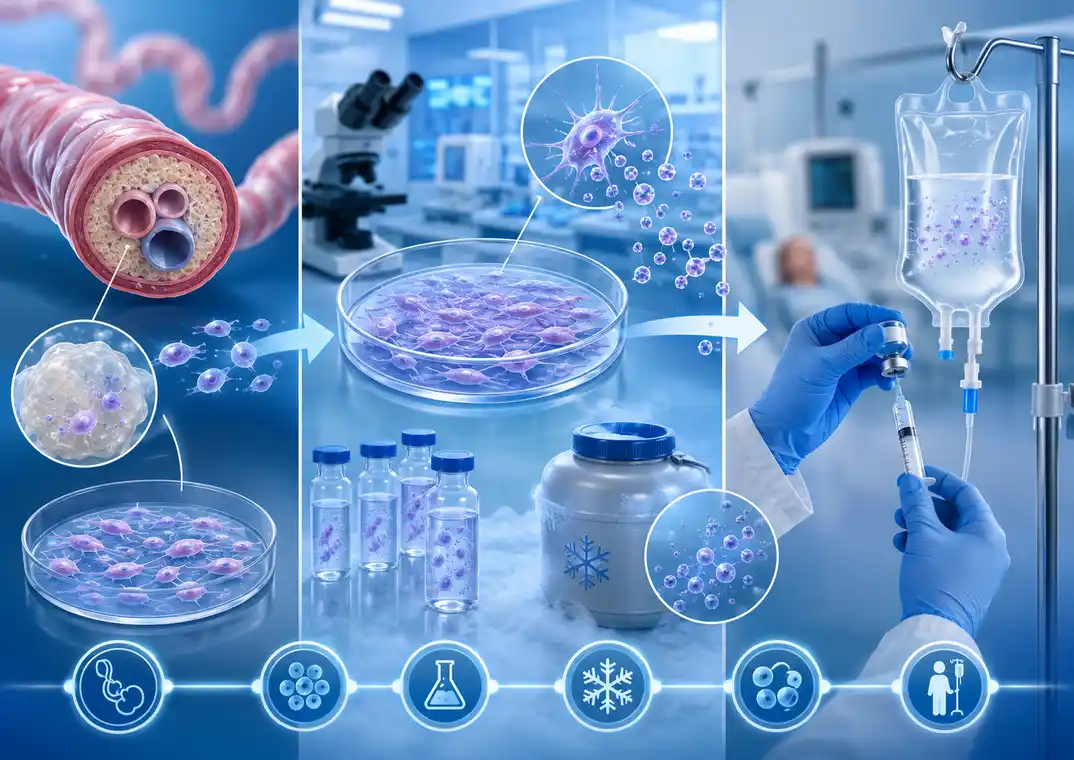
Patients usually see only the final stage of regenerative treatment: a vial, an infusion or an injection.
The stem cell therapy process begins much earlier.
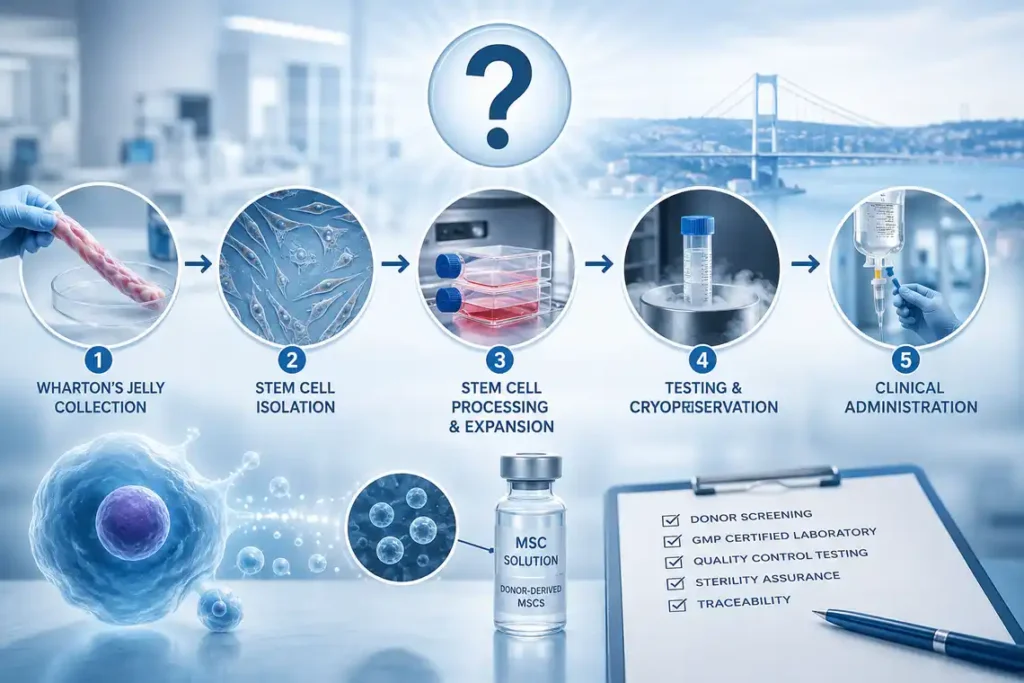
Before donor-derived stem cells can be considered for clinical use, the donor must be evaluated, the umbilical cord must be collected correctly, and the cells must be isolated, expanded and tested. They are then cryopreserved, transported and prepared for administration.
Exosomes follow a different route. They are not removed directly from the umbilical cord. Suitable cells must first be cultured. The extracellular vesicles released by those cells are then collected from the culture medium, isolated, purified and characterised.
For me, the stem cell therapy process is not a technical detail hidden behind the treatment. It is part of the treatment itself.
Table of Contents
Stem Cell Collection: How Wharton’s Jelly Is Obtained
The donor-derived mesenchymal stromal cells, or MSCs, used in the treatment concepts discussed here come from Wharton’s Jelly.
Wharton’s Jelly is the soft connective tissue surrounding the blood vessels inside the umbilical cord. The cord is collected after a healthy full-term delivery, with the mother’s informed consent. It would otherwise normally be discarded.
These are not embryonic stem cells. They are also not the same as cord-blood stem cells.
Cord blood contains mainly haematopoietic stem and progenitor cells, which produce blood and immune cells. Wharton’s Jelly is a separate tissue and is used as a source of MSCs.
Before a donated cord is accepted, the mother’s medical history, family history and pregnancy are reviewed. Screening looks for relevant infections, hereditary conditions, complications and other factors that could affect the suitability of the tissue.
Testing may include HIV, hepatitis B, hepatitis C, CMV and other infectious agents required by the GMP certified laboratory protocol. Donor screening and communicable-disease testing are fundamental parts of responsible human-cell and tissue processing.
How Donor-Derived MSCs Are Isolated and Expanded
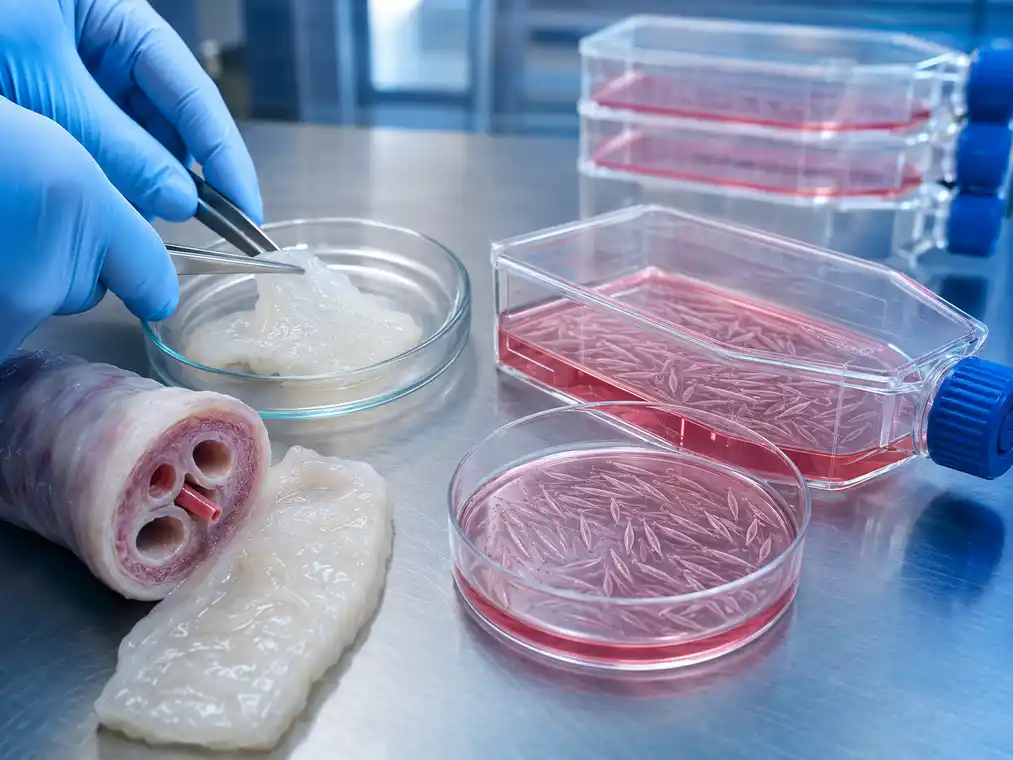
Once the umbilical cord reaches the laboratory, it enters a controlled production system.
The cord is prepared, its vessels are identified, and the Wharton’s-Jelly tissue is separated from the surrounding structures. MSCs are then released from the tissue through a validated mechanical, enzymatic or combined method.
Only a limited number of cells can be obtained directly from a small tissue sample. To prepare a sufficient and consistent cell population, the MSCs must be grown under controlled culture conditions.
In stem cell processing, this stage is called cell expansion.
The cells attach to the culture surface, grow and multiply. During this period, the laboratory monitors their appearance, growth rate and behaviour. The culture is also checked repeatedly for contamination and unexpected change.
The aim is not to produce the largest possible number of cells at any cost. It is to obtain a well-characterised population without keeping the cells in culture longer than necessary.
Why We Use Low-Passage MSCs
Patients sometimes hear the terms “first-generation” or “second-generation stem cells”.
The more accurate laboratory term is passage.
When MSCs have grown sufficiently in their first culture vessel, they are transferred into a new vessel so they have space to continue multiplying. Each controlled transfer is counted as another passage. Careful stem cell processing therefore aims to achieve the required cell number without unnecessary expansion.
The partner laboratories we work with use low-passage MSCs, generally between passage 1 and passage 4, although passage 1 and passage 2 are used most often. Using low-passage MSCs limits unnecessary laboratory ageing and keeps the preparation closer to the original cell population. This matters because every additional passage means more time in culture.
With prolonged expansion, MSCs may become larger, divide more slowly and develop signs of cellular ageing. Their gene-expression and biological signalling profiles can also drift away from those of the original early-passage population. Research into MSC senescence supports the concern that extended culture can reduce stemness and alter function.
Passage number alone is not proof of quality. Early-passage cells must still pass identity, purity, sterility and viability testing before they can be released.
Exosome Production: How Exosomes Are Obtained From MSCs
Exosomes are not collected from Wharton’s Jelly in the same way as MSCs.
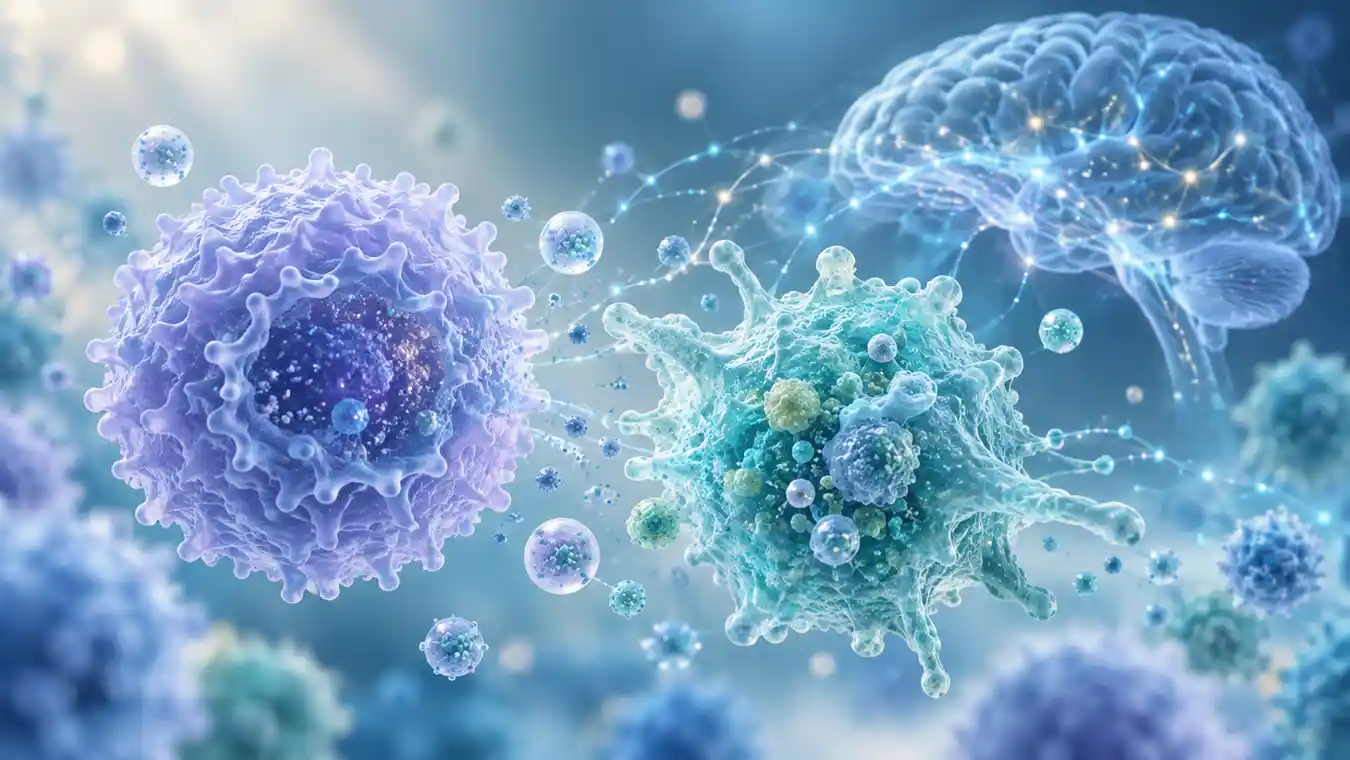
First, suitable donor-derived MSCs are isolated and cultured. While living in culture, the cells release small extracellular vesicles into the surrounding fluid. This fluid is called conditioned medium.
The conditioned medium is then collected.
At that stage, however, it is not a finished exosome product. It also contains nutrients, proteins, cell fragments and other particles that must be separated.
The extracellular vesicles are concentrated and purified through a validated laboratory process. Particle size, concentration and relevant vesicle-associated markers may then be examined.
In everyday clinical language, these preparations are often called exosomes. In scientific reporting, the broader term extracellular vesicles may be more accurate unless the vesicle population has been characterised sufficiently.
The final preparation is cell-free. It contains vesicles released by the source cells, not living MSCs.
Stem Cell and Exosome Processing: Isolation, Purification and Characterisation
Stem cell processing and exosome processing are not the same.
For an MSC product, the laboratory must confirm that the culture contains the expected cell population. Flow cytometry can be used to examine characteristic surface markers. Cell count, morphology, purity and viability are also assessed.
For an exosome preparation, the main task is particle separation and purification. The laboratory must reduce contamination from free proteins, cell debris and other non-vesicular material.
No single marker or particle count can prove that an exosome product is pure, active or clinically effective.
Current extracellular-vesicle guidance recommends looking at the source cells, culture conditions, isolation method, particle characteristics, protein markers and possible contaminants together.
This is why a very large vesicle number on its own tells us less than many patients assume.
Stem Cell Laboratory Safety and Quality-Control Testing – GMP Certified Laboratory
A GMP Certified Laboratory should not release a cell product simply because the cells grew successfully. In responsible stem cell processing, quality control begins with the donor and continues until the product is prepared for the patient.
Donor Screening
Before donated umbilical-cord tissue is accepted, the laboratory reviews the mother’s medical, genetic and pregnancy history.
Depending on the approved protocol, screening may include:
- relevant hereditary disorders;
- HIV;
- hepatitis B and hepatitis C;
- CMV and other infectious agents;
- pregnancy complications;
- physical and obstetric evaluation;
- documented consent;
- complete traceability of the donated tissue.
The starting material cannot enter routine production unless the required donor checks have been completed.
Inside the High-Control Cleanroom Laboratory
Cell processing does not take place in an ordinary medical laboratory.
It is performed in a GMP Certified Laboratory with high-control cleanroom areas—what patients sometimes describe as a high-security laboratory.
Access is restricted. Staff cannot enter the production areas in normal clothing. They move through controlled changing zones and wear dedicated protective garments such as sterile coveralls, masks, hair coverings, gloves and shoe protection.
Materials and equipment enter through separate controlled transfer areas. Open cell-processing steps are performed only within the appropriate classified clean zones.
Airflow, pressure, airborne particles, surfaces and environmental microbial levels are monitored. Cleaning, disinfection and gowning follow written procedures.
The purpose is to minimise every avoidable contamination risk.
No responsible laboratory can claim that microorganisms do not exist anywhere in a facility. What can be required is a controlled environment and a final product with no detectable bacterial, fungal or mycoplasma contamination, together with acceptable endotoxin levels.
GMP certified laboratory standards are designed to make manufacturing, testing, documentation and batch release controlled and reproducible. They do not prove that a treatment will work for a particular disease, but they are central to the quality of a biological product.
Testing Before a Batch Is Released
The quality-control department may examine:
- sterility;
- mycoplasma contamination;
- endotoxin levels;
- cell identity and purity;
- cell count and viability;
- flow-cytometry markers;
- morphology and growth behaviour;
- genetic stability where required;
- tumour-forming potential where required by the product protocol;
- environmental-monitoring results;
- complete production and traceability records.
If a preparation fails an essential release test, it should not be administered.
Why Our MSC Products Are Cryopreserved
In the partner laboratories we work with, approved MSC batches are cryopreserved under validated conditions after they have passed the required quality-control tests.
For long-term storage, the cells are kept at cryogenic temperatures, generally below −150°C in the vapour phase of liquid nitrogen. Liquid nitrogen itself has a temperature of approximately −196°C. At these temperatures, biological activity is largely suspended, allowing qualified cell batches to be stored until they are required. The exact storage conditions depend on the laboratory’s validated system and the individual cell product.
Before treatment, the required donor-derived MSCs are prepared specifically for the individual patient. The laboratory takes into account the requested number of cells, passage, formulation, treatment protocol and route of administration.
Each patient-specific preparation is accompanied by laboratory documentation and certificates.
The frozen vials are delivered in validated transport containers containing dry ice, which has a temperature of approximately −78°C. This is considerably warmer than liquid-nitrogen storage, but it keeps the product frozen during the validated transport period. The temperature must remain controlled, and the cold chain must not be interrupted.
Once the product has been thawed and prepared for administration, it has only a limited period of use. In our laboratory workflow, the cells must normally be administered within the validated 24- to 48-hour window.
This does not mean that every cell suddenly dies after exactly 48 hours. It means that beyond the approved period, sufficient viability and biological function can no longer be guaranteed. The preparation should therefore not be used after its documented expiry time.
Exosome preparations are also stored frozen under conditions validated for the particular product. Their storage temperature, transport requirements and period of use may differ from those of living MSCs.
Exosome preparations are easier to store and transport than living MSCs because exosomes are not living cells. They can be kept in a refrigerator at 2–8°C for a limited period, while longer-term storage usually requires freezing. They do not need the same cryogenic conditions as living stem cells.
The complete stem cell therapy process is therefore:
production, quality testing, patient-specific preparation, cryopreservation, storage, temperature-controlled transport, thawing and timely administration.
Why Immunosuppressants Are Usually Not Required
Patients often ask whether donor-derived MSCs will be rejected like a transplanted organ.
In most MSC protocols, routine immunosuppressive medication is not required.
The reason is partly related to the HLA profile of MSCs.
Human leukocyte antigens, or HLA molecules, help the immune system distinguish the body’s own cells from foreign tissue. MSCs generally show relatively low expression of some molecules involved in strong immune activation, particularly HLA class II and certain co-stimulatory molecules under standard culture conditions.
They also release signals that can influence T cells, natural killer cells and other parts of the immune response. HLA-G is one of the molecules associated with MSC-mediated immunomodulation.
HLA typing forms part of donor and product characterisation. However, HLA typing itself does not prevent rejection. It documents the immunological profile of the donor cells.
The lower immunogenicity and immunomodulatory behaviour of MSCs are the main reasons why they are not treated like a transplanted kidney, heart or liver.
An organ remains in the body as a large, permanently foreign tissue containing many immune-recognisable cell types. MSCs are not intended to become a replacement organ. Their proposed role is mainly connected to signalling, immune modulation and support of the surrounding tissue.
This does not mean that donor MSCs are completely invisible to the immune system. Their behaviour may also change under inflammatory conditions. The final decision about medication must therefore consider the cell product, route, diagnosis and patient.
Do Donor Stem Cells Change the Recipient’s DNA?
No. A standard donor-derived MSC preparation is not gene therapy.
Donor-derived MSCs retain their own DNA while they are present, but they do not rewrite the genetic code inside the patient’s own cells. They do not change the patient’s inherited characteristics, eggs or sperm, and they do not alter the genetic information that can be passed to future children.
Genetically modified cell products belong to a separate medical category. In those treatments, cells are deliberately altered in the laboratory to carry or express a particular genetic sequence. The MSC products discussed here are not genetically modified.
Can Stem Cells Treat a Genetic Disease?
An ordinary MSC or exosome treatment cannot correct an inherited mutation.
If a patient has a genetic neurological, muscular or metabolic disease, the underlying genetic change remains present.
The treatment goal may instead be to influence inflammation, support remaining tissue, reduce secondary damage or improve certain symptoms and functions.
That is supportive treatment. It is not correction of the genetic cause.
Treating the mutation itself would require a gene-replacement, gene-silencing or gene-editing therapy specifically developed for that condition.
Can a Sibling’s Stored Umbilical Cord Be Used?
Families sometimes tell us that the umbilical cord of a child or sibling was stored privately and ask whether it can now be used to prepare MSCs.
The partner laboratories we work with in Türkiye do not routinely accept cord tissue stored by an external family cord bank.
The problem is not the family relationship.
The GMP certified laboratory cannot automatically verify how externally stored Wharton’s Jelly or cord tissue was collected, transported, processed, frozen or stored. Introducing externally handled material into a validated cleanroom production system may create contamination, hygiene and traceability concerns.
For this reason, externally stored family material cannot normally enter the routine workflow.
In an exceptional case, separate laboratory and regulatory approval would be required. The material would need complete repeat testing, segregated handling and additional contamination controls.
Because an area of the laboratory might need to be isolated specifically for that material, such processing could cost roughly three times as much as the standard process.
Even then, acceptance could not be guaranteed.
Stem Cell Administration: How the Products Are Given
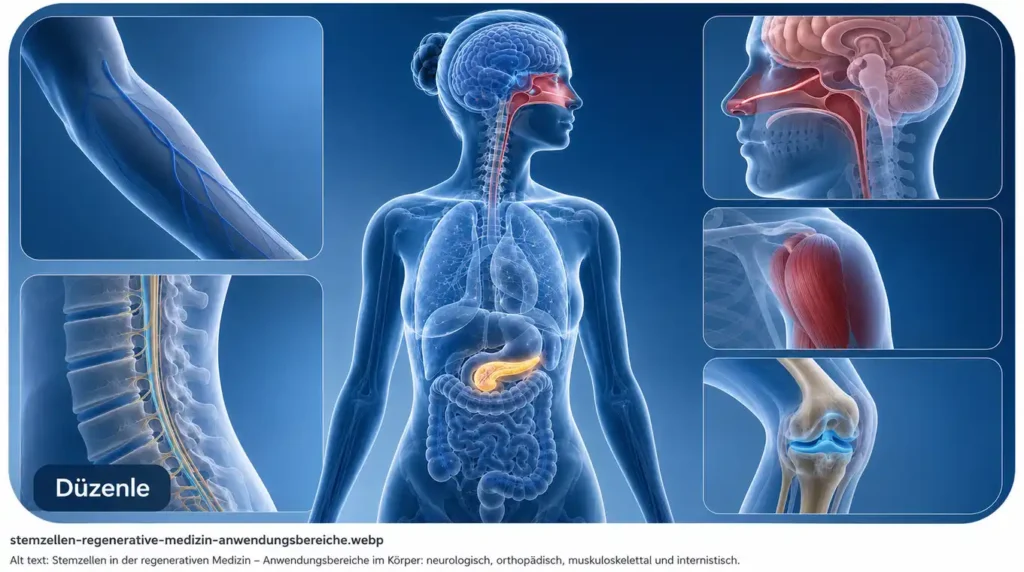
There is no single route of administration that is suitable for every diagnosis. Stem cell administration is the final clinical stage of the stem cell therapy process.
Depending on the biological product, the target tissue and the treatment protocol, possible routes may include:
- intravenous administration;
- local or intra-articular injection;
- intramuscular injection;
- intrathecal administration;
- intranasal administration;
- caudal epidural or transcaudal administration;
- selective intra-arterial administration through the coeliac artery or pancreatic arterial branches;
- direct intrapancreatic administration in highly selected protocols.
A local knee problem, a spinal disorder, a neurological disease and a pancreatic condition do not have the same biological target. The administration route must therefore be selected according to the diagnosis, the intended effect, the characteristics of the product and the patient’s medical condition.
Intrathecal administration means that the product is introduced into the cerebrospinal fluid surrounding the spinal cord. It is not injected into the spinal cord itself. This is an important distinction, because the spinal cord is nervous tissue, while the intrathecal space contains the fluid surrounding and protecting the brain and spinal cord.
Intrathecal procedures must be performed in an appropriate hospital environment using sterile technique and under light sedation.
Because the procedure enters the space containing the cerebrospinal fluid—the clear fluid that surrounds and protects the brain and spinal cord—it can temporarily affect the pressure of this fluid.
For this reason, I always require a recent brain MRI or, when MRI is not available, at least a current CT scan before intrathecal administration. The purpose is to confirm that there is no condition inside the skull that could make the procedure unsafe for the patient.
Caudal epidural or transcaudal administration enters the epidural space through the sacral region. It is different from intrathecal administration because the product is not placed directly into the cerebrospinal fluid.
Selective delivery through the coeliac artery or pancreatic arterial branches may be considered in certain specialised protocols intended to direct the product towards the pancreatic circulation. Direct administration into pancreatic tissue is a separate and more invasive approach.
In the neurological protocols discussed here, exosomes are often administered intranasally. Exosomes are nanosized vesicles, generally hundreds of times smaller in diameter than living MSCs. Their small size allows them to pass through the nasal mucosa and use nose-to-brain pathways associated mainly with the olfactory and trigeminal nerves.
Through these pathways, extracellular vesicles may reach the olfactory bulb and subsequently distribute to other regions of the central nervous system while bypassing the blood-brain barrier. Whole stem cells are much larger and cannot use these pathways.
The route should never be selected simply because another patient with a different diagnosis received treatment in that way.
What Patients Should Ask Before Treatment
A transparent stem cell therapy process should provide patients with clear answers to several basic questions:
- What exactly will be administered?
- Is it a living MSC product or a cell-free exosome preparation?
- Where did the starting tissue come from?
- How was the donor screened?
- Which cell passage was used?
- How were identity, purity, sterility and viability checked?
- Was the product cryopreserved?
- How was it transported and thawed?
- Why was this route of administration selected?
- Is the treatment established for this diagnosis, or is it investigational?
- Is the aim to treat symptoms, support tissue or correct the cause of the disease?
A high cell count or vesicle count cannot answer these questions.
Numbers matter, but source, laboratory processing, quality testing and clinical reasoning matter just as much.
Frequently Asked Questions About the Stem Cell Therapy Process
How are stem cells collected?
The donor-derived MSCs discussed here are obtained from Wharton’s Jelly, the connective tissue inside the umbilical cord. The cord is collected after a healthy full-term delivery with the mother’s informed consent. MSCs are then isolated from the tissue in a controlled laboratory.
What are first- and second-generation stem cells?
This expression usually refers to early-passage cells. Passage 1 or passage 2 means that the cells have undergone only one or two controlled expansion stages after the initial culture. Early passages are preferred because repeated culture can gradually change cell growth, signalling and function.
Why are low-passage MSCs preferred?
They have spent less time in laboratory culture. Passage 1 and passage 2 are often used, but passage 3 and passage 4 may also be suitable when the cells meet all required standards for identity, sterility, purity and viability. Low passage does not replace quality testing.
How does the laboratory prevent contamination?
In a GMP Certified Laboratory, access to cleanroom areas is restricted. Staff wear dedicated sterile clothing, gloves, masks, hair coverings and shoe protection. Air, pressure, particles, surfaces and microbial levels are monitored. The final preparation is also tested for bacteria, fungi, mycoplasma and endotoxins before release.
Why are donor MSCs not usually rejected?
MSCs generally have a relatively low immune-activating HLA profile and possess immunomodulatory properties. This reduces the likelihood of the classical immune reaction seen after organ transplantation. HLA characterisation is part of product assessment, but donor MSCs should not be described as completely invisible to the immune system.
Are immunosuppressants needed after stem cell treatment?
They are not routinely required in many donor-derived MSC protocols. The final decision depends on the exact cell product, diagnosis, route of administration and the patient’s medical condition.
Do donor stem cells change the patient’s DNA?
No. Standard donor-derived MSC treatment does not rewrite the DNA of the patient’s own cells. It does not change inherited characteristics or the genetic information passed to future children.
Can stem cells cure a genetic disease?
MSCs and exosomes cannot repair an inherited mutation. They may be considered to influence inflammation, support viable tissue or improve certain symptoms, but the genetic cause remains unchanged.
Can a stored umbilical cord from a sibling be used?
The partner laboratories we work with do not routinely accept cord tissue stored by an external family bank. Its collection, transport, processing and storage cannot automatically be verified within the laboratory’s validated system. Exceptional processing would require separate approval, full retesting and segregated handling.
Are all stem cells frozen before treatment?
In the partner laboratories used for these protocols, all approved MSC batches are cryopreserved under validated conditions. They are later thawed according to a controlled procedure, and post-thaw viability is checked before clinical preparation.
How are exosomes produced?
MSCs are first cultured under controlled conditions. The cells release extracellular vesicles into the culture medium. The medium is collected, and the vesicles are isolated, concentrated, purified and characterised. The resulting product does not contain living stem cells.
How are stem cells and exosomes administered?
Possible routes include intravenous, local, intra-articular, intramuscular, intrathecal and intranasal administration. The appropriate route depends on the diagnosis, product, treatment objective and patient.