

Written by Dt. Elif Nurhak Erdal (Klinik EN)
What effects the Lifespan of Dental Implants?
Most of us grow up hearing stories about things that last forever. Real life is usually a little less dramatic. In dentistry, long-term success does not happen on its own. It depends on good care, regular controls, and the condition of the mouth over time. Dental implants are no exception to that.
Not so far back, many patients were unfamiliar with the term ‘implant’ and did not understand how it worked. Nowadays, implants are commonplace in dentistry. They can perfectly close a gap in the teeth and replace a missing tooth without being visible from the outside. In the past, bridges were often used. But people keep asking themselves one question: how long do dental implants last?
Table of Contents
What Is the Average Lifespan of Dental Implants?
The honest answer is no dentist can promise that. Dental implants can work very well for many years, sometimes for decades, but they should never be described as a lifelong guarantee.
In scientific publications, 15 years is often used as a long-term reference point for implant survival. This number is often misunderstood. It does not mean an implant suddenly reaches the end of its life after 15 years. It also does not mean that problems automatically begin at that stage.
What it actually tells us is that once an implant has been followed for 15 years, researchers are able to assess long-term outcomes and complication rates in a meaningful way. Even at that point, implants are still considered highly successful within accepted clinical standards.
In daily practice, I have seen both sides. I have seen implants remain stable, healthy, and fully functional for well over 20 years. I have also seen cases with serious bone loss only a few years after placement. That difference is never just about luck. It usually comes down to planning, tissue quality, maintenance, and the way the case was managed from the beginning.
So yes, implants can last a very long time. But they do not do that automatically.
With more than 27 years of clinical experience, I have seen this very clearly in practice.
- Implants functioning perfectly after 20+ years
- Implants with severe bone loss only 3 years after placement
So what creates that difference?
Why Do Dental Implants Fail?
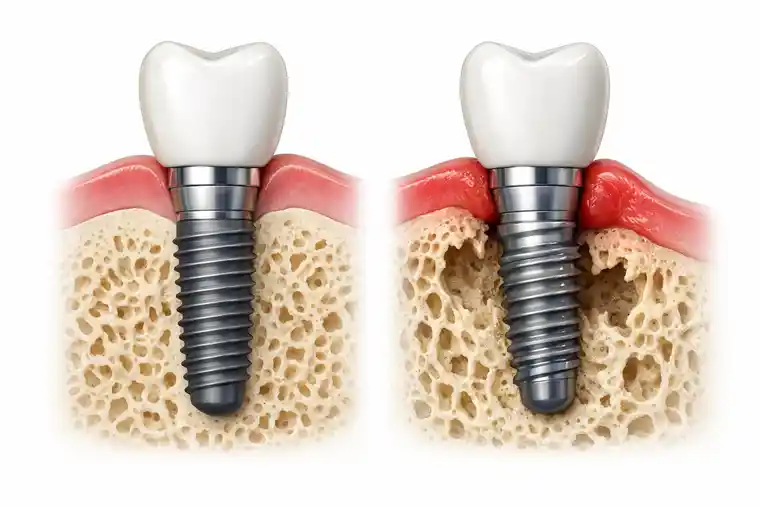
Patients often ask what actually causes an implant to fail.
There can be various reasons for this, some of which are technical in nature. For example, some implants are not suitable for weak bone structure, in which case more aggressive implants must be used. Alternatively, there may be other problems in the patient’s body that can cause implants to fail, such as diabetes or an immune disorder.
1. Patient-Related Factors
- Bone quality and bone volume
- Systemic health conditions such as diabetes or immune disorders
- Smoking habits
- Level of oral hygiene
- Regular dental follow-up
2. Dentist-Related Factors
- Proper diagnosis and correct indication
- Surgical experience
- Sterilization protocols
- Prosthetic planning
- Accurate implant positioning
In most failed cases, the problem is not caused by one isolated issue. It is usually the result of several things coming together, including biological response and clinical execution.
Does the Implant Brand Really Matter?
Many patients focus heavily on brand names when they start looking into implants.
Yes, implant brands differ from one another. Some have stronger long-term data, some have better component design, and some may offer practical advantages in certain cases. Still, the overall global success rate of dental implants is above 90%, and most well-known systems perform at a high level.
Almost all commonly used implant systems are made from titanium, apart from a few alternative materials such as zirconia. Titanium itself is not endlessly variable, and global production is concentrated among a relatively small number of suppliers. In other words, patients are not simply paying for some kind of magical superior metal.
A premium brand may help reduce certain risks, but it never removes risk completely.
What matters more than the label on the implant box is the person planning and placing it. Before asking which brand is best, it usually makes more sense to ask who is doing the treatment.
That may sound blunt, but the clinician plays the leading role in implant treatment.
An experienced dentist who continues to learn and improve will be able to:
- Evaluate your bone and systemic health correctly
- Select the most suitable implant system for your case
- Follow sterile and precise surgical protocols
- Create a realistic long-term maintenance plan
When you choose the right professional, their choice of implant system usually becomes much easier to trust.
Clinical judgment, experience, and scientific openness are worth more than marketing language.
How to Make Dental Implants Last Longer
If you want your implants to last as long as possible, your own role matters as well.
A dental implant may be artificial, but it is placed into living tissue. That means it still depends on the health of the surrounding bone and gums. It needs care for as long as it stays in your mouth.
Your Responsibilities
- Attend routine dental check-ups every 6 months
- Maintain careful daily oral hygiene
- Use implant-specific cleaning tools recommended by your dentist
- Avoid smoking
- Don’t drink so much
It has been scientifically proven that smoking has a negative effect on implants. It can even lead to infection, which we dentists call peri-implantitis. This is inflammation around the implants, which can ultimately lead to implant loss.
Are Dental Implants Better Than Natural Teeth?
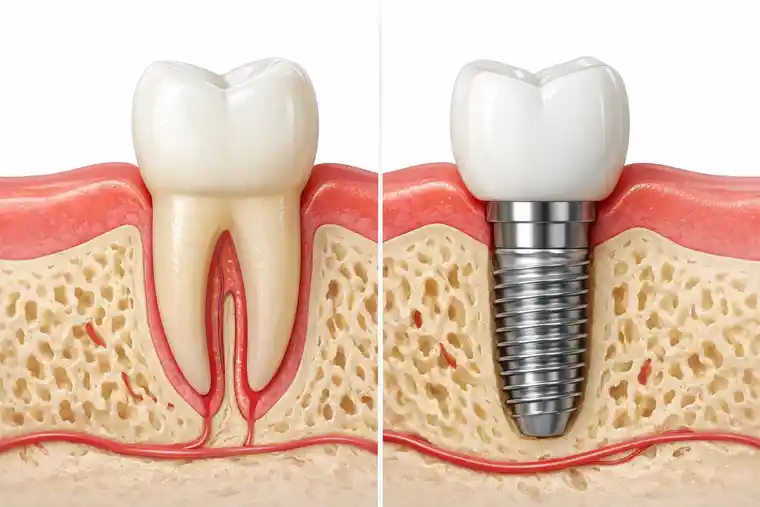
I am always honest with my patients.
Nothing is better than a healthy natural tooth.
A dental implant is an excellent medical solution when a tooth is missing. But it is still a replacement. It is not superior to natural, healthy dentition.
If there is such a thing as a happy ending in implant dentistry, it does not come from fantasy. It comes from the basics being done properly:
- Correct diagnosis
- Skilled surgical execution
- Patient compliance
- Long-term professional follow-up
- Mutual trust between dentist and patient
From my point of view, one of the strongest factors behind long-lasting implant success is having confidence in the dentist who is treating you and staying under proper follow-up over time.
Final Thoughts on the Lifespan of Dental Implants
Dental implants are not magic, and they are not fairy-tale solutions. They are advanced medical treatments.
How long they last depends on biology, technique, maintenance, and responsibility on both sides.
There may be no “forever” in dentistry, but with the right planning, the right care, and the right professional support, an implant can serve a patient very reliably for many years, and in many cases for decades.
That is not a fairy tale. That is simply good dentistry.
Where Can You Get Professional Dental Implant Treatment?
At Klinik EN, implant cases are approached individually. The focus is not only on replacing a missing tooth, but on creating a result that feels stable, functions well, and fits the patient’s overall oral health.
Good equipment matters, of course, but experience, judgment, and attention during treatment matter just as much.
Stay Updated
Want to keep reading? Our blog is where we post new guides, clinic updates, and straightforward tips you can actually use. If you’re considering treatment and want to talk it through, contact MedClinics and we’ll point you in the right direction.
FAQs about the Lifespan of Dental Implants
How long can one implant really stay in the mouth?
Sometimes much longer than expected. I have seen implants still doing their job after many years without any real issue. I have also seen the opposite. There is no fixed lifespan of dental implants that applies to every patient.
If studies mention 15 years, what does that actually mean?
Only that researchers have followed many implants for that length of time. It does not mean year 15 is the end. It is just a number from follow-up data, nothing more.
What usually damages an implant first?
Very often, the tissue around it. Not the implant itself. If the gums stay inflamed or bone starts to recede, the whole situation changes. That is usually how trouble begins.
Should patients care more about the brand or the dentist?
The dentist. Brand questions are common, but they come too early. First the case has to be diagnosed properly. Then the implant has to be placed in the right position, under the right conditions. That part matters more.
Can an implant go bad even if it felt fine at first?
Yes. That happens. Some problems do not start with pain. Things can look stable in the beginning and change later. That is why regular controls matter, even when everything seems normal.