Clinical insights from Prof. Dr. Serdar Kabataş, MD, PhD (C)
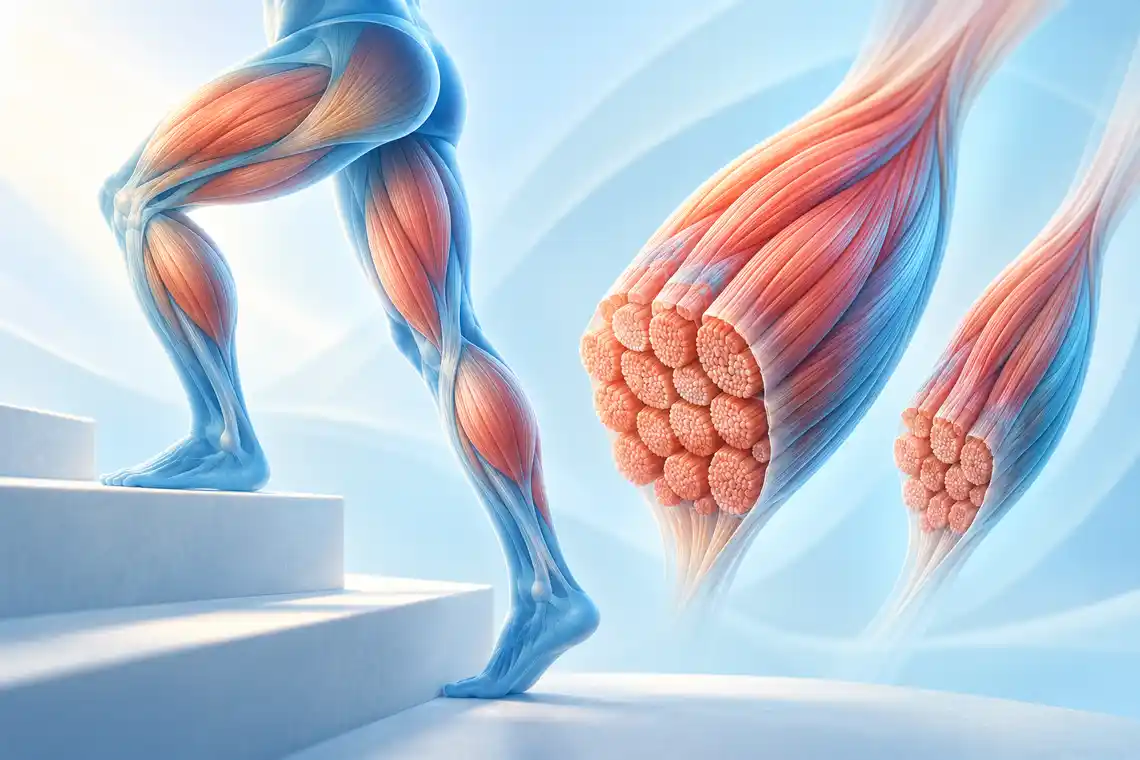
When You First Notice Muscle Loss With Age
“The stairs are getting steeper.”
You know they have not changed. But you used to carry the washing upstairs in one go.
“Do you still take the basket up?”
“Only if it isn’t full.”
“When did you start doing that?”
Perhaps your knees have been painful. Perhaps you were ill a few months ago and have never felt quite as strong since. Or there is no obvious beginning. You have gradually started doing less, without making a decision to stop.
Muscle loss with age can become noticeable in this way. The shopping gets divided into smaller bags. You choose a different chair. A job in the garden is left until someone can help.
“I can still do it.”
“Talk me through the stairs, then. Where does it become difficult?”
You might say that halfway up, you stop and put down whatever you are carrying. Does it hurt?
“What happens if you try without holding on?”
You may say that you have not tried for some time. You no longer trust the leg enough.
I need to examine that. In my work, a complaint of weakness brings several questions: what can the muscle do, how well is the nerve supplying it, and is pain preventing you from using the strength you have?
Your age will be written in the notes. Before describing this as muscle loss with age, I still need an explanation for what has become difficult.
Table of Contents
Sarcopenia: What Does the Diagnosis Mean?
“Is there a name for muscle loss with age?”
Sarcopenia is one term you may hear.
“Would you say I have it?”
I would need to examine you and make some measurements first. You may have noticed that your sleeves are looser. Tell me about that, but also tell me what happens when you try to lift something.
I would want to assess your strength.
“Wouldn’t a scan show whether I have lost muscle?”
It can help measure the amount of muscle. But suppose you have a reasonable amount and still cannot produce the force needed to get out of a chair. That weakness matters.
The European criteria used in many clinics begin with low muscle strength. We then look for reduced muscle quantity or quality to confirm sarcopenia. Testing physical performance helps judge how much the loosing muscle strength is affecting movement.
That order sometimes surprises people. They expect the diagnosis to begin with a scan showing how far muscle loss with age has progressed.
I may learn something useful before we reach that stage, simply by watching you stand up and walk across the room.
Do you push hard on the armrests? Once you are standing, can you set off comfortably, or do you have to wait?
I would ask you about what I have seen. Perhaps the first step hurts. Perhaps you feel dizzy when you stand. The same apparent difficulty can take the examination in quite different directions.
Why Does Muscle Strength Decline?
“Have I done something wrong?”
I would not approach it that way.
There are changes within aging muscle, including a less effective response to the protein we eat and to exercise. The nerves that activate muscle change too. When we discuss muscle loss with age, I also want to hear what has been happening around those changes.
A painful knee may have kept you indoors.
“What were you able to do after the operation?”
You may have been allowed to walk but felt more comfortable staying in bed. Or an infection left you with no appetite, and you were getting up only to use the bathroom.
The illness passes, but the muscle strength does not always return without some work.
“I thought I should rest until I felt stronger.”
How much are you resting now? Are you up for meals? Have you started going outside again?
Someone may have recovered from the infection yet still be spending most of the day in the same chair. Waiting another month may leave them with more muscle strength to regain. We need to find an appropriate amount of activity now, accounting for what they have been through.
“My Weight Has Not Changed”: What About Muscle Strength?
“Has anything changed in the way your clothes fit?”
You may say no. You still wear the same size, and the scales have barely moved for years.
They record your total weight. They cannot show whether you have less muscle than before and more fat.
A person may therefore lose muscle and gain fat without noticing much difference on the scales. Someone with obesity can also have sarcopenia.
I would be interested in the weight history to investigate your muscle loss with age, but I would not use it to decide how strong you are.
“What would you measure instead?”
I would look at the amount of muscle, test the force you can produce and assess relevant movements. Each gives me information that the others may miss.
For example, you might manage a seated leg exercise quite well but struggle to get into the bath. I would want to see what is stopping you there. Does the hip bend comfortably?
“Where do you get stuck?”
“Lifting my foot over. I can do it if somebody holds my arm.”
That tells me something about the movement we need to examine.
In the Health ABC study, 1,880 older adults were followed over three years. Strength declined faster than leg lean mass. Some participants maintained or gained lean mass and still became weaker.
“You can see on this report that my muscle has improved.”
I would read it with you. What had you hoped to find easier by now?
Perhaps lifting the kettle was the problem. Has that changed? Can you get up from the sofa without asking for a hand?
I need to hear about those results too.
Why I Ask About the Things You Have Stopped Doing
“What do you mean by weaker?” can be a difficult question to answer.
It may be easier to tell me about last weekend.
You went to see your family but stayed downstairs while everyone else went up to the terrace. You said you were comfortable where you were.
“Did you want to go upstairs?”
“I did. But everyone would have had to wait for me.”
What were you expecting to happen on the stairs? You may have been concerned about pain. Or you remembered struggling to come down the last time you visited.
There may be other things you have quietly handed over. The heavy saucepan stays in the cupboard. A neighbour takes the rubbish out. You ask your daughter to buy anything that comes in a large bottle.
When you ask for help with decreasing muscle strength, I would ask which of those things you would like to do yourself again.
“Could you carry the saucepan if it were empty?”
“Yes. It hurts when I lift it full.”
I would examine that pain. If you describe the arm giving way without pain, I have a different question to investigate.
The history may take us back to weeks spent recovering from an illness. It may reveal that your foot has recently started catching on the ground. I would want to examine the nerves and movement in that case.
“When was the first time it happened?” matters here. Weakness that starts suddenly, especially on one side, needs urgent medical attention. Please do not wait to see whether exercise makes it better.
What Does Strength Have to Do With Longevity?
“Will stronger muscles help me live longer?”
I cannot calculate additional years from your grip-strength result. What I can discuss is how muscle strength affects the life you are living now and the activities you hope to continue.
You may be planning to travel after retirement. There will be luggage, unfamiliar stairs and more walking than you do at home.
Or your priority may be much closer to home: getting dressed, cooking and going out without waiting for someone to accompany you.
These are good reasons to look after muscle strength.
I would ask about any previous hospital admission as well. When you came home, could you manage the bathroom?
“Who was there with you?”
Your daughter may have stayed for the first week because you could not get out of bed alone.
“And after she went home?”
You may have managed indoors but needed somebody to come back before attempting a walk outside. I would want to know how long that continued and whether you ever returned to your earlier routine.
That experience belongs in a discussion about the years ahead.
You may already have a trip in mind but hesitate to book it. Or you want to stay in your present home and have begun wondering about the bedroom upstairs.
“What would you like to keep doing here?” gives us somewhere to begin. I can examine the difficulty you have now and discuss what might help.
How Would I Assess Muscle Loss With Age?
If you come to me concerned about muscle loss with age, I would ask you to describe the difficulty before choosing the tests.
For example, “My legs are weak” might mean that both legs tire during a walk. It might mean that one knee gives way. Or you may be describing the light-headed feeling you get when standing.
We would go through when it began, what brings it on and what else you have noticed.
Bring your medication list, including anything added or changed around that time. I would ask about those changes as we go through the history.
“Will you test my hands even though it is my legs that bother me?”
A grip-strength measurement can contribute to the assessment. You squeeze a device called a dynamometer, which records the force.
I may also ask you to stand repeatedly from a chair. Walking speed and other movement tests provide information about physical performance.
“Could I just time myself getting out of a chair?”
You can certainly notice whether the task has become harder. A formal test needs consistent conditions, however. Seat height, use of the arms and the way the test is performed can affect the result.
Muscle quantity may be assessed with DXA or bioelectrical impedance. I would interpret those findings alongside the strength measurements.
“Do I need blood tests?”
I would decide after hearing the history and examining you. There may be a reason to investigate a nutritional problem or another medical condition. Bring any recent results so I can see what has already been checked.
Please mention symptoms you might think are unrelated. A foot catching on the floor, numb fingers or a new problem with balance may change what we investigate.
I would rather hear about them at the beginning than discover later that you had been trying to manage them alone.
Building Muscle After 60: “Have I Left It Too Late?”
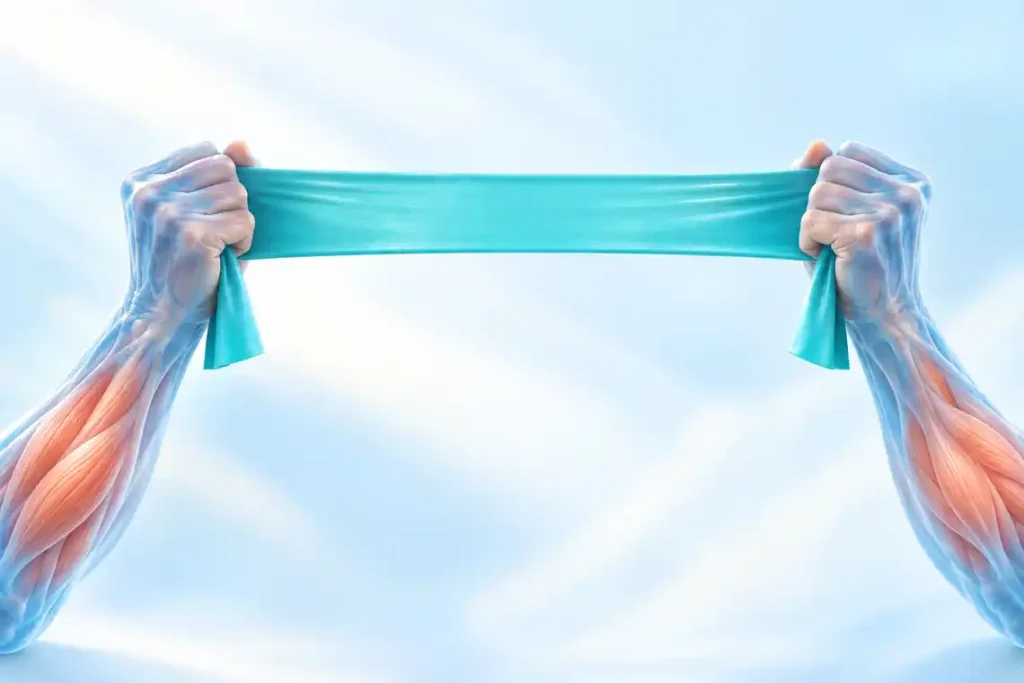
No. Older muscles retain the ability to respond to training.
There is research involving people much older than sixty. In one trial, the participants were nursing-home residents; the youngest was 72 and the oldest 98. Progressive resistance training improved strength and walking speed, so building muscle after 60 is possible.
I would not take that result and give every older patient the programme used in the study.
“Were they just given weights and told to exercise?”
No. Their training was supervised. The load was reviewed and changed as they progressed. I would discuss that part of the study as well as the improvement.
For you, I might first ask what happens when you stand from a chair. It might involve resistance bands, weights or machines. Someone who has difficulty walking may first need help from a physiotherapist.
“I have a pair of small weights at home to increase my muscle strength.”
“What do you do with them?”
You might describe a routine you have followed for months.
“How does the last repetition feel?”
“Much the same as the first now.”
Then I would want to review what comes next. We may be able to increase the weight, or choose another movement that is more useful for the task troubling you and for building muscle after 60.
I also want to hear if you have stopped doing part of the programme. An exercise may hurt, or you may feel unsafe attempting it when nobody else is at home. Please say so. We can only adjust a plan if we know what is happening.
“How often would you want me to do it?”
The general recommendation is strength work involving the major muscle groups on at least two days a week. I would look at how that fits your health and present activity. If you have done very little recently, the first sessions may need to be shorter than the ones you eventually work towards.
How to Prevent Muscle Loss: Is Walking Enough?
“I walk every day. Surely that counts?”
Yes. Tell me where you go. Is it ten minutes on level ground? An hour with hills? Have you changed the route recently because one part has become difficult?
Walking provides useful activity.
“What about the chair I still cannot get out of?”
I would want some exercise directed at that difficulty too.
“Could I just walk further?”
You may be able to increase your walking, but I would still examine the chair rise. Is the seat very low? Does standing hurt? Once we understand that, we can decide how to work on the movement and how to prevent muscle loss.
I would also ask about balance. Do you feel steady when you turn?
“What happens if somebody comes towards you on a narrow pavement?”
You may say that you stop and wait for them to pass. You no longer feel comfortable moving aside.
That is worth raising with the physiotherapist. Guidance for older adults includes varied activity with balance and strength work on three or more days a week. The exercises need choosing for the person doing them.
If you enjoy walking in the morning, I would keep it in the discussion when planning the week. When could you do the strengthening work? Would somebody be available if you needed help initially?
People asking how to prevent muscle loss sometimes tell me about their exercise session and leave out the rest of the day.
“What do you do when you get home?”
If you then spend hours sitting, I would ask whether there are comfortable ways to get up and move more often.
Before Buying Protein Powder, Look at Your Meals
“Would a supplement help to prevent with muscle loss with age?”
Possibly.
“What did you have for breakfast yesterday?”
You may remember the coffee but have to think about whether you ate anything with it. Lunch was soup. Dinner contained more protein, but you only managed half of it.
“Isn’t that a fairly healthy day?”
It may include good foods.
“How much of the dinner did you leave?”
The answer may change my impression of what you are getting from the day.
I would ask about the soup too. Was it made with lentils, or mostly stock and vegetables? Did you have anything with it? Those details help me work out how much protein the meal provided.
We can look at foods you already enjoy. If you like yoghurt or eggs at breakfast, that may be somewhere to start. Beans, lentils, tofu, fish or meat may fit other meals. I want to know what you would actually eat.
“How much should I be having?”
For a healthy older adult, a commonly suggested daily range is 1.0–1.2 grams of protein for each kilogram of body weight.
“Could you work that out for me?”
At 70 kilograms, it would be about 70–84 grams over the day.
I would check your health before turning that into a personal target. Kidney disease may change the advice. Someone who is unwell, recovering or becoming more active may have different needs.
We can then look at where the protein will come from. If nearly all of it is planned for dinner, a poor appetite that evening leaves a lot uneaten.
“What would you manage earlier in the day?”
You may find a smaller meal or a drink easier at a particular time. I would still ask why eating has become difficult.
Do you feel hungry at mealtimes? Does chewing hurt? Have you stopped preparing proper meals because standing in the kitchen is tiring?
I need those answers as well as the amount written on a supplement label.
Losing Weight Without Losing Too Much Muscle

“I have lost six kilos. My clothes fit better, but my legs feel weaker.”
I would want to review the weight loss.
“Over how long?”
Six kilos over several months gives me a different starting point from six kilos lost during an illness.
“Were you trying to lose it?”
You might have stopped having breakfast. Dinner has become smaller too. You are pleased with the result, so you have continued, although getting up from the sofa now takes more effort.
“Could I be losing muscle as well?”
Yes, some muscle can be lost during weight reduction. I cannot tell how much from the change on your bathroom scales. I would ask about your meals and examine the weakness.
“Should I put the weight back on?”
I would not decide that from the six kilos alone. Why was weight loss recommended? Has it helped the problem you wanted to address? If your knees hurt less but standing has become harder, I want to understand both changes before advising you to continue.
Researchers have examined this difficulty in older people. In one trial, 160 adults with obesity followed weight-reduction and exercise programmes. Those whose training included resistance exercise lost less lean mass than those doing aerobic exercise alone. The group combining aerobic and resistance work improved most on the physical-performance test used in the trial.
“What would you look for in my case?”
Are the stairs easier because you are carrying less weight? Or have you begun pulling yourself up with the handrail? Both the weight change and the way you move belong in the review.
“And if I prefer intermittent fasting?”
Write down a day’s meals for me, with the times. Include what you leave unfinished. Do you finish them comfortably, or feel too full after trying to fit everything into a few hours?
We discuss meal timing and cellular maintenance in our article “Intermittent Fasting and Anti-Aging.”
You may find an eating window convenient.
“But I cannot manage another meal before it closes.”
Then we have something to change. I would not keep the same schedule while you struggle to eat enough and your strength is declining.
Where Stem Cells and Exosome Therapy May Fit
“Could stem cells help me get some strength back?”
“Which difficulty would you most like help with?” would be my next question. What is limiting you, and what are we hoping a treatment would improve?
There is human research involving mesenchymal stromal cells, commonly called mesenchymal stem cells or MSCs, in older adults with frailty.
One randomised trial tested a bone marrow-derived preparation called laromestrocel. It included 148 treated participants. At nine months, the highest-dose group had improved its six-minute walking distance more than the placebo group. At six months, the difference had not reached statistical significance.
That gives us a result to discuss, including when it appeared.
“Did they grow new muscle?”
The walking result cannot answer that. Someone may walk further for several reasons. I would not describe it as proof that the treatment rebuilt their muscles.
Exosomes are being investigated too. They are small vesicles released by cells, carrying biological material that other cells can respond to. In a 2025 study, MSC-derived exosomes improved muscle structure and performance in an aging mouse model.
I am interested in that work. The next question is what happens in people receiving a defined preparation. We still need human studies establishing whether it helps with age-related muscle loss and what benefit lasts.
For now, MSCs and exosome therapy remain investigational for this purpose.
What Would We Look for at Follow-Up?
“How will we know whether the plan is helping with muscle loss with age?”
Before beginning, I would write down one or two things you want to find easier.
You may be able to climb the stairs but need somebody else to carry everything. Or you can stand from the dining chair and struggle with the lower one in the sitting room.
We can record appropriate strength and movement measurements as well. When you return, I want to compare those results and hear about the activities you mentioned.
“I can get up more easily now.”
From which chair?
“The dining chair. I still get stuck on the sofa.”
That is worth recording. What happens when you try the sofa? Do you make several attempts, or ask somebody to help after the first one?
Those details help me understand the improvement.
You might instead say that the exercises are going well but you still avoid going outside. I would ask what happens when you reach the door. Is the step difficult? Are you afraid of falling? Does the walk back uphill worry you?
We may need to adjust the work you are doing. An improvement during an exercise session does not necessarily solve every difficulty at home.
Bring those difficulties to the review. I would rather hear that the garden step is still a problem than assume that a better test result has answered everything.
Questions About Muscle Loss With Age

“I Am Already Seventy-Five. Is There Still Any Point in Starting?”
Yes. Seventy-five would not be a reason for me to dismiss strength training.
I would ask what you can manage now. Can you get out of a chair? Are you comfortable walking around the house? Have you had a fall?
We can choose a starting point from there. You may need somebody beside you for the first sessions. As an exercise becomes easier, the programme can be adjusted. Research involving people in their eighties and nineties has shown that strength can improve; your own progress will need to be followed.
“My Legs Are Quite Big. Could I Still Have Lost Muscle?”
You could. The size of your legs does not tell me how much force the muscles can produce or anything about muscle strength.
Have you noticed a change when standing, climbing or carrying something? That would interest me more than whether your legs look thin.
“But surely I would see it?”
Not necessarily. You may have gained fat during the same period. I would want to test your muscle strength, and we may need a measurement of muscle quantity. Looking at your legs would leave too much unanswered.
“Would You Recommend a Protein Drink?”
I might, particularly if you are struggling to eat enough.
“When would you have it?”
You might say, “Before lunch, so I know I have had my protein.”
What happens at lunch afterwards? If you leave most of the meal because you feel full, I would look again at the timing. For somebody else, a drink may be manageable when a meal is not. I need to hear how it works for you.
A photograph of the packet would help me see what you are taking. I would also check your medical history, especially any kidney condition, before advising on protein intake.
“The Weight Is Coming Off, but I Feel Weaker. Should I Keep Going?”
I would review the plan before encouraging further weight loss.
Tell me what “weaker” means. Perhaps your usual walk has become shorter.
“Yesterday I could not get up from the low chair.”
Had that happened before you started losing weight? What did you manage to eat yesterday?
I would examine you as well. Your account may lead us towards a problem with food intake, but I do not want to assume that explains the weakness. Reaching the target weight would not persuade me to overlook a decline in what you can do.
“Would Stem Cells or Exosomes Replace the Exercise?”
I would not recommend abandoning the exercise and nutritional work in expectation of a regenerative treatment.
The MSC study discussed here examined walking in people with frailty. The exosome study involved mice.
“Could I have treatment first and see whether I still need the exercises?”
That is more than these findings allow me to recommend. I would keep the appropriate exercise and nutritional care in place.
We can look at the preparation, the proposed purpose and the research behind it. I would explain where the evidence ends; treatment for age-related muscle loss is still being investigated.