written by Dr. Mehmet Kalcay (DentSpa)
How Exosome Therapy for Periodontitis May Help Regenerate Gum Tissue
If you have severe gum disease and you have read about exosome therapy, you probably know about its regenerative potential already. Naturally, the big question on your mind is: can this procedure regenerate my lost gum tissue?
In theory, the simple answer is YES. Early research has shown that exosomes can aid in the repair and regeneration of damaged tissue while also reducing inflammation.
But how exactly does it work? Who is eligible for the treatment? And how does it compare with traditional treatment for periodontitis? These and other key question are what we are going to answer in this article.
Table of Contents
What is Periodontitis and How Does It Damage Gum Tissue?
Periodontitis is the most advanced case of gum disease and also causes damage to the structures that help hold your teeth in place.
This happens when you consistently eat sugary or starch based foods, and fail to frequently brush and floss your teeth causing plaque to nest along your gum line. The longer you go without removing them, the easier it will be for the bacteria to multiply and produce toxins which will irritate your gums.
Conventional Treatment for Periodontitis and Its Limitations
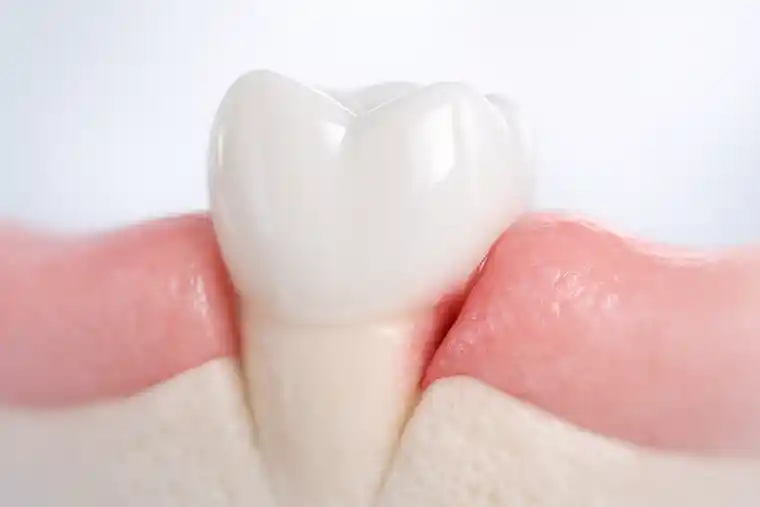
Traditional periodontitis treatments, while effective, still have some glaring limitations. In this section, we will look at some of the treatments and where they fall short.
Scaling and root planing
This is a non-surgical treatment that involves the use of specialized tools to effectively clean the bacterial infested areas (pockets) around your teeth and below the gumline. The goal of this treatment is to remove bacteria and infected tissue with the hope that that would stop the progression of the disease
Limitations
- It is sometimes hard to thoroughly clean all the deep pockets and remove all the bacteria.
- The treatment alone is not enough to fully eradicate bacteria and halt disease progression.
- SRP’s only goal is to remove bacteria, never to rebuild lost tissue or bone.
- This treatment has some side effects including temporary root hypersensitivity and significant gingival recession
Antibiotics
This treatment involves the use of antibiotics to target and eradicate bacterias lodging in the deep pockets. However, just like SRP, this treatment also has some limitations
Limitations
- Antibiotics are simply a temporary solution. They can suppress bacterial growth, but they rarely eliminate the problem on their own unless combined with deep mechanical cleaning.
- Antibiotics treatment have some side effects including gastrointestinal distress, yeast infections, and allergic reactions.
- Just like SRP treatment, antibiotics can not reverse existing bone loss and neither can it remove calculus or biofilm.
- Over time, bacteria can even become resistant to antibiotics.
Surgical interventions
Surgical methods (like flap surgery, pocket reduction surgery, or guided tissue regeneration) are typically employed when conservative, non-invasive treatments have failed to stop the advancement of periodontal disease.
Limitation
- Gum recession may occur due to the surgery itself.
- The expense for the procedure can be high, in addition to an extended recovery time.
- Patients sometimes struggle to maintain good oral hygiene after surgery. This inadvertently can make the infection resurface.
- Common complications that can occur post-operatively include nerve damage, bleeding, swelling, etc.
How Exosomes May Support Gum Regeneration in Periodontitis
The potential for Exosomes in Gum Tissue Regeneration
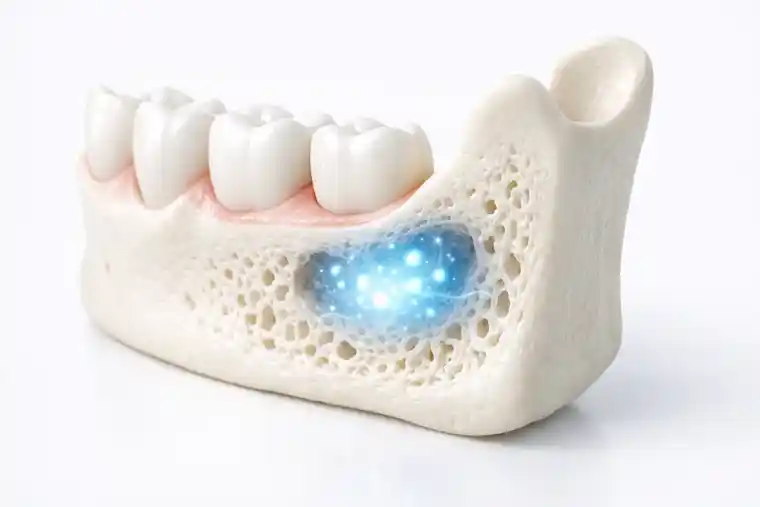
Exosomes are small vesicles that have been produced from cells. These small vesicles contain a variety of biological materials (functional proteins, lipids, miRNA, mRNA, etc.) that provide signals and instructions to nearby cells.
When these vesicles are released, they then travel to the neighboring cells where they can initiate an action such as the regulation of inflammation, or stimulate regeneration or repair of cells that have become damaged or stressed.
Exosome therapy has lots of proposed applications. In regenerative dentistry, research have shown that the procedure can support gum regeneration in the following ways:
Anti-inflammatory effects
Exosomes therapy can be used to calm overactive immune cells that would have caused chronic inflammation, a common cause of gum tissue destruction in periodontitis. By calming the inflammatory signals, damaged gum tissues are far more likely to repair themselves.
Stimulating Fibroblast Function
Chronic periodontitis affects fibroblasts (cells which help build and maintain gum tissues), either causing them to become less active or completely dysfunctional. Exosomes therapy has the potential to stimulate fibroblast function thereby allowing these cells to function properly once again.
Support of periodontal ligament regeneration
Research has also shown that exosome therapy may help support the regeneration of damaged ligament cells. By delivering signaling molecules that stimulate cell repair, the structure and function of the periodontal ligament may become fully restored.
Enhancement of soft tissue healing
Researchers also believe that Exosome Therapy may help accelerate wound healing. This can be achieved by delivering growth factors and signaling molecules that support tissue regeneration while also reducing inflammation.
Beyond its use in regenerative dentistry to fix gum tissue, this procedure has the potential to be effective in healing tendons, ligaments, skin and other bodily soft tissues as well.
Clinical Expectations for Exosome Therapy for Periodontitis
Before we go any further, it is important to point this out: Exosome therapy is NOT magic. It is a simple biological procedure that utilises what is already in your body (tiny vesicles) to support and enhance the body’s own natural healing processes.
Another key point is that the science behind this procedure is really complex, one error during the treatment and all kinds of complications can surface. That is one reason why the treatment is not yet widely adopted. In fact, most countries have not formally approved it for routine dental use. As a result, patients interested in the treatment often need to travel to regions where it is legally offered under regulated clinical settings.
Lastly, exosome is generally considered a complementary therapy, it can not outrightly replace traditional treatment. In fact, it tends to work best when combined with other traditional treatments like flap surgery, scaling, etc to enhance regenerative outcomes.
If you have advanced periodontitis, your dentist is more likely to recommend any of the current and widely acceptable treatment first before suggesting exosome therapy as an adjunct option.
How Exosome Therapy Is Delivered for Periodontitis Treatment
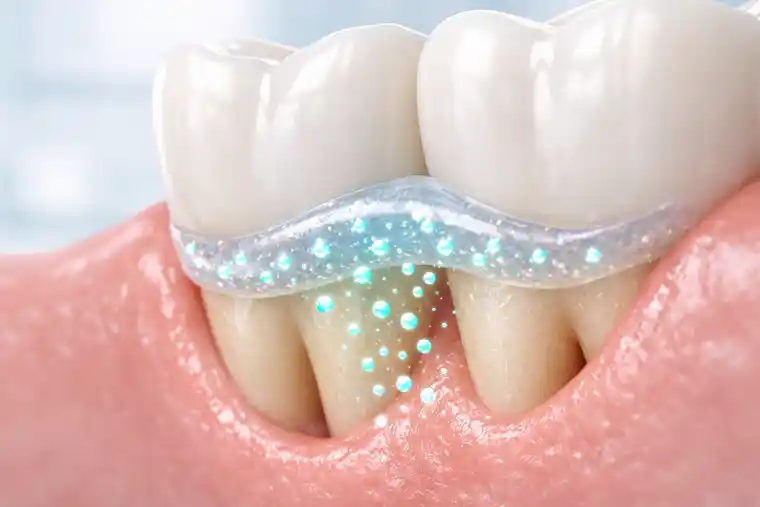
Exosomes for periodontitis (to regenerate lost gum tissue) are generally delivered through the following methods:
- The exosomes, after extraction, can be injected directly into the defective gum tissue. This method is perfect for situations where you already have a specific site you want to target.
- Another promising method for administering this treatment is through muco-adhesive hydrogel scaffolds. These are biomaterials packed with exosomes and designed to stick to the surface of the gum. Once in place, they start to release the exosomes slowly over a period of time. In simple terms, they are best known for their delayed controllable release.
Who May Be Eligible for Exosome Therapy for Periodontitis
Patient eligibility depends mostly on the overall health of the patient. But generally, exosome therapy for periodontitis is designed mainly for Patients with Stage III or IV periodontitis.
Who May Not Be Eligible for Exosome Therapy for Periodontitis
- Pregnant or nursing mothers are often exempted.
- Patients suffering from uncontrolled diabetes or other systemic conditions are often exempted from this treatment.
- Active smokers may also be excluded from this procedure
- Patients with mild gingivitis or early periodontitis are not qualified (conventional treatment works fine here).
Final Thoughts on Exosome Therapy for Periodontitis
The popularity of exosome therapy is growing rapidly in the field of regenerative dentistry and its advantages are easy to explain. Research has shown that exosome therapy may have potential to assist with the regeneration of lost gingiva and connective tissue through a reduction in inflammation and stimulation of cellular repair based on clinical trials.
It’s also important to know that while research shows the potential of using exosome therapy for the treatment of periodontitis, exosomes do not replace current methods of treatment for periodontitis. Rather, they can be thought of as a supplement to support or add value to existing treatment options for periodontitis.
That said, if you have been diagnosed with periodontitis and are interested in advanced treatment for your condition, DentSpa in Turkey specialises in a variety of advanced procedures that are aligned with regenerative principles. The clinic offers a wide range of treatment options including periodontal restoration and comprehensive periodontal care, as well as dental implant placement,
FAQs About Exosome Therapy for Periodontitis
Can gum tissue grow back naturally?
Yes, but it depends on the stage the gum disease is. If the gum disease is still in its early stage (gingivitis), there is a high chance that gum tissue will grow back naturally. However, if the gum disease has progressed to chronic periodontitis, regenerative treatments are often needed here.
Can periodontitis be reversed?
Whether or not you can reverse periodontitis is based upon how advanced the periodontal disease has become. If caught early, it can be reversed. However, once periodontitis begins and there has been significant bone loss, reversal of the disease is unlikely. The goal of the treatment will shift to halting progression and managing the infection.
What are some of the new ways to treat Periodontitis?
There are a variety of emerging treatments for periodontitis that include; Exosome Therapy, Stem Cell Therapy, Platelet Rich Fibrin (PRF), Growth Factor Applications (such as Emdogain) and many other forms of regenerative treatment options.
How do I restore my gums?
Your gums may be restored by using a gum graft, guided tissue regeneration, or by using exosome therapy. Should however be noted that the effectiveness of these options all depends on how well you can maintain your oral hygiene.
Is regenerative periodontal therapy effective?
Yes, but effectiveness varies by technique, stage and the stage of the disease. Traditional regenerative surgery like bone grafts, etc have shown they can restore some jaw bones, particularly in moderate cases.
In more severe cases, emerging approach like exosomes therapy has shown promising early signs that it can support tissue repair and regeneration
How much does gum regeneration treatment cost?
It depends on your location and severity of bone loss. In the US, the price of traditional bone grafting typically ranges from $1,500 to over $3,000 per site. In Turkey, the price falls between €800 to €1,600 per site. For Exosome therapy in dental restoration, treatment price in Turkey ranges from €2,200 to over €5,000.