
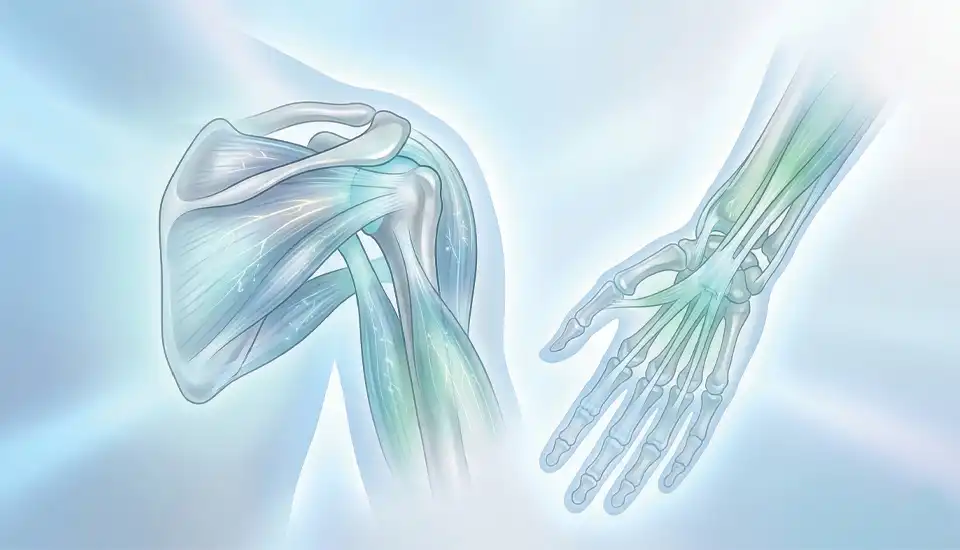
A Sports Medicine Perspective
Clinical Insights by Op. Dr. Hilmi Karadeniz
Orthopedic Surgeon & Sports Medicine Physician
Table of Contents
Why the End of the Season Reveals So Much
When sports medicine comes to mind, most people picture the obvious moments-the ones nobody misses. A player limps off the pitch. A runner pulls up halfway through a race. A tennis player reaches for the shoulder just after contact on a serve. Those scenes are easy to recognize, easy to remember, and for that reason they tend to dominate the conversation.
But much of this field has very little to do with drama. It happens later, in quieter settings, when no one is watching.
One of the most revealing points in an athlete’s year comes only after the season is finished. Not during the height of competition, but after it. Once the pace drops, training loads ease, and the calendar stops dictating every decision, athletes finally have enough distance to notice what the previous months actually did to them. And what comes up then is often not a major injury at all. It is something more subtle.
An ankle that never quite regained its old sense of stability after a challenge. A hamstring that healed, technically, but stayed just a little tight every time acceleration really mattered. A shoulder that no longer hurts in any obvious way, yet still does not feel trustworthy when the effort becomes maximal.
None of that necessarily prevents performance. Athletes can get through a season-and sometimes a very good one-while carrying exactly these kinds of issues. Still, from a sports medicine perspective, this is often the most useful information we receive. Small details, yes, but they say a great deal. They show us how the body has coped with the repeated demands of training and competition over time.
What a Long Season Really Does to the Body
What a long season does to the body is not always visible in the way people expect. A competitive season places a very particular strain on the musculoskeletal system. Training sessions, matches, travel, recovery, then the same again. Week after week. The body does what it has to do: it adapts.
That adaptation is not abstract. Muscles begin to share load differently. Joints alter how they deal with force. Movement patterns shift, sometimes only slightly, usually to protect whatever has started to feel vulnerable. Most of this is hidden from view. From the stands, the athlete may look completely normal-better than normal, in some cases. But internally, the body has been making adjustments the whole time.
And it remembers them.
As the season goes on, some tissues begin to carry more than their fair share. A tendon that handled load easily at the beginning may become gradually reactive. A joint that has lost just a little stability may force surrounding muscles to do more than they should. Performance can still look intact. The numbers may even say everything is fine. But the structure underneath that performance can become less robust, less forgiving. That is why the period after the season matters so much medically. For a short while, the urgency lifts, and it becomes possible to examine the body without the usual pressure of the next fixture hanging over every decision.
When Athletes Say Something Feels Different
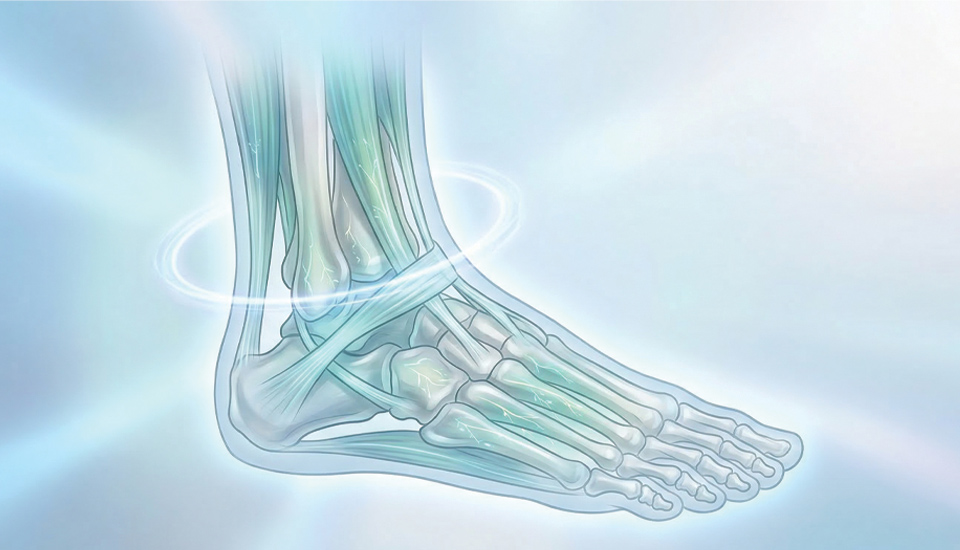
Athletes often try to describe this in ways that do not fit neatly into a test result. They do not usually say, “I am injured.” More often they say something feels different.
A sprinter may talk about acceleration feeling heavier, not dramatically worse, just not as clean as before. A basketball player may say the knee is fine in training but reacts afterwards, especially after games. A swimmer might explain that the shoulder moves well enough, yet starts to feel unstable once fatigue comes in.
Those comments matter. In fact, they are often more useful than people realize. What they usually point to is not a collapse in performance but a gap between workload and recovery. The body has repaired enough to keep functioning, but not always enough to tolerate repeated stress in the same way it once did. Muscles can regain strength without fully recovering their old coordination. Inflammation can settle without disappearing completely. Tissues may no longer be acutely injured, yet they remain vulnerable.
Athletes continue under those conditions all the time. What changes, slowly, is resilience. And if you want to protect a career, resilience matters.
Looking More Carefully at the Athlete
Looking more carefully at the athlete begins once the competition schedule stops. Only then can the body be assessed thoroughly enough to understand what is really going on. Usually that starts with a detailed orthopedic examination. Ligaments, tendons, joint stability-these are looked at closely. Even minor findings can be meaningful: a slight instability, a reduced range of motion, a small area of persistent irritation. None of those things is necessarily dramatic on its own, but together they can explain symptoms that seemed vague during the season.
Movement observation is just as important. Athletes who have played through smaller problems often develop compensations they barely notice themselves. A shift in weight while running. A preference for one side during explosive movements. These changes can be subtle, but they are rarely irrelevant.
Then there is strength. Not just whether the athlete is strong in general, but whether the two sides of the body still work in balance. Sometimes the difference between limbs is easy to miss during training, especially when the athlete is still functioning well. Yet these imbalances are among the common reasons why problems come back.
We also pay attention to the tissues themselves. Tendons, muscles, cartilage surfaces-they absorb an enormous amount of stress over the course of a season. Even in the absence of a visible injury, they may show signs that athlete recovery was partial rather than complete. The point of all this is not to go looking for trouble. It is more practical than that. We are trying to answer a straightforward question: is this body actually ready to tolerate another season built on similar demands?
Assessing Injury Risk Before the Next Season

Thinking ahead to the next season means accepting something sport never lets us forget: injuries cannot be predicted with certainty. The unpredictability is part of the game. What sports medicine can do, though, is identify conditions that make trouble more likely.
The same patterns tend to appear again and again. A hamstring that never quite regains full strength after rehabilitation. A knee that has lost some proprioceptive control after ligament strain. A tendon that becomes swollen every time training intensity climbs. These things do not always stop an athlete from competing right away. That is precisely why they are so easy to underestimate.
Then the next season starts. Load rises. Intensity returns. And those are often the areas that break down first.
If they are addressed early, the situation changes. The athlete starts the new season with more stability, more trust in the body, and usually more confidence as well.
Recovery Between Seasons
Recovery between seasons is often misunderstood. A surprising number of athletes think of it as little more than rest. Sometimes rest is part of it, but that is rarely the full picture. More often, athlete recovery involves reducing load while also doing very specific work.
For one athlete, that may mean restoring mobility and neuromuscular control. For another, it may be strength work aimed at correcting imbalances that built up gradually over the year. Sometimes lowering training intensity for a period is enough to calm stressed tendons or joints and let biology do what it has been trying to do all along.
In some situations, regenerative treatments may also enter the discussion. The purpose there is not to create an artificial performance gain. It is more modest, and more medical than that. These approaches are considered when the body appears to need help finishing a healing process that ongoing competition has repeatedly interrupted. The goal is to support tissue repair, not to bypass physiology.
Why End-of-Season Evaluation Is Often Skipped
Even so, end-of-season athlete evaluation is often skipped. That is understandable. After months of travel, competition, and constant structure, many athletes want the opposite of another appointment, another test, another plan. Others finish the year without a major injury and assume that means everything is fine.
That assumption can be costly.
A considerable number of problems that show up early in the next season have roots in the one before. They begin as small unresolved issues, not dramatic failures. If nobody looks for them, they remain there until the body is asked to perform under full stress again.
Ignoring them does not preserve performance. Usually it does the opposite. It only postpones the moment when the body insists on being taken seriously.
A Final Reflection
From the outside, athletic performance often looks effortless. In reality, it depends on a fine balance-training, adaptation, recovery, all working together, sometimes barely. The end of a season is one of the few moments when that balance can be examined honestly.
If athlete and physician use that moment well, the difference is often noticeable. Small weaknesses can be corrected. Tissues get the time they need. Movement patterns settle back into place. What follows is not always dramatic. In fact, it is often something much simpler.
The body starts to feel dependable again.
And at a high level, that sense of dependability is not secondary to performance. It is one of the things performance is built on.
FAQs About End-of-Season Athlete Assessment
Why do sports doctors like to see athletes when the season is over?
Because this is often when the body stops hiding things. During the season, athletes keep going. They adapt, they compensate, and they work around smaller problems because the next session or the next match is already waiting. Once that pressure eases, it becomes much easier to see what has really been building up underneath.
What do you actually check in an end-of-season athlete evaluation?
It usually begins with simple questions. What kept coming back? What felt different? What never quite returned to normal? From there, we look at movement, joint stability, muscle balance, and any area that seems to have carried too much of the load across the season.
Can this really help prevent injuries?
Not in a perfect or absolute way. Sport does not work like that. But it can help us catch smaller problems before they become bigger ones. A tendon that remains irritable, a side-to-side strength difference, a movement pattern that changed after an old injury-those details matter more than people sometimes think.
What does recovery between seasons usually involve?
That depends on what the season actually left behind. For some athletes, reducing load for a while is enough. Others need more specific work on strength, mobility, or neuromuscular control. Recovery is not always dramatic. Often it is simply a matter of giving the right tissue, or the right system, the attention it has not had time to receive.
Is it still worth doing if the athlete got through the season without injury?
Yes. Quite often, the athlete who says, “I was fine,” still has areas that were working harder than they should have been. They may not be injured in any obvious sense, but that does not always mean the system is in balance. An off-season evaluation helps uncover that before it turns into a problem later.