Proofread by Prof. Dr. Serdar Kabataş, MD, PhD (C)
MedClinics News & Blog
MSC-derived extracellular vesicles have now been tested in a first human trial for sudden hearing loss, a condition that can begin in a strangely ordinary moment. A person wakes up and one ear seems blocked. A telephone call sounds faint on one side. There may be ringing, dizziness or a feeling of pressure, yet no pain and no obvious reason for the change.
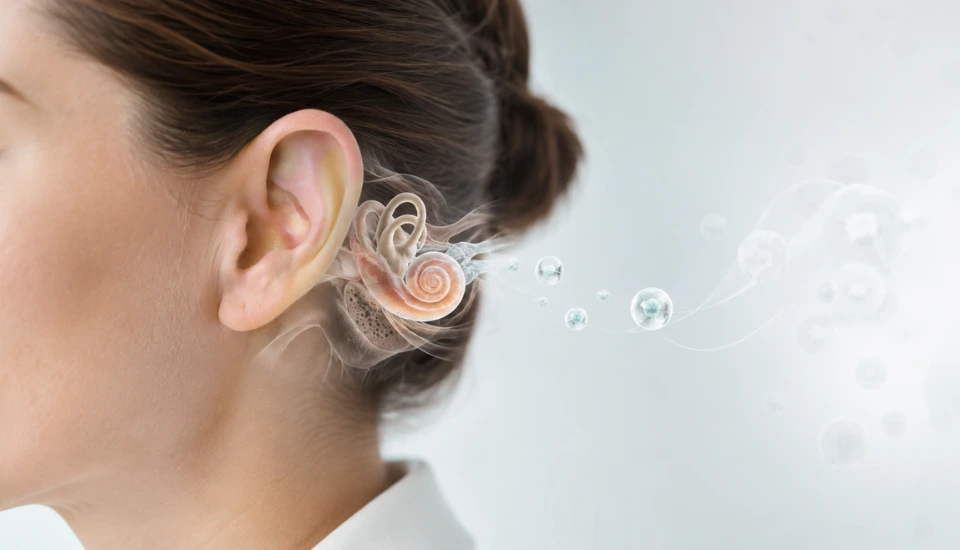
When the loss comes from the inner ear, doctors call it sudden sensorineural hearing loss. It is treated as a medical emergency because the chance of recovery may narrow with time. Corticosteroids are usually offered early, although some patients gain little hearing despite treatment.
A small study from China has now taken a regenerative approach into the clinic. Researchers administered small extracellular vesicles derived from human umbilical cord mesenchymal stem cells to patients whose hearing had not improved adequately after steroids. The Phase 1 trial, published in Stem Cell Research & Therapy in June 2026, is the first reported human study of this particular approach in refractory sudden sensorineural hearing loss.
Over eight weeks, the investigators recorded no serious treatment-related adverse events. Five of the twelve patients who completed follow-up also had a measurable improvement in hearing. The numbers are small, though the way those responses were distributed gives researchers something quite specific to examine next.
Table of Contents
Sudden Hearing Loss Does Not Always Recover With Steroids
Sudden sensorineural hearing loss usually develops over hours or a few days and most often affects one ear. Many patients also experience tinnitus. Dizziness and ear fullness are common enough that the problem can initially be mistaken for congestion, wax or a minor ear infection.
In most cases, no definite cause is found. Possible explanations include inflammation, viral injury, disturbed blood flow and immune activity inside the cochlea. Whatever starts the process, sensory hair cells and the nerve structures that carry sound signals may be placed under considerable stress.
Corticosteroids can reduce inflammation and are given orally or through the eardrum. Some people recover well. Others are left with severe loss even when treatment begins promptly. The twelve patients followed in the new trial belonged to this second group. Each had received at least seven days of corticosteroids without improving by 15 decibels or more.
The average pure-tone threshold at enrolment was about 88 decibels, placing the group within the severe-to-profound range.
Why Study Small Extracellular Vesicles From MSCs?
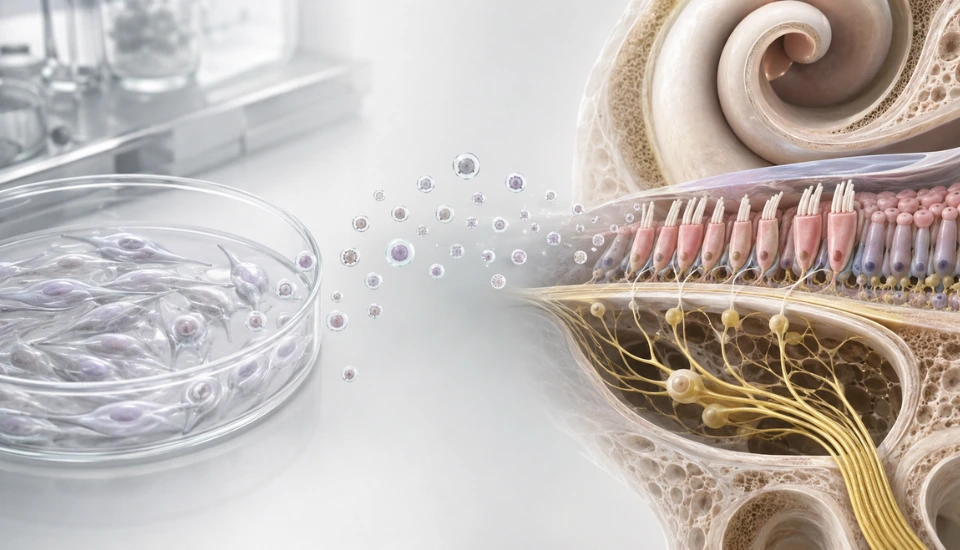
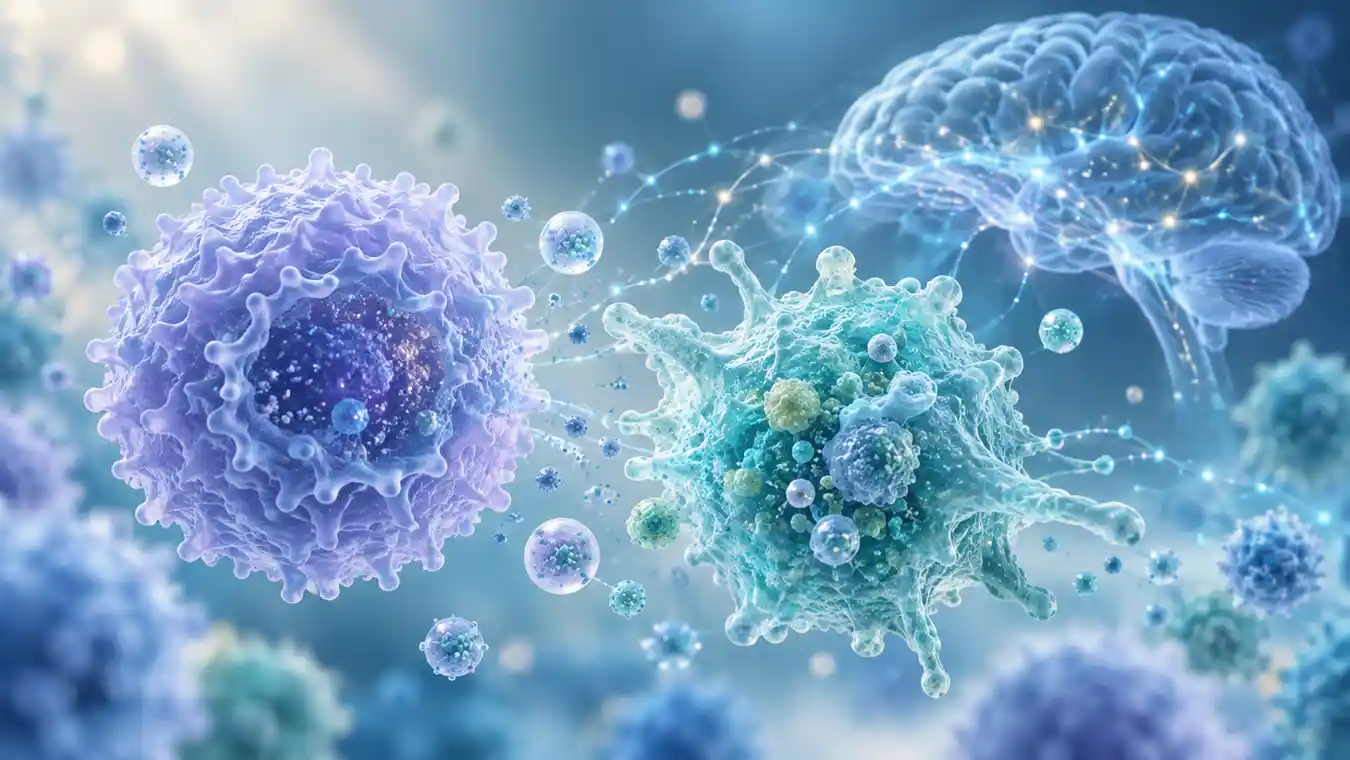
Mesenchymal stem cells release many substances into their surroundings. Among them are extracellular vesicles, tiny membrane-bound particles carrying proteins, lipids and RNA. Cells can absorb these particles and respond to the biological material inside them.
Researchers are interested in this communication system because it may account for part of the anti-inflammatory and tissue-supporting activity associated with MSCs. In laboratory studies, MSC-derived extracellular vesicles have influenced oxidative stress, immune signalling and cell-survival pathways.
The inner ear presents a compelling setting for that research. Its sensory hair cells do not readily regenerate after major injury, and damage to the spiral ganglion neurons can interrupt the passage of sound information to the brain. Earlier animal work suggested that MSC-derived vesicles might help protect both types of cell under certain forms of stress.
The product used in this trial came from human umbilical cord MSCs grown in culture. No living stem cells were injected. The investigators refer to the product as small extracellular vesicles, or sEVs. These particles are often discussed under the more familiar name “exosomes,” although extracellular vesicle is the more accurate description for the preparation studied here.
Inside the Phase 1 Trial
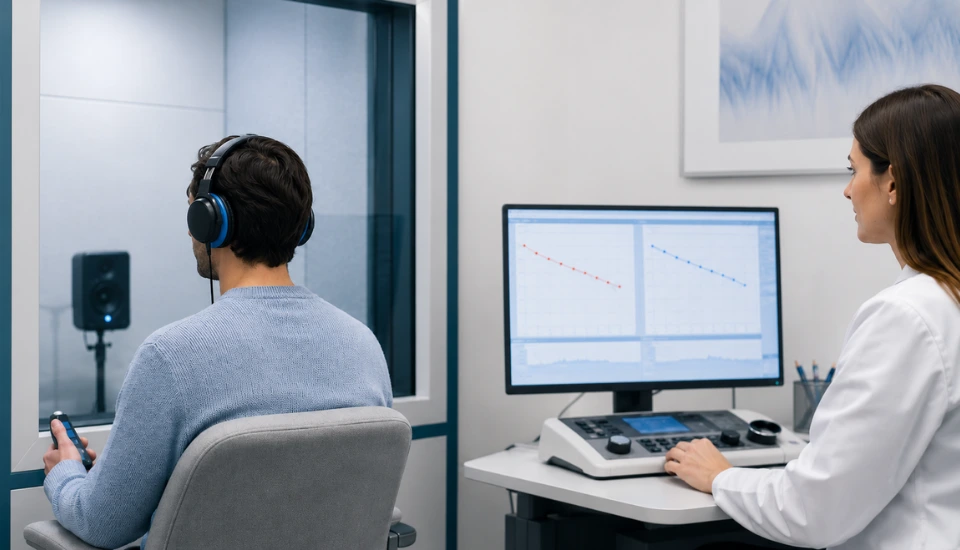
The study took place at Zhujiang Hospital of Southern Medical University in Guangzhou. Thirteen adults enrolled between June and September 2025, and twelve completed the eight-week follow-up.
Before treatment, the patients underwent MRI to exclude acoustic neuroma and other identifiable neurological causes. Active ear infection, a perforated eardrum and middle-ear disease were among the exclusion criteria.
The shortest interval between hearing loss and enrolment was eight days. At the other end of the group was a patient whose hearing had been affected for 366 days. That unusually wide range later became relevant to the results.
The participants received one of four doses of small extracellular vesicles, with concentrations ranging from 800 million to 100 billion particles per millilitre. A 0.3-milliliter dose was injected through the eardrum into the affected ear once a day for five days. Afterwards, patients remained lying down with the treated ear facing upward for around 30 minutes.
Hearing tests and ear examinations were repeated after one, two, four and eight weeks. Blood counts and liver and kidney function were also monitored. Everyone knew which treatment was being given, and there was no placebo group. This design is common in a first safety study, but it means the hearing results have to be read with care.
The Injections Were Well Tolerated
No serious treatment-related adverse events or dose-limiting toxicities were reported during follow-up. Blood tests did not reveal clinically meaningful changes in liver, kidney or bone-marrow function.
The symptoms that did occur were mild and familiar in the context of an injection through the eardrum. Five patients reported ear pain, three had a temporary feeling of fullness and two experienced brief dizziness. All resolved without additional treatment.
The puncture sites also healed. There were no persistent eardrum perforations, middle-ear infections or fluid collections, and middle-ear pressure remained stable.
Eight weeks is a short observation period, and twelve people cannot reveal uncommon risks. The immediate safety experience nevertheless supports taking the preparation into a larger study.
What Happened to the Patients’ Hearing?
The number that draws attention is five. That is how many of the twelve patients improved by at least 15 decibels in the pure-tone average, the threshold selected by the investigators for a hearing response. Three improved by more than 30 decibels, and some changes were visible from the first week.
Those figures are promising enough to attract attention, especially in a group that had already responded poorly to steroids. They are not yet a measure of treatment efficacy. Sudden hearing loss can improve naturally during the early weeks, and without an untreated or placebo group there is no reliable way to calculate how much recovery was connected to the injections.
Pure-tone audiometry also measures only part of a person’s hearing. An improvement on the audiogram may help with the detection of quieter sounds, but speech recognition often matters more in daily life. Larger studies should examine whether any change carries through to conversations, telephone use and hearing in background noise.
A Surprising Result at the Lower Doses
The dose pattern was the unexpected part. Every responder had received one of the two lower concentrations. All three patients in the second-lowest group improved by at least 15 decibels, as did two of the three patients given the lowest concentration. None of the six people in the higher-dose groups reached the same mark.
With three patients per group, this could easily be shaped by chance or by differences between the individuals enrolled. It does raise a sensible question for future research. Extracellular vesicles carry biological signals, and biological responses do not always rise in step with concentration. A higher particle count may reach a point where no further activity is gained. It could also affect how particles interact, disperse or enter cells.
The result gives the next research team a reason to examine lower doses closely, rather than beginning with the assumption that more particles must produce a stronger effect.
All Five Responders Were Treated Within 22 Days
Timing produced an equally notable pattern. Every patient who improved by at least 15 decibels began the experimental treatment within 22 days of losing their hearing. People with a longer disease history showed little or no change.
There is a biological logic to this. Soon after sudden hearing loss, some inner-ear cells may be badly stressed while still remaining viable. An intervention that changes inflammatory or cell-survival signals might have an opportunity to preserve them. After prolonged injury, the loss of sensory cells and neural connections may be too advanced for the same approach.
The study cannot establish 22 days as a clinical deadline. Early cases already tend to have a better outlook, which could partly explain the result. Still, future trials are likely to learn more from a reasonably consistent group treated soon after an inadequate steroid response than from patients whose hearing loss ranges from days to a full year.
Why the Treatment Was Injected Through the Eardrum
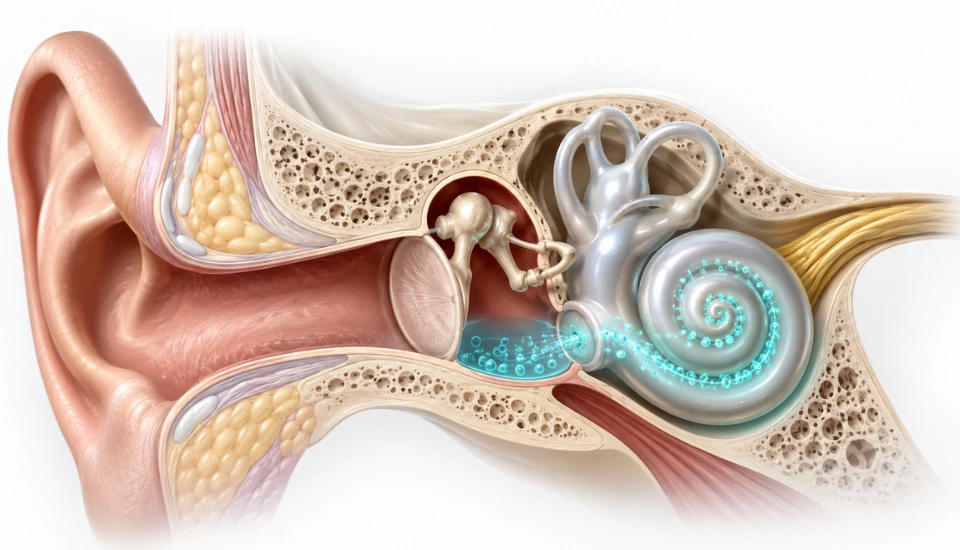
Reaching the cochlea is difficult. A drug travelling through the bloodstream may enter the inner ear only in limited amounts because of the barriers that protect it.
An intratympanic injection places treatment in the middle ear, beside the round-window membrane that leads toward the cochlea. ENT specialists already use this route for steroid treatment, so the procedure itself is established even though the vesicle preparation remains experimental.
Local administration may also limit exposure in the rest of the body. Questions remain about how many vesicles cross into the inner ear, which cells take them up and how long their activity continues. Those questions will require dedicated biological studies alongside the next clinical trial.
What Researchers Need to Study Next
This trial gives extracellular-vesicle research a foothold in clinical hearing medicine. It also shows how the field is beginning to study defined products made from the material MSCs release, alongside therapies that use living cells.
Producing such a treatment consistently will be demanding. The source of the MSCs, the way they are cultured, the method used to collect the vesicles and the conditions in which the final preparation is stored can all alter its composition. The product in this study was checked for particle size and concentration, sterility, endotoxins and viral safety. Future studies will need equally clear manufacturing standards if results are to be compared across centres.
The next clinical study should be larger and randomised, with a placebo or sham procedure where ethically and practically appropriate. It should follow patients for longer and include speech-recognition results as well as hearing thresholds. Dose and timing deserve particular attention after the patterns seen here.
For patients, the immediate message remains simple. Sudden hearing loss needs urgent medical assessment, and corticosteroids remain the standard early treatment. MSC-derived extracellular vesicles are still being studied and are not an approved treatment for this condition. Commercial products marketed broadly as “stem cell exosomes” should not be assumed to match the clinical-grade preparation used in this trial.
An Early Human Signal Worth Following
The first human trial of MSC-derived extracellular vesicles for refractory sudden hearing loss was small, but it produced several findings that can guide the field. Repeated injections were tolerated without a serious treatment-related event during the eight-week study. Five patients showed measurable hearing improvement, and the responses appeared only in the lower-dose groups and among people treated within 22 days of onset.
None of those patterns is settled after twelve patients. They have, however, turned a laboratory idea into a clinical research question that can now be tested properly: can a carefully manufactured MSC-derived vesicle preparation help preserve hearing when standard steroid treatment has not been enough?
Frequently Asked Questions
Were stem cells injected into the ear?
No. The researchers injected small extracellular vesicles collected from cultured human umbilical cord mesenchymal stem cells. The preparation contained no living MSCs.
Did the treatment improve hearing in everyone?
Five of the twelve patients improved by at least 15 decibels. Three recorded gains of more than 30 decibels. The other seven did not reach the study’s response threshold during the eight-week follow-up.
Why might the lower doses have produced more responses?
There is no confirmed explanation yet. Vesicle signalling may behave differently at different concentrations, but the groups were so small that patient differences or chance could account for the pattern. Dose selection will need to be tested in a larger trial.
Is this treatment available now?
It is an experimental approach tested in a Phase 1 clinical study. Anyone who experiences sudden loss of hearing should contact an ENT specialist urgently rather than delaying established treatment while looking for an extracellular-vesicle procedure.
Sources
- Stem Cell Research & Therapy – Intratympanic Injection of Human Umbilical Cord Mesenchymal Stem Cell-Derived Small Extracellular Vesicles for Refractory Sudden Sensorineural Hearing Loss: A Phase 1 Trial
- PubMed – Intratympanic Injection of Human Umbilical Cord Mesenchymal Stem Cell-Derived Small Extracellular Vesicles for Refractory Sudden Sensorineural Hearing Loss: A Phase 1 Trial
- National Institute on Deafness and Other Communication Disorders – Sudden Deafness
- American Academy of Otolaryngology–Head and Neck Surgery – Clinical Practice Guideline: Sudden Hearing Loss (Update)