Regenerative Medicine

Clinical Insights by Prof. Dr. Serdar Kabataş, MD, PhD (C)
I’m Prof. Dr. Serdar Kabataş, and for more than two decades I have worked with diseases that change lives in very different ways.
Some conditions arrive abruptly.
Stage 3 chronic kidney disease usually does not.
It shows itself more quietly.
A patient is told that kidney function is “moderately reduced.” Another hears that the numbers are no longer normal, even if they are not yet catastrophic. Someone else goes home with medication, advice, and the uneasy sense that something has already begun.
That middle stage unsettles people for a reason.
Not because they are critically ill.
Because they understand direction.
I remember a patient who said, very simply, “I don’t want to wait until this becomes serious.” That sentence stayed with me. It captures what stage 3 CKD really feels like. Most patients are not asking for miracles here. They are asking whether the curve can still be changed.
That is why stage 3 matters.
It is often the point where kidney disease becomes real enough to command attention, but not yet so advanced that every conversation is already about dialysis. And that is also why chronic kidney disease stem cell therapy becomes more relevant here than in very early disease and more realistic than in very late disease.
Not as a cure.
As a question.
Can progression still be slowed while there is still enough function left to protect?
That is the right place to begin.
Stage 3 is often where the diagnosis stops sounding technical and starts feeling personal.
In earlier stages, many patients still hear reassuring language. Damage may be present, but daily life does not yet feel altered in a serious way. Stage 3 is different. The numbers are no longer close to normal, and even if the patient still feels reasonably well, there is now a clearer awareness that kidney reserve is no longer what it was.
That changes the mood immediately.
Patients start asking more practical questions:
These are not exaggerated fears. They are reasonable fears. Stage 3 is often the moment when progression becomes imaginable.
At the same time, this stage is easy to misunderstand. It does not mean kidney failure is near in every patient. Some remain stable for years. Others move faster than expected. The real issue is not the label by itself, but how the disease is behaving underneath it.
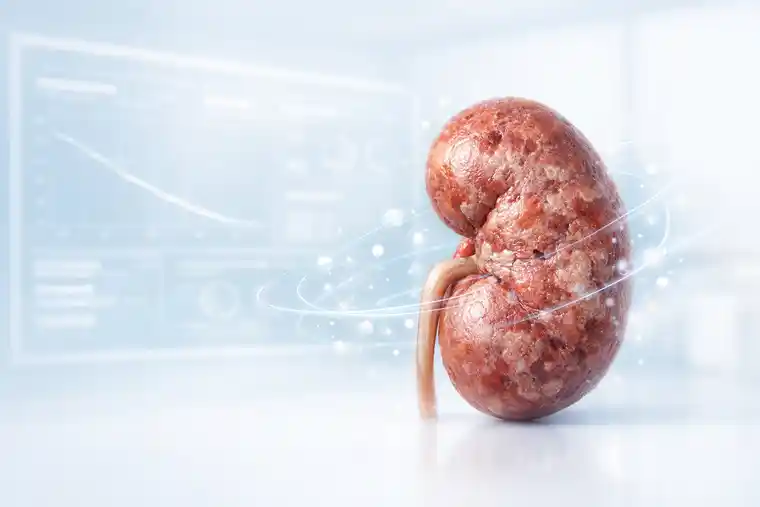
Stage 3 CKD means there is a moderate reduction in kidney function.
That sounds tidy. In real life, it means the kidneys are still doing their job, but with less room to absorb stress. Waste handling may still be acceptable. Fluid balance may still look stable. The patient may still feel mostly normal.
But the reserve is smaller.
That matters more than many people realize.
Once that margin narrows, problems that once would have been tolerated can begin to do more damage. High blood pressure. Diabetes. Recurrent dehydration. Ongoing inflammation. Medication burden. Poor follow-up. A stage 3 kidney does not absorb those pressures as easily as a healthier one.
That is why this stage is such an important turning point.
It is not the end of the story.
But it is no longer the beginning either.
This is one of the most searched questions, and patients rarely ask it casually.
Usually, the honest answer is no. Not in the simple sense people hope for.
If chronic kidney disease has been present long enough for scarring and structural damage to develop, full reversal is not a realistic goal. That is especially true when the kidneys have been under pressure for years from diabetes, hypertension, or persistent inflammatory stress.
But that still leaves a great deal of room between “full reversal” and “nothing can be done.”
Those are very different positions.
In stage 3 CKD, the more realistic aim is often to slow the process, reduce ongoing injury, and protect the function that remains. For many patients, that matters far more than the word reversed.
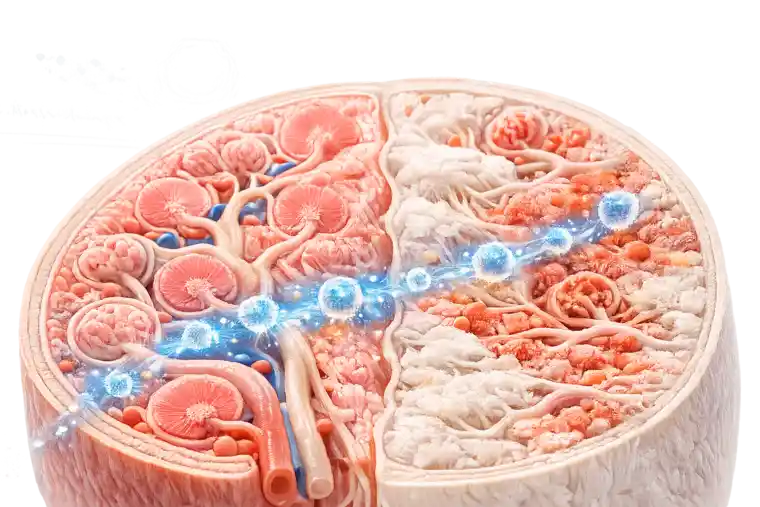
If regenerative treatment is going to be discussed in chronic kidney disease, stage 3 is often where the conversation becomes most meaningful.
The reason is not complicated.
There is still something left to preserve.
In very early CKD, patients often do not yet feel enough urgency to think about biologic treatment. In very advanced disease, fibrosis may already dominate the picture so strongly that the window becomes much narrower. Stage 3 sits between those two extremes.
There is already visible loss.
But often still enough biology worth trying to protect.
Inflammation may still be active. Fibrotic signaling may still be moving. Vascular stress may still be shaping what happens next. That is why regenerative medicine becomes relevant here — not because it can build a new kidney from the ground up, but because it may help influence the environment in which further damage is taking place.
That claim is modest.
Which is another way of saying it is probably closer to the truth.
Possibly, in selected patients.
That is the balanced answer.
The thinking behind stem cell and exosome-based treatment in CKD is not that these therapies somehow create a fresh organ. The interest lies elsewhere: inflammation, immune signaling, tissue stress, vascular support. In simpler terms, the hope is not dramatic regeneration. The hope is that the kidney may be placed under less biological pressure.
For a patient in stage 3, that distinction matters.
If some of the inflammatory or fibrotic drive can be reduced, progression may slow. That is why these therapies are being explored. But this still has to be discussed carefully, because the evidence is limited and the right patient matters a great deal.
This should never be described as guaranteed protection from dialysis.
At best, it is a supportive strategy that may make sense in the right setting.
Stage 3 is not one uniform situation.
One patient’s kidney function has barely moved over the last few years. Another patient’s numbers keep slipping, albumin in the urine is increasing, diabetes is poorly controlled, and each follow-up raises a little more concern than the last one.
Those are two different conversations.
The first patient may need careful observation above all. The second may justify a more active discussion about how much kidney function can still be protected.
A patient whose stage 3 CKD is clearly moving may justify a more active preservation discussion.
That is why trend matters so much. A single value can mislead. What matters more is whether the kidney is holding, drifting, or clearly falling.
This needs to be said without softening it.
No regenerative therapy replaces the basics in stage 3 CKD.
If blood pressure is still poorly controlled, diabetes is unmanaged, medication is irregular, diet is neglected, and follow-up is inconsistent, then the main injury is still being allowed to continue. In that situation, even the most interesting biologic therapy is being asked to work against damage that is still happening every day.
That is not a serious strategy.
In stage 3 CKD, conventional care still does the real heavy lifting:
Regenerative therapy, where it is discussed, should rest on that foundation. Never instead of it.
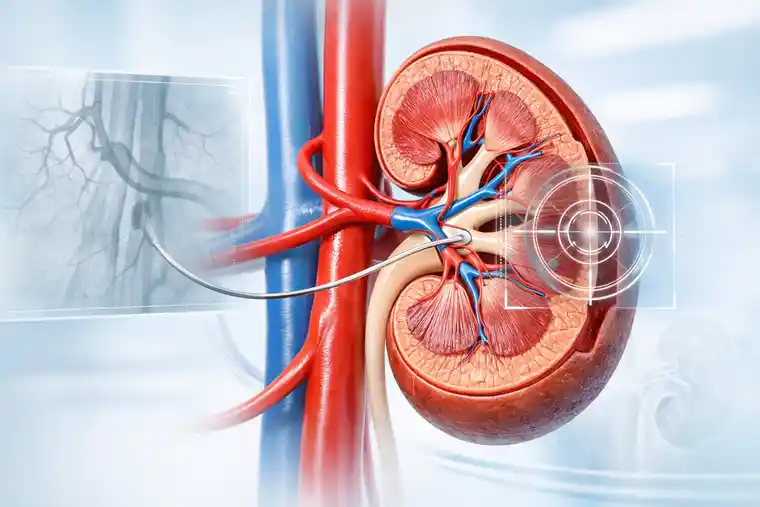
When stem cell or exosome treatment is considered in stage 3 CKD, patients usually want practical clarity quickly.
Sometimes treatment is given intravenously.
In some cases, a more targeted route may be chosen, with a thin catheter guided under imaging into the vessels supplying the kidneys. When that approach is used, it should be done by an experienced interventional radiologist and only in a setting where the anatomy, indication, and treatment plan have been reviewed carefully.
The route itself is not the most important part.
The more important question is whether the treatment is being chosen thoughtfully, for the right patient, at the right point in the disease.
Most are not asking for perfection.
They are asking for time.
Time before dialysis becomes a real discussion.
Time before fatigue becomes ordinary.
Time before every lab result feels like a warning.
That is why the realistic goal in stage 3 is often not reversal, but distance. Distance from faster decline. Distance from later-stage complications. Distance from a future that already feels too close.
For many patients, even a slower rate of loss would already mean something important.
Medically, that is not a small thing.
There are also patients for whom this discussion has to be much more restrained.
If scarring is already advanced, if the kidneys are structurally very reduced, if the overall medical condition is unstable, or if expectations are unrealistic from the beginning, then the role of regenerative therapy becomes much weaker.
Sometimes the most responsible consultation is the one that sets limits early.
That is not the same as withholding hope.
It is protecting the patient from the wrong kind of hope.
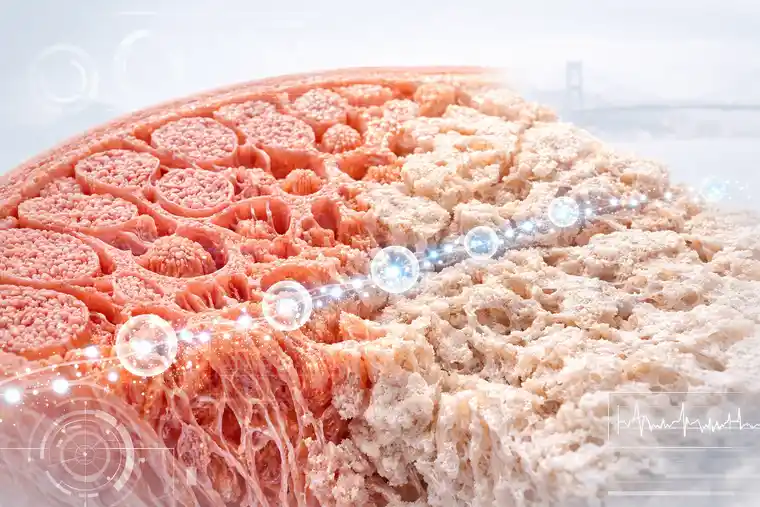
Often, yes.
That is one of the reasons this stage matters so much. A patient may already have enough loss to take the disease seriously, but still enough remaining function to protect. Whether it can actually be slowed depends on what is driving it and whether those pressures are still active.
Usually not in a complete sense.
What I would say more often in consultation is this: stage 3 may still leave room to hold the line. For many patients, that is the more realistic goal — not getting back to a perfect number, but keeping the disease from moving faster.
No.
Some patients stay in stage 3 for a long time. Others do not. The difference usually comes down to the cause of the disease, how active it still is, and how seriously blood pressure, diabetes, albuminuria, and follow-up are being managed.
No. Standard nephrology care remains the basis of treatment. Regenerative therapy is a separate and more selective discussion.
Usually someone whose disease is still active enough to justify a preservation strategy, but not so advanced that scarring has already closed most of the window.
Stage 3 CKD is often the moment when patients stop asking whether they have kidney disease and start asking what comes next.
That is why this stage deserves more attention than it often gets.
It is serious enough to require action.
But often early enough to leave room for one.
That is exactly where regenerative therapy becomes relevant. Not as a promise of cure, and not as a replacement for nephrology, but as a possible attempt to slow a process that may still be moving in the wrong direction.
For the right patient, that may be worth discussing.
And in stage 3 CKD, it is often worth having that discussion before the window becomes smaller.