Some joint conditions do not begin with a sudden injury or a clear breaking point. Knee osteoarthritis is one of them.
It develops quietly, often over years, as movement patterns change, load distribution shifts, and the joint slowly loses its ability to adapt. Many patients remain active throughout this process, unaware that the balance inside the knee is gradually being lost—until everyday movement no longer feels reliable.
A Non-Surgical, Regenerative Perspective on Treating Knee Osteoarthritis
Clinical Insights by Op. Dr. Hilmi Karadeniz
Orthopedic Surgeon & Sports Medicine Physician
A Personal Introduction: An Orthopedic Surgeon’s Perspective
A sports orthopedic surgeon’s perspective on recovery and restraint.
I am Op. Dr. Hilmi Karadeniz, an orthopedic surgeon and sports medicine physician.
For many years, my work has revolved around joints that carry load quietly, reliably, and without complaint – until they no longer do.
In daily practice, I meet patients at a very specific moment in their lives. They are still walking. Still working. Often still active. But something has shifted. The joint they trusted without thinking has become present in their awareness. Not always painful. Sometimes just unreliable. Sometimes stiff. Sometimes swollen for no obvious reason.
Knee osteoarthritis is one of the most common reasons people come to my clinic. And paradoxically, it is also one of the most misunderstood.
Not because the diagnosis is difficult, but because the timing of decisions around it is often wrong.
Much like femoral head avascular necrosis, knee osteoarthritis is a condition where rushing toward a solution – especially a surgical one – can close doors that were not yet meant to be closed.
Table of Contents
How Knee Osteoarthritis Usually Begins in Daily Life
Almost no one tells me, “My knee suddenly failed.”
What I hear instead are stories that sound minor at first.
- A former runner who stopped running “temporarily” and never went back.
- A patient who avoids stairs without consciously deciding to.
- Someone who plans their day around where they can sit down.
Often, they have already adjusted their life before they ever seek medical advice.
Pain is not always the main complaint. Loss of trust is.
By the time imaging confirms osteoarthritis, the joint has often been adapting under increasing stress for years. Muscles have compensated. Movement patterns have changed. The knee has been protected in subtle ways that eventually create new problems.
This is why knee osteoarthritis should never be reduced to a radiology report.
Why Knee Osteoarthritis Is More Than Cartilage Wear
Cartilage loss is visible. It is measurable. And it is easy to point to.
But cartilage itself does not feel pain.
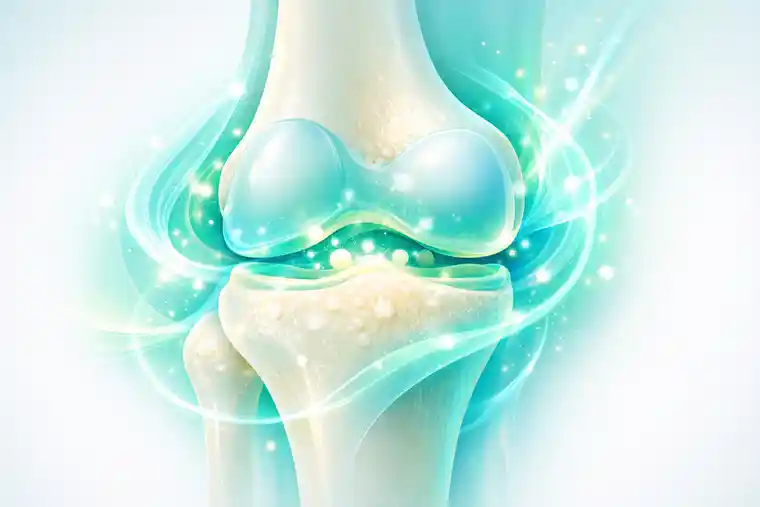
Pain arises from the tissues that respond to stress when the joint environment changes: the synovium, the bone beneath the cartilage, the capsule, the surrounding musculature. What we call osteoarthritis is not one failing structure, but a gradual loss of coordination between many structures.
- Inflammation becomes persistent rather than adaptive.
- Joint fluid loses its protective properties.
- Bone begins to absorb load it was never designed to carry.
- Muscles around the knee stop working as a coordinated system.
At this point, the knee is no longer simply “aging.”
It is struggling.
This distinction matters, because struggling tissue can still respond – if approached correctly.
Why Knee Replacement Is Not Always the First Answer
Many patients arrive already convinced that knee replacement is inevitable. Some have been told so explicitly. Others assume it because pain has lasted too long.
Knee replacement is a remarkable operation. It has restored mobility to millions of people. But it is not a neutral reset. It replaces biological adaptation with mechanical reliability. For some patients, that trade-off is necessary and appropriate.
For others, it is premature.
The real question is not whether surgery works.
It is whether the joint has reached a point where biology can no longer contribute meaningfully.
If that point has not yet been reached, non-surgical regenerative treatment is not avoidance – it is responsibility.
What Regenerative Treatment Means for Knee Osteoarthritis
Regenerative treatment is often misunderstood as an attempt to grow new cartilage or reverse time.
That is not what responsible regenerative medicine does.
The goal is not to recreate a youthful joint.
The goal is to restore a more stable biological environment.
When inflammation is reduced, when tissue signaling improves, when load distribution becomes more balanced, the joint often behaves differently – even if imaging does not dramatically change.
- Patients walk more freely.
- They move with less hesitation.
- They stop thinking about their knee constantly.
- This is not a miracle.
- It is a shift in balance.
Who Is a Suitable Candidate for Regenerative Knee Treatment
Not every knee should be treated conservatively.
In my practice, regenerative approaches are considered primarily when the joint still has:
- Preserved alignment
- Residual cartilage
- Functional muscle support
- The capacity to respond biologically
Most patients are over fifty. Many are active. Almost all want to avoid a prosthesis if possible, but not at the cost of endless ineffective treatments.
- This is where honesty matters.
- Regenerative medicine is not about hope without limits.
- It is about realistic opportunity.
How Knee Osteoarthritis Is Evaluated Before Treatment
Before any injection is discussed, I spend time observing how the knee behaves.
- How does the patient walk into the room?
- How do they stand up?
- Which movements are avoided instinctively?
Imaging helps, but it never tells the full story on its own. MRI and X-rays are reviewed not just for cartilage thickness, but for bone stress patterns, synovial changes, and alignment.
Only after this do we discuss options.
There is no standard protocol because there is no standard knee.
Stem Cells, Exosomes, and Biological Therapies for Knee Osteoarthritis
Modern medicine offers powerful biological tools. Used carelessly, they become noise. Used thoughtfully, they can change outcomes.
- Stem cell–based therapies are not interchangeable.
- Allogeneic stem cells offer consistent biological signaling and are independent of the patient’s own cellular age.
- Autologous approaches – such as SVF from adipose tissue or BMAC from bone marrow – draw on the patient’s own biology and can be particularly meaningful when bone involvement plays a role.
- Exosomes add another layer. They do not replace cells. They influence how cells communicate. In joints caught in chronic inflammatory loops, that communication matters.
- Supportive injections such as high-quality hyaluronic acid are not outdated. They remain essential for improving joint mechanics and reducing reactive irritation.
- Blood-derived therapies like ACP, PRGF, or Sanakin are used selectively, particularly when synovial inflammation dominates the clinical picture.
The mistake is not in using these tools.
The mistake is in using them without a plan.
Why Rehabilitation and Physiotherapy Matter in Knee Osteoarthritis
No biological treatment works in isolation.
After injections, the knee must be guided back into movement. Not aggressively. Not passively. Precisely.
Daily physiotherapy allows the joint to relearn load tolerance. Muscles are reactivated. Protective movement patterns are dismantled carefully. Manual techniques help reduce pain and restore confidence.
This is often where patients notice the real change – not immediately after injections, but days later, when movement feels less guarded.
Structured Non-Surgical Treatment Pathways for Knee Osteoarthritis

- For patients who travel or require concentrated treatment, care is organized into structured multi-day programs.
- One pathway focuses on autologous regenerative strategies, combining patient-derived cellular therapies with exosomes, joint-support injections, regenerative stimulation, and daily physiotherapy.
- Another pathway uses allogeneic stem cells as the primary biological intervention, supported by exosomes, joint environment optimization, and structured rehabilitation.
- Both pathways are flexible. They are adapted based on how the knee responds, and they can be extended when necessary.
What does not change is the principle: injections are not repeated unnecessarily. Rehabilitation is prioritized.
What Non-Surgical Regenerative Treatment Can and Cannot Achieve
- It can reduce pain.
- It can improve movement.
- It can restore trust in the joint.
- It can delay, sometimes significantly, the need for knee replacement.
- It cannot reverse advanced structural collapse.
- It cannot promise permanence.
- It cannot replace surgery when surgery is truly indicated.
Regenerative treatment is not a denial of reality.
It is a negotiation with it.
Clinical Treatment Programs for Knee Osteoarthritis
How Regenerative Knee Osteoarthritis Treatment Is Structured in Practice
In patients who travel from abroad or who benefit from a concentrated treatment period, regenerative care is organized into structured, multi-day clinical pathways.
These are not “packages” in a commercial sense, but time-based treatment frameworks that allow biological therapy and rehabilitation to work together without unnecessary interruption.
The exact combination is always adjusted based on clinical findings, imaging, pain levels, swelling, and joint response. What follows is a typical structure, not a rigid protocol.
Regenerative Treatment Pathway 1
Autologous Cell-Based Approach
This pathway is most often used when the patient’s own biological repair capacity is still sufficient and when bone and joint biology can be supported using autologous material.
Day 1:
The process begins with a detailed orthopedic examination and a careful review of existing MRI and X-ray images. If additional imaging is required to clarify cartilage condition, bone stress, or synovial activity, it is performed at this stage.
Based on these findings, a personalized regenerative and rehabilitation plan is created.
Day 2:
Depending on the biological requirements of the joint, either adipose-derived cellular material (SVF) or bone marrow–derived concentrate (BMAC) is prepared and applied. The choice is guided by joint structure, bone involvement, and overall regenerative potential.
Day 3:
Focused physiotherapy begins.
The aim is not aggressive strengthening, but restoring controlled movement, reducing protective patterns, and improving joint confidence.
Day 4:
Exosome therapy is applied both intravenously and directly into the joint, followed by a hyaluronic acid injection to support the joint environment.
Physiotherapy continues, adapted to the joint’s response.
Day 5:
A regenerative stimulation therapy – such as ACP, PRGF, or Sanakin – is applied, particularly when synovial inflammation or reactive swelling is present.
Physiotherapy continues.
If pain, swelling, or movement restriction require additional time, the pathway may be extended up to seven days. Extended days focus on physiotherapy and rehabilitation; injection components remain unchanged.
Regenerative Treatment Pathway 2
Allogeneic Stem Cell–Based Approach
This pathway is preferred when patient age, metabolic condition, or joint biology suggest that standardized, donor-derived cellular signaling may offer greater benefit.
Day 1:
Orthopedic evaluation and imaging review are performed,
followed by individual treatment planning.
Day 2:
Allogeneic stem cells are applied intra-articularly.
On the same day, physiotherapy begins to guide early functional adaptation.
Day 3:
Physiotherapy continues, focusing on joint control and muscle coordination.
Day 4:
Exosome therapy is administered intravenously and intra-articularly,
followed by hyaluronic acid injection.
Physiotherapy continues.
Day 5:
A regenerative stimulation therapy (ACP, PRGF, or Sanakin) is applied as clinically indicated,
followed by physiotherapy.
As with the first pathway, extension up to seven days is possible when clinically justified.
Final Thoughts on Preserving the Knee Joint
Knee osteoarthritis is not an emergency.
But it is also not benign.
When addressed early and thoughtfully, many knees respond better than expected. Not because medicine is extraordinary, but because the body still knows how to adapt when given the right conditions.
Sometimes, the most responsible decision is not replacement.
It is patience, precision, and giving biology one last, well-supported chance.
FAQs About Knee Osteoarthritis Treatment

How do I know if my knee is “too advanced” for regenerative treatment?
This cannot be determined by pain level alone.
Some patients with severe pain still have biologically responsive joints, while others with mild symptoms may already have structural collapse.
Imaging, clinical examination, and movement analysis together provide the answer.
If the joint can still respond biologically, regenerative treatment may be reasonable.
Will these treatments regrow cartilage or cure osteoarthritis?
This is usually one of the first things patients ask, and I understand why.
The honest answer is no – osteoarthritis does not disappear, and cartilage does not suddenly become “new” again. If that were possible, knee replacement surgery would not exist.
What can change is how the joint behaves. In many patients, inflammation settles, swelling reduces, movement feels smoother, and pain no longer dominates daily life. The knee may still look arthritic on an MRI, but functionally it often behaves very differently.
So the goal is not to cure osteoarthritis.
The goal is to make the knee livable again – sometimes surprisingly so.
How long do the effects usually last?
There is no fixed duration. Some patients experience meaningful improvement for months, others for years.
The outcome depends on disease stage, activity level, body weight, alignment, and how well movement patterns are restored after treatment..
Is knee replacement still possible later if this does not work?
Yes. Regenerative treatment does not close the door to surgery. In most cases, it simply delays the need for it.
When surgery becomes necessary, it can still be performed without disadvantage.
Is this approach suitable for very active or athletic patients?
It can be – but this is where expectations matter.
If someone expects an arthritic knee to perform like a healthy 25-year-old joint again, regenerative treatment will disappoint them. That is not realistic.
If, however, the goal is to stay active, train sensibly, walk, cycle, hike, or play recreational sports without constant pain or fear of damage, then many active patients do quite well. Especially those who are willing to adjust how they load the joint and who take rehabilitation seriously.
In athletes, the conversation is less about what is possible and more about what is sustainable.