Understanding COPD – Chronic Obstructive Pulmonary Disease – and the Role of Regenerative Therapy for Patients
Clinical Insights by Prof. Dr. Serdar Kabataş, MD, PhD (C)
A Personal Perspective from a Neurosurgeon and Stem Cell & Immunology Specialist
I am Prof. Dr. Serdar Kabataş.
Most of my professional life has been spent dealing with the nervous system – the brain, the spinal cord, the fragile connections that allow movement, speech, and awareness to happen at all.
COPD was not something I expected to deal with in this depth.
But medicine has a way of pulling you into areas you didn’t plan for. Not through ambition. Through patients.
The first COPD patient who really stayed with me wasn’t dramatic. He didn’t describe panic or fear. He just paused. Mid-sentence. Looked at the floor. Took a breath. Then another. Then continued, quietly embarrassed.
That pause told me more than any CT scan.
COPD takes something we are never supposed to notice — breathing — and places it in the foreground. Once that happens, life feels different. Smaller. Slower.
Over the years, I’ve met many patients like him. Men and women who were not looking for miracles. They were looking for space. A little less resistance. A little less effort behind every breath.
And the question they ask is almost always the same. Sometimes out loud, sometimes not.
“Is there anything else?”
Not “Is there a cure?”
Just – anything else.
Conventional medicine does a lot. Inhalers matter. Oxygen matters. Pulmonary rehab matters. I would never suggest otherwise.
But there is a point where patients feel they are only maintaining damage. Not calming it. Not changing the underlying process.
That is where regenerative medicine entered the conversation for me. Quietly. Carefully. Without promises.
Table of Contents
What COPD Really Means for Patients and Families
COPD is usually described with measurements. FEV1. Oxygen saturation. Exacerbation rates.
Those numbers are useful. But they miss something important.
What COPD really does is narrow the margins of daily life.
At first, patients adapt without realizing it. They walk slower. They take elevators instead of stairs. They stop carrying heavy bags. None of this feels dramatic.
Later, the adaptations become more obvious. Planning outings around rest. Avoiding conversations that require long sentences. Sitting down to shower.
Families notice before patients do. A partner walks ahead, then slows down. A child learns to wait.
There is often frustration, but also guilt. Patients don’t want to be a burden. Families don’t want to push.
And because COPD progresses slowly, people around the patient adjust too. Until one day, everyone realizes how much has changed.
One patient told me, “I don’t remember when I stopped singing in the car. I just know I don’t anymore.”
That’s what COPD does. It removes small, human things first.
How Lung Damage Slowly Becomes Permanent
COPD is not sudden. It’s cumulative.
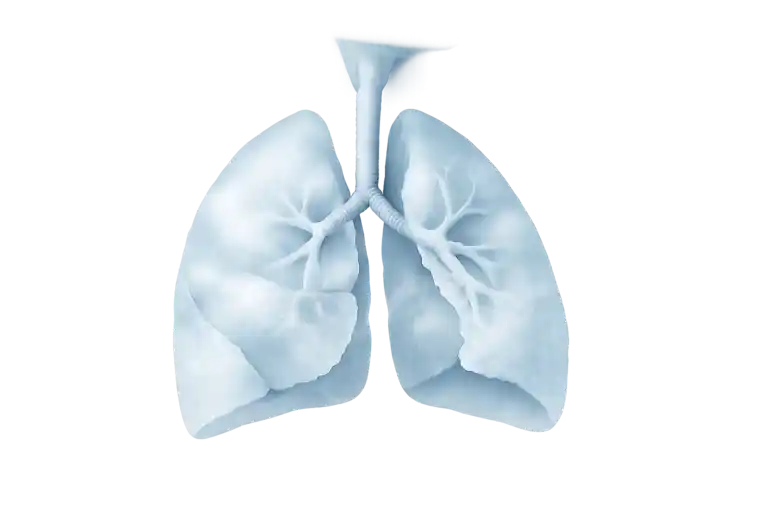
Most cases are linked to long-term exposure — cigarettes, yes, but also polluted air, industrial dust, chemicals, untreated asthma, repeated infections. Sometimes genetics makes the lungs more vulnerable from the start.
Inside the lung, two processes happen at the same time.
One is inflammation. Persistent. Low-grade. Always there.
The other is structural damage. The small airways thicken. The alveoli lose their elasticity. Air gets trapped.
And here’s the difficult part: lung tissue does not regenerate easily.
Unlike skin or liver, the lung has very limited repair capacity. Once alveoli collapse or disappear, the body struggles to replace them.
This is why COPD keeps progressing even when patients “do everything right.”
Medicine can open airways. Reduce inflammation. Supply oxygen.
But repairing structure is another question entirely.
Symptoms and the Daily Adjustments Nobody Talks About
COPD symptoms are not always dramatic. That’s part of the problem.
Shortness of breath is obvious. Chronic cough too. But there are quieter changes.
- People stop laughing loudly.
- They stop speaking on the phone for long.
- They learn which clothes are easier to put on without getting breathless.
- Sleep changes. Many patients don’t lie flat anymore. Some wake up at night gasping, not from panic, but from physics – the lungs simply can’t manage.
- Fatigue becomes constant. Not the kind that goes away with rest.
And then there’s fear. Not panic – fear. The awareness that air is limited.
Patients rarely say this directly.
But you can see it in how carefully they move.
Why Stem Cells Are Being Considered in COPD
Stem cell therapy in COPD is often misunderstood.

It is not about growing new lungs. Anyone who suggests that is not being honest.
The interest in stem cells comes from something more subtle.
Mesenchymal stem cells, especially those derived from umbilical cord tissue, have properties that matter in chronic lung disease. They don’t replace tissue. They communicate.
- They release signals that calm inflammation.
- They influence immune cells that have been stuck in overdrive for years.
- They support microcirculation.
In COPD, inflammation never fully shuts off. It keeps damaging what remains.
What we see in early studies – and in carefully selected patients – is not reversal, but stabilization. Fewer flare-ups. Slower decline. Sometimes improved tolerance for activity.
That may not sound impressive. But for someone losing function every year, slowing the loss matters.
Exosomes and Chronic Inflammation in the Lung
Exosomes are small enough that it’s almost strange to think they matter.
They are not cells. They don’t live. They don’t divide.
They are messages.
Released naturally by stem cells, exosomes carry instructions — proteins, RNA fragments, regulatory signals. In chronic diseases, these signals can influence how immune cells behave.
In the lung, that influence matters.
Exosomes seem to reach areas that stem cells themselves may not. They move quietly. They don’t provoke immune reactions. They don’t stay forever.
In many regenerative protocols, stem cells and exosomes are used together. One prepares the environment. The other delivers signals.
This approach is still evolving. It’s not finished science. But biologically, it makes sense for a disease driven by chronic inflammation rather than acute injury.
What the Treatment Journey Actually Looks Like
Every patient starts with evaluation. Not a formality – a necessity.
We look at lung function tests, imaging, medication history, heart health, infection risk. We talk about daily life. What triggers symptoms. What doesn’t.
Treatment, if appropriate, is usually given intravenously. No surgery. No anesthesia.
And this is important: regenerative therapy does not replace standard COPD care. Patients continue inhalers, rehab, oxygen if needed.
After treatment, we don’t look for miracles. We look for patterns.
- Fewer infections.
- Less exhaustion.
- Sleeping better.
- Being able to finish a task that used to require a break.
One patient told me he could stand at the sink long enough to wash dishes again. He didn’t say it like an achievement. Just as an observation.
That’s often how improvement appears.
Risks, Limits, and the Need for Honesty
So far, properly conducted stem cell and exosome therapies show a good safety profile. Side effects are usually mild — fatigue, low fever, headache.
But honesty matters more than optimism.
- This is not a cure.
- It does not rebuild destroyed alveoli.
- It does not remove the need for inhalers or oxygen.
Its role is supportive. Stabilizing. Sometimes meaningfully improving quality of life.
Anyone promising more than that should be questioned.
A Short Guide for Patients and Families
COPD is chronic. It changes over time. But it does not look the same in every person.
Some decline quickly. Others stabilize for years.
Regenerative therapy may help by calming inflammation and supporting remaining lung tissue. It may reduce flare-ups. It may improve daily endurance.
What it cannot do is erase damage that has already occurred.
What we promise is careful evaluation, realistic discussion, and ethical treatment.
Nothing more. Nothing less.
Where the Cells Come From – Quality and Ethics
Patients have every right to ask where treatment materials come from.
The stem cells used are derived from donated umbilical cords after healthy births, with informed consent. No embryos. No harm.
Cells are processed in certified laboratories. Every batch is tested. Anything questionable is discarded.
Exosomes are derived from the same controlled cultures, purified step by step.
I often say the same thing, and I mean it every time:
I would not offer a treatment I would not trust for someone in my own family.
That line does not move.
Conclusion – Not a Cure, But Room to Breathe
COPD takes space away from life.
Regenerative medicine does not give it all back.
But sometimes, it gives a little room.
- Room to walk further.
- Room to sleep better.
- Room to breathe without thinking quite so much about it.
- Medicine is not always about fixing. Sometimes it’s about easing.
And that is where this work belongs – careful, restrained, and grounded in reality.
Frequently Asked Questions – Stem Cell & Exosome Therapy for COPD
Is there really any point in stem cell therapy if COPD can’t be cured?
This is probably the most honest question people ask — sometimes directly, sometimes after a long pause.
No, COPD cannot be cured. That doesn’t change in Turkey, Europe, or anywhere else. But many patients are not asking for a cure anymore. They’re asking whether things can stop getting worse so fast.
For some people, stem cell and exosome therapy helps calm the chronic inflammation in the lungs. That can mean fewer flare-ups, a bit more stamina, or simply feeling less “tight” when breathing.
It’s not dramatic. But for the right patient, it can still matter.
At what stage of COPD does this therapy make sense?
Usually earlier than people expect.
Patients who are already completely dependent on oxygen, with very advanced lung destruction, often have limited benefit. There has to be something left to protect.
We see better responses in mild to moderate COPD, or in patients who are progressing but still relatively stable. That’s why we insist on lung function tests and imaging before giving any recommendation.
Sometimes the answer is simply: not now — or not at all. And that honesty is part of responsible care.
What do patients usually notice first – if it works at all?
Almost never what they expect.
It’s usually not a sudden feeling of “more air.” More often, patients tell us small things:
* getting through the day with less exhaustion
* sleeping a bit better
* fewer infections over the next months
* recovering faster after exertion
Some patients don’t notice anything clear. Others notice changes only when they look back after a few months. This therapy works quietly, or not at all – there’s no reliable way to predict it.
Is this dangerous for someone who already struggles to breathe?
This question usually comes late in the conversation. Not first. Sometimes not even spoken out loud.
The honest answer is: it depends on the person.
For most patients who are properly evaluated, the treatment itself is not physically stressful. There is no surgery, no anesthesia, no strain on the lungs during the procedure. That matters for people who already feel fragile.
That said, COPD patients are not all the same. Some have heart problems. Some have frequent infections. Some are already very close to their physical limits. In those cases, even a low-risk treatment may not be a good idea.
This is why we don’t decide quickly. We look at lung tests, heart status, recent infections, and overall stability. If something doesn’t feel right, we don’t proceed. There is no benefit in pushing a body that is already overwhelmed.
So yes – for the right patient, the risk is usually low.
But for the wrong patient, the right decision is sometimes to say no.
Can this replace my inhalers, oxygen, or COPD medication?
No – and stopping those treatments is one of the biggest mistakes patients can make.
Stem cell and exosome therapy are not alternatives to standard COPD care. They are considered an additional approach. Inhalers, oxygen therapy, pulmonary rehab, and medication remain essential.
Patients who do best are usually the ones who continue their regular treatment consistently and see regenerative therapy as supportive, not as a replacement.
What if this doesn’t help at all – and we’ve only lost time, money, and hope?
This is the question that usually stays unspoken. Families look at me, then look away, and you can feel it in the room.
The truth is: yes, that is possible.
Not every body responds. Not every lung calms down. Sometimes nothing changes in a way that can be clearly felt. And when that happens, disappointment can be heavy – emotionally and financially.
That’s why we talk about this before any treatment. This therapy is not a guarantee, and it should never be presented as one. It’s an attempt to slow a disease that is otherwise moving in one direction.
What I tell families is this: if you go into treatment believing it must work, the risk is too high. If you go into it understanding that it might help, and that stopping progression or buying time is already meaningful, then the decision is clearer.
Hope is important. But unprotected hope can hurt.
Our responsibility is to be honest enough that hope doesn’t turn into regret.