Clinical Observations by Prof. Dr. Serdar Kabataş, MD, PhD (C)
Alzheimer’s Disease – A Personal Note from Clinical Practice
I am Prof. Dr. Serdar Kabataş. My work as a neurosurgeon has always placed me close to the limits of modern medicine. The nervous system does not fail loudly. It fails quietly, layer by layer, often long before imaging or tests fully explain what families are witnessing at home.
Alzheimer’s disease is one of the conditions where this gap between clinical explanation and lived reality is widest.
Patients rarely arrive saying, “I think I have Alzheimer’s.”
They come because something feels off. A repeated story. A misplaced object that becomes an accusation. A moment of confusion that is brushed aside, until it can’t be.
What makes Alzheimer’s especially difficult is not only memory loss, but the gradual loss of confidence. Patients sense that they are no longer reliable narrators of their own lives. Families sense it too, often earlier, and struggle with when – or whether – to say something.
For many years, our tools were limited. We focused on medications that might slow progression in some patients, on structuring daily life, and on supporting caregivers. Those remain essential. Nothing replaces good care.
Regenerative medicine entered this field not as a solution, but as a question:
Can we influence the biological conditions that accelerate decline?
Table of Contents
Understanding Alzheimer’s Disease Beyond the Diagnosis
Alzheimer’s disease is often reduced to a single idea: memory loss. In reality, memory is only one part of the picture.
In daily practice, Alzheimer’s shows itself through:
- difficulty organizing simple tasks,
- loss of orientation in familiar environments,
- changes in judgment and social behavior,
- emotional withdrawal or unexpected irritability,
- increasing dependence on others for decisions once made independently.
Families often tell me, “It’s not that she forgets – it’s that she’s not herself anymore.”
That observation is important. Alzheimer’s affects identity as much as cognition.
What Alzheimer’s Disease Is – Biologically Speaking
Alzheimer’s is a neurodegenerative disease with multiple overlapping mechanisms. Amyloid plaques and tau pathology are well known, but they do not act alone.
Other processes play a significant role:
- chronic activation of inflammatory pathways in the brain,
- reduced cerebral blood flow and microvascular dysfunction,
- impaired communication between neurons,
- oxidative stress affecting cellular energy systems,
- gradual loss of neurotrophic support.
No single mechanism explains the disease. That is why single-target treatments have struggled.
From a regenerative medicine perspective, the focus shifts away from “removing plaques” and toward supporting the environment in which neurons attempt to function.
What Patients and Families Often Assume About Alzheimer’s Treatment
Certain expectations appear repeatedly in consultations.
“If this works, memory should come back.”
Memory loss in Alzheimer’s is not like a blocked signal that can simply be reopened. Once neural networks are lost, they do not regenerate in a meaningful way. Any intervention must be judged on realistic goals.
“Exosomes are safer because they are not cells.”
Safety depends on sourcing, processing, and clinical oversight – not on whether something is labeled “cell-free.” Biology does not respect marketing terms.
“If we don’t see change quickly, it didn’t work.”
This is a common assumption, but it does not reflect how Alzheimer’s disease behaves. When there is a response to treatment, it is rarely immediate and rarely dramatic. Families sometimes notice changes in daily rhythm before anything else – fewer periods of agitation, more regular sleep, or a patient who remains engaged a little longer during conversations. These observations often appear well before any formal cognitive testing shows a difference.
When expectations are not discussed carefully from the beginning, frustration and disappointment can easily follow.
Why Stem Cells Are Being Studied in Alzheimer’s Disease
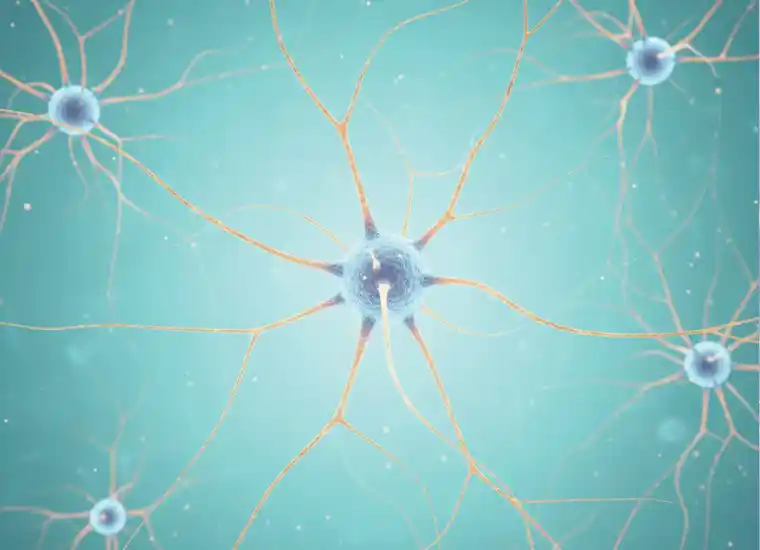
Mesenchymal stem cells are not used with the expectation that they will replace damaged neurons. That is not how they function in clinical reality.
They are studied because of their biological effects on inflammation, immune regulation, and vascular support within the nervous system.
In laboratory models and early clinical observations, mesenchymal stem cells have demonstrated the ability to:
- reduce inflammatory signaling,
- influence microglial behavior,
- support blood vessel function,
- release factors that help neurons tolerate stress.
From a clinical standpoint, Alzheimer’s progression often reflects a hostile environment rather than a single catastrophic event. If that environment can be stabilized, decline may slow in some patients. Of course, it is not a guarantee.
Exosome Therapy in Alzheimer’s – A Different Angle on the Same Question
Exosomes are microscopic vesicles released by cells. They carry signals, not structure.
Interest in exosomes comes from their ability to:
- transport regulatory molecules,
- cross biological barriers,
- act without introducing living cells.
This makes them appealing, particularly for neurological conditions. However, enthusiasm must be balanced with discipline. Exosome therapy is highly sensitive to preparation quality. Poorly characterized products are ineffective.
In my practice, exosomes are approached as a biological intervention, not an innovation for its own sake.
How Stem Cell and Exosome Treatment for Alzheimer’s Is Approached
No patient begins treatment without thorough evaluation. Alzheimer’s exists on a spectrum, and not every memory complaint is Alzheimer’s.
Assessment includes:
- detailed neurological examination,
- review of imaging studies,
- laboratory evaluation to exclude reversible causes,
- medication analysis,
- caregiver observations of daily function.
If the diagnosis is uncertain, treatment is postponed. Precision matters more than speed.
Planning focuses on:
- appropriate route of administration,
- timing and number of sessions,
- integration with cognitive and physical activity,
- follow-up strategy.
This is not a one-day decision.
Expected Outcomes of Stem Cell Treatment in Alzheimer’s Disease
This is the most difficult part of the conversation.
In some patients, families report:
- more stable daily routines,
- fewer periods of agitation,
- improved sleep,
- better tolerance of social interaction,
- slower functional decline.
What is unlikely:
- recovery of lost memories,
- reversal of advanced disease,
- elimination of caregiver involvement.
Success must be defined individually. Often, it means preserving independence for longer or reducing daily stress – not dramatic improvement.
Scientific Research on Stem Cell and Exosome Therapy for Alzheimer’s
Clinical research into stem cell–based approaches for Alzheimer’s is ongoing. Early-phase studies have focused primarily on safety and biological markers rather than large cognitive gains.
Exosome research remains largely translational, with promising mechanisms but limited long-term human data.
Importantly, international guidelines continue to emphasize that Alzheimer’s care is multifactorial. Regenerative approaches, where used, must complement – not replace – comprehensive care.
Who May Be Considered for Stem Cell Treatment in Alzheimer’s Disease

Patients more likely to be considered include:
- early to moderate Alzheimer’s stages,
- stable overall health,
- strong caregiver support,
- ability to participate in follow-up.
Patients usually not considered include:
- advanced end-stage disease,
- unstable medical conditions,
- absence of reliable caregiving,
- expectations of guaranteed outcomes.
Sometimes, the most responsible medical decision is to decline treatment.
The Alzheimer’s Treatment Process in Istanbul
The process is structured:
- Medical review
- In-depth consultation
- Informed decision-making
- Treatment under controlled conditions
- Ongoing follow-up
Consent is not paperwork. It is understanding.
What Families Living with Alzheimer’s Often Say Afterwards
The most meaningful feedback is rarely dramatic.
“He seems calmer.”
“She sleeps through the night now.”
“We have fewer difficult days.”
These changes do not cure Alzheimer’s. They change how it is lived.
Ethics, Safety, and Responsibility in Alzheimer’s Regenerative Therapy
Regenerative medicine demands restraint.
Families should always know:
- where biological materials originate,
- how they are processed,
- what standards are followed.
Final Reflections on Stem Cell and Exosome Therapy for Alzheimer’s Disease
Alzheimer’s disease challenges medicine because it unfolds slowly and personally. There is no single solution.
Stem cell and exosome therapies represent an area of investigation – not a destination. Used responsibly, they may support quality of life for some patients.
If we speak, we will speak honestly.
We will define realistic goals.
And we will always place responsibility above hope.
FAQs about Stem Cell & Exosome Treatment for Alzheimer’s Disease
Can stem cell therapy cure Alzheimer’s disease?
There is currently no cure for Alzheimer’s disease. Stem cell therapy is not designed to reverse the condition or restore lost memories. The goal of regenerative approaches is to support the brain’s environment – particularly inflammation control and vascular support – and in some patients, this may help stabilize certain functions or slow progression. It is not a replacement for standard Alzheimer’s care.
What improvements can stem cell treatment realistically offer for Alzheimer’s patients?
This is usually asked very directly: “What will change?”
In Alzheimer’s, we don’t expect lost memories to return. That’s important to say clearly. What we sometimes see – especially in earlier stages – is not a dramatic shift in cognition, but small functional differences. A patient may seem more settled in the evenings. Sleep can become more regular. Conversations may last a little longer before attention drifts.
These are not headline changes. But for families living with the condition every day, those adjustments can make daily care less exhausting. That’s usually where any benefit appears – in stability, not reversal.
Is stem cell and exosome therapy safe for elderly patients with Alzheimer’s disease?
Most people considering this treatment are older, so the question comes up naturally. Age by itself is not the main issue. What matters more is the person’s overall condition – heart health, blood pressure control, metabolic stability, and general strength.
Before recommending anything, we look at the full medical picture. When patients are medically stable and monitored properly, the procedure is generally well tolerated. The decision is never based on age alone; it’s based on whether the individual can safely undergo the treatment.
At what stage of Alzheimer’s disease does stem cell treatment make the most sense?
In practice, earlier stages tend to offer more room for supportive therapies. When a patient is still independent in some activities and communication is largely intact, there is more functional reserve. That’s when we are more likely to consider regenerative options.
In advanced stages – when recognition, communication, and daily function are already severely affected – expectations have to be very limited. At that point, maintaining comfort and structure often becomes more important than intervention.
Each case requires individual assessment. There isn’t a universal cutoff, but there is a clear difference between early support and late-stage care.